Textile Yarn
CN → US| HS Code | Tariff Rate | Origin | Destination | Doc |
|---|---|---|---|---|
| 5607909000 | 41.3% | CN | US | Official Doc |
| 5604909000 | 40.0% | CN | US | Official Doc |
| 5606000090 | 43.0% | CN | US | Official Doc |
| 5606000010 | 43.0% | CN | US | Official Doc |
| 5607493000 | 38.6% | CN | US | Official Doc |
Product Images
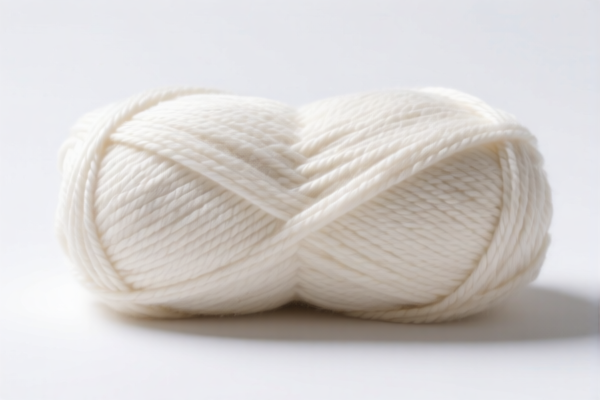

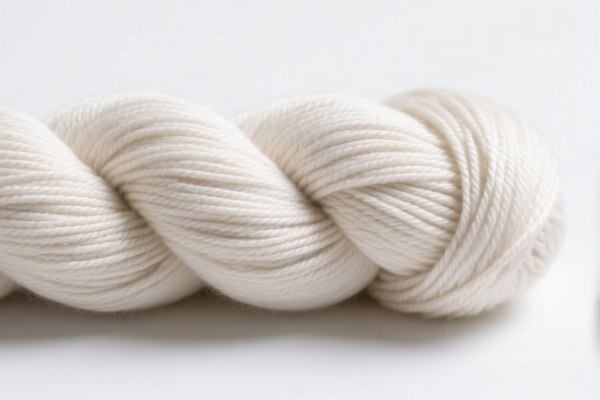
AI Analysis
🧵 Textile Yarn (纺织用缆线纱)
🌐 HS Code Reference & Customs Clearance Guide | 2026 Latest Tariff Analysis | Professional Clearance Strategy
📌 I. Product Definition & Classification: What is "Textile Cable Yarn"?
"Textile Yarn" in the context of cross-border trade (specifically regarding the provided data) refers to specialized twisted, cabled, or covered yarns used in industrial, safety, or decorative textile applications. It is not simple single-strand thread. The classification depends heavily on: 1. Structure: Twisted (plied), Cable, or Chenille. 2. Material: Synthetic fibers (Polypropylene/Polyethylene) vs. other fibers. 3. Composition: Presence of elastic filaments (Spandex/Elastane) or rubber/plastic coverings.
⚠️ Key Distinction Points:
- If it is a cable rope made of synthetic fibers (PP/PE) → 5607
- If it is a twisted yarn with elastic content → 5606.00.00.10
- If it is a twisted yarn without elastic content → 5606.00.00.90
- If it has rubber/plastic coating → 5604.90.90.00
📦 II. HS Code Classification Details (2026 Latest Tariff对照)
| HS Code | Product Description | Key Characteristics | Applicable Scenario |
|---|---|---|---|
5607.90.90.00 |
Other textile cable yarns/cords | General cable yarns, non-specific fiber type | General industrial twines, decorative cables |
5604.90.90.00 |
Textile yarn with rubber/plastic covering | Covered yarns (rubber/plastic sheath) | Elastic bands, reinforced cords, medical tubing yarn |
5606.00.00.90 |
Twisted yarn, chenille yarn (Non-Elastic) | No elastomeric filaments | Standard cotton/polyester twisted yarns, non-stretch decorative yarns |
5606.00.00.10 |
Twisted yarn with Elastomeric Filaments | Contains Spandex/Elastane | Stretch yarns, elastic bands, high-stretch textiles |
5607.49.30.00 |
Polypropylene/Polyethylene Cable Yarn | Specific synthetic material (PP/PE) | Agricultural twine, shipping ropes, geotextiles |
🔍 Critical Note:
- The presence of Elastomeric Filaments (e.g., Spandex) is the deciding factor for5606.00.00.10.
- Material Specificity matters for5607.49.30.00(must be PP/PE). If it's nylon or polyester, it likely falls under5607.90.90.00.
- Covering changes the chapter. If covered in rubber/plastic, it moves to Chapter 56 Section 5604.
💰 III. 2026 Latest Tariff Rate Breakdown (Detailed Tax Clauses)
✅ Applicable Country: United States (US)
✅ Origin: China (CN)
✅ Effective Date: Current applicable rates (2025/2026 regime)
🎯 1. 5607.90.90.00 – Other Textile Cable Yarns
| Item | Content |
|---|---|
| Base Tariff | 6.3% |
| Section 301 Tariff | +25.0% |
| Section 122 Tariff | +10.0% |
| Total Effective Rate | 41.3% |
| Tax Calculation | CIF Value × 41.3% |
| Legal Basis | Base Rate (HTSUS) + Section 301 (USTR) + Section 122 (Customs/Trade Action) |
📌 Explanation:
- This is the general bucket for cable yarns not specified elsewhere.
- The 41.3% rate is cumulative. You pay the base duty, then add 25% for trade tensions, plus an additional 10% for specific trade remedies.
- No De Minimis Exemption: This category is generally subject to high duties, meaning small shipments are still taxed.
🎯 2. 5604.90.90.00 – Textile Yarn Covered with Rubber or Plastics
| Item | Content |
|---|---|
| Base Tariff | 5.0% |
| Section 301 Tariff | +25.0% |
| Section 122 Tariff | +10.0% |
| Total Effective Rate | 40.0% |
| Tax Calculation | CIF Value × 40.0% |
| Legal Basis | Base Rate (HTSUS) + Section 301 + Section 122 |
📌 Explanation:
- Slightly lower base rate (5.0%) compared to general cable yarns.
- However, the total burden (40.0%) remains severe.
- Compliance Check: You must prove the covering is rubber or plastic. If it’s just twisted fibers, this code is incorrect.
🎯 3. 5606.00.00.90 – Twisted Yarn, Chenille, Other (No Elastomers)
| Item | Content |
|---|---|
| Base Tariff | 8.0% |
| Section 301 Tariff | +25.0% |
| Section 122 Tariff | +10.0% |
| Total Effective Rate | 43.0% |
| Tax Calculation | CIF Value × 43.0% |
| Legal Basis | Base Rate (HTSUS) + Section 301 + Section 122 |
📌 Explanation:
- Highest Base Rate (8.0%) among the options.
- Critical Constraint: Must confirm NO elastomeric filaments (spandex/elastic) are present. If spandex is added, the code changes to.10.
- Common for standard cotton or polyester twisted yarns.
🎯 4. 5606.00.00.10 – Twisted Yarn, Chenille, Containing Elastomeric Filaments
| Item | Content |
|---|---|
| Base Tariff | 8.0% |
| Section 301 Tariff | +25.0% |
| Section 122 Tariff | +10.0% |
| Total Effective Rate | 43.0% |
| Tax Calculation | CIF Value × 43.0% |
| Legal Basis | Base Rate (HTSUS) + Section 301 + Section 122 |
📌 Explanation:
- Same total rate as.90(43.0%), but the base structure is different.
- Must Contain: Elastomeric filaments (e.g., Spandex, Lycra).
- Used for stretch fabrics, elastic bands, and high-comfort textiles.
🎯 5. 5607.49.30.00 – Other Twisted, Braided, or Woven Textile Materials (PP/PE)
| Item | Content |
|---|---|
| Base Tariff | 3.6% |
| Section 301 Tariff | +25.0% |
| Section 122 Tariff | +10.0% |
| Total Effective Rate | 38.6% |
| Tax Calculation | CIF Value × 38.6% |
| Legal Basis | Base Rate (HTSUS) + Section 301 + Section 122 |
📌 Explanation:
- Lowest Total Rate (38.6%).
- Specific Requirement: Material must be Polypropylene (PP) or Polyethylene (PE).
- If your rope is Nylon or Polyester, you cannot use this code; you must use5607.90.90.00(41.3%).
- Ideal for agricultural twines, shipping ropes, and industrial geotextiles.
🛠️ IV. Customs Clearance Practical Advice (Real-World Pitfall Guide)
✅ 1. Preparation Checklist (Non-Negotiable)
| Document | Required | Description |
|---|---|---|
| ✅ Product Specification Sheet | ✔️ | Must detail fiber content (% PP, % Spandex, etc.), structure (twisted/cabled), and diameter. |
| ✅ Composition Analysis Report | ✔️ | Lab test proving presence/absence of elastomers (for 5606.00 vs 5607.90) and plastic/rubber covering (for 5604.90). |
| ✅ Photos (Close-up) | ✔️ | Show the cross-section of the yarn. Can you see the core and the cover? |
| ✅ Commercial Invoice | ✔️ | Clearly state "Textile Cable Yarn" and specify material (e.g., "100% Polypropylene Twisted Yarn"). |
| ✅ HS Code Pre-Ruling | ✔️ | Highly Recommended. Due to the complexity of "cable" vs "twisted" vs "covered," a pre-ruling saves weeks of delay. |
✅ 2. Declaration Strategy (Key Mnemonics)
🔥 "Check Elastic, Check Material, Check Cover!"
| Scenario | Correct HS Code | Wrong Code Risk |
|---|---|---|
| PP Rope | 5607.49.30.00 (38.6%) |
If misdeclared as general yarn → 5607.90.90.00 (41.3%) → 3% extra tax |
| Spandex Twisted Yarn | 5606.00.00.10 (43.0%) |
If declared as general twisted → 5606.00.00.90 (43.0%) → Same rate, but compliance risk if origin rules differ |
| Rubber-Covered Thread | 5604.90.90.00 (40.0%) |
If declared as simple yarn → 5607.90.90.00 (41.3%) → Higher tax + classification error |
| Nylon Cable | 5607.90.90.00 (41.3%) |
If declared as PP → 5607.49.30.00 → Fraud/Severe Penalty because material is wrong |
✅ 3. Special Situation Handling
| Situation | Handling Advice |
|---|---|
| Mixed Material Yarn | If yarn contains both PP and Spandex, it likely falls under Elastomeric categories (5606.00.00.10). Material weight % determines the chapter. |
| Sample vs. Bulk | Samples must still be declared with accurate HS Code. Do not use "Gift" or "Sample" to avoid tariffs; customs may still apply duties. |
| Customs Audit Trigger | If your volume of 5607.49.30.00 (PP) spikes, CBP may audit material composition. Ensure your lab reports are consistent. |
🌍 V. Global Market Comparison (2026 Update)
| Country/Region | Recommended HS Code | Est. Tariff (China Origin) | Notes |
|---|---|---|---|
| 🇺🇸 USA | 5607.49.30.00 / 5606.00.00.10 |
38.6% - 43.0% | Includes Base + 301 + 122. High barrier. |
| 🇨🇳 China | 5607.49.30.00 |
8% - 10% | Standard import duty. No Section 301. |
| 🇪🇺 EU | 5607.49.30.00 |
0% - 5% | Generally low. Check for anti-dumping on specific synthetic ropes. |
| 🇬🇧 UK | 5607.49.30.00 |
5% - 10% | Post-Brexit tariffs. No Section 301 equivalent. |
📌 Conclusion:
- The USA is the most expensive market due to the layered tariffs (Base + 25% + 10%).
- Cost Optimization: If possible, source PP-based ropes (5607.49.30.00) as they have the lowest total rate (38.6%) compared to general cable yarns (41.3%) or elastomeric yarns (43.0%).
📌 VI. Common Errors & Pitfalls (Lessons Learned)
❌ Error 1: Confusing "Cable Yarn" with "Twisted Yarn"
👉 Consequence: Using 5607 (Cable) for simple twisted yarn. May lead to under-declaration if duties differ, or over-declaration if 5606 is cheaper (but they are similar here). Risk of misclassification penalties.
❌ Error 2: Ignoring Elastomer Content
👉 Consequence: Declaring a Spandex-blend yarn as 5606.00.00.90 (Non-Elastic). While the total rate is the same (43.0%), it violates HTSUS legal notes regarding "Other" vs "Containing Elastomers." This can trigger an audit of your entire product line.
❌ Error 3: Misidentifying Material (PP vs. Nylon)
👉 Consequence: Using 5607.49.30.00 (38.6%) for Nylon Rope. This is tariff evasion. The difference is 2.7%, but customs uses density tests and melt tests. Penalties can be 3x-10x the duty difference.
✅ Correct Action:
"PP Twisted Cable, 3-Ply, 5mm Diameter, ASTM D4835 Compliant"
"Spandex-Core Polyester Twisted Yarn, Elastic, 120 Denier"
🎯 VII. Conclusion: Precision Saves Money!
🎯 Remember the Hierarchy:
- Is it covered in rubber/plastic? →
5604.90.90.00(40.0%)- Is it PP/PE? →
5607.49.30.00(38.6%) ← Cheapest- Does it have Spandex? →
5606.00.00.10(43.0%)- Is it general twisted/cable? →
5607.90.90.00or5606.00.00.90(41.3%-43.0%)
📌 Pro Tip:
For US imports, PP-based cables (5607.49.30.00) offer the lowest effective duty burden. If your product allows, switch to PP to save 2.7% on every shipment. Always verify material composition with a lab report before shipping.
📣 Immediate Action:
📞 Contact your customs broker with a material breakdown and cross-section photo.
🚀 Request a Binding Ruling if volumes are high. Secure your supply chain against the 43% tax wall.
✨ Smart Classification, Smarter Profits!
💼 In Textile Yarn, the smallest fiber mix determines the biggest tax bill!
Customer Reviews
About HS Code Classification
The Harmonized System (HS) is an internationally standardized nomenclature developed by the World Customs Organization (WCO) to classify traded products. Over 200 countries use the HS system as the basis for customs tariffs, trade statistics, and import/export regulations.
Each HS code follows a hierarchical structure:
- Chapter (2 digits) — Broad category of goods (e.g., Chapter 84: Machinery and Mechanical Appliances)
- Heading (4 digits) — More specific grouping within the chapter
- Subheading (6 digits) — Internationally standardized breakdown, used by all WCO member countries
- National subdivisions (8-10 digits) — Country-specific extensions for further classification, such as US HTSUS 10-digit codes
Correct HS code classification is essential for smooth customs clearance, accurate duty payment, and compliance with trade regulations. Misclassification can lead to customs delays, overpayment of duties, or penalties.
When importing from CN to US, the applicable tariff rates may include:
- Most-Favored-Nation (MFN) rate — The standard duty rate applied to WTO members
- General rate — Applied to countries without trade agreements
- Trade remedy duties — Additional tariffs such as Section 301 (anti-dumping), Section 232 (national security), or countervailing duties
The information provided on this page is for reference purposes only. For official classification, please consult with your local customs authority or a licensed customs broker.