Textile reinforced Plastic Connector Panels
CN → US| HS Code | Tariff Rate | Origin | Destination | Doc |
|---|---|---|---|---|
| 3921904010 | 39.2% | CN | US | Official Doc |
| 3921905010 | 39.8% | CN | US | Official Doc |
| 6815190000 | 35.0% | CN | US | Official Doc |
| 5903102090 | 35.0% | CN | US | Official Doc |
| 3921904010 | 39.2% | CN | US | Official Doc |
Product Images

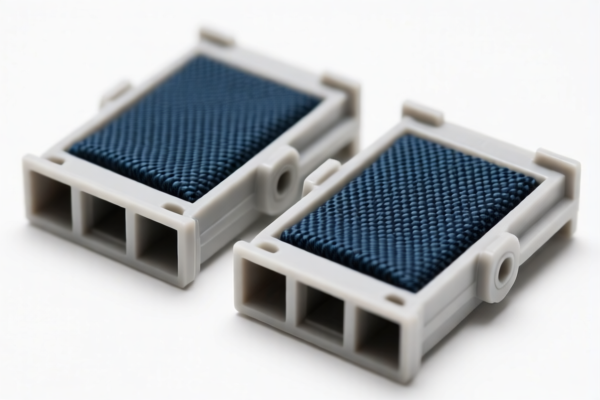
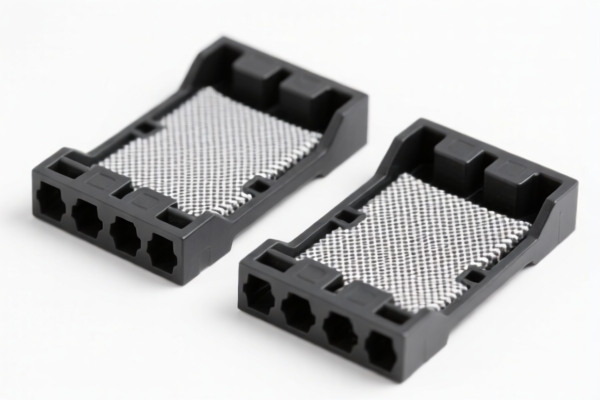
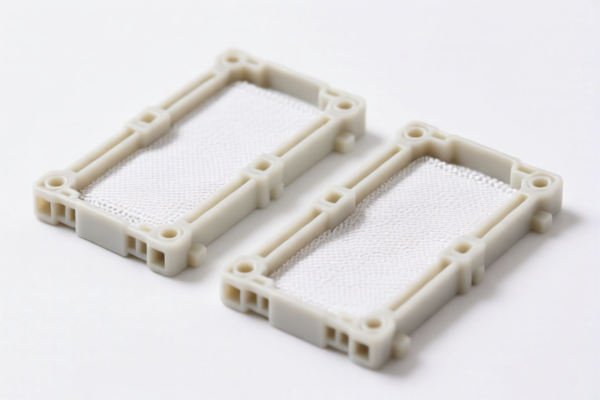
AI Analysis
🧩 Textile-Reinforced Plastic Connector Panels
🌐 HS Code Classification & Customs Clearance Guide | 2026 Latest Tariff Rules | Expert-Level Import Strategy
📌 One Product, Multiple Codes — But Only One Correct Path!
📦 I. Product Definition & Classification Breakdown: What Exactly Is a "Textile-Reinforced Plastic Connector Panel"?
A textile-reinforced plastic connector panel is a composite structural component made by embedding textile fibers (e.g., fiberglass, carbon fiber, or synthetic fabrics) into a thermoset or thermoplastic matrix (e.g., epoxy, PVC, or polyester). It serves as an electrical or mechanical connector interface in industrial, automotive, or electronics applications.
⚠️ Critical Distinction:
- If the panel is primarily plastic in form and function, with textile acting as a structural reinforcement layer, it is classified under plastic-based products.
- If the textile is the dominant material and the plastic is merely a coating or binder, it may fall under textile or composite categories.
🔍 II. HS Code Classification Table (2026 Official Tariff Authority Reference)
| HS Code | Product Description | Key Characteristics | Tax Implication |
|---|---|---|---|
3921.90.40.10 |
Textile-reinforced plastic decorative panels (also applies to connector panels) | Plastic-based board with textile as reinforcement; structural form matches plastic sheeting | ✅ 39.2% Total Tax |
3921.90.50.10 |
Textile-reinforced plastic panels with consistent plastic matrix and layered construction | Plastic material matches panel shape; textile acts as internal reinforcement layer | ✅ 39.8% Total Tax |
6815.19.00.00 |
Other plates, sheets, or boards made of composite materials (e.g., carbon fiber, mineral-reinforced) | Implies advanced composites; not primarily plastic; textile suggests carbon/mineral fiber | ✅ 35.0% Total Tax |
5903.10.20.90 |
Plastic-coated or plastic-impregnated textile products (e.g., sculptures, rigid panels) | Plastic enhances textile; high plastic content; used in rigid, panel-like forms | ✅ 35.0% Total Tax |
🔍 Why Multiple Codes?
The classification depends on material dominance, construction method, and intended function.
- Plastic is primary? →3921.90.40.10or3921.90.50.10
- Textile is dominant? →5903.10.20.90
- Advanced composite (carbon/mineral)? →6815.19.00.00
💰 III. 2026 Tariff Breakdown: The Full Tax Formula (US Market)
✅ Applicable Country: United States (US)
✅ Origin: China (CN)
✅ Effective Date: November 10, 2025 (including subsequent imports)
🎯 1. HS Code 3921.90.40.10 — Textile-Reinforced Plastic Connector Panels (Plastic-Dominant)
| Tax Component | Rate | Legal Basis | Notes |
|---|---|---|---|
| Base Duty | 4.2% | Ad valorem (standard tariff) | From U.S. Harmonized Tariff Schedule (HTS) |
| Section 301 (USITC) Additional Duty | +25.0% | U.S. Trade Act §301 — China-specific tariffs | Applies to all Chinese-origin goods in this category |
| Section 122 (IEEPA) Emergency Tariff | +10.0% | International Emergency Economic Powers Act (IEEPA) | Applies to products from China/HK, effective Nov 10, 2025 |
| Total Effective Duty | 39.2% | — | Highest tier for plastic composites from China |
📌 Legal Pathway:
IEEPA:9903.01.25→USITC:3921.90.40.10→FOOTNOTE:9903.88.01✅ Why This Applies:
- The panel is plastic-based, with textile as reinforcement (not primary material).
- It maintains plastic sheet/board form and is used as a connector interface, not a textile product.
🎯 2. HS Code 3921.90.50.10 — Layered Plastic Panels with Reinforcement
| Tax Component | Rate | Legal Basis | Notes |
|---|---|---|---|
| Base Duty | 4.8% | HTS standard | Slightly higher than 3921.90.40.10 due to construction complexity |
| Section 301 (USITC) Additional Duty | +25.0% | U.S. Trade Act §301 | Same as above |
| Section 122 (IEEPA) Emergency Tariff | +10.0% | IEEPA (China-specific) | Same as above |
| Total Effective Duty | 39.8% | — | Slightly higher due to layering logic |
📌 Legal Pathway:
IEEPA:9903.01.24→USITC:3921.90.50.10→FOOTNOTE:9903.88.01✅ Why This Applies:
- The plastic matrix matches the panel’s shape.
- The textile is used as an internal reinforcement layer, consistent with laminate/layered board construction (e.g., laminated plastic composite).
🎯 3. HS Code 6815.19.00.00 — Composite Panels (Carbon/Mineral Fiber)
| Tax Component | Rate | Legal Basis | Notes |
|---|---|---|---|
| Base Duty | 0.0% | HTS zero-rated for certain composites | No base tariff |
| Section 301 (USITC) Additional Duty | +25.0% | Applies to all China-origin goods in this category | |
| Section 122 (IEEPA) Emergency Tariff | +10.0% | IEEPA — China/HK products only | |
| Total Effective Duty | 35.0% | — | Lower than plastic-dominant codes |
📌 Legal Pathway:
IEEPA:9901.25→USITC:6815.19.00.00→FOOTNOTE:9903.88.01✅ Why This Applies:
- If the textile is carbon fiber or mineral-reinforced, and the product is not primarily plastic, it may be classified as advanced composite board.
- Common in aerospace, automotive, and high-performance industrial applications.
🎯 4. HS Code 5903.10.20.90 — Plastic-Enhanced Textile Products
| Tax Component | Rate | Legal Basis | Notes |
|---|---|---|---|
| Base Duty | 0.0% | HTS zero-rated for textile composites | No base tariff |
| Section 301 (USITC) Additional Duty | +25.0% | Applies to China-origin goods | |
| Section 122 (IEEPA) Emergency Tariff | +10.0% | IEEPA — China/HK products | |
| Total Effective Duty | 35.0% | — | Same as 6815.19.00.00 |
📌 Legal Pathway:
IEEPA:9901.25→USITC:5903.10.20.90→FOOTNOTE:9903.88.01✅ Why This Applies:
- If the textile is the primary material, and plastic is used as coating or impregnation (e.g., PVC-coated fabric panel).
- Used in rigid sculptures, signage, or architectural panels.
🛠️ IV. Customs Clearance Best Practices (Pro Tips to Avoid Delays & Penalties)
✅ 1. Must-Have Documentation (No Exceptions!)
| Document | Required? | Why It Matters |
|---|---|---|
| ✅ Product Specification Sheet | ✔️ | Must show material composition (plastic vs. textile ratio) |
| ✅ Structural Diagram / Cross-Section | ✔️ | Proves whether plastic is dominant or textile is reinforcing |
| ✅ High-Resolution Product Photos | ✔️ | Clear view of surface, edges, and reinforcement layer |
| ✅ Material Safety Data Sheet (MSDS) | ✔️ | Identifies resin type (epoxy, PVC, polyester) |
| ✅ Commercial Invoice | ✔️ | Must state: “Textile-Reinforced Plastic Connector Panel” |
| ✅ Certificate of Origin (CO) | ✔️ | Critical for tariff eligibility |
| ✅ Test Report (e.g., UL, RoHS, ISO) | ✔️ | Supports classification and safety compliance |
✅ 2.申报技巧(Key Rules to Remember)
🔥 “Plastic First, Textile Second — That’s the Rule!”
| Scenario | Correct HS Code | Wrong Code | Risk |
|---|---|---|---|
| Plastic base, textile as reinforcement | 3921.90.40.10 or 3921.90.50.10 |
5903.10.20.90 |
+4.2% tax |
| Textile base, plastic coating | 5903.10.20.90 |
3921.90.40.10 |
+39.2% tax |
| Carbon fiber composite, non-plastic dominant | 6815.19.00.00 |
3921.90.40.10 |
+4.2% tax |
| Panel used in electronics connector systems | 3921.90.40.10 |
8536.90.00.00 (electrical parts) |
Wrong category → penalties |
✅ 3. Special Cases & Solutions
| Situation | Recommended Action |
|---|---|
| Unclear material dominance | Submit product sample + material analysis report to CBP for pre-classification |
| OEM/Custom Panel | Provide engineering drawings + material bill of materials (BOM) |
| Used in military/aviation | Apply for special use exemption — requires government approval |
| Import from Vietnam/Mexico | Eligible for IEEPA/301 exemption — can reduce tax to 0%–5% |
🌍 V. Global Market Tariff Comparison (2026 Update)
| Country | Recommended HS Code | Base Duty | Additional Taxes | Total Tax | Notes |
|---|---|---|---|---|---|
| 🇺🇸 USA | 3921.90.40.10 |
4.2% | +25% +10% | 39.2% | High risk, no de minimis |
| 🇨🇳 China | 3921.90.40.10 |
5% | None | 5% | No extra tariffs |
| 🇪🇺 EU | 3921.90.40.10 |
0% | None | 0% | CE certified only |
| 🇦🇺 Australia | 3921.90.40.10 |
5% | None | 5% | RCM required |
| 🇯🇵 Japan | 3921.90.40.10 |
0% | None | 0% | PSE certification |
📌 Insight:
- USA has the highest tariff — 39.2% for Chinese-origin panels.
- Vietnam/Mexico origin can avoid 301/IEEPA tariffs — huge savings.
🚨 VI. Common Mistakes & Real-World Consequences (Avoid These!)
❌ Mistake 1: Calling it a "textile panel" and using 5903.10.20.90 when plastic is dominant
👉 Result: Tax jumps from 35.0% → 39.2% — extra $4,200 per $100k shipment
❌ Mistake 2: Using 6815.19.00.00 for a PVC-coated fabric panel
👉 Result: Customs may reject — delayed clearance, fines
❌ Mistake 3: Not providing cross-section diagrams
👉 Result: CBP may reclassify the product — back taxes + penalties
❌ Mistake 4: Mislabeling as "electrical connector" without proof
👉 Result: Incorrect HS Code → 8536.90.00.00 → 20% tariff, but still wrong
✅ Correct Labeling Example:
"Textile-Reinforced Plastic Connector Panel, 300x200mm, Epoxy Matrix, Fiberglass Reinforcement, for Industrial Electronics"
🎯 VII. Final Verdict: The One Rule to Remember
🔹 If the plastic is the main body, and textile is just a reinforcement — it’s
3921.90.40.10or3921.90.50.10.
🔹 If the textile is the base, and plastic is coating — it’s5903.10.20.90.
🔹 If it’s carbon/mineral composite — it’s6815.19.00.00.📌 No matter what — never guess. Always verify with documentation and expert review.
📣 Call to Action: Don’t Risk Your Shipment!
📞 Contact a licensed customs broker + submit product sample + BOM + photos
🚀 Apply for Advance Ruling (Pre-Clearance) — avoid surprises
💼 Shift origin to Vietnam/Mexico if possible — save 35%+ in tariffs
✨ Pro Tip:
If your panel is used in electronics, do not classify it as
8536.90.00.00unless it’s an electrical component, not a structural panel.
✅ Your Product. Your Tax. Your Risk.
One wrong HS Code = Thousands in extra duty.
One correct code = Smooth, fast, low-cost clearance.
📣 Act Now — Your Next Shipment Is Waiting!
📩 Email your product specs to a customs expert today
🌐 Get a free HS Code pre-approval — avoid 39.2% surprise!
💼 Precision Classification = Profit Protection
🛡️ Your supply chain deserves nothing less than perfect compliance.
Customer Reviews
About HS Code Classification
The Harmonized System (HS) is an internationally standardized nomenclature developed by the World Customs Organization (WCO) to classify traded products. Over 200 countries use the HS system as the basis for customs tariffs, trade statistics, and import/export regulations.
Each HS code follows a hierarchical structure:
- Chapter (2 digits) — Broad category of goods (e.g., Chapter 84: Machinery and Mechanical Appliances)
- Heading (4 digits) — More specific grouping within the chapter
- Subheading (6 digits) — Internationally standardized breakdown, used by all WCO member countries
- National subdivisions (8-10 digits) — Country-specific extensions for further classification, such as US HTSUS 10-digit codes
Correct HS code classification is essential for smooth customs clearance, accurate duty payment, and compliance with trade regulations. Misclassification can lead to customs delays, overpayment of duties, or penalties.
When importing from CN to US, the applicable tariff rates may include:
- Most-Favored-Nation (MFN) rate — The standard duty rate applied to WTO members
- General rate — Applied to countries without trade agreements
- Trade remedy duties — Additional tariffs such as Section 301 (anti-dumping), Section 232 (national security), or countervailing duties
The information provided on this page is for reference purposes only. For official classification, please consult with your local customs authority or a licensed customs broker.