Textile reinforced Plastic Flame Retardant Panels
CN → US| HS Code | Tariff Rate | Origin | Destination | Doc |
|---|---|---|---|---|
| 3921190090 | 41.5% | CN | US | Official Doc |
| 3921110000 | 40.3% | CN | US | Official Doc |
| 3926909989 | 22.8% | CN | US | Official Doc |
| 3920300000 | 40.8% | CN | US | Official Doc |
| 3920995000 | 40.8% | CN | US | Official Doc |
Product Images
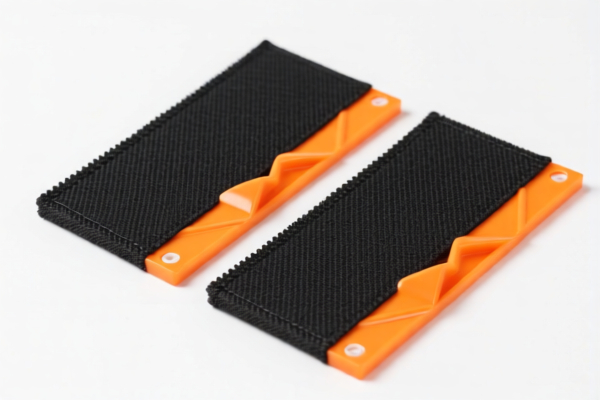
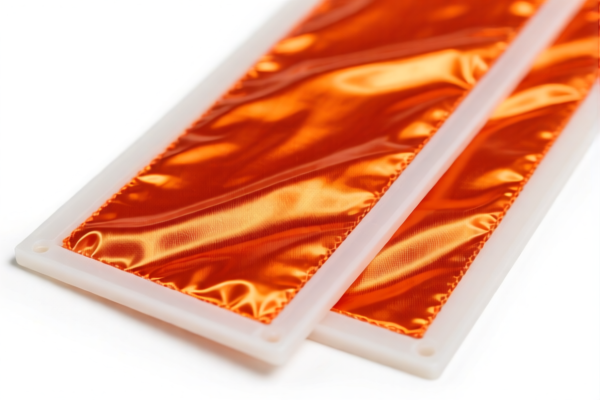
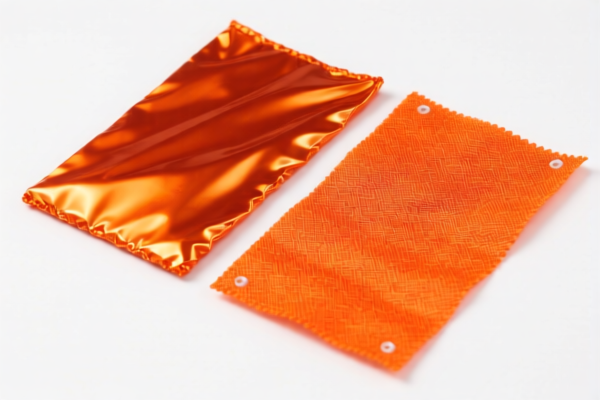
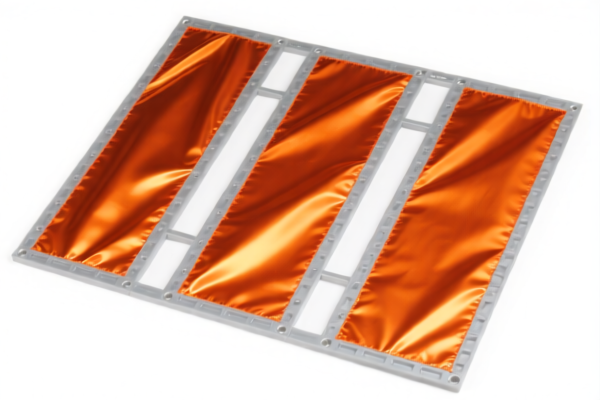
AI Analysis
🧱 Textile Reinforced Plastic (TRP) Flame Retardant Panels
🌐 HS Code Reference & Customs Clearance Guide | 2026 Latest Tariff Analysis | Professional Clearance Strategy
📌 I. Product Definition & Classification: Do You Really Understand "TRP Panels"?
Textile Reinforced Plastic (TRP) Flame Retardant Panels are composite materials consisting of a polymer matrix (typically Polystyrene or similar polymers) reinforced with textile fibers and treated with flame retardants. In international trade, their classification is highly sensitive to material composition, form (sheet/board), and specific polymer type.
The key challenge lies in distinguishing between generic plastic sheets, specific polymer sheets (like Polystyrene), and general plastic articles. The presence of "Flame Retardant" does not change the basic classification logic but may affect the specific subheading if the base polymer falls into a specific category.
⚠️ Key Distinction Point:
- If the base material is Polystyrene (PS), it generally falls under Heading 3920 (Plates, Sheets, etc., of Plastics).
- If the classification is broader or the polymer is less specific, it might fall under Heading 3926 (Other Articles of Plastics).
- The specific HS code depends on the exact polymer type and how customs authorities interpret "reinforced" vs. "pure plastic."
📦 II. HS Code Classification Details (2026 Latest Tariff Authority Comparison)
Based on the provided data, here are the potential HS Codes for Textile Reinforced Plastic Flame Retardant Panels:
| HS Code | Product Description | Application Scenario | Reason for Classification |
|---|---|---|---|
3921.19.00.90 |
Flame Retardant Polystyrene Plastic Sheet | Non-specified polystyrene sheet/board | Classified under "Other plates, sheets, film, foil and strip" of plastics. Broad interpretation. |
3921.11.00.00 |
Flame Retardant Polystyrene Plastic Sheet | Specifically Polystyrene-based | Fully complies with "Polystyrene" requirements. Most precise for PS materials. |
3926.90.99.89 |
Flame Retardant Plastic Board (General) | Other plastic articles | Classified as "Other plastic articles" if not strictly a "sheet" or if polymer type is ambiguous. |
3920.30.00.00 |
Polystyrene Plastic Sheet | Polystyrene polymer sheet | Directly classifies as "Polystyrene" plates/sheets. Flame retardant attribute does not change classification. |
3920.99.50.00 |
Other Plastic Sheet/Board | General plastic board | Classified under "Other plates, sheets..." if not specifically listed elsewhere. Broad logic for plastic boards. |
🔍 Key Reminder:
- Polystyrene (PS) is the key driver here. If your product is confirmed as Polystyrene,3920.30.00.00or3921.11.00.00are the most accurate.
- If the "Textile Reinforcement" is minimal or considered integral to the plastic sheet, it stays in 3920/3921.
-3926is a fallback for "other articles" and usually has lower tariffs but may raise questions if the product is clearly a sheet/board.
💰 III. 2026 Latest Tariff Rate Breakdown (Including Surtaxes & Policy Add-ons)
✅ Applicable Country: United States (US)
✅ Origin: China (CN)
✅ Effective Date: From November 10, 2025 (including subsequent imports)
🎯 1. 3921.19.00.90 —— Other Plastic Plates, Sheets, etc.
| Item | Content |
|---|---|
| Base Tariff Rate | 6.5% (ad valorem) |
| USITC Add-on Tariff (Section 301) | +25.0% |
| 122 Clause Tariff (IEEPA/Other) | +10.0% |
| Total Tariff Rate | 41.5% |
| Tax Calculation | CIF Value × 41.5% |
| De Minimis Eligibility | ❌ No (deny_de_minimis) |
| Legal Basis Path | 122 Clause:10% → Section 301:25% → Base:6.5% → HS:3921.19.00.90 |
📌 Explanation:
- This is a high-tariff category. The 25% Section 301 tariff and 10% 122 Clause tariff significantly increase costs.
- Even though it's a "plastic sheet," the specific subheading19may attract higher scrutiny.
🎯 2. 3921.11.00.00 —— Plates, Sheets, etc. of Polystyrene
| Item | Content |
|---|---|
| Base Tariff Rate | 5.3% (ad valorem) |
| USITC Add-on Tariff (Section 301) | +25.0% |
| 122 Clause Tariff (IEEPA/Other) | +10.0% |
| Total Tariff Rate | 40.3% |
| Tax Calculation | CIF Value × 40.3% |
| De Minimis Eligibility | ❌ No (deny_de_minimis) |
| Legal Basis Path | 122 Clause:10% → Section 301:25% → Base:5.3% → HS:3921.11.00.00 |
📌 Note:
- This is the most precise code for Polystyrene.
- Slightly lower base rate (5.3%) compared to3921.19.00.90(6.5%), resulting in a 1.2% savings on the total tariff.
- Still subject to the full 35% surcharge (25% + 10%).
🎯 3. 3926.90.99.89 —— Other Plastic Articles
| Item | Content |
|---|---|
| Base Tariff Rate | 5.3% (ad valorem) |
| USITC Add-on Tariff (Section 301) | +7.5% |
| 122 Clause Tariff (IEEPA/Other) | +10.0% |
| Total Tariff Rate | 22.8% |
| Tax Calculation | CIF Value × 22.8% |
| De Minimis Eligibility | ❌ No (deny_de_minimis) |
| Legal Basis Path | 122 Clause:10% → Section 301:7.5% → Base:5.3% → HS:3926.90.99.89 |
📌 Warning:
- This code offers the lowest total tariff (22.8%).
- However, it is a high-risk classification for "Panels/Sheets." Customs may argue that panels are "articles" but not "other" if they fit better under 3920/3921.
- Risk: If misclassified, you may face back taxes, penalties, and delays. Only use if your product is truly a shaped/finished article and not a simple sheet/board.
🎯 4. 3920.30.00.00 —— Plates, Sheets, etc. of Polystyrene
| Item | Content |
|---|---|
| Base Tariff Rate | 5.8% (ad valorem) |
| USITC Add-on Tariff (Section 301) | +25.0% |
| 122 Clause Tariff (IEEPA/Other) | +10.0% |
| Total Tariff Rate | 40.8% |
| Tax Calculation | CIF Value × 40.8% |
| De Minimis Eligibility | ❌ No (deny_de_minimis) |
| Legal Basis Path | 122 Clause:10% → Section 301:25% → Base:5.8% → HS:3920.30.00.00 |
📌 Explanation:
- Another accurate code for Polystyrene sheets.
- Base rate (5.8%) is slightly higher than3921.11.00.00(5.3%).
- Flame retardant attribute does not affect classification here; it remains a polystyrene sheet.
🎯 5. 3920.99.50.00 —— Other Plates, Sheets, etc. of Plastics
| Item | Content |
|---|---|
| Base Tariff Rate | 5.8% (ad valorem) |
| USITC Add-on Tariff (Section 301) | +25.0% |
| 122 Clause Tariff (IEEPA/Other) | +10.0% |
| Total Tariff Rate | 40.8% |
| Tax Calculation | CIF Value × 40.8% |
| De Minimis Eligibility | ❌ No (deny_de_minimis) |
| Legal Basis Path | 122 Clause:10% → Section 301:25% → Base:5.8% → HS:3920.99.50.00 |
📌 Note:
- Use this if the product is a plastic board but doesn't fit other specific polymer subheadings.
- Same total tariff as3920.30.00.00.
🛠️ IV. Customs Clearance Practical Advice (Battle-Tested Pitfall Guide)
✅ 1. Required Documents Checklist (Missing Any = Delay)
| Document | Mandatory | Description |
|---|---|---|
| ✅ Product Specification Sheet | ✔️ | Must specify: Polymer type (e.g., Polystyrene), Reinforcement type (Textile/Fiberglass), Flame Retardant level (UL94 V-0, etc.), Dimensions. |
| ✅ Material Composition Certificate | ✔️ | Critical to prove "Polystyrene" content for 3920/3921 codes. |
| ✅ Product Photos (Clear) | ✔️ | Show surface, cross-section (if possible), and labels. |
| ✅ Flame Retardancy Test Report | ✔️ | UL94, ASTM D3801, etc. Proves the "Flame Retardant" claim. |
| ✅ Commercial Invoice | ✔️ | Clearly state "Textile Reinforced Polystyrene Panel" or similar precise description. |
| ✅ Packing List | ✔️ | Detail weight, dimensions, and quantity. |
| ✅ Origin Certificate (CO) | ✔️ | If applicable for other countries, but for US origin, declare CN. |
✅ 2. Declaration Tips (Key Mnemonics)
🔥 "True Polymer, Specific Code; General Plastic, Higher Risk; Flame Retardant, No Change!"
| Scenario | Correct Declaration | Wrong Practice |
|---|---|---|
| Confirmed Polystyrene Panel | 3921.11.00.00 or 3920.30.00.00 |
Misdeclaring as 3926 → Risk of audit. |
| Unknown Polymer/General Plastic | 3921.19.00.90 or 3920.99.50.00 |
Misdeclaring as 3926 → May be rejected if clearly a sheet. |
| Finished Shaped Article (Not a Sheet) | 3926.90.99.89 |
Misdeclaring a flat panel as 3926 → High risk of correction. |
| Including Accessories (e.g., Frames) | Declare Separately | Bundling panels with frames → Complex classification. |
✅ 3. Special Situations Handling
| Situation | Handling Advice |
|---|---|
| TRP with High Textile Content | If textile content is >50%, it might fall under Heading 54 or 55. Consult a customs broker. |
| Composite with Non-Plastic Core | If it has a wood or metal core, it may not be a "plastic sheet." |
| OEM Custom Panels | Provide design drawings to prove it's a "sheet/panel" and not a custom article. |
| Sample for Testing | Send pre-production samples to get an Advance Ruling or pre-classification opinion. |
🌍 V. Global Market Customs Comparison (2026 Latest)
| Country/Region | Recommended HS Code | Tariff | Certification Requirements | Notes |
|---|---|---|---|---|
| 🇺🇸 USA | 3921.11.00.00 |
40.3% (China Origin) | UL94, ASTM D3801 | High tariff; 35% surcharge applies. |
| 🇨🇳 China | 3921.11.00.00 |
5.3% (Import) | CCC (if applicable) | Low tariff; no surcharge. |
| 🇪🇺 EU | 3920.30.00 |
6.5% (Standard MFN) | CE, REACH | No surcharge; standard duty. |
| 🇦🇺 Australia | 3920.30.00 |
5% | RCM, G-Mark | Low tariff; no surcharge. |
| 🇯🇵 Japan | 3920.30.00 |
5% | PSE (if electrical) | No surcharge. |
📌 Conclusion:
- USA is the only market with significant surcharges (35%).
- Cost Impact: A $10,000 shipment to the US will incur ~$4,030 in tariffs under3921.11.00.00.
- Strategy: Consider supply chain diversification (e.g., Vietnam, Mexico) if possible, or negotiate cost-sharing with buyers.
📌 VI. Common Errors & Pitfall Guide (Lessons Learned)
❌ Error 1: Declaring "Flame Retardant Panel" under 3926 to save taxes.
👉 Consequence: Customs may reclassify it as 3921 or 3920, leading to back taxes + penalties.
❌ Error 2: Failing to specify "Polystyrene" in the description.
👉 Consequence: Customs may assume a generic plastic with a higher base rate or request more documentation.
❌ Error 3: Ignoring the "Textile Reinforcement" aspect.
👉 Consequence: If the textile layer is significant, the product might be classified as a composite material under different headings.
❌ Error 4: Using "Plastic Board" as the only description.
👉 Consequence: Ambiguity leads to customs holds and delays.
✅ Correct Declaration Example:
"Textile Reinforced Polystyrene (TRP) Flame Retardant Panel, UL94 V-0, 1220x2440mm, 5mm Thick, Model XYZ"
🎯 VII. Conclusion: Professional Declaration, Save Time & Money
🎯 Remember the Mnemonic:
🔹 "Polystyrene is Key, 3920/3921 is True; General Plastic, 3921.19; Finished Article, 3926; US Tariff, 35% More!"
🔹 "Flame Retardant Doesn't Change Code, But Documentation is God!"
📌 Pro Tip:
If your product is originating from Vietnam, Mexico, Thailand, or Malaysia, you may qualify for IEEPA/Surcharge Exemptions, reducing the tariff to 0%~5%.
Recommendation: Apply for an Advance Ruling with US Customs and Border Protection (CBP) before shipping to ensure correct classification and avoid unexpected costs.
📣 Immediate Action:
📞 Contact a professional customs broker + Provide product specs + Apply for HS Code Pre-Ruling
🚀 Ensure your Textile Reinforced Plastic Panels clear customs smoothly, efficiently, and profitably!
✨ Professional Clearance Starts with Accurate Classification!
💼 Every cent of your cost deserves precise calculation!
Customer Reviews
About HS Code Classification
The Harmonized System (HS) is an internationally standardized nomenclature developed by the World Customs Organization (WCO) to classify traded products. Over 200 countries use the HS system as the basis for customs tariffs, trade statistics, and import/export regulations.
Each HS code follows a hierarchical structure:
- Chapter (2 digits) — Broad category of goods (e.g., Chapter 84: Machinery and Mechanical Appliances)
- Heading (4 digits) — More specific grouping within the chapter
- Subheading (6 digits) — Internationally standardized breakdown, used by all WCO member countries
- National subdivisions (8-10 digits) — Country-specific extensions for further classification, such as US HTSUS 10-digit codes
Correct HS code classification is essential for smooth customs clearance, accurate duty payment, and compliance with trade regulations. Misclassification can lead to customs delays, overpayment of duties, or penalties.
When importing from CN to US, the applicable tariff rates may include:
- Most-Favored-Nation (MFN) rate — The standard duty rate applied to WTO members
- General rate — Applied to countries without trade agreements
- Trade remedy duties — Additional tariffs such as Section 301 (anti-dumping), Section 232 (national security), or countervailing duties
The information provided on this page is for reference purposes only. For official classification, please consult with your local customs authority or a licensed customs broker.