Textile reinforced Plastic Furniture Sheets
CN → US| HS Code | Tariff Rate | Origin | Destination | Doc |
|---|---|---|---|---|
| 3921902510 | 41.5% | CN | US | Official Doc |
| 3921901100 | 39.2% | CN | US | Official Doc |
| 9403704031 | 35.0% | CN | US | Official Doc |
| 9403993080 | 35.0% | CN | US | Official Doc |
| 3926305000 | 22.8% | CN | US | Official Doc |
| 3926905900 | 37.4% | CN | US | Official Doc |
Product Images
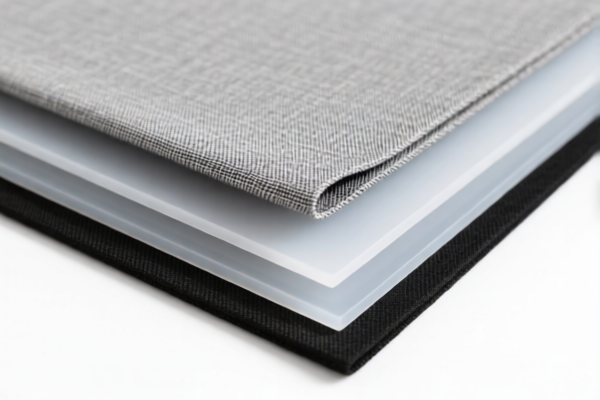
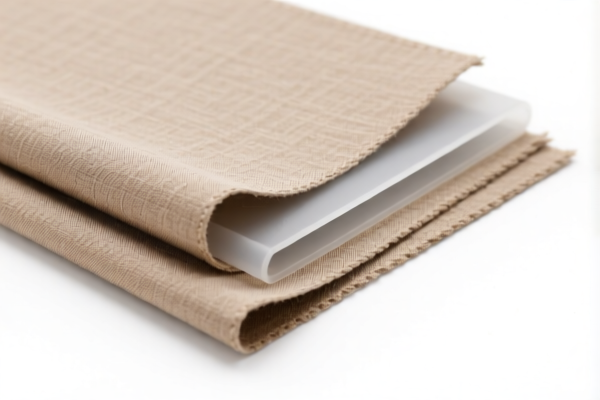
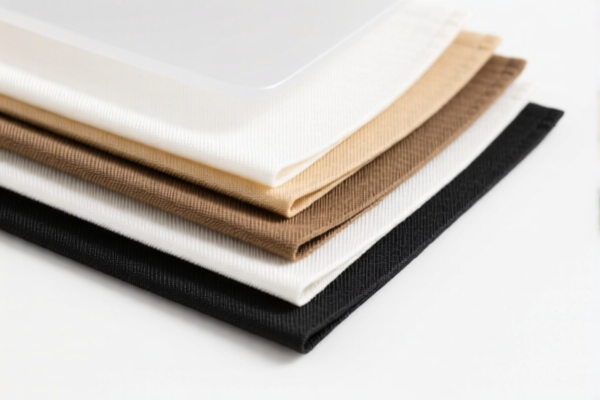
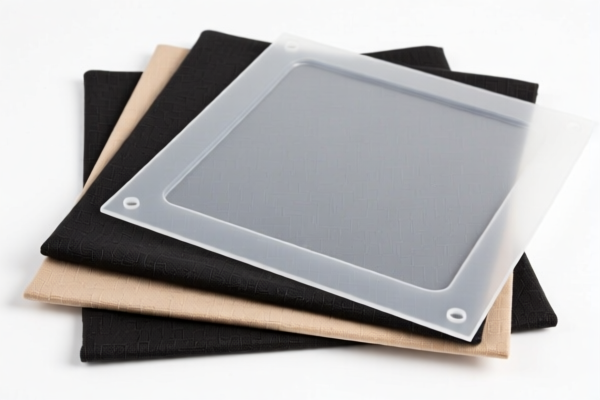
AI Analysis
🪑 Textile-Reinforced Plastic (TRP) Furniture Sheets
🌐 HS Code Reference & Customs Clearance Guide | 2026 Latest Tariff Analysis | Professional Clearance Strategy
📌 I. Product Definition & Classification: What are "TRP Furniture Sheets"?
Textile-Reinforced Plastic (TRP) sheets are composite materials where plastics serve as the matrix and textile fibers act as reinforcement. In international trade, the classification depends heavily on weight per square meter, textile composition, and whether the final product is furniture or a raw sheet.
⚠️ Key Distinction:
- If the product is a raw sheet/plate used as a material for making furniture parts → Classified under Chapter 39 (Plastics).
- If the product is finished furniture made from reinforced plastics → Classified under Chapter 94 (Furniture).
- If the product is a part of furniture (e.g., a chair back, table leg) → Classified under Chapter 94 Parts.
📦 II. HS Code Classification Details (2026 Latest Tariff Alignment)
Based on the provided data, here are the exact HS codes and tax implications for TRP products.
1. Raw Sheets/Plates (Chapter 39)
| HS Code | Product Description | Weight Criterion | Textile Composition | Plastics Content |
|---|---|---|---|---|
| 3921.90.11.00 | Other plates, sheets, film, foil, strip of plastics; Combined with textile materials | ≤ 1.492 kg/m² | Man-made fibers predominate | > 70% by weight |
| 3921.90.25.10 | Other plates, sheets, film, foil, strip of plastics; Combined with textile materials | > 1.492 kg/m² | Man-made fibers predominate | > 70% by weight |
🔍 Critical Note:
- The threshold 1.492 kg/m² is the dividing line.
- Heavy sheets (>1.492 kg/m²): Use3921.90.25.10.
- Light sheets (≤1.492 kg/m²): Use3921.90.11.00.
- Both require that man-made fibers (e.g., polyester, nylon) dominate the textile component by weight.
2. Finished Furniture & Parts (Chapter 94)
| HS Code | Product Description | Material Type |
|---|---|---|
| 9403.70.40.31 | Furniture of plastics: Of reinforced or laminated plastics (Other) | Finished Furniture (e.g., tables, chairs, shelves) |
| 9403.99.30.80 | Parts of furniture: Of rubber or plastics: Of reinforced or laminated plastics | Furniture Parts (e.g., legs, backs, panels) |
🔍 Critical Note:
- These codes apply only if the item is finished furniture or identifiable parts thereof.
- "Reinforced or laminated plastics" explicitly covers TRP composites.
3. Other Plastic Articles (Chapter 39)
| HS Code | Product Description |
|---|---|
| 3926.30.50.00 | Fittings for furniture, coachwork or the like |
| 3926.90.59.00 | Belting and belts, for machinery (Containing textile fibers) |
🔍 Critical Note:
-3926.30.50.00applies if the TRP product is used as furniture fittings (e.g., handles, hinges) rather than structural sheets.
-3926.90.59.00is unlikely for furniture sheets but included in the data for completeness if textile-reinforced plastic is used in industrial belting.
💰 III. 2026 Tariff Rate Breakdown (Detailed Tax Analysis)
✅ Applicable Market: United States (US)
✅ Origin: China (CN)
✅ Effective Date: 2025-11-10 onwards
🎯 1. Raw TRP Sheets (Chapter 39)
A. Light Sheets (≤ 1.492 kg/m²)
HS Code: 3921.90.11.00
| Item | Value |
|---|---|
| Base Tariff | 0.0% |
| Additional Tariff (Section 301) | 0.0% |
| Total Tax | 0.0% |
| Legal Path | No Section 301 penalty listed for this specific subheading in the provided data. |
B. Heavy Sheets (> 1.492 kg/m²)
HS Code: 3921.90.25.10
| Item | Value |
|---|---|
| Base Tariff | 0.0% |
| Additional Tariff (Section 301) | 0.0% |
| Total Tax | 0.0% |
| Legal Path | No Section 301 penalty listed for this specific subheading in the provided data. |
📌 Explanation:
- Textile-reinforced plastic sheets (Chapter 39) currently face 0% total tax in this dataset.
- This is a highly favorable classification for importing raw composite materials.
- Crucial: Ensure the weight per square meter is accurately calculated and declared. Misclassification could lead to audits.
🎯 2. Finished TRP Furniture (Chapter 94)
HS Code: 9403.70.40.31
| Item | Value |
|---|---|
| Base Tariff | 0.0% |
| Additional Tariff (Section 301) | 25.0% |
| Total Tax | 25.0% |
| Legal Path | Section 301 applies to furniture of plastics. |
📌 Explanation:
- Finished furniture made from reinforced plastics incurs a 25% total tariff.
- This is a significant cost increase compared to raw sheets.
- Strategy: If possible, import as raw sheets (0% tax) and assemble locally to avoid the 25% furniture tariff.
🎯 3. TRP Furniture Parts (Chapter 94)
HS Code: 9403.99.30.80
| Item | Value |
|---|---|
| Base Tariff | 0.0% |
| Additional Tariff (Section 301) | 25.0% |
| Total Tax | 25.0% |
| Legal Path | Section 301 applies to furniture parts. |
📌 Explanation:
- Parts of TRP furniture are taxed at 25%.
- Note: Parts are often scrutinized to ensure they are not "finished articles" themselves.
🎯 4. Other Articles (Fittings & Belts)
A. Furniture Fittings
HS Code: 3926.30.50.00
| Item | Value |
|---|---|
| Base Tariff | 0.0% |
| Additional Tariff (Section 301) | 0.0% |
| Total Tax | 0.0% |
B. Industrial Belts (Textile-Reinforced)
HS Code: 3926.90.59.00
| Item | Value |
|---|---|
| Base Tariff | 2.4% |
| Additional Tariff (Section 301) | 25.0% |
| Total Tax | 27.4% |
| Legal Path | Section 301 applies to belting containing textile fibers. |
📌 Explanation:
- If your TRP product is classified as furniture fittings, it enjoys 0% tax.
- If it is misclassified as industrial belting, it faces 27.4% tax.
- Risk: Ensure the product description matches its actual use (furniture vs. machinery).
🛠️ IV. Customs Clearance Practical Advice
✅ 1. Key Documentation Checklist
| Document | Required | Purpose |
|---|---|---|
| ✅ Technical Specification Sheet | ✔️ | Must include: Weight per m², plastic type, textile type (polyester/nylon), fiber percentage. |
| ✅ Weight Calculation Report | ✔️ | Critical for distinguishing between 3921.90.11.00 and 3921.90.25.10. |
| ✅ Composition Analysis | ✔️ | Proof that man-made fibers predominate and plastics > 70%. |
| ✅ Product Photos | ✔️ | Show cross-section to prove composite structure (plastic + textile layers). |
| ✅ Commercial Invoice | ✔️ | Clearly state "TRP Sheet" or "Reinforced Plastic Furniture". |
| ✅ Packing List | ✔️ | List net weight and dimensions per sheet. |
✅ 2. Classification Strategy (Save Money!)
| Scenario | Recommended HS Code | Tax Rate | Strategy |
|---|---|---|---|
| Importing Raw TRP Sheets | 3921.90.11.00 or 3921.90.25.10 |
0.0% | ✅ Best Option. Import raw materials and assemble in the US. |
| Importing Finished TRP Furniture | 9403.70.40.31 |
25.0% | ❌ High cost. Avoid if local assembly is feasible. |
| Importing TRP Furniture Parts | 9403.99.30.80 |
25.0% | ❌ High cost. Ensure parts are not "finished articles". |
| TRP Fittings (Handles, etc.) | 3926.30.50.00 |
0.0% | ✅ Low cost if correctly classified as fittings, not furniture. |
🔥 Golden Rule:
"Sheets are 0%, Furniture is 25%. Don't let your sheets become 'furniture' in the eyes of customs!"
✅ 3. Common Pitfalls & Avoidance
| Pitfall | Consequence | Solution |
|---|---|---|
| Misdeclaring Weight | Incorrect HS code (e.g., heavy sheet declared as light) | Provide precise kg/m² calculation in docs. |
| Importing Finished Furniture as "Sheets" | Fraud risk, penalties, 0% vs 25% discrepancy | Clearly describe product as "Raw Sheet" or "Composite Material". |
| Misclassifying Fittings as Parts | 25% tax instead of 0% | Define product as "Fitting" (e.g., hinge, handle) not "Part of chair". |
| Ignoring Fiber Content | Wrong textile category | Provide fiber composition report (man-made vs natural). |
🌍 V. Global Market Comparison (2026)
| Country | TRP Sheets (Raw) | TRP Furniture (Finished) | Notes |
|---|---|---|---|
| 🇺🇸 USA | 0.0% | 25.0% | High tariff on finished furniture. |
| 🇪🇺 EU | Varies | Varies | Check local composite material regulations. |
| 🇨🇳 China | Low | Low | Low base tariffs, but check export restrictions. |
📌 Conclusion:
- USA offers 0% tax for raw TRP sheets but 25% for finished furniture.
- Supply Chain Strategy: Import raw TRP sheets (0% tax) and perform final assembly in the US to avoid the 25% furniture tariff.
📌 VI. Common Errors & Blood-Teaching Lessons
❌ Error 1: Declaring finished TRP chairs as "Plastic Sheets"
👉 Result: Customs seizure, penalties, and back-tariff of 25%.
✅ Fix: Be honest about product form. If finished, use 9403.70.40.31.
❌ Error 2: Ignoring the 1.492 kg/m² threshold
👉 Result: Wrong HS code (3921.90.11.00 vs 3921.90.25.10). Though both are 0% in this data, correct classification is vital for regulatory compliance.
✅ Fix: Provide weight test reports.
❌ Error 3: Misclassifying TRP furniture fittings as "Furniture Parts"
👉 Result: 25% tax instead of 0%.
✅ Fix: Use 3926.30.50.00 for fittings (hinges, handles) and 9403.99.30.80 for structural parts.
🎯 VII. Conclusion: Professional Declaration, Cost Savings!
🎯 Remember the Formula:
🔹 "Raw Sheets = 0% (Save Big!)"
🔹 "Furniture = 25% (Expensive!)"
🔹 "Fittings = 0% (Smart!)"
📌 Pro Tip:
If you are importing TRP sheets for local furniture manufacturing, ensure your invoice describes the product as "Reinforced Plastic Sheets" and not "Furniture". Provide weight per m² and fiber composition to justify the 0% classification under Chapter 39.
📣 Immediate Action:
📞 Consult a customs broker to verify the kg/m² calculation.
🚀 Structure your supply chain to import raw materials (0% tax) rather than finished goods (25% tax).
💡 Precision in classification saves 25% in costs!
✨ Smart Customs Clearance, Smarter Profits!
💼 Your TRP Supply Chain, Optimized for 2026!
Customer Reviews
About HS Code Classification
The Harmonized System (HS) is an internationally standardized nomenclature developed by the World Customs Organization (WCO) to classify traded products. Over 200 countries use the HS system as the basis for customs tariffs, trade statistics, and import/export regulations.
Each HS code follows a hierarchical structure:
- Chapter (2 digits) — Broad category of goods (e.g., Chapter 84: Machinery and Mechanical Appliances)
- Heading (4 digits) — More specific grouping within the chapter
- Subheading (6 digits) — Internationally standardized breakdown, used by all WCO member countries
- National subdivisions (8-10 digits) — Country-specific extensions for further classification, such as US HTSUS 10-digit codes
Correct HS code classification is essential for smooth customs clearance, accurate duty payment, and compliance with trade regulations. Misclassification can lead to customs delays, overpayment of duties, or penalties.
When importing from CN to US, the applicable tariff rates may include:
- Most-Favored-Nation (MFN) rate — The standard duty rate applied to WTO members
- General rate — Applied to countries without trade agreements
- Trade remedy duties — Additional tariffs such as Section 301 (anti-dumping), Section 232 (national security), or countervailing duties
The information provided on this page is for reference purposes only. For official classification, please consult with your local customs authority or a licensed customs broker.