Textile reinforced Plastic Handicraft Panels
CN → US| HS Code | Tariff Rate | Origin | Destination | Doc |
|---|---|---|---|---|
| 6815190000 | 35.0% | CN | US | Official Doc |
| 3921905010 | 39.8% | CN | US | Official Doc |
| 3921904010 | 39.2% | CN | US | Official Doc |
| 3921902510 | 41.5% | CN | US | Official Doc |
| 3921905010 | 39.8% | CN | US | Official Doc |
Product Images
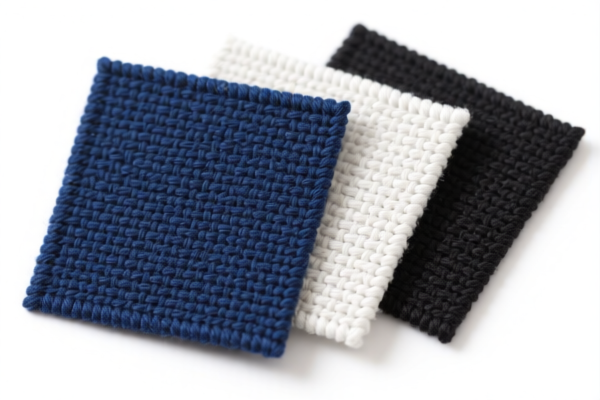
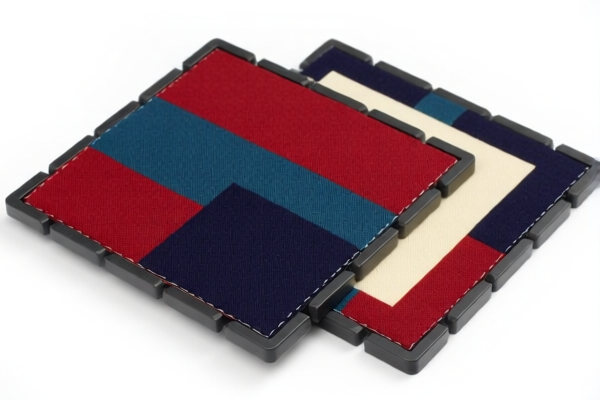
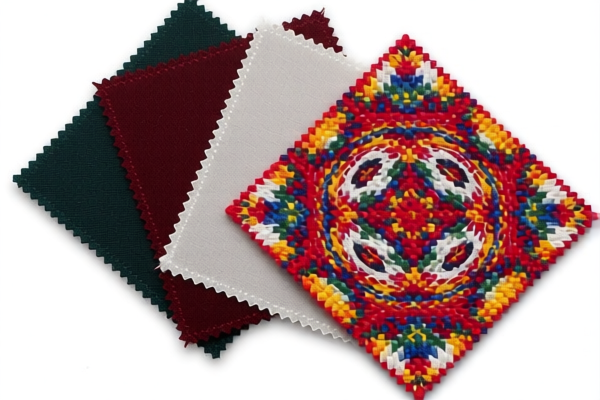
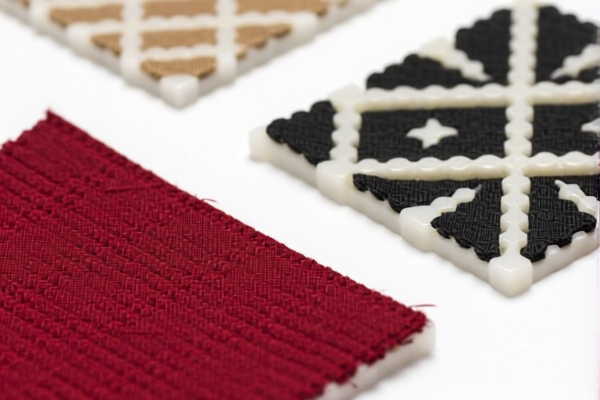
AI Analysis
🧱 Textile Reinforced Plastic (TRP) Handicraft Panels
🌐 HS Code Reference & Customs Clearance Guide | 2026 Latest Tariff Analysis | Professional Clearance Strategy
📌 I. Product Definition & Classification: What Exactly is "TRP Panel"?
Textile Reinforced Plastic (TRP) panels, specifically used as handicraft or decorative items, are composite materials made by impregnating textile fibers (such as glass, carbon, or synthetic fibers) with a plastic resin matrix, then shaping them into rigid or semi-rigid boards.
In international trade, the classification hinges on the dominant material and the specific application. While these panels are fundamentally plastics reinforced with textiles, customs authorities may view them differently based on whether they are seen as "plastic articles" or "articles of stone/mineral materials" (if carbon-like) or "decorative laminates."
⚠️ Key Distinction Point:
- If viewed as a plastic board variant with textile reinforcement → Generally falls under Chapter 39 (Plastics).
- If viewed as a carbon-fiber composite resembling mineral-based composites → May fall under Chapter 68 (Articles of Stone/Gypsum/Cement).
- If viewed as decorative laminates (like high-pressure decorative panels) → Falls under specific subheadings for decorative plastic boards.
📦 II. HS Code Classification Details (Based on Provided Data)
The following HS Codes are derived directly from the provided dataset. Note that duplicates in the source data indicate common misclassifications or alternative interpretations.
| HS Code | Product Description (Summary) | Total Tax Rate | Tax Detail Breakdown |
|---|---|---|---|
6815.19.00.00 |
Carbon Fiber/Mineral-like Composites: Classified as articles of stone or other mineral materials, specifically carbon fiber or similar fiber-reinforced composite boards. | 35.0% | Base Tariff: 0.0% Add'l Tariff: 25.0% Section 301 (122): 10% |
3921.90.50.10 |
High-Pressure Decorative Laminates: Classified as plastic decorative boards where textiles reinforce the plastic, fitting the category of high-pressure paper/plastic decorative laminates. | 39.8% | Base Tariff: 4.8% Add'l Tariff: 25.0% Section 301 (122): 10% |
3921.90.40.10 |
Plastic Boards (Other): Classified as plastic boards where textile reinforcement is considered a variant of standard plastic boards, falling under "Other" categories. | 39.2% | Base Tariff: 4.2% Add'l Tariff: 25.0% Section 301 (122): 10% |
3921.90.25.10 |
High-Strength Industrial Boards: Classified as industrial boards where textile composition and plastic dominate, emphasizing the "high-strength" and industrial nature. | 41.5% | Base Tariff: 6.5% Add'l Tariff: 25.0% Section 301 (122): 10% |
🔍 Note on Duplicates:
-3921.90.40.10appears twice in the source data with identical tax rates (39.2%). This suggests it is a common fallback classification for general "plastic boards" with textile reinforcement.
💰 III. 2026 Latest Tariff Rate Analysis (Including Surcharge Policies)
✅ Applicable Market: United States (US)
✅ Origin: China (CN)
✅ Effective Time: 2025/2026 (Post-Section 301 & IEEPA adjustments)
🎯 1. 6815.19.00.00 —— Articles of Stone/Mineral (Carbon Fiber Composites)
| Item | Content |
|---|---|
| Base Tariff | 0% (ad valorem) |
| USITC Additional Tariff | +25% (Section 301) |
| IEEPA Additional Tariff | +10% (Specific to Chinese products) |
| Total Effective Rate | 35.0% |
| Calculation | CIF Value × 35% |
| De Minimis Exemption | ❌ Not Applicable (High-risk category) |
| Legal Pathway | USITC:6815.19.00.00 → FOOTNOTE:301 → IEEPA:9903.01.25 |
📌 Explanation:
This classification is risky if the product is clearly not "mineral-based." However, if the textile is carbon fiber, customs may argue it mimics mineral composites. The 0% base rate is offset by the 35% total surcharge.
🎯 2. 3921.90.50.10 —— High-Pressure Decorative Laminates
| Item | Content |
|---|---|
| Base Tariff | 4.8% |
| USITC Additional Tariff | +25% |
| IEEPA Additional Tariff | +10% |
| Total Effective Rate | 39.8% |
| Calculation | CIF Value × 39.8% |
| De Minimis Exemption | ❌ Not Applicable |
| Legal Pathway | USITC:3921.90.50.10 → FOOTNOTE:301 → IEEPA:9903.01.25 |
📌 Explanation:
This is the most specific classification for decorative panels. If your product is marketed as "handicraft" or "decorative," this is likely the most accurate description. The higher base rate (4.8%) makes it more expensive than6815.19.
🎯 3. 3921.90.40.10 —— Plastic Boards (Other/Variant)
| Item | Content |
|---|---|
| Base Tariff | 4.2% |
| USITC Additional Tariff | +25% |
| IEEPA Additional Tariff | +10% |
| Total Effective Rate | 39.2% |
| Calculation | CIF Value × 39.2% |
| De Minimis Exemption | ❌ Not Applicable |
| Legal Pathway | USITC:3921.90.40.10 → FOOTNOTE:301 → IEEPA:9903.01.25 |
📌 Explanation:
This is a common "catch-all" for plastic boards. It is slightly cheaper than the decorative laminate category (39.2%vs39.8%). Use this if the "decorative" aspect is secondary to the "board" aspect.
🎯 4. 3921.90.25.10 —— High-Strength Industrial Boards
| Item | Content |
|---|---|
| Base Tariff | 6.5% |
| USITC Additional Tariff | +25% |
| IEEPA Additional Tariff | +10% |
| Total Effective Rate | 41.5% |
| Calculation | CIF Value × 41.5% |
| De Minimis Exemption | ❌ Not Applicable |
| Legal Pathway | USITC:3921.90.25.10 → FOOTNOTE:301 → IEEPA:9903.01.25 |
📌 Explanation:
The highest tax rate (41.5%). This classification implies the product is primarily industrial and high-strength. For handicraft panels, this is likely incorrect and should be avoided to prevent overpayment of taxes.
🛠️ IV. Customs Clearance Practical Advice (Avoiding Pitfalls)
✅ 1. Required Documentation Checklist
| Document | Must Provide | Notes |
|---|---|---|
| ✅ Product Specification Sheet | ✔️ | Detail materials: Type of textile (glass/carbon/synthetic), resin type, thickness. |
| ✅ Commercial Invoice | ✔️ | Clearly state "Textile Reinforced Plastic Decorative Panel" or "Handicraft Panel." |
| ✅ Packing List | ✔️ | Include weight, dimensions, and package count. |
| ✅ Photos of Product | ✔️ | Show the panel surface, edges, and any branding/packaging. |
| ✅ Material Composition Proof | ✔️ | Certificate of Analysis showing % of textile vs. plastic. |
| ✅ Origin Certificate (if applicable) | ✔️ | For non-China origin, though tariffs shown are for China origin. |
✅ 2. Declaration Strategy (Key Tips)
🔥 "Match the Description, Don't Guess the Category!"
| Scenario | Recommended HS Code | Reason |
|---|---|---|
| Decorative/Handicraft Use | 3921.90.50.10 (39.8%) |
Best fits "decorative" intent. |
| General Plastic Board | 3921.90.40.10 (39.2%) |
Cheaper option if "decorative" label is not prominent. |
| Carbon Fiber Look-alike | 6815.19.00.00 (35.0%) |
Risky. Only if truly carbon fiber/mineral-like. |
| Industrial/Structural Panel | 3921.90.25.10 (41.5%) |
Avoid for handicrafts. Too expensive. |
📌 Critical Warning:
- Do not misdeclare decorative panels as "industrial" to avoid scrutiny; customs may reclassify and charge penalties.
- Do not declare mineral-based (6815) if the product is clearly plastic-based (3921). Misclassification can lead to audits.
✅ 3. Special Cases
| Situation | Handling Advice |
|---|---|
| Mixed Materials | If the panel has a wooden frame or metal parts, declare separately or ensure the plastic panel is the principal component. |
| Small Samples | Even small handicraft samples are subject to the same tariff rates if the HS code is misclassified. |
| Value Below De Minimis | ❌ Do not rely on de minimis. All listed HS codes carry high effective taxes and are explicitly denied de minimis exemption in this context. |
🌍 V. Global Market Comparison (2026)
| Region | Recommended HS Code | Estimated Total Tax | Notes |
|---|---|---|---|
| 🇺🇸 USA | 3921.90.50.10 or 3921.90.40.10 |
39.2% - 39.8% | High tariffs due to Section 301 + IEEPA. |
| 🇨🇳 China | 3921.90.50.10 |
~4.8% | Low import tariff for domestic sales/import. |
| 🇪🇺 EU | 3921.90 |
~4.0% - 6.0% | No Section 301 tariffs. Verify VAT/Duties separately. |
| 🇬🇧 UK | 3921.90 |
~4.0% - 6.0% | Post-Brexit tariffs apply. |
📌 Conclusion:
The US market imposes a ~40% tariff burden on TRP panels due to trade policies. This significantly impacts profitability. Consider sourcing from non-China origins (e.g., Vietnam, Thailand) if possible, though verification of origin rules is required.
📌 VI. Common Errors & Pitfalls (Blood & Tears Lessons)
❌ Error 1: Declaring "Handicraft Panels" as "Plastic Sheets" without specifying reinforcement.
👉 Consequence: Customs may reclassify to a higher-tax category or demand additional duties.
❌ Error 2: Using 6815.19 for generic glass-fiber panels.
👉 Consequence: Rejected as "not mineral-based." Delayed clearance.
❌ Error 3: Assuming small value shipments are tax-free.
👉 Consequence: No de minimis exemption for these HS codes. Full tax must be paid.
❌ Error 4: Ignoring the "122 Clause" (IEEPA) 10% surcharge.
👉 Consequence: Underpaying taxes leads to penalties and future audits.
✅ Correct Approach:
"Textile Reinforced Plastic Decorative Panel, Resin: Epoxy/Polyester, Reinforcement: Glass Fiber, Dimension: 1200x2400mm, HS: 3921.90.50.10"
🎯 VII. Conclusion: Professional Classification for Cost Efficiency
🎯 Key Takeaway:
🔹 For handicraft/decorative TRP panels,
3921.90.50.10(39.8%) is the most accurate but slightly expensive.
🔹 For general TRP boards,3921.90.40.10(39.2%) offers a slight saving.
🔹 Avoid3921.90.25.10for handicrafts; it is for industrial use and costs 41.5%.
🔹 Beware of6815.19.00.00; only use if carbon/mineral-like, otherwise it risks misclassification.
📌 Pro Tip:
If your volume is high, apply for an Advance Ruling from US Customs (CBP) to confirm the correct HS Code before shipping. This protects you from retroactive duties.
📣 Immediate Action:
📞 Consult with your customs broker.
📄 Provide product photos and material specs.
🚀 Secure the correct HS Code to avoid ~40% tax shocks.
✨ Professional clearance starts with precise classification!
💼 Every percent saved in tariffs is pure profit!
Customer Reviews
About HS Code Classification
The Harmonized System (HS) is an internationally standardized nomenclature developed by the World Customs Organization (WCO) to classify traded products. Over 200 countries use the HS system as the basis for customs tariffs, trade statistics, and import/export regulations.
Each HS code follows a hierarchical structure:
- Chapter (2 digits) — Broad category of goods (e.g., Chapter 84: Machinery and Mechanical Appliances)
- Heading (4 digits) — More specific grouping within the chapter
- Subheading (6 digits) — Internationally standardized breakdown, used by all WCO member countries
- National subdivisions (8-10 digits) — Country-specific extensions for further classification, such as US HTSUS 10-digit codes
Correct HS code classification is essential for smooth customs clearance, accurate duty payment, and compliance with trade regulations. Misclassification can lead to customs delays, overpayment of duties, or penalties.
When importing from CN to US, the applicable tariff rates may include:
- Most-Favored-Nation (MFN) rate — The standard duty rate applied to WTO members
- General rate — Applied to countries without trade agreements
- Trade remedy duties — Additional tariffs such as Section 301 (anti-dumping), Section 232 (national security), or countervailing duties
The information provided on this page is for reference purposes only. For official classification, please consult with your local customs authority or a licensed customs broker.