Textile reinforced Plastic Toy Housing Panels
CN → US| HS Code | Tariff Rate | Origin | Destination | Doc |
|---|---|---|---|---|
| 3921905050 | 39.8% | CN | US | Official Doc |
| 3926305000 | 22.8% | CN | US | Official Doc |
| 3921904090 | 39.2% | CN | US | Official Doc |
| 8473309100 | 35.0% | CN | US | Official Doc |
| 3926909989 | 22.8% | CN | US | Official Doc |
Product Images
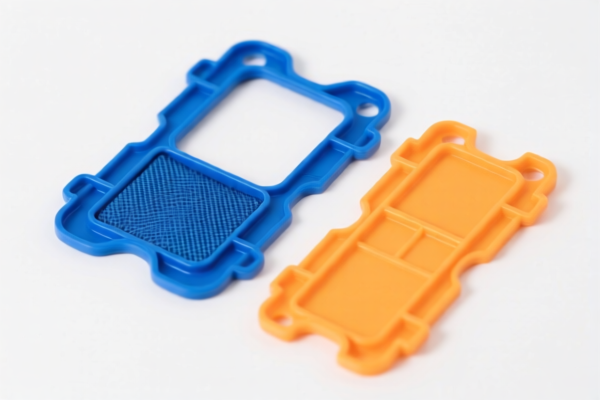
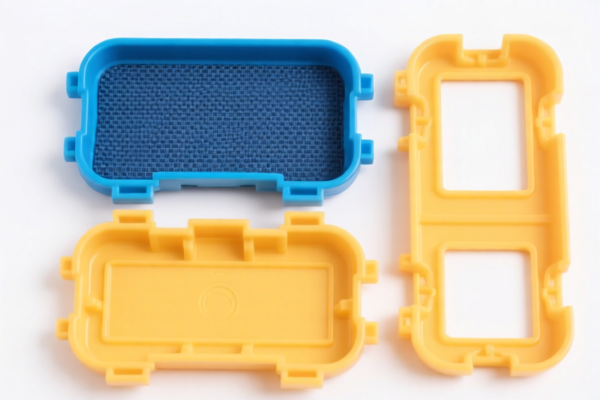
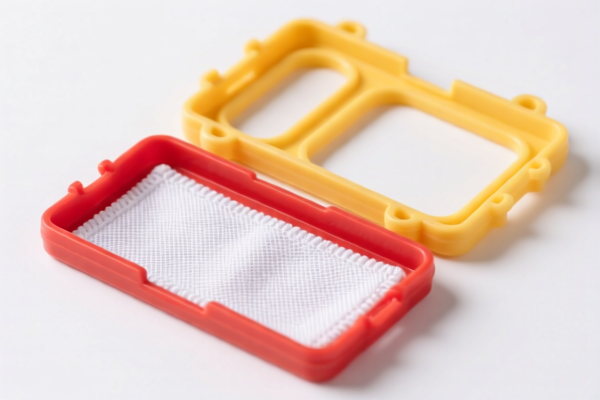
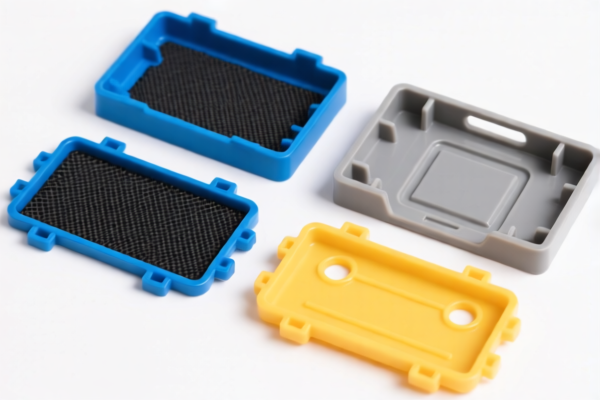
AI Analysis
🧸 Textile Reinforced Plastic (TRP) Toy Housing Panels
🌐 HS Code Reference & Clearance Guide | 2026 Latest Tariff Analysis | Strategic Clearance Strategy
📌 I. Product Definition & Classification: Do You Really Understand "TRP Toy Housing"?
Textile Reinforced Plastic (TRP) Toy Housing Panels are structural components used in toy manufacturing. They combine the durability and lightweight nature of plastics with the strength and stiffness of textile reinforcement (often fiberglass or carbon fiber meshes embedded in resin).
In international trade, the classification of these panels is highly sensitive to their physical form and specific application. A single product description can lead to five different HS Codes, each with drastically different tariff implications due to US trade policies (Section 301 and Section 122).
⚠️ Key Distinction Points:
- Is it a "Plate/Sheet" (Chapter 39, Heading 3921)? → Usually high tariffs.
- Is it a "Specific Accessory/Shell" (Chapter 39, Heading 3926)? → Potentially lower base tariffs, but still subject to additions.
- Is it considered a "Part/Accessory of Machinery" (Chapter 84)? → Zero base duty, but high additions.
📦 II. HS Code Classification Details (2026 Latest Tariff Authority Comparison)
Based on the provided data for "Textile reinforced Plastic Electronic Product Housing Panels" (applying the structural logic to Toy Housing as the material form is identical), here are the 5 possible classifications and their tax breakdowns:
| HS Code | Product Description (Per Data) | Application Scenario | Total Tax Rate | Tax Breakdown |
|---|---|---|---|---|
3921.90.50.50 |
TRP Panels, Plastic Material, Plate/Sheet Form | Electronic Accessories / General Sheets | 39.8% | Base: 4.8% Add: 25.0% (Sec 301) Add: 10% (Sec 122) |
3926.30.50.00 |
TRP Panels, Electronic Housing, Connector/Shell Type | Specific Shells/Connectors for Electronics | 22.8% | Base: 5.3% Add: 7.5% (Sec 301) Add: 10% (Sec 122) |
3921.90.40.90 |
TRP Panels, Other Plates/Sheets/Films | General Plastic Sheets, No Specific Use | 39.2% | Base: 4.2% Add: 25.0% (Sec 301) Add: 10% (Sec 122) |
8473.30.91.00 |
TRP Panels, Parts/Accessories of Machinery | Machine Parts/Attachments (Plastic) | 35.0% | Base: 0.0% Add: 25.0% (Sec 301) Add: 10% (Sec 122) |
3926.90.99.89 |
TRP Panels, Other Plastic Products/Parts | General Plastic Articles, No Specific Subheading | 22.8% | Base: 5.3% Add: 7.5% (Sec 301) Add: 10% (Sec 122) |
🔍 Critical Insight:
- Section 122 Tariff (+10%) is applied uniformly across ALL 5 HS codes in the provided data. This is a crucial fixed cost.
- The variable cost comes from the Base Duty and the Section 301 Add-on (either 25% or 7.5%).
-3926.30.50.00and3926.90.99.89offer the lowest total tax rate (22.8%) because their Section 301 add-on is only 7.5%, compared to 25% for the others.
💰 III. 2026 Latest Tariff Rate Detailed Explanation
✅ Applicable Country: United States (US)
✅ Origin: China (CN) (Implied by Section 301 & 122 context)
✅ Effective Date: Current enforcement includes Section 122 (10%) and Section 301 (varies).
🎯 1. The "High Cost" Category (Base +25% Sec 301)
Applicable HS Codes:
- 3921.90.50.50 (39.8% Total)
- 3921.90.40.90 (39.2% Total)
- 8473.30.91.00 (35.0% Total)
| Item | Detail |
|---|---|
| Base Duty | 0.0% – 4.8% |
| Section 301 Add-on | +25% |
| Section 122 Add-on | +10% |
| Total Effective Rate | 35.0% – 39.8% |
| Calculation Base | CIF Value (Cost, Insurance, Freight) |
| De Minimis Exemption | ❌ Not Eligible (Section 321 does not apply to goods subject to Section 301/122 duties) |
📌 Explanation:
- Section 122 (10%): Applied to certain imported goods to protect domestic industry or for national security reasons. It is additive.
- Section 301 (25%): Standard punitive tariff for many Chinese plastic articles and machine parts.
- Result: These codes make the product very expensive to import.
🎯 2. The "Optimized Cost" Category (Base +7.5% Sec 301)
Applicable HS Codes:
- 3926.30.50.00 (22.8% Total)
- 3926.90.99.89 (22.8% Total)
| Item | Detail |
|---|---|
| Base Duty | 5.3% |
| Section 301 Add-on | +7.5% |
| Section 122 Add-on | +10% |
| Total Effective Rate | 22.8% |
| Calculation Base | CIF Value |
| De Minimis Exemption | ❌ Not Eligible |
📌 Explanation:
- Why only 7.5%? Some subheadings under Chapter 3926 ("Other articles of plastics") are excluded from the highest 25% bracket of Section 301, falling into a lower tier.
- This is the KEY to savings: A difference of 17.4% in total tax (39.8% vs 22.8%) can significantly impact profit margins.
🛠️ IV. Customs Clearance Practical Advice (Avoid Pitfalls)
✅ 1. Material & Description Strategy
To qualify for the lower 22.8% tax rate (HS Codes 3926.30.50.00 or 3926.90.99.89), you must justify the classification carefully.
| Factor | High Tax Classification (3921/8473) | Low Tax Classification (3926) |
|---|---|---|
| Form | "Plate," "Sheet," "Film" (Raw/semi-finished) | "Shell," "Housing," "Article," "Part" (Finished/Functional) |
| Function | General structural reinforcement | Specific housing for electronics/toys |
| Description | "Reinforced Plastic Plate" | "Plastic Housing Panel for Toy/Electronics" |
| Risk | High duty (39.8%) | Lower duty (22.8%) |
⚠️ Warning: Do NOT simply label it "Plastic Sheet" if it is cut into specific shapes for housing. Customs may reject it as "too processed" for Chapter 3921. Instead, emphasize it is a "Finished Article" or "Part".
✅ 2. Documentation Checklist
| Document | Requirement | Reason |
|---|---|---|
| Product Photo | Show the exact shape of the panel | To prove it is not a generic "sheet" but a specific "housing/part" |
| Technical Spec | Highlight "Reinforced with Textile" | To confirm material composition (Plastic + Textile) |
| Intended Use | Specify "Toy Housing" or "Electronics Shell" | Links to HS 3926 (Articles of Plastic) rather than 3921 (Plates/Sheets) |
| Bill of Lading | Ensure Consignee and Shipper details match | Standard requirement |
✅ 3. Special Cases & Optimization
| Scenario | Recommendation |
|---|---|
| If the panel is cut to specific size/shape | Argue for 3926 (Articles of Plastic). It is no longer a "sheet" but a "part." |
| If the panel is flat and uncut | You may be forced into 3921 (Plates/Sheets), accepting the 39%+ tax. |
| Section 122 Applicability | The data confirms 10% is applied to ALL codes. There is no exemption for toy housing under the provided data. Budget for this fixed cost. |
| Pre-Ruling Request | Given the 17% tax difference, apply for a binding ruling with CBP to confirm HS 3926 eligibility. |
🌍 V. Global Market Comparison (Contextual)
| Market | Typical HS Code for TRP Panels | Estimated Duty | Notes |
|---|---|---|---|
| 🇺🇸 USA | 3926.90.99.89 or 3921.90.50.50 |
22.8% – 39.8% | High due to Sec 301 + Sec 122. Optimize classification! |
| 🇨🇳 China | 3926.90.99.00 |
~5-7% | No Section 301/122. Lower cost for domestic assembly. |
| 🇪🇺 EU | 3926.90.97 |
0-6.5% | No punitive tariffs. CE marking required for toys. |
| 🇬🇧 UK | 3926.90.99 |
0-6.5% | Post-Brexit tariffs. No US-style add-ons. |
📌 Conclusion for US Importers:
The US market is the most expensive due to layered tariffs.
Strategy: Avoid "Sheet/Plate" classification if possible. Use "Housing/Part" classification to target 3926.90.99.89 or 3926.30.50.00.
📌 VI. Common Errors & Pitfalls (Lessons Learned)
❌ Mistake 1: Labeling as "Plastic Sheet" when it is a cut "Housing Panel"
👉 Result: Customs classifies as 3921.90.50.50 → 39.8% Tax.
👉 Fix: Use terms like "Molded Panel," "Housing Component," or "Finished Shell."
❌ Mistake 2: Ignoring Section 122
👉 Result: Budgeting only for Sec 301 (25%) but missing the extra 10%.
👉 Fix: Always include +10% in cost calculations for these goods.
❌ Mistake 3: Assuming Toys get a lower rate than Electronics
👉 Result: In HS Code classification, "Toy Housing" and "Electronics Housing" made of plastic are often grouped under 3926.
👉 Fix: Check the specific subheading description. 3926.30.50.00 mentions "Electronics," but 3926.90.99.89 is broader ("Other"). Both have the same 22.8% rate, so either is viable if properly described.
🎯 VII. Conclusion: Professional Classification Saves Money!
🎯 Key Takeaway:
🔹 "Don't call it a sheet if it's a shell."
🔹 "Target HS 3926 to save 17% in taxes."
🔹 "Always budget for the extra 10% Section 122 tariff."
✅ Recommended Action Plan:
1. Modify Product Description: Use "Plastic Housing Panel" or "Reinforced Plastic Part" instead of "Sheet."
2. Select HS Code: Prefer 3926.90.99.89 or 3926.30.50.00.
3. Calculate Cost: Use 22.8% total tax rate for accurate pricing.
4. Verify with CBP: If shipments are large, file a Type 6 or Type 8 Entry with a binding ruling request.
📌 Pro Tip:
If the textile reinforcement is significant (e.g., >50% by weight or value), you might even explore Chapter 59 (Impregnated Textile Fabrics) or Chapter 63 (Other Made Up Textile Articles), but Chapter 39 is the standard for "Plastic + Reinforcement" composites. Stick to 3926 for best results in this data set.
📣 Immediate Action:
📞 Contact your customs broker with the photos of the finished panel (not raw rolls).
🚀 Clarify: "This is a housing part, not a raw plastic sheet."
✨ Precision Classification, Predictable Costs, Smooth Clearance!
💼 Every percentage point saved is profit kept!
Customer Reviews
About HS Code Classification
The Harmonized System (HS) is an internationally standardized nomenclature developed by the World Customs Organization (WCO) to classify traded products. Over 200 countries use the HS system as the basis for customs tariffs, trade statistics, and import/export regulations.
Each HS code follows a hierarchical structure:
- Chapter (2 digits) — Broad category of goods (e.g., Chapter 84: Machinery and Mechanical Appliances)
- Heading (4 digits) — More specific grouping within the chapter
- Subheading (6 digits) — Internationally standardized breakdown, used by all WCO member countries
- National subdivisions (8-10 digits) — Country-specific extensions for further classification, such as US HTSUS 10-digit codes
Correct HS code classification is essential for smooth customs clearance, accurate duty payment, and compliance with trade regulations. Misclassification can lead to customs delays, overpayment of duties, or penalties.
When importing from CN to US, the applicable tariff rates may include:
- Most-Favored-Nation (MFN) rate — The standard duty rate applied to WTO members
- General rate — Applied to countries without trade agreements
- Trade remedy duties — Additional tariffs such as Section 301 (anti-dumping), Section 232 (national security), or countervailing duties
The information provided on this page is for reference purposes only. For official classification, please consult with your local customs authority or a licensed customs broker.