Thank You Card with Envelope
CN → US| HS Code | Tariff Rate | Origin | Destination | Doc |
|---|---|---|---|---|
| 4820104000 | 35.0% | CN | US | Official Doc |
| 4820900000 | 35.0% | CN | US | Official Doc |
| 4817202000 | 35.0% | CN | US | Official Doc |
| 4817204000 | 35.0% | CN | US | Official Doc |
| 4911998000 | 17.5% | CN | US | Official Doc |
| 4911914040 | 17.5% | CN | US | Official Doc |
Product Images
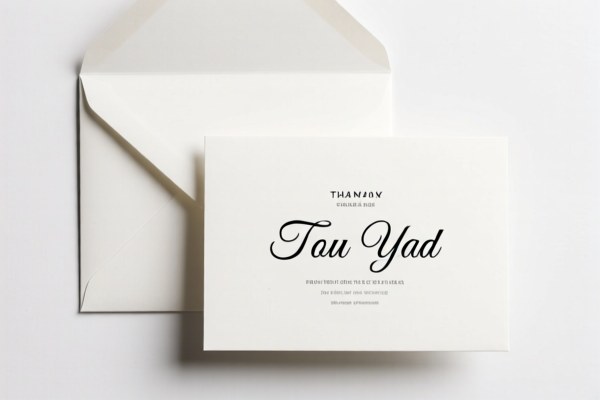


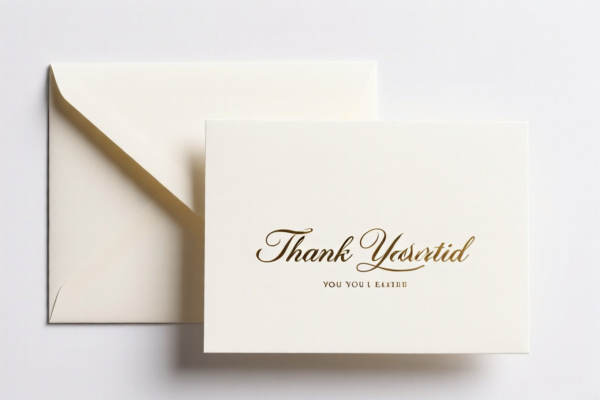
AI Analysis
💌 Thank You Card with Envelope (Stationery & Printed Matter)
🌐 HS Code Reference & Customs Clearance Guide | 2026 Latest Tariff Analysis | Professional Clearance Strategy
📌 I. Product Definition & Classification: Are You Clear on "Thank You Cards"?
"Thank You Cards with Envelopes" fall under the broader category of Paper Stationery and Printed Matter in international trade. The classification depends heavily on whether the item is sold as a pre-assembled kit (card + envelope bound together) or as loose printed sheets intended for folding, and whether it includes specific formatting (like pre-printed designs vs. blank writing space).
In the context of the provided data, these items are primarily classified under Chapter 48 (Paper and Paperboard; Articles of Paper Pulp, of Paper or Paperboard) or Chapter 49 (Printed Books, Newspapers, Pictures and Other Products of the Printing Industry).
⚠️ Key Distinction Points:
- Stationery Kits (Boxes/Compounds): If the thank you cards and envelopes are sold together in a box, pouch, or wallet as an assortment, they may fall under 4817 (Boxes, pouches, wallets... containing an assortment of paper stationery).
- Loose Printed Matter: If they are individual sheets (pre-printed designs) or blank letter cards, they may fall under 4911 (Other printed matter) or 4820/4817 depending on specific features like perforations or gumming.
📦 II. HS Code Classification Details (Based on Provided Data)
| HS Code | Product Description | Application Scenario | Key Features |
|---|---|---|---|
4817.20.20.00 |
Letter cards, plain postcards, correspondence cards: Sheets of writing paper, with border gummed or perforated... prepared for use as combination sheets and envelopes | Pre-formatted Thank You Cards: Cards that come with pre-gummed/perforated envelopes or are designed to be folded into envelopes. | ✅ Pre-gummed/Perforated/Combined |
4817.20.40.00 |
Letter cards, plain postcards, correspondence cards: Other | Standard Loose Thank You Cards: Individual cards not pre-combined with envelopes or special formatting. | ❌ Simple Sheets/Cards |
4820.10.40.00 |
Registers, account books, notebooks... and similar articles: Other | Notebook-Style Thank You Logs: If the product is a bound book/log for recording thanks rather than a single card. | ✅ Bound/Notebook Format |
4820.90.00.00 |
Other articles of stationery of paper or paperboard | General Stationery Items: Other paper goods not specifically classified elsewhere (e.g., decorative binders or specialized folders). | ❌ General Stationery |
4911.99.80.00 |
Other printed matter, including printed pictures and photographs: Other: Other | Decorative/Artistic Printed Cards: Thank you cards primarily valued for their printed artwork, designs, or photographs rather than just writing space. | ✅ Artistic/Decorative Print |
4911.91.40.40 |
Printed not over 20 years at time of importation: Other Other Other | Vintage/Collectible Thank You Cards: Historical or antique cards (rare for standard commercial imports). | ✅ Vintage (<20 yrs) |
🔍 Focus Recommendation:
For standard commercial "Thank You Cards with Envelopes,"4817.20.20.00is often the most accurate if they are "combination sheets" (card+envelope unit), or4911.99.80.00if they are primarily decorative printed matter. However, based on the high tariff rates shown in the data (25%), the US imposes significant duties on most paper stationery from China.
💰 III. 2026 Latest Tariff Rate Breakdown (Including Additional Taxes)
✅ Applicable Country: United States (US)
✅ Origin: China (CN)
✅ Effective Time: Current tariffs include Section 301 Additional Duties.
🎯 1. 4817.20.20.00 & 4817.20.40.00 (Letter Cards & Envelopes)
| Item | Content |
|---|---|
| Basic Tariff | 0.0% (Ad Valorem) |
| Additional Duty (Section 301) | +25.0% |
| Total Effective Tax Rate | 25.0% |
| Tax Calculation | CIF Value × 25% |
| De Minimis Exemption | ❌ Not Applicable (For shipments from China, Section 301 duties typically apply even below $800, though enforcement varies; generally, high-value or bulk commercial shipments face this). |
| Legal Basis Path | USITC:4817.20.xx.00 → Section 301: HTSUS 4817 → Additional Duty: 25% |
📌 Explanation:
- Paper stationery, including letter cards and envelopes, is classified under Heading 4817.
- Under US Trade Law (Section 301), most Chinese-made paper products face a 25% additional tariff.
- There is no basic tariff, so the entire tax burden is the 25% additional duty.
🎯 2. 4820.10.40.00 & 4820.90.00.00 (Notebooks & General Stationery)
| Item | Content |
|---|---|
| Basic Tariff | 0.0% |
| Additional Duty (Section 301) | +25.0% |
| Total Effective Tax Rate | 25.0% |
| Tax Calculation | CIF Value × 25% |
| De Minimis Exemption | ❌ Not Applicable |
| Legal Basis Path | USITC:4820.xx.xx.00 → Section 301: HTSUS 4820 → Additional Duty: 25% |
📌 Note: Same as above. Standard paper stationery goods from China face a flat 25% additional duty on top of 0% base duty.
🎯 3. 4911.99.80.00 & 4911.91.40.40 (Other Printed Matter)
| Item | Content |
|---|---|
| Basic Tariff | 0.0% |
| Additional Duty (Section 301) | +7.5% |
| Total Effective Tax Rate | 7.5% |
| Tax Calculation | CIF Value × 7.5% |
| De Minimis Exemption | ❌ Not Applicable (Check specific exclusions, but generally high) |
| Legal Basis Path | USITC:4911.xx.xx.00 → Section 301: HTSUS 4911 → Additional Duty: 7.5% |
📌 Note: Some "Other printed matter" items fall under a lower 7.5% additional duty bracket. If your thank you cards are considered purely "printed pictures/designs" rather than functional stationery, you might qualify for this lower rate, but customs often reclassify them as stationery (4817/4820) due to their functional use.
🛠️ IV. Customs Clearance Practical Advice (Real-World Pitfall Avoidance)
✅ 1. Documentation Checklist (Must-Haves)
| Document | Required? | Notes |
|---|---|---|
| ✅ Commercial Invoice | ✔️ | Must clearly state "Thank You Cards with Envelopes" or "Paper Stationery Set." Avoid vague terms like "Gifts." |
| ✅ Packing List | ✔️ | Detail contents: e.g., "100 pcs Letter Cards, 100 pcs Envelopes." |
| ✅ Product Photos | ✔️ | Show front/back of cards, envelope interior, and packaging. |
| ✅ Material Declaration | ✔️ | Confirm 100% Paper/Cardboard content. |
| ✅ Harmonized System Code | ✔️ | Specify HS Code (e.g., 4817.20.20.00). |
✅ 2. Declaration Strategy (Key Mnemonic)
🔥 "Function over Form: If it writes, it's Stationery (25%); If it's purely art, it's Printed Matter (7.5% - risky)."
| Scenario | Recommended HS Code | Risk Level |
|---|---|---|
| Standard Thank You Cards + Envelopes | 4817.20.20.00 |
⚠️ High Tariff (25%) but Accurate |
| Loose Blank Cards for Writing | 4817.20.40.00 |
⚠️ High Tariff (25%) |
| Decorative Cards with No Writing Space | 4911.99.80.00 |
🟡 Lower Tariff (7.5%) but High Risk of Re-Classification |
| Notebook-style Thank You Log | 4820.10.40.00 |
⚠️ High Tariff (25%) |
📌 Critical Warning:
- Do NOT under-declare as "Printed Matter" (4911) to save 17.5% if the item is clearly functional stationery (cards for writing addresses/messages). Customs officers frequently challenge this, leading to penalties and delays.
- Ensure the description explicitly mentions "Paper" and "Stationery" if classifying under 4817/4820.
✅ 3. Special Case Handling
| Situation | Handling Advice |
|---|---|
| Sample Gifts (Low Value) | Check if the shipment qualifies for de minimis entry. Note: Section 301 duties often still apply to Chinese goods even under $800, depending on CBP enforcement at the time of import. |
| Custom Printed Design | Provide proof of design ownership to avoid intellectual property issues. |
| Bulk vs. Retail | Bulk commercial shipments require full documentation. Small direct-to-consumer packages may face scrutiny for misclassification. |
🌍 V. Global Market Comparison (2026 Update)
| Country/Region | Recommended HS Code | Tariff (China Origin) | Notes |
|---|---|---|---|
| 🇺🇸 United States | 4817.20.20.00 |
25% (Additional) | High tariff burden. Consider non-China sourcing if volume is high. |
| 🇨🇳 China | 4817.20.20.00 |
0% - 5% | Import duties are low. Export taxes may apply depending on policy. |
| 🇪🇺 EU | 4823.69 or 4911.99 |
0% - 4.5% | Generally low duties for paper stationery. CE marking not required for paper. |
| 🇬🇧 UK | 4817.20 |
0% - 5% | Post-Brexit tariffs vary; generally favorable for paper goods. |
| 🇦🇺 Australia | 4817.20 |
5% | No significant additional tariffs. |
📌 Conclusion:
- The US market is the most expensive for importing paper stationery from China due to the 25% Section 301 tariff.
- For large-scale exports to the US, consider supply chain diversification (e.g., sourcing from Vietnam or Malaysia) to avoid these additional duties, provided Rules of Origin are met.
📌 VI. Common Errors & Pitfall Guide (Lessons Learned)
❌ Error 1: Classifying Thank You Cards as "Gifts" (HTSUS 9905)
👉 Consequence: Customs may reject the classification, leading to retroactive duty assessment + penalties. Gifts do not have an HS code; they must be classified by product type.
❌ Error 2: Under-declaring value by splitting "Card" and "Envelope" into different shipments
👉 Consequence: Violation of anti-circumvention laws. Total value is assessed together.
❌ Error 3: Misclassifying as "Printed Pictures" (4911) to save tax
👉 Consequence: If the item has writing space or envelope functionality, it is Stationery (4817). Incorrect classification leads to 25% vs 7.5% difference and potential audits.
✅ Correct Approach:
"Paper Thank You Cards with Envelopes, Assorted Designs, 100 Sets, Made in China"
HS Code:4817.20.20.00
Duty: 25%
🎯 VII. Conclusion: Professional Declaration Saves Money!
🎯 Remember the Rule:
🔹 "Stationery = 25% Duty; Art Print = 7.5% Duty (but risky)."
🔹 "Never hide functional stationery as art. Be accurate to avoid delays."
🔹 "CIF Value × 25% is the real cost for US imports of paper goods from China."
📌 Pro Tip:
If your business volume is high, consider:
1. Applying for an Exclusion: Check if your specific HTSUS code has any current Section 301 exclusions (rare for paper).
2. Supply Chain Shift: Source from non-China countries for US-bound stationery to mitigate the 25% tariff.
3. Pre-Ruling: Submit a binding ruling request to CBP for clarification if your product has unique features (e.g., metal foil, plastic windows).
📣 Immediate Action:
📞 Verify your HS Code with a licensed customs broker.
📊 Calculate Landed Cost including the 25% tariff.
🚀 Ensure accurate commercial invoices to prevent customs holds.
✨ Precision in Classification, Efficiency in Clearance!
💼 Every 1% of duty saved is pure profit. Let’s get it right!
Customer Reviews
About HS Code Classification
The Harmonized System (HS) is an internationally standardized nomenclature developed by the World Customs Organization (WCO) to classify traded products. Over 200 countries use the HS system as the basis for customs tariffs, trade statistics, and import/export regulations.
Each HS code follows a hierarchical structure:
- Chapter (2 digits) — Broad category of goods (e.g., Chapter 84: Machinery and Mechanical Appliances)
- Heading (4 digits) — More specific grouping within the chapter
- Subheading (6 digits) — Internationally standardized breakdown, used by all WCO member countries
- National subdivisions (8-10 digits) — Country-specific extensions for further classification, such as US HTSUS 10-digit codes
Correct HS code classification is essential for smooth customs clearance, accurate duty payment, and compliance with trade regulations. Misclassification can lead to customs delays, overpayment of duties, or penalties.
When importing from CN to US, the applicable tariff rates may include:
- Most-Favored-Nation (MFN) rate — The standard duty rate applied to WTO members
- General rate — Applied to countries without trade agreements
- Trade remedy duties — Additional tariffs such as Section 301 (anti-dumping), Section 232 (national security), or countervailing duties
The information provided on this page is for reference purposes only. For official classification, please consult with your local customs authority or a licensed customs broker.