Thermal Cooking Cup
CN → US| HS Code | Tariff Rate | Origin | Destination | Doc |
|---|---|---|---|---|
| 9617001000 | 17.2% | CN | US | Official Doc |
| 9617003000 | 16.9% | CN | US | Official Doc |
| 7323930060 | 62.0% | CN | US | Official Doc |
| 7323999030 | 88.4% | CN | US | Official Doc |
| 7418100051 | 70.5% | CN | US | Official Doc |
Product Images
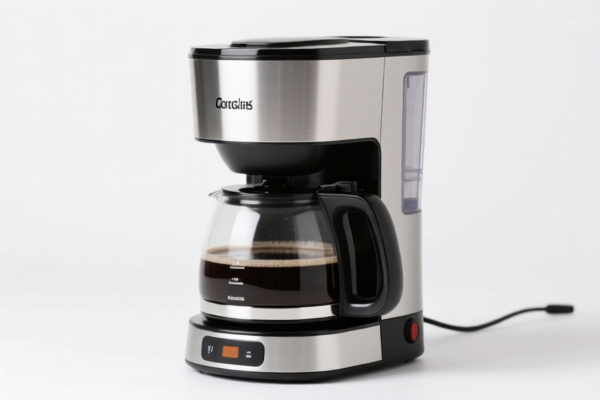
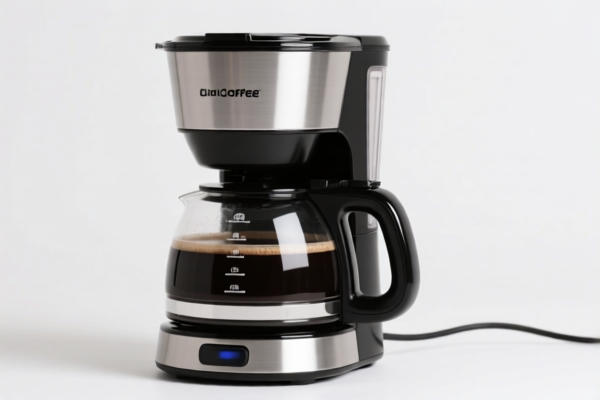
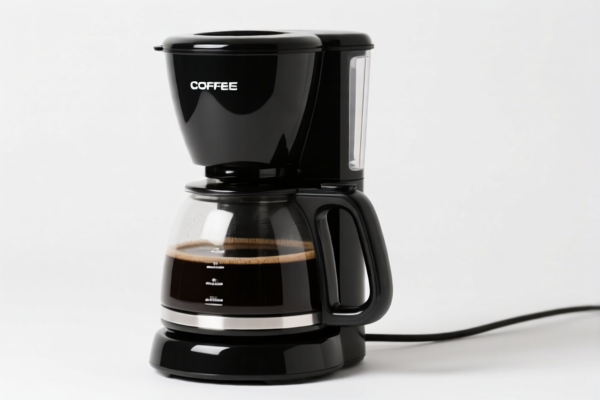
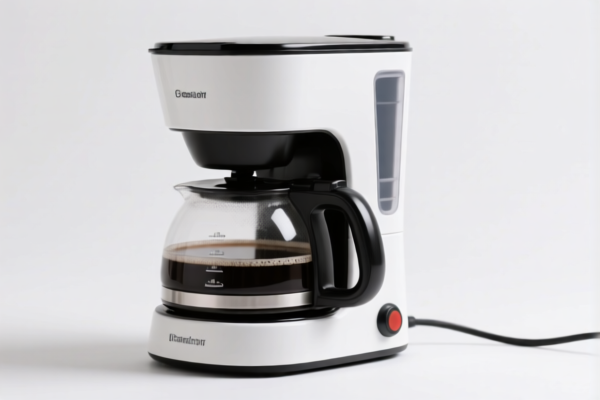
AI Analysis
☕ Thermal Cooking Cup (Vacuum Insulated Drinkware)
🌐 HS Code Reference & Customs Clearance Guide | 2026 Latest Tariff Analysis | Strategic通关 Strategy for US Imports
📌 I. Product Definition & Classification: What Exactly is a "Thermal Cooking Cup"?
A Thermal Cooking Cup (commonly known as a vacuum flask, thermos, or insulated tumbler) is a container designed to maintain the temperature of beverages or food through vacuum insulation technology. In international trade, its classification depends heavily on its material, intended use, and structural completeness.
It is broadly categorized into two main groups: 1. Finished Consumer Goods (Appliances/Tableware): Fully assembled units with lids, spouts, and often decorative exteriors, intended for direct consumer use. 2. General Tableware/Kitchenware: Items classified primarily by their material (stainless steel, aluminum) rather than their vacuum technology, often subject to higher punitive tariffs.
⚠️ Critical Distinction:
- If the item is explicitly designed as a vacuum-insulated finished good (brand name, ready-to-use), it leans towards Chapter 96.
- If the item is perceived as a generic metal container or kitchen utensil without specific "vacuum appliance" designation in customs records, it may fall under Chapter 73 (Iron/Steel) or 74 (Copper) or 76 (Aluminum), triggering significantly higher duties.
📦 II. HS Code Classification Details (Based on Provided Data)
The following HS Codes are derived directly from the provided dataset. Note that while standard global HS codes often place vacuum flasks in 9617.00, the provided data highlights specific US tariff classifications and associated duties.
| HS Code | Product Description | Classification Logic |
|---|---|---|
9617.00.10.00 |
Vacuum Containers (Finished Consumer Goods) | Classified as a finished consumer good. Fits the definition of a "Vacuum Container" intended for direct use. |
9617.00.30.00 |
Vacuum Containers (General Utility) | Also classified under vacuum containers, but focuses on the "container utility" attribute rather than specific consumer branding. |
7323.93.00.60 |
Stainless Steel Kitchen/Tableware | Classified based on material (Stainless Steel) as "Household utensils of stainless steel." |
7323.99.90.30 |
Other Stainless Steel Tableware | Classified as "Other articles of tableware/kitchenware of stainless steel." |
7418.10.00.51 |
Non-electric Heating Appliances (Household) | Classified as "Other non-electric domestic appliances of base metal." |
🔍 Key Insight:
- Chapters 9617 offer the lowest tax burden (~17%).
- Chapters 7323/7418 offer the highest tax burden (up to ~88.4%).
- The difference is not just the product type, but the tariff treatment (Section 301/122 clauses) applied to steel/base metal goods vs. finished plastic/vacuum goods.
💰 III. 2026 Latest Tariff Rate Breakdown (US Imports from China)
✅ Applicable Country: United States (US)
✅ Origin: China (CN)
✅ Valid Time: Current rates apply (2026)
🎯 1. 9617.00.10.00 & 9617.00.30.00 — The Preferred Classification
Logic: These codes classify the item as a finished vacuum container. This is the most favorable category because it is viewed as a specific consumer appliance rather than raw metal goods.
| Item | Detail |
|---|---|
| Base Tariff | 6.9% - 7.2% |
| Section 301 / Add-on Tariff | 0.0% (Note: Dataset indicates 0% for these specific subheadings) |
| Section 122 Tariff | +10% |
| Steel/Aluminum/Copper Add-on | ❌ Not Applicable (Not classified as base metal goods) |
| Total Effective Tax Rate | ~17.2% (Code .10) ~16.9% (Code .30) |
| Tax Calculation | CIF Value × 17.2% |
📌 Explanation:
- Base Tariff: Standard Most Favored Nation (MFN) rate for vacuum containers.
- Add-on Tariffs: The dataset explicitly states 0.0% for Section 301 add-ons for these codes. This is a critical advantage.
- Section 122: A specific penalty tariff applied to many Chinese consumer goods, set at 10%.
- Result: You pay only the base rate + 10%. This is the safest and cheapest classification.
🎯 2. 7323.93.00.60 — Stainless Steel Kitchenware
Logic: Classified as a generic stainless steel household utensil. This triggers the "Base Metal" punitive tariffs.
| Item | Detail |
|---|---|
| Base Tariff | 2.0% |
| Section 301 / Add-on Tariff | 0.0% |
| Section 122 Tariff | +10% |
| Steel/Aluminum/Copper Add-on | +50% (Critical Penalty) |
| Total Effective Tax Rate | 62.0% |
| Tax Calculation | CIF Value × 62.0% |
📌 Explanation:
- Steel Add-on (50%): Because this code is under Chapter 73 (Iron/Steel), the US imposes a massive 50% additional duty on steel products from China.
- Section 122: The 10% penalty still applies.
- Result: Even with a low base rate (2%), the 50% steel penalty makes this prohibitively expensive.
🎯 3. 7323.99.90.30 — Other Stainless Steel Tableware
Logic: A catch-all for stainless steel tableware not specifically listed elsewhere. Highest punitive tariffs apply.
| Item | Detail |
|---|---|
| Base Tariff | 3.4% |
| Section 301 / Add-on Tariff | +25% (Standard Section 301) |
| Section 122 Tariff | +10% |
| Steel/Aluminum/Copper Add-on | +50% |
| Total Effective Tax Rate | 88.4% |
| Tax Calculation | CIF Value × 88.4% |
📌 Explanation:
- This is the wor-case scenario. It combines the standard 301 tariff (25%), Section 122 (10%), AND the Steel Penalty (50%).
- Result: Nearly 90% tax burden. Avoid this classification if possible.
🎯 4. 7418.10.00.51 — Non-Electric Household Appliances
Logic: Classified as a "household appliance" made of base metal (likely steel or aluminum).
| Item | Detail |
|---|---|
| Base Tariff | 3.0% |
| Section 301 / Add-on Tariff | +7.5% |
| Section 122 Tariff | +10% |
| Steel/Aluminum/Copper Add-on | +50% |
| Total Effective Tax Rate | 70.5% |
| Tax Calculation | CIF Value × 70.5% |
📌 Explanation:
- Similar to the above, it attracts the 50% base metal penalty.
- Result: High cost due to the metal classification.
🛠️ IV. Customs Clearance Practical Advice (Real-World Pitfall Guide)
✅ 1. Documentation Checklist (Mandatory)
| Document | Required | Notes |
|---|---|---|
| ✅ Product Description | ✔️ | Must state "Vacuum Insulated Cup" or "Thermos," NOT just "Stainless Steel Container." |
| ✅ Material Certificate | ✔️ | Prove the vacuum seal mechanism (Chapter 96 logic). |
| ✅ Commercial Invoice | ✔️ | Value must be clear (CIF). |
| ✅ Packing List | ✔️ | Include lid, sleeve, etc., as part of the main unit. |
| ✅ Origin Certificate | ✔️ | Confirm China origin (triggers tariffs). |
| ✅ FCC/Other Certs | ❓ | Not required for non-electric cups, but good for brand compliance. |
✅ 2. Declaration Strategy (The "Goldilocks" Principle)
| Scenario | Correct HS Code | Why? |
|---|---|---|
| Branded, Finished Cup | 9617.00.10.00 |
It is a finished consumer good. Customs views it as a "Vacuum Container" (Chapter 96). Lowest tax (17.2%). |
| Bulk/Unbranded Vacuum Flask | 9617.00.30.00 |
Fits "Vacuum Container" definition. Slightly lower tax (16.9%). |
| Generic Steel Container (No Vacuum) | 7323.93.00.60 |
AVOID. High tax (62%). Only use if it’s NOT a vacuum flask. |
| Mixed Package (Cup + Steel Box) | 9617.00.10.00 |
Declare the cup as the primary item. The box is packaging. Do not declare the box separately as steel. |
🔥 Golden Rule:
"Declare as Vacuum Container, Not Steel Product."
If you describe your product as "Stainless Steel Cup," customs may automatically assign7323codes. If you describe it as "Vacuum Insulated Thermos," they are more likely to assign9617codes.
✅ 3. Special Case Handling
| Situation | Recommendation |
|---|---|
| OEM Private Label | Provide branding proof. Shows it is a finished consumer good (Chapter 96). |
| Cup with Plastic Lid | Still 9617. The vacuum body is the essential character. |
| Multi-Wall Steel (No Vacuum) | Must use 7323 codes. You cannot claim vacuum technology if there is no vacuum gap. |
| Gift Set (Cup + Coaster) | Declare the Cup as the main item (9617). The coaster is an accessory. |
🌍 V. Global Market Comparison (2026)
| Market | Recommended HS Code | Est. Tax Rate | Notes |
|---|---|---|---|
| 🇺🇸 USA | 9617.00.10.00 |
17.2% | Section 122 applies. Avoid 7323 (62%+). |
| 🇨🇳 China | 9617.00.10.00 |
~7.2% | No Section 122 or 301. |
| 🇪🇺 EU | 9617.00.10.00 |
~4.5% | Generally low tariffs for finished consumer goods. |
| 🇬🇧 UK | 9617.00.10.00 |
~4.5% | Post-Brexit rules align with EU for this category. |
📌 Conclusion:
- The USA is the only major market with significant punitive tariffs.
- Chapter 96 (9617) is your best friend. It saves you 45-70% in taxes compared to Chapter 73 (7323).
📌 VI. Common Mistakes & Pitfalls (Lessons Learned)
❌ Mistake 1: Describing the product as "Stainless Steel Cup" on the invoice.
👉 Result: Customs assigns 7323.93.00.60. Tax jumps to 62.0%.
❌ Mistake 2: Declaring the vacuum flask as a "Kitchen Utensil" without mentioning vacuum technology.
👉 Result: Risk of being classified as 7323 (62.0%) or 7418 (70.5%).
❌ Mistake 3: Splitting the shipment (Cup in one box, Lid in another).
👉 Result: Customs may tax each part separately. If the lid is seen as a separate metal part, it could face high duties.
✅ Correct Approach:
Description: "Vacuum Insulated Stainless Steel Thermal Cup, Model XYZ, 500ml, Blue, Finished Consumer Good."
HS Code:9617.00.10.00
Tax: 17.2%
🎯 VII. Conclusion: Professional Declaration, Lower Costs!
🎯 Remember the Golden Rule:
🔹 "Vacuum = Chapter 96 (Low Tax)"
🔹 "Steel = Chapter 73 (High Tax)"
📌 Action Plan:
1. Update Product Descriptions: Use "Vacuum Insulated" prominently.
2. Pre-Classification: Apply for an Advance Ruling if possible, to lock in 9617.00.10.00.
3. Monitor Tariffs: Section 122 and 301 rates are subject to change.
📣 Immediate Action:
📞 Consult a licensed customs broker to confirm
9617.00.10.00eligibility for your specific design.
🚀 Save 45%+ in tariffs by choosing the right HS Code!
✨ Precise Classification, Maximum Profit!
💼 Your margin depends on your HS Code!
Customer Reviews
About HS Code Classification
The Harmonized System (HS) is an internationally standardized nomenclature developed by the World Customs Organization (WCO) to classify traded products. Over 200 countries use the HS system as the basis for customs tariffs, trade statistics, and import/export regulations.
Each HS code follows a hierarchical structure:
- Chapter (2 digits) — Broad category of goods (e.g., Chapter 84: Machinery and Mechanical Appliances)
- Heading (4 digits) — More specific grouping within the chapter
- Subheading (6 digits) — Internationally standardized breakdown, used by all WCO member countries
- National subdivisions (8-10 digits) — Country-specific extensions for further classification, such as US HTSUS 10-digit codes
Correct HS code classification is essential for smooth customs clearance, accurate duty payment, and compliance with trade regulations. Misclassification can lead to customs delays, overpayment of duties, or penalties.
When importing from CN to US, the applicable tariff rates may include:
- Most-Favored-Nation (MFN) rate — The standard duty rate applied to WTO members
- General rate — Applied to countries without trade agreements
- Trade remedy duties — Additional tariffs such as Section 301 (anti-dumping), Section 232 (national security), or countervailing duties
The information provided on this page is for reference purposes only. For official classification, please consult with your local customs authority or a licensed customs broker.