Thermal Paper Base Paper Commercial Grade
CN → US| HS Code | Tariff Rate | Origin | Destination | Doc |
|---|---|---|---|---|
| 4802202000 | 35.0% | CN | US | Official Doc |
| 4802201000 | 35.0% | CN | US | Official Doc |
| 4811908030 | 35.0% | CN | US | Official Doc |
| 4811909030 | 35.0% | CN | US | Official Doc |
| 4911998000 | 17.5% | CN | US | Official Doc |
Product Images

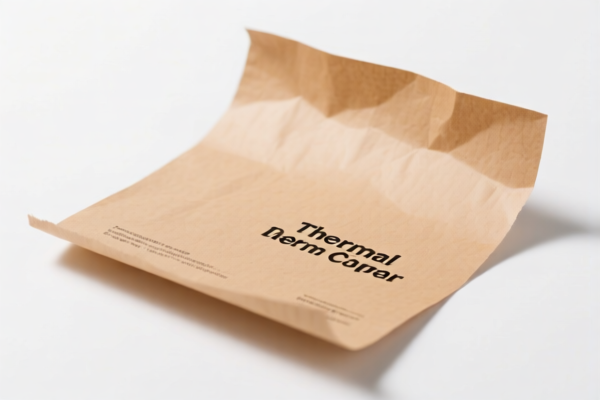
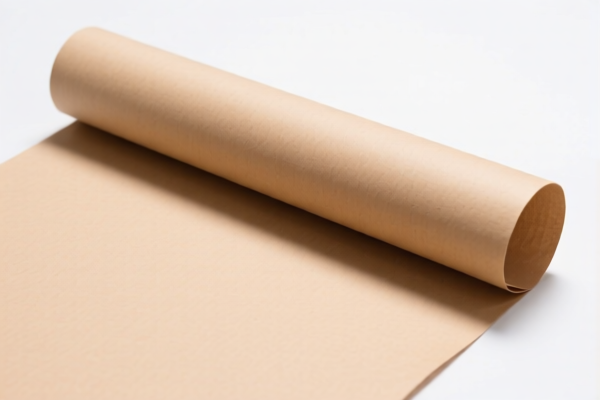
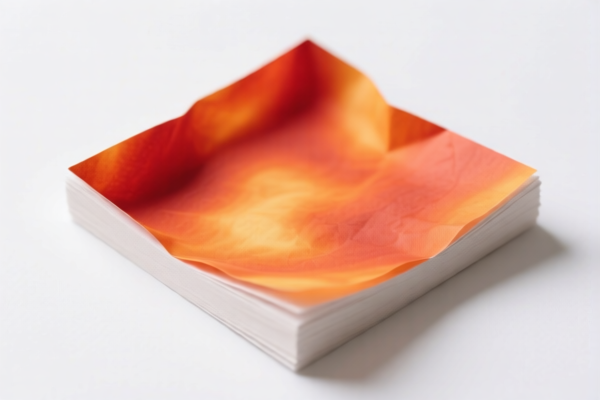
AI Analysis
🧾 Thermal Paper (Commercial Grade Base)
🌐 HS Code Classification & Clearance Guide | 2026 Updated Tariff Analysis | Strategic Customs Compliance
📌 I. Product Definition & Classification: Understanding "Thermal Paper"
Thermal Paper is a specialized paper coated with a chemical layer that changes color when exposed to heat. In international trade, it is primarily categorized based on whether the "thermal coating" is integral to the paper structure or applied as a finishing process.
Key Distinctions: * Base Paper for Thermal/Electric/Photosensitive Use (4802): The raw substrate paper specifically manufactured to serve as the foundation for thermal or photosensitive coatings. It focuses on the physical paper properties. * Thermally Coated Paper (4811): Paper that has already undergone the manufacturing process of applying the thermal-reactive coating. It focuses on the finished functional attribute. * Printed Thermal Paper (4911): Thermal paper that is printed with text, graphics, or barcodes, falling under the "Printed Matter" category.
⚠️ Critical Classification Point:
- If the goods are unprinted and primarily defined as the substrate material intended for further processing → Consider 4802.
- If the goods are finished thermal paper (coated) but unprinted → Consider 4811.
- If the goods are printed (e.g., POS receipts, shipping labels) → Consider 4911.
📦 II. HS Code Classification Details (2026 Latest Tariff Concordance)
| HS Code | Product Description | Application Scenario | Tax Rate (US/China Origin) |
|---|---|---|---|
| 4802.20.20.00 | Base paper for photosensitive, thermosensitive, or electrosensitive paper/board | Raw thermal paper substrate, uncoated or pre-coated base, industrial rolls | 35.0% |
| 4802.20.10.00 | Base paper for photosensitive, thermosensitive, or electrosensitive paper/board | Alternative base paper classification based on specific physical specs (e.g., weight/size) | 35.0% |
| 4811.90.80.30 | Other paper, paperboard, cellulose wadding and webs of cellulose fibers, coated, impregnated, covered, surface-colored, surface-decorated or printed, other | Finished thermal coated paper (unprinted), standard commercial rolls | 35.0% |
| 4811.90.90.30 | Other paper, paperboard, cellulose wadding and webs of cellulose fibers, coated, impregnated, covered, surface-colored, surface-decorated or printed, other | Alternative finished thermal coated paper classification | 35.0% |
| 4911.99.80.00 | Other printed matter (including printed pictures and photographs) | Printed thermal paper (receipts, labels, tickets) | 17.5% |
🔍 Key Insight:
- The most significant tax difference lies between 48xx (Paper) and 4911 (Printed Matter).
- If the thermal paper is printed (even lightly), it often shifts to 4911.99.80.00, reducing the total tax burden significantly.
- For unprinted thermal paper, the choice between 4802 (Base) and 4811 (Coated) is critical. While both carry the same high tax rate (35%) in this dataset, customs authorities may scrutinize whether the "thermal coating" makes it a "finished coated paper" (4811) rather than just "base paper" (4802).
💰 III. 2026 Latest Tariff Rate Breakdown (Including Surcharges & Policy Add-ons)
✅ Applicable Country: United States (US)
✅ Country of Origin: China (CN)
✅ Effective Date: November 10, 2025 (and subsequent imports)
🎯 1. HS Codes 4802.20.20.00, 4802.20.10.00, 4811.90.80.30, 4811.90.90.30
Category: Unprinted Thermal Paper / Base Paper
| Item | Content |
|---|---|
| Base Tariff | 0.0% (Ad Valorem) |
| USITC Additional Duty (Section 301) | +25.0% |
| IEEPA Additional Duty (122 Clause) | +10.0% |
| Total Effective Tax Rate | 35.0% |
| Tax Calculation | CIF Value × 35% |
| De Minimis Eligibility | ❌ Not Eligible (deny_de_minimis) |
| Legal Basis Path | IEEPA:9903.01.25 → IEEPA:9903.01.24 → USITC:4802/4811 → FOOTNOTE:9903.88.01 |
📌 Explanation:
- The 25% Section 301 duty is applied to all Chinese-origin paper products in this category.
- The 10% IEEPA duty is an additional levy specifically targeting Chinese goods under current emergency economic powers.
- Combined 35% is a very high tax rate, significantly impacting profit margins.
🎯 2. HS Code 4911.99.80.00
Category: Printed Thermal Paper (e.g., Receipts, Labels)
| Item | Content |
|---|---|
| Base Tariff | 0.0% (Ad Valorem) |
| USITC Additional Duty (Section 301) | +7.5% |
| IEEPA Additional Duty (122 Clause) | +10.0% |
| Total Effective Tax Rate | 17.5% |
| Tax Calculation | CIF Value × 17.5% |
| De Minimis Eligibility | ❌ Not Eligible (deny_de_minimis) |
| Legal Basis Path | IEEPA:9903.01.25 → IEEPA:9903.01.24 → USITC:4911 → FOOTNOTE:9903.88.01 |
📌 Note:
- The Section 301 duty for printed matter (4911) is lower (7.5%) compared to base paper (25%).
- This results in a massive tax savings (17.5% vs 35%).
- Crucial: To qualify for this lower rate, the thermal paper must be printed (barcodes, text, logos). Unprinted rolls will be rejected and reassigned to 48xx codes.
🛠️ IV. Customs Clearance Practical Advice (Operational Pitfall Guide)
✅ 1. Required Documentation Checklist (Mandatory)
| Document | Mandatory? | Description |
|---|---|---|
| ✅ Product Specification Sheet | ✔️ | Must detail: Paper weight (GSM), diameter, core size, coating type, and print details (if any). |
| ✅ Technical Data Sheet (TDS) | ✔️ | Proves the chemical composition (e.g., Bisphenol A-free) and thermal sensitivity mechanism. |
| ✅ Commercial Invoice | ✔️ | Clearly state: "Thermal Paper, [Printed/Unprinted], [Coated/Base]." Mislabeling causes delays. |
| ✅ Packing List | ✔️ | Include roll dimensions, weight per roll, and total rolls per pallet. |
| ✅ Certificate of Origin (CO) | ✔️ | Required for origin verification; affects tariff eligibility. |
| ✅ Lab Test Report | ✔️ | FDA/REACH compliance if applicable, or proof of thermal coating stability. |
✅ 2. Declaration Strategy (Key Principles)
🔥 “Printed Gets Discount, Unprinted Pays Full!”
| Scenario | Correct HS Code Declaration | Incorrect Action | Consequence |
|---|---|---|---|
| Unprinted Thermal Paper Rolls | 4811.90.80.30 or 4802.20.20.00 |
Declare as 4911 (Printed) |
❌ Severe Penalty: Re-classification + 17.5% tax adjustment + fines. |
| Printed Thermal Receipts | 4911.99.80.00 |
Declare as 4811 (Unprinted) |
❌ Overpayment: You pay 35% instead of 17.5%. |
| Mixed Shipments (Printed + Unprinted) | Separate Lines | Combine into one line item | ❌ Customs Hold: Cannot clear mixed classifications easily; demands separation. |
| Thermal Paper Rolls | Specify "Coated" or "Base" | Use vague term "Paper" | ❌ Uncertainty: Customs may apply highest duty rate or request sample testing. |
✅ 3. Special Handling Tips
| Situation | Recommendation |
|---|---|
| OEM Custom Printing | Provide print templates and approval emails to prove "Printed" status for 4911. |
| BPA-Free Certification | Highlight "Non-Toxic/BPA-Free" on invoice. While not affecting tax, it speeds up regulatory checks. |
| Roll Diameter > Standard | If rolls are excessively large, ensure they fit standard shipping container dimensions. Custom sizes may trigger additional scrutiny. |
| Origin Diversification | If possible, source from Vietnam or Mexico to avoid IEEPA/Section 301 duties entirely. |
🌍 V. Global Market Clearance Comparison (2026 Latest)
| Country/Region | Recommended HS Code | Total Tax Rate (China Origin) | Key Certifications | Notes |
|---|---|---|---|---|
| 🇺🇸 USA | 4911.99.80.00 (Printed) 4811.90.80.30 (Unprinted) |
17.5% (Printed) 35.0% (Unprinted) |
None specific, but FDA compliance recommended | High tariffs on unprinted paper; strong incentive to declare printed items correctly. |
| 🇨🇳 China | 4811.90.80.30 |
~5-7% (Import Duty) | RoHS | No additional US-style surcharges. |
| 🇪🇺 EU | 4811.90.80.30 |
~5-7% (Import Duty) | REACH, REACH SVHC | No Section 301 equivalents, but strict chemical regulations. |
| 🇬🇧 UK | 4811.90.80.30 |
~5-7% (Import Duty) | UKCA | Post-Brexit rules apply; similar to EU. |
| 🇯🇵 Japan | 4811.90.80.30 |
~3-5% (Import Duty) | PSE (if applicable) | Generally low tariffs for paper products. |
📌 Conclusion:
- The USA is the most expensive market for Chinese thermal paper due to Section 301 and IEEPA duties.
- Printed thermal paper (4911) is strategically advantageous in the US due to the lower 301 duty rate (7.5% vs 25%).
- Exporters should consider adding simple printing (logos, instructions) to raw thermal paper rolls to qualify for the lower4911classification, if commercially viable.
📌 VI. Common Mistakes & Pitfalls (Lessons Learned)
❌ Mistake 1: Declaring Unprinted Thermal Paper as 4911.99.80.00
👉 Consequence: Customs inspects goods, finds no print, reclassifies to 4811, and charges 35% instead of 17.5%. Result: Back taxes + penalties.
❌ Mistake 2: Failing to specify "Thermal Coated" in the description
👉 Consequence: Customs may classify as standard paper (4802.90), leading to disputes over whether Section 301 applies. Result: Clearance delay.
❌ Mistake 3: Mixing Printed and Unprinted rolls in one container without separate invoices
👉 Consequence: Customs cannot process mixed HS codes efficiently. Result: Inspection required, potentially holding the entire shipment.
✅ Best Practice:
Description Example:
"Thermal Paper Rolls, 57mm x 30m, BPA-Free, Coated, Pre-printed with Barcodes and Text, Model XYZ, for POS Systems."
(This clearly supports4911.99.80.00classification.)
🎯 VII. Conclusion: Smart Classification, Cost Efficiency!
🎯 Remember the Golden Rule:
🔹 "Printed = 17.5% | Unprinted = 35%"
🔹 "If it has ink, declare it printed! If not, declare it coated!"
🔹 "HS Code dictates your profit margin. Precision is key!"
📌 Pro Tip:
If your thermal paper is 100% unprinted, consider:
1. Adding minimal printing (e.g., branding, handling instructions) to qualify for 4911.
2. Sourcing from non-China origins (e.g., Vietnam, Malaysia) to avoid IEEPA/Section 301 duties entirely.
3. Applying for a Pre-Ruling with US Customs (CBP) if the product is borderline between Base Paper and Coated Paper.
📣 Immediate Action:
📞 Consult with a licensed customs broker.
📝 Provide product samples and print proofs.
🚀 Optimize your HS Code declaration to save up to 17.5% in duties!
✨ Professional Clearance Starts with Accurate Classification!
💼 Every Dollar Saved is Pure Profit!
Customer Reviews
About HS Code Classification
The Harmonized System (HS) is an internationally standardized nomenclature developed by the World Customs Organization (WCO) to classify traded products. Over 200 countries use the HS system as the basis for customs tariffs, trade statistics, and import/export regulations.
Each HS code follows a hierarchical structure:
- Chapter (2 digits) — Broad category of goods (e.g., Chapter 84: Machinery and Mechanical Appliances)
- Heading (4 digits) — More specific grouping within the chapter
- Subheading (6 digits) — Internationally standardized breakdown, used by all WCO member countries
- National subdivisions (8-10 digits) — Country-specific extensions for further classification, such as US HTSUS 10-digit codes
Correct HS code classification is essential for smooth customs clearance, accurate duty payment, and compliance with trade regulations. Misclassification can lead to customs delays, overpayment of duties, or penalties.
When importing from CN to US, the applicable tariff rates may include:
- Most-Favored-Nation (MFN) rate — The standard duty rate applied to WTO members
- General rate — Applied to countries without trade agreements
- Trade remedy duties — Additional tariffs such as Section 301 (anti-dumping), Section 232 (national security), or countervailing duties
The information provided on this page is for reference purposes only. For official classification, please consult with your local customs authority or a licensed customs broker.