Thermal Paper Base Paper High Brightness
CN → US| HS Code | Tariff Rate | Origin | Destination | Doc |
|---|---|---|---|---|
| 4802202000 | 35.0% | CN | US | Official Doc |
| 4802201000 | 35.0% | CN | US | Official Doc |
| 4811908030 | 35.0% | CN | US | Official Doc |
| 4811909030 | 35.0% | CN | US | Official Doc |
| 4911998000 | 17.5% | CN | US | Official Doc |
Product Images
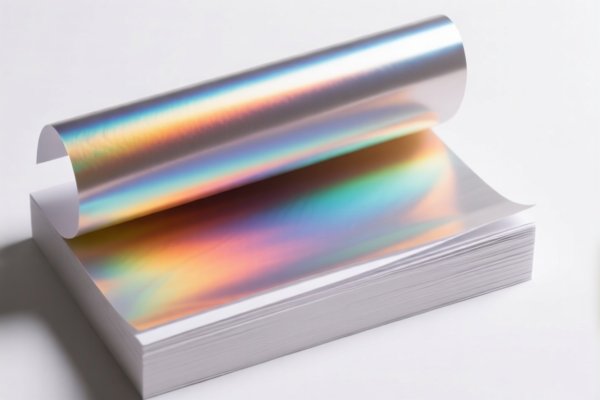

AI Analysis
📄 Thermal Paper (High Brightness Base Paper)
🌐 HS Code Reference & Customs Clearance Guide | 2026 Latest Tariff Analysis | Professional Customs Strategy
📌 I. Product Definition & Classification: What Exactly is "Thermal Paper Base Paper"?
Thermal paper is a specialty paper coated with a heat-sensitive chemical layer that produces an image when heated. In international trade, classification depends heavily on whether the product is in its base paper form (uncoated or lightly treated) or the finished coated product.
- Base Paper (Substrate): The fundamental paper stock, often high-brightness, used as the foundation for thermal coating. It may not yet have the thermal layer fully applied.
- Finished Thermal Paper: Paper that has undergone the coating process (thermal layer, overcoat, adhesive, etc.).
⚠️ Key Distinction Point:
- If the product is strictly uncoated paper designed specifically for thermal applications but lacks the final thermal chemical layer →归入 4802.20 (Paper for photo-sensitive, thermo-sensitive, or electro-sensitive use).
- If the product is coated thermal paper (finished) →归入 4811.90 (Paper coated with adhesives or other substances, excluding goods of heading 48.03, 48.09, 48.10, 48.11, 48.16, or 48.20).
- If the product is printed thermal paper (e.g., receipts, labels) →归入 4911.99 (Other printed matter).
📦 II. HS Code Classification Details (2026 Latest Tariff Authority Comparison)
Based on the provided data, here are the potential HS Codes and the rationale for each:
| HS Code | Product Description | Application Scenario | Reason for Matching |
|---|---|---|---|
4802.20.20.00 |
Base paper for thermo-sensitive paper/cardboard | Uncoated or semi-coated base paper specifically for thermal use | Match Success: Name "Thermal Paper" aligns with "Base paper for paper/cardboard for photo-sensitive, thermo-sensitive or electro-sensitive use." |
4802.20.10.00 |
Base paper for thermo-sensitive paper (other specs) | Base paper where material (thermal) and usage match, even if size specs are missing | Material & Usage Match: Based on material ("thermal") and name consistency, initially judged to fit. |
4811.90.80.30 |
Thermo-coated paper (other) | Finished thermal paper with thermal coating | Match Success: Name directly corresponds to core attribute "thermal"; inferred material is paper, fitting "thermo-coated paper." |
4811.90.90.30 |
Other paper coated with adhesives (thermo) | Finished thermal paper with direct thermal coating | Match Success: Name "Thermal Paper" fully matches material (paper) and core usage (direct thermal coating). |
4911.99.80.00 |
Other printed matter (incl. thermal receipts/labels) | Printed thermal paper (e.g., POS receipts, shipping labels) | Printed Matter: Thermal paper belongs to printed goods; inferred material is paper, fits "Other printed matter." |
🔍 Key Reminder:
- Base Paper vs. Coated Paper: If the thermal coating is not yet applied, use 4802. If coated, use 4811. - Printed vs. Unprinted: If the thermal paper is already printed with barcodes/text, consider 4911 (though often 4811 is used for raw thermal rolls, printed rolls may fall here depending on specific customs interpretation).
💰 III. 2026 Latest Tariff Rate Details (Including Surcharges & Policy Additions)
✅ Applicable Country: United States (US)
✅ Origin: China (CN)
✅ Effective Date: From November 10, 2025 (including subsequent imports)
🎯 1. HS Codes 4802.20.20.00 & 4802.20.10.00 (Base Paper for Thermal Use)
| Item | Content |
|---|---|
| Base Tariff Rate | 0% (ad valorem) |
| USITC Surcharge | +25% (from USITC Footnote 9903.88.01 / Section 301) |
| IEEPA Surcharge | +10% (for China/HK products, effective Nov 10, 2025) |
| Total Tariff Rate | 35.0% |
| Tax Calculation | CIF Value × 35% |
| De Minimis Exemption | ❌ Not Eligible (deny_de_minimis) |
| Legal Basis Path | IEEPA:9903.01.25 → IEEPA:9903.01.24 → USITC:4802.20.20.00 → FOOTNOTE:9903.88.01 |
📌 Explanation:
- "USITC Surcharge 25%": From the Section 301 investigation under the US Trade Act; - "IEEPA 10%": From the International Emergency Economic Powers Act (IEEPA) additional tariffs on Chinese goods; - Total 35%: A high tariff rate. Must be predicted in advance!
🎯 2. HS Codes 4811.90.80.30 & 4811.90.90.30 (Coated Thermal Paper)
| Item | Content |
|---|---|
| Base Tariff Rate | 0% |
| USITC Surcharge | +25% |
| IEEPA Surcharge | +10% |
| Total Tariff Rate | 35.0% |
| Tax Calculation | CIF × 35% |
| De Minimis Exemption | ❌ Not Eligible |
| Legal Basis Path | IEEPA:9901.25 → IEEPA:9903.01.24 → USITC:4811.90.80.30 → FOOTNOTE:9903.88.01 |
📌 Note:
- Same as above; both base paper and coated thermal paper fall under the same surcharge structure. - Whether it is "B2B raw thermal paper" or "finished thermal rolls," the 35% rate applies if originating from China.
🎯 3. HS Code 4911.99.80.00 (Printed Thermal Matter)
| Item | Content |
|---|---|
| Base Tariff Rate | 0% |
| USITC Surcharge | +7.5% |
| IEEPA Surcharge | +10% |
| Total Tariff Rate | 17.5% |
| Tax Calculation | CIF × 17.5% |
| De Minimis Exemption | ❌ Not Eligible (typically) |
| Legal Basis Path | IEEPA:9903.01.24 → USITC:4911.99.80.00 → FOOTNOTE:9903.88.01 |
📌 Important:
- If the thermal paper is already printed (e.g., labeled, receipt rolls with pre-printed text), it might be classified under 4911, resulting in a lower total tariff of 17.5%. - However, this is risky. Customs may still classify pre-printed thermal paper under 4811 (35%) if the printing is incidental or if the primary identity is "thermal paper." - Advice: Confirm with customs broker if pre-printed status qualifies for 4911.
🛠️ IV. Customs Clearance Practical Advice (Combat Pitfall Guide)
✅ 1. Preparation Checklist (All Required)
| Document | Required | Description |
|---|---|---|
| ✅ Product Specification Sheet | ✔️ | Must clearly state: "Thermal Paper," "Base Paper," brightness level, weight, dimensions. |
| ✅ Composition Statement | ✔️ | Explicitly state: "Uncoated base paper for thermal use" OR "Coated thermal paper with heat-sensitive layer." |
| ✅ Product Photos | ✔️ | Clear photos of the roll, core, and any labels/coating details. |
| ✅ Commercial Invoice | ✔️ | Must NOT simply say "Paper." Use "Thermal Paper Base Paper" or "Thermal Coated Paper." |
| ✅ Packing List | ✔️ | Show net/gross weight, number of rolls. |
| ✅ Certificate of Origin (CO) | ✔️ | To prove Chinese origin (triggers surcharges). |
✅ 2. Declaration Tips (Key Mantra)
🔥 "Clarify Coating Status, Specify Thermal Use, Avoid General 'Paper'!"
| Scenario | Correct Declaration | Wrong Practice |
|---|---|---|
| Uncoated Base Paper | 4802.20.20.00 "Base paper for thermo-sensitive paper" |
Declaring as "General Paper" (4802) → Higher scrutiny |
| Coated Thermal Paper | 4811.90.80.30 "Thermal coated paper" |
Declaring as "Printed Paper" without proof → Risk of 35% |
| Pre-printed Receipts | 4911.99.80.00 "Other printed matter" |
Declaring as "Thermal Paper" → Pay 35% instead of 17.5% |
| Vague Description | "Paper" | Ambiguous → Customs delay, inspection, potential reclassification |
✅ 3. Special Situation Handling
| Situation | Handling Advice |
|---|---|
| OEM Custom Thermal Paper | Provide customer order + design/tech specs to confirm if it's base or coated. |
| High Brightness Claim | Emphasize "High Brightness" in specs; this doesn't change HS code but confirms quality grade. |
| Mixed Shipments | If base paper and coated paper are shipped together, declare separately. Do not lump into one vague HS code. |
| Re-export | If re-exported from a third country, ensure the Country of Origin is still China. US tariffs apply based on origin, not shipment route. |
🌍 V. Global Market Customs Comparison (2026 Latest)
| Country/Region | Recommended HS Code | Tariff Rate (China Origin) | Certification Required | Notes |
|---|---|---|---|---|
| 🇺🇸 USA | 4802.20.20.00 / 4811.90 |
35% (Base/Coated) 17.5% (Printed) |
No specific certification | High tariff risk. IEEPA + 301 apply. |
| 🇨🇳 China | 4802.20.20.00 |
0% | No special cert | Domestic trade, no export tariffs. |
| 🇪🇺 EU | 4802.20.20.00 |
0% | REACH (chemicals) | No additional surcharges for thermal paper. |
| 🇦🇺 Australia | 4802.20.20.00 |
5% | No special cert | Standard MFN rate. |
| 🇯🇵 Japan | 4802.20.20.00 |
0% | JIS (if applicable) | No surcharges. |
📌 Conclusion:
- USA is the only major market imposing high surcharges on Chinese thermal paper. - Cost Impact: A $10,000 shipment faces $3,500 in tariffs for base/coated paper. This significantly impacts profit margins. - Strategy: Consider if the product can be classified as 4911 (printed) if it has significant pre-printing, or explore 供应链 diversification (e.g., sourcing from non-Chinese origins) for US-bound goods.
📌 VI. Common Errors & Pitfall Guide (Blood & Tears Lessons)
❌ Error 1: Declaring "Thermal Paper" as "General Paper" (4802.99)
👉 Consequence: Customs may audit and reclassify to 4802.20, triggering 35% tariffs and penalties.
❌ Error 2: Not specifying "Thermo-sensitive" in description
👉 Consequence: Customs may doubt the HS code, leading to delayed clearance and storage fees.
❌ Error 3: Assuming all thermal paper is the same
👉 Consequence: Confusing Base Paper (4802) with Coated Paper (4811) can lead to incorrect duty calculation.
❌ Error 4: Ignoring IEEPA 10% Surcharge
👉 Consequence: Budgeting only for 25% (301) and missing the additional 10% (IEEPA) → Unexpected cash flow crisis.
✅ Correct Practice:
"Thermal Paper Base Paper, High Brightness, Uncoated, for Thermal Printer Rolls, Model XYZ, Origin: China"
🎯 VII. Conclusion: Precise Classification Saves Money!
🎯 Remember the Mantra:
🔹 "Base vs. Coated, Know the Difference!"
🔹 "Thermal Paper to US: 35% Tax, Budget Wisely!"
🔹 "Printed Matter? Maybe 17.5%, But Verify First!"
📌 Pro Tip:
If your thermal paper is pre-printed with significant value-added design, consult a customs broker about classifying under 4911.99.80.00 to potentially reduce the tariff to 17.5%.
For raw thermal paper/base paper, the 35% rate is fixed for Chinese origin. Consider Advance Ruling if unsure.
📣 Immediate Action:
📞 Contact a professional customs broker + Provide product photos + Request HS Code Pre-ruling
🚀 Let your thermal paper pass customs smoothly, control costs, and maximize profits!
✨ Professional Customs Clearance Starts with Accurate Classification!
💼 Every cent of your cost deserves to be calculated precisely!
Customer Reviews
About HS Code Classification
The Harmonized System (HS) is an internationally standardized nomenclature developed by the World Customs Organization (WCO) to classify traded products. Over 200 countries use the HS system as the basis for customs tariffs, trade statistics, and import/export regulations.
Each HS code follows a hierarchical structure:
- Chapter (2 digits) — Broad category of goods (e.g., Chapter 84: Machinery and Mechanical Appliances)
- Heading (4 digits) — More specific grouping within the chapter
- Subheading (6 digits) — Internationally standardized breakdown, used by all WCO member countries
- National subdivisions (8-10 digits) — Country-specific extensions for further classification, such as US HTSUS 10-digit codes
Correct HS code classification is essential for smooth customs clearance, accurate duty payment, and compliance with trade regulations. Misclassification can lead to customs delays, overpayment of duties, or penalties.
When importing from CN to US, the applicable tariff rates may include:
- Most-Favored-Nation (MFN) rate — The standard duty rate applied to WTO members
- General rate — Applied to countries without trade agreements
- Trade remedy duties — Additional tariffs such as Section 301 (anti-dumping), Section 232 (national security), or countervailing duties
The information provided on this page is for reference purposes only. For official classification, please consult with your local customs authority or a licensed customs broker.