Thermal Paper Base Roll
CN → US| HS Code | Tariff Rate | Origin | Destination | Doc |
|---|---|---|---|---|
| 4811908030 | 35.0% | CN | US | Official Doc |
| 4811909030 | 35.0% | CN | US | Official Doc |
Product Images
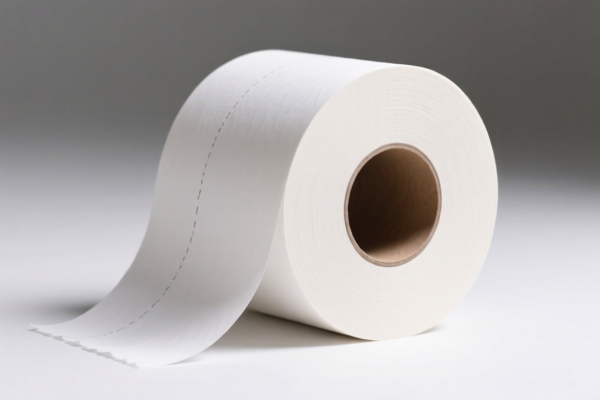
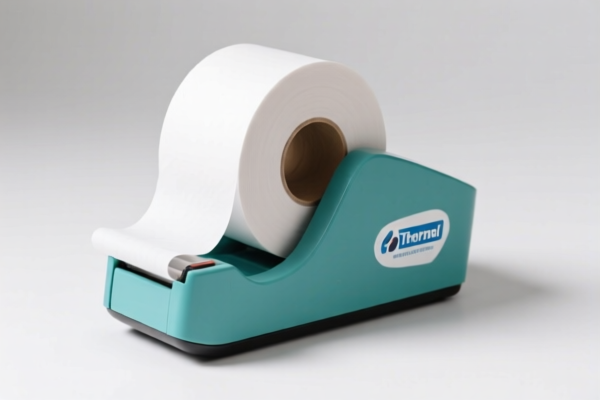
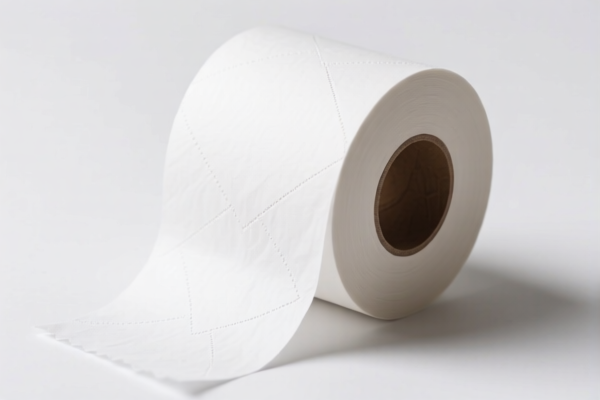
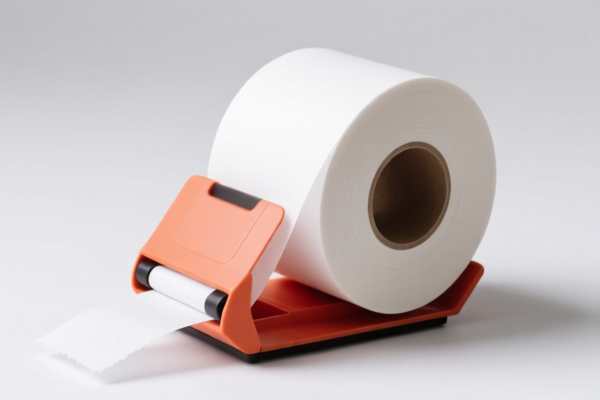
AI Analysis
🧻 Thermal Paper Base Roll (Direct Thermal Coated Paper)
🌐 HS Code Reference & Customs Clearance Guide | 2026 Latest Tariff Analysis | Professional Strategy
📌 I. Product Definition & Classification: What Exactly is "Thermal Paper"?
Thermal Paper Base Roll (specifically Direct Thermal Coated Paper) is a specialized paper product where the surface is chemically treated to produce an image when exposed to heat, without the need for ink, ribbon, or toner. It is widely used in POS receipts, fax machines, ATM tickets, and shipping labels.
In international trade, it is categorized under Chapter 48 (Paper and Paperboard). The critical distinction lies in its form factor (roll width/size) and grammage (weight per square meter).
⚠️ Key Classification Distinction:
- By Form: Is it in narrow strips/rolls (<15cm) or wide rolls/sheets (>15cm width)?
- By Weight: Does it weigh over 30 g/m²?
- By Type: Is it Direct Thermal (heat-sensitive layer applied directly to base paper) vs. Thermal Transfer (uses a ribbon)?
Note: The data below specifically covers Direct Thermal Coated Paper.
📦 II. HS Code Classification Details (2026 Latest Tariff Authority)
Based on the provided data, here are the two primary HS Codes for Direct Thermal Coated Paper subject to specific tariffs.
| HS Code | Product Description | Dimensions/Format | Grammage | Key Constraint |
|---|---|---|---|---|
| 4811.90.80.30 | Other Direct Thermal Coated Paper | Strips/Rolls > 15 cm width OR Sheets with one side > 36 cm AND other side > 15 cm | Over 30 g/m² | Must exceed dimensional thresholds |
| 4811.90.90.30 | Other Direct Thermal Coated Paper | Other (General) | Not specified in detail, but distinct from the "strips/rolls" category | Catch-all for other thermal paper forms |
🔍 Critical Logic:
- Both codes fall under Heading 4811: "Paper, paperboard, cellulose wadding and webs of cellulose fibers, coated, impregnated, covered, surface-colored, surface-decorated or printed... other than goods of heading 4803, 4809 or 4810." - Both are specifically for Direct Thermal Coated Paper. - Both have a 25.0% Total Tax Rate.
💰 III. 2026 Latest Tariff Rate Breakdown (Detailed Analysis)
✅ Applicable Country: United States (US)
✅ Origin: China (CN)
✅ Tax Type: Base Tariff + Section 301 Additional Tariff
🎯 1. 4811.90.80.30 —— Large Format Thermal Paper (>15cm width/30g/m²)
| Item | Detail |
|---|---|
| Base Tariff | 0.0% (Most Favored Nation rate for this subheading) |
| Additional Tariff | +25.0% (Section 301 Tariff) |
| Total Tax Rate | 25.0% |
| Tax Calculation | Tax = CIF Value × 25% |
| Legal Basis | USITC Heading 4811 → Section 301 List 4 (or relevant footnote) |
📌 Explanation:
- The base tariff is 0%, meaning standard international trade does not impose a duty on this specific paper category.
- However, due to Section 301 tariffs on Chinese goods, an additional 25% is applied.
- Total Liability: 25% of the customs value (CIF).
🎯 2. 4811.90.90.30 —— Other Direct Thermal Coated Paper
| Item | Detail |
|---|---|
| Base Tariff | 0.0% |
| Additional Tariff | +25.0% |
| Total Tax Rate | 25.0% |
| Tax Calculation | Tax = CIF Value × 25% |
| Legal Basis | USITC Heading 4811 → Section 301 List |
📌 Explanation:
- Identical tax treatment to4811.90.80.30.
- The distinction is purely descriptive regarding dimensions/width, but the financial impact is identical.🚨 Key Takeaway:
Regardless of whether your thermal paper falls under4811.90.80.30(large rolls) or4811.90.90.30(other), you will face a 25% total duty. There is no base duty savings to be had; the cost is driven entirely by geopolitical trade policies.
🛠️ IV. Customs Clearance Practical Advice (Avoid Pitfalls)
✅ 1. Essential Documentation Checklist
| Document | Required? | Purpose |
|---|---|---|
| ✅ Product Specification Sheet | ✔️ | Must explicitly state: "Direct Thermal Coated Paper," chemical coating type, and weight per square meter (g/m²). |
| ✅ Commercial Invoice | ✔️ | Must clearly describe as "Thermal Paper Roll" or "Direct Thermal Paper." Avoid vague terms like "Office Paper." |
| ✅ Packing List | ✔️ | Details roll diameter, width, and core size. Critical for verifying if it falls under ">15cm" or ">36cm" rules. |
| ✅ Certificate of Origin (CO) | ✔️ | To prove origin. If not from China, different tariffs may apply. |
| ✅ Safety Data Sheet (SDS) | ✔️ | Sometimes requested for chemical-coated papers to ensure no hazardous substances violate other regulations. |
✅ 2. Declaration Tips (The "Golden Rules")
🔥 Rule: "Declare by Size & Weight, Not Just 'Paper'!"
| Scenario | Correct HS Code | Risk of Wrong Declaration |
|---|---|---|
| Roll width > 15cm AND Weight > 30g/m² | 4811.90.80.30 |
If misdeclared as smaller rolls, it might look like duty-free (but triggers audit). If misdeclared as non-thermal, penalty applies. |
| Roll width ≤ 15cm OR Weight ≤ 30g/m² | Not covered in provided data | ⚠️ Caution: The provided data ONLY covers the 25% taxed items. If your paper is narrow (<15cm) or light (<30g/m²), it may fall under a different HS Code (e.g., 4811.40 or 4811.60) which might have different rates. Check those separately! |
| Thermal Transfer Paper (uses ribbon) | Different HS | Do NOT declare as Direct Thermal. It may be classified differently (e.g., printed paper). |
⚠️ Warning:
The data provided only covers: 1. Rolls/Strips > 15 cm width 2. Sheets with one side > 36 cm and other > 15 cm 3. Weight > 30 g/m²If your thermal paper is SMALL (e.g., receipt rolls < 50mm width) or LIGHT (<30g/m²), these HS Codes DO NOT APPLY. You must look for other codes in Chapter 48, which might have different duty rates. Do not force these codes if dimensions don't match.
✅ 3. Special Considerations
| Situation | Advice |
|---|---|
| Small Receipt Rolls (<15cm) | These likely fall under 4811.40 (Self-copy paper) or 4811.60 (Other coated). Check if those have lower or zero Section 301 tariffs. |
| Composite Goods | If thermal paper is bundled with printers, the printer (HS 8443) may dominate the classification. |
| Chemical Content | Ensure the thermal coating does not violate EPA or REACH regulations if exporting to other regions, though US customs focuses on the HTSUS code. |
🌍 V. Global Market Comparison (2026)
| Region | HS Code | Tariff Rate | Notes |
|---|---|---|---|
| 🇺🇸 United States | 4811.90.80.30 / 90.90.30 | 25.0% | High due to Section 301. Base is 0%. |
| 🇨🇳 China | 4811.90.80.30 / 90.90.30 | ~2.5% - 5% | Varies by specific tariff line; no Section 301. |
| 🇪🇺 EU | 4811.90 | 0% - 2.4% | Generally low, but check specific CN codes. |
| 🇨🇦 Canada | 4811.90 | 0% - 5% | Generally favorable, no major Section 301 equivalent. |
📌 Conclusion:
The 25% duty is unique to the US market (and potentially other markets with similar retaliatory tariffs). For most other major markets, this product is either duty-free or carries a minimal standard duty.
📌 VI. Common Mistakes & Pitfalls (Learn from Others)
❌ Mistake 1: Declaring small receipt rolls (e.g., 57mm wide) as 4811.90.80.30 (which requires >15cm width).
👉 Result: Customs rejection, delay, or fine for incorrect declaration.
✅ Fix: Verify width. If <15cm, find the correct code for "narrow rolls."
❌ Mistake 2: Ignoring the 30 g/m² threshold.
👉 Result: If your paper is lightweight (<30g/m²) but large, you might be misclassified.
✅ Fix: Include gram weight in your spec sheet.
❌ Mistake 3: Calling it "Copy Paper" or "Printer Paper" generically.
👉 Result: Customs may assign a higher default rate or request additional testing.
✅ Fix: Use precise terms: "Direct Thermal Coated Paper Roll."
🎯 VII. Conclusion: Strategic Sourcing & Costing
🎯 Remember:
🔹 "Width > 15cm? Weight > 30g? Then 25% Duty Hits Hard!"
🔹 "Small Rolls? Check Other Codes – You Might Save Money!"
🔹 "Always Declare 'Direct Thermal' – Don't Leave It to Guesswork."📌 Pro Tip:
If your thermal paper does not meet the size/weight criteria in the provided data (e.g., it is narrow or light), DO NOT use these HS Codes. Investigate codes like 4811.40 or 4811.60, which may have different tariff treatments. Misclassification is the #1 cause of customs delays.
📣 Immediate Action:
📞 Contact Your Customs Broker: Provide the exact roll width and gram weight.
📄 Verify Dimensions: Ensure your product matches>15cmor>36cmcriteria.
💡 Cost Calculation: Add 25% to your landed cost if selling to the US under these specific codes.
✨ Precision in Classification Saves Thousands!
💼 Don't Guess Your HS Code – Verify It!
Customer Reviews
About HS Code Classification
The Harmonized System (HS) is an internationally standardized nomenclature developed by the World Customs Organization (WCO) to classify traded products. Over 200 countries use the HS system as the basis for customs tariffs, trade statistics, and import/export regulations.
Each HS code follows a hierarchical structure:
- Chapter (2 digits) — Broad category of goods (e.g., Chapter 84: Machinery and Mechanical Appliances)
- Heading (4 digits) — More specific grouping within the chapter
- Subheading (6 digits) — Internationally standardized breakdown, used by all WCO member countries
- National subdivisions (8-10 digits) — Country-specific extensions for further classification, such as US HTSUS 10-digit codes
Correct HS code classification is essential for smooth customs clearance, accurate duty payment, and compliance with trade regulations. Misclassification can lead to customs delays, overpayment of duties, or penalties.
When importing from CN to US, the applicable tariff rates may include:
- Most-Favored-Nation (MFN) rate — The standard duty rate applied to WTO members
- General rate — Applied to countries without trade agreements
- Trade remedy duties — Additional tariffs such as Section 301 (anti-dumping), Section 232 (national security), or countervailing duties
The information provided on this page is for reference purposes only. For official classification, please consult with your local customs authority or a licensed customs broker.