Thermal Paper Label Roll
CN → US| HS Code | Tariff Rate | Origin | Destination | Doc |
|---|---|---|---|---|
| 4802202000 | 35.0% | CN | US | Official Doc |
| 4802201000 | 35.0% | CN | US | Official Doc |
| 4811908030 | 35.0% | CN | US | Official Doc |
| 4811909030 | 35.0% | CN | US | Official Doc |
| 4911998000 | 17.5% | CN | US | Official Doc |
Product Images
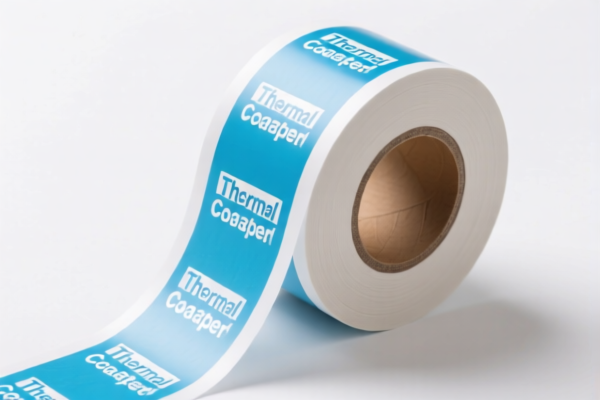
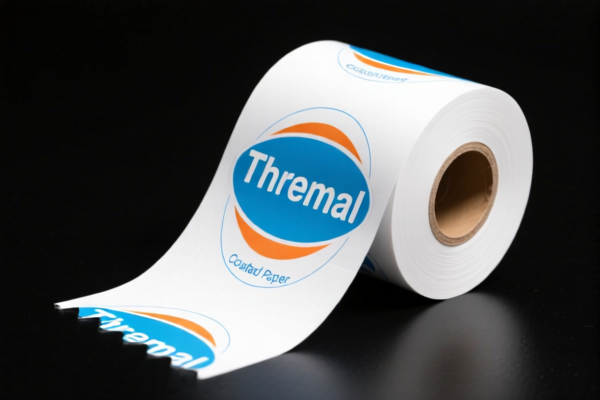
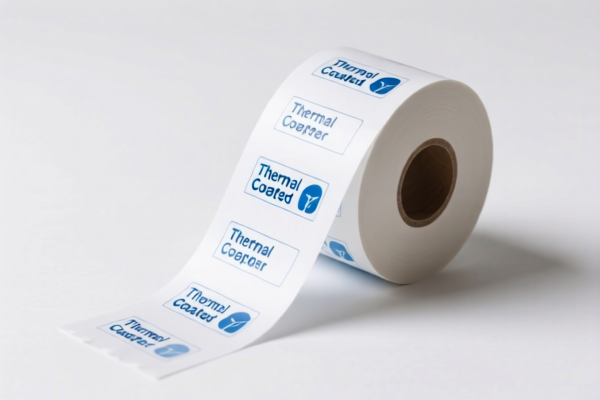
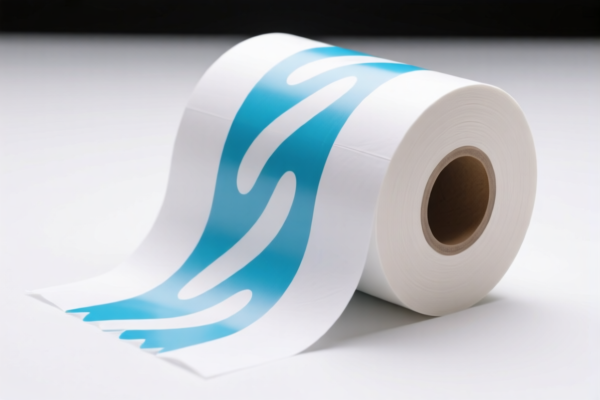
AI Analysis
🏷️ Thermal Paper Label Roll (热敏纸标签卷)
🌐 HS Code Reference & Customs Clearance Guide | 2026 Latest Tariff Analysis | Professional Compliance Strategy
📌 I. Product Definition & Classification: Do You Really Know "Thermal Paper"?
Thermal paper labels are widely used in logistics, retail, healthcare, and finance for immediate printing without ink or ribbons. In international trade, the classification depends heavily on the base material vs. finished application.
Two Main Categories: 1. Base Paper with Thermal Coating: The core paper substrate with heat-sensitive coating, often sold as rolls for further processing or industrial use. 2. Finished Printed Thermal Labels: Thermal paper that has been printed with logos, barcodes, or text, functioning as a "printed article."
⚠️ Key Distinction Point:
- If it is blank thermal paper (white, unprinted) or only has generic barcodes intended for user printing → Classified under Chapter 48 (Paper) or Chapter 49 (Printed Matter) depending on specific coating/usage.
- If it is specifically pre-printed as a finished label with complex graphics → May fall under Chapter 49 as other printed matter.
📦 II. HS Code Classification Details (2026 Latest Tariff Authority Comparison)
| HS Code | Product Description | Application Scenario | Key Attribute |
|---|---|---|---|
4802.20.10.00 |
Thermal paper, base paper consistency determined by material & name | Generic thermal paper rolls, unprinted | ✅ Based on Material & Name consistency |
4802.20.20.00 |
Thermal paper, matches basic paper attributes of photosensitive/thermal/electric paper | Industrial base paper, high-volume rolls | ✅ Matches Base Paper Attributes |
4811.90.80.30 |
Thermal coated paper, matches core thermal attributes & paper material | Coated thermal stock, specific coating tech | ✅ Matches Coated Paper & Core Function |
4811.90.90.30 |
Thermal paper, matches paper material & direct thermal coating usage | Direct thermal coating applications | ✅ Matches Direct Thermal Coating |
4911.99.80.00 |
Thermal paper, classified as "other printed matter" | Pre-printed labels, branded labels | ✅ Classified as Printed Article |
🔍 Critical Reminder:
- Blank thermal paper (unprinted) generally falls under 4802 or 4811.
- Pre-printed thermal labels (with specific content) are often scrutinized under 4911 as "other printed matter."
- Misclassification can lead to significant duty differences (35% vs. 17.5%) and compliance risks.
💰 III. 2026 Latest Tariff Rate Breakdown (Including Surtaxes & Policy Add-ons)
✅ Applicable Country: United States (US)
✅ Origin: China (CN)
✅ Effective Date: From November 10, 2025 (including subsequent imports)
🎯 1. 4802.20.20.00 – Thermal Paper Classification (Base Paper Attributes)
| Item | Content |
|---|---|
| Base Tariff | 0.0% (ad valorem) |
| USITC Surcharge | +25.0% (301 Tariff) |
| Section 122 Tariff | +10.0% (Specific provision for certain Chinese goods) |
| Total Rate | 35.0% |
| Tax Calculation | CIF Value × 35% |
| De Minimis Exemption | ❌ Not Eligible (High duty rate blocks de minimis) |
| Legal Basis Path | Base: 0% → 301: 25% → Sec 122: 10% |
📌 Explanation:
- This code applies to blank thermal base paper.
- The 35% total duty is significant. Importers must account for this in cost models.
- Section 122 is a critical add-on for specific thermal paper products from China.
🎯 2. 4802.20.10.00 – Thermal Paper Classification (Material & Name Consistency)
| Item | Content |
|---|---|
| Base Tariff | 0.0% |
| USITC Surcharge | +25.0% |
| Section 122 Tariff | +10.0% |
| Total Rate | 35.0% |
| Tax Calculation | CIF Value × 35% |
| De Minimis Exemption | ❌ Not Eligible |
| Legal Basis Path | Base: 0% → 301: 25% → Sec 122: 10% |
📌 Note:
- Similar to the above, this covers thermal paper classified by name and material consistency.
- Duty burden is identical; correct subheading depends on specific product description in customs declarations.
🎯 3. 4811.90.80.30 – Thermal Coated Paper (Core Thermal Attributes)
| Item | Content |
|---|---|
| Base Tariff | 0.0% |
| USITC Surcharge | +25.0% |
| Section 122 Tariff | +10.0% |
| Total Rate | 35.0% |
| Tax Calculation | CIF Value × 35% |
| De Minimis Exemption | ❌ Not Eligible |
| Legal Basis Path | Base: 0% → 301: 25% → Sec 122: 10% |
📌 Explanation:
- Applies when the product is explicitly identified as coated paper with thermal properties.
- Often used for industrial thermal rolls where the coating technology is the defining feature.
🎯 4. 4811.90.90.30 – Thermal Paper (Direct Thermal Coating Usage)
| Item | Content |
|---|---|
| Base Tariff | 0.0% |
| USITC Surcharge | +25.0% |
| Section 122 Tariff | +10.0% |
| Total Rate | 35.0% |
| Tax Calculation | CIF Value × 35% |
| De Minimis Exemption | ❌ Not Eligible |
| Legal Basis Path | Base: 0% → 301: 25% → Sec 122: 10% |
📌 Note:
- Specifically for direct thermal coating applications.
- Ensures precise matching between product material and intended usage in customs valuation.
🎯 5. 4911.99.80.00 – Thermal Paper as Printed Matter
| Item | Content |
|---|---|
| Base Tariff | 0.0% |
| USITC Surcharge | +7.5% |
| Section 122 Tariff | +10.0% |
| Total Rate | 17.5% |
| Tax Calculation | CIF Value × 17.5% |
| De Minimis Exemption | ❌ Not Eligible |
| Legal Basis Path | Base: 0% → 301: 7.5% → Sec 122: 10% |
📌 Critical Advantage:
- This code results in a significantly lower duty rate (17.5%) compared to paper classifications (35%).
- Applies when thermal paper is pre-printed and considered a printed article.
- Warning: Must genuinely be "printed matter." Blank paper cannot use this code. Misuse leads to severe penalties.
🛠️ IV. Customs Clearance Practical Advice (Combat Pitfall Guide)
✅ 1. Documentation Checklist (Essential)
| Document | Mandatory? | Notes |
|---|---|---|
| ✅ Product Specification Sheet | ✔️ | Must detail coating type, base paper weight, thermal sensitivity |
| ✅ Coating Technology Description | ✔️ | To support classification under 4811 vs 4802 |
| ✅ Product Photos | ✔️ | Clear images showing rolls, labels, and any pre-printed content |
| ✅ Commercial Invoice | ✔️ | Must clearly state "Thermal Paper" or "Thermal Label" and HS Code |
| ✅ Packing List | ✔️ | Show dimensions, weight, and number of rolls per carton |
| ✅ Pre-printed Content Samples | ✔️ | If claiming 4911.99.80.00, provide examples of printed labels |
✅ 2. Declaration Strategy (Key Mnemonics)
🔥 "Blank Paper 35, Pre-printed 17.5, Don't Mix Up!"
| Scenario | Correct Declaration | Incorrect Action |
|---|---|---|
| Blank Thermal Rolls | 4802.20.10.00 / 4802.20.20.00 / 4811.90.80.30 / 4811.90.90.30 |
Classify as 4911 → Audit risk |
| Pre-printed Thermal Labels | 4911.99.80.00 |
Classify as 4802 → Higher duty (35% vs 17.5%) |
| Generic Paper Rolls | 4802 |
Use 4911 without proof of printing → Penalties |
✅ 3. Special Cases Handling
| Situation | Handling Advice |
|---|---|
| OEM Custom Thermal Paper | Provide client order + design specs. If blank, use 48xx codes. |
| Pre-printed Logistics Labels | Clearly declare as "Printed Thermal Labels" to qualify for 17.5% duty. |
| Mixed Shipments (Blank + Printed) | Separate Declaration! Do not mix. Blank parts under 48xx, printed under 4911. |
| Sample Rolls | Mark as "Sample, No Commercial Value" if applicable, but ensure accurate description. |
🌍 V. Global Market Comparison (2026 Latest)
| Country/Region | Recommended HS Code | Duty Rate (China Origin) | Certification | Notes |
|---|---|---|---|---|
| 🇺🇸 USA | 4802.20.10.00 / 4911.99.80.00 |
35% (Paper) / 17.5% (Printed) | None specific | High duty burden; classification is critical |
| 🇨🇳 China | 4802 / 4911 |
5% (General) | N/A | Lower base duty |
| 🇪🇺 EU | 4802 / 4911 |
0% - 4.5% | CE (if applicable) | No 301/122 surcharges |
| 🇦🇺 Australia | 4802 / 4911 |
5% | N/A | Moderate duty |
| 🇯🇵 Japan | 4802 / 4911 |
0% - 5% | PSE (if electronic) | Low duty |
📌 Conclusion:
- USA is the only market with 35% or 17.5% duty on thermal paper from China due to 301 & Section 122 tariffs.
- EU, Japan, Australia have significantly lower duties (0-5%).
- Strategy: If exporting to the US, optimize between48xx(blank) and4911(printed) to minimize costs where legally compliant.
📌 VI. Common Errors & Pitfalls (Blood & Tears Lessons)
❌ Error 1: Declaring blank thermal paper as 4911.99.80.00
👉 Consequence: Audit Failure, Back Duties + Fines! (You pay 17.5% but owe 35%)
❌ Error 2: Declaring pre-printed labels as 4802.20.10.00
👉 Consequence: Overpaying 17.5% in duties. (Missed savings)
❌ Error 3: Mixing blank and printed rolls in one shipment without separate declarations
👉 Consequence: Customs holds shipment, requires re-classification, delays delivery.
❌ Error 4: Vague description "Paper Roll"
👉 Consequence: Customs assigns worst-case rate (35%) or requests extensive documentation.
✅ Correct Practice:
"Pre-printed Thermal Shipping Labels, 4x6 inch, with Barcode, Adhesive Backing, Model XYZ" →
4911.99.80.00
"Blank Thermal Paper Roll, 80gsm, Direct Thermal Coating, Width 100mm" →4811.90.90.30
🎯 VII. Conclusion: Professional Declaration, Save Money, Avoid Risks!
🎯 Remember the Mnemonic:
🔹 "Blank Paper 35%, Pre-printed 17.5%."
🔹 "Classification Saves Dollars, Misclassification Costs Thousands."
📌 Pro Tip:
If you export pre-printed thermal labels, ensure the pre-printing is substantial and final. Generic barcodes for user printing may still be classified as
4802/4811. Consult a customs broker to confirm if your specific pre-printing qualifies for4911.
📣 Immediate Action:
📞 Engage a professional customs broker.
📤 Provide clear product photos and specifications.
🚀 Optimize your duty rate from day one!
✨ Professional clearance starts with precise classification!
💼 Every cent of duty saved is pure profit!
Customer Reviews
About HS Code Classification
The Harmonized System (HS) is an internationally standardized nomenclature developed by the World Customs Organization (WCO) to classify traded products. Over 200 countries use the HS system as the basis for customs tariffs, trade statistics, and import/export regulations.
Each HS code follows a hierarchical structure:
- Chapter (2 digits) — Broad category of goods (e.g., Chapter 84: Machinery and Mechanical Appliances)
- Heading (4 digits) — More specific grouping within the chapter
- Subheading (6 digits) — Internationally standardized breakdown, used by all WCO member countries
- National subdivisions (8-10 digits) — Country-specific extensions for further classification, such as US HTSUS 10-digit codes
Correct HS code classification is essential for smooth customs clearance, accurate duty payment, and compliance with trade regulations. Misclassification can lead to customs delays, overpayment of duties, or penalties.
When importing from CN to US, the applicable tariff rates may include:
- Most-Favored-Nation (MFN) rate — The standard duty rate applied to WTO members
- General rate — Applied to countries without trade agreements
- Trade remedy duties — Additional tariffs such as Section 301 (anti-dumping), Section 232 (national security), or countervailing duties
The information provided on this page is for reference purposes only. For official classification, please consult with your local customs authority or a licensed customs broker.