Thermal Paper for Self Service Ordering Machine
CN → US| HS Code | Tariff Rate | Origin | Destination | Doc |
|---|---|---|---|---|
| 4811908030 | 35.0% | CN | US | Official Doc |
| 4811909030 | 35.0% | CN | US | Official Doc |
| 4802201000 | 35.0% | CN | US | Official Doc |
| 4802202000 | 35.0% | CN | US | Official Doc |
| 4911996000 | 17.5% | CN | US | Official Doc |
Product Images

AI Analysis
🧾 Thermal Paper for Self-Service Ordering Machines
🌐 HS Code Reference & Customs Clearance Guide | 2026 Latest Tariff Analysis | Professional Clearance Strategy
📌 I. Product Definition & Classification: Do You Really Understand "Thermal Paper"?
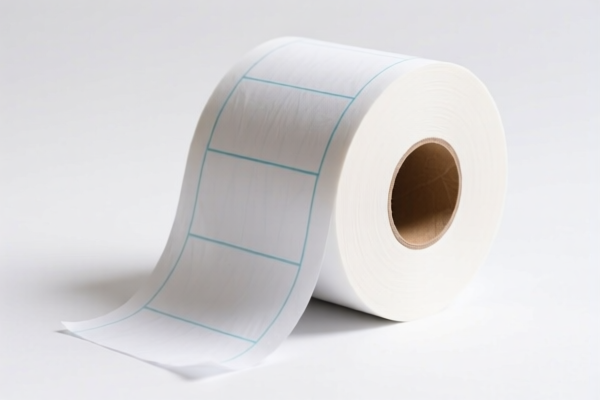
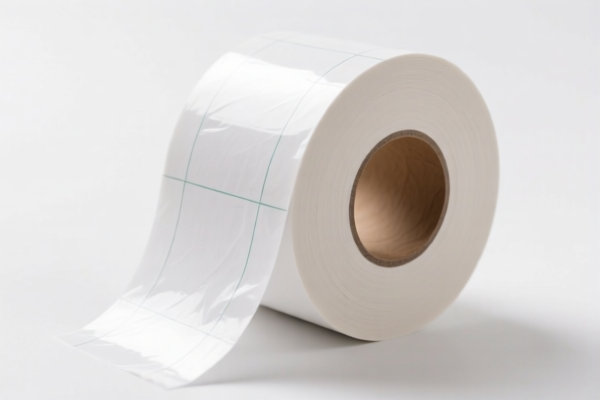
Thermal paper is a specialized coated paper that forms images when exposed to heat. In the context of Self-Service Ordering Machines (SSOMs) (such as Kiosks in restaurants, gas stations, or retail stores), this product is critical for printing receipts, tickets, and order confirmations.
Internationally, it is classified based on its physical structure (is it pre-coated? is it base paper?) and its intended use (is it a finished good or a raw material?). The classification hinges on whether the paper is considered a "finished thermal paper" or a "base paper for thermal printing."
⚠️ Key Distinction Point:
- If the paper is fully coated and ready for use in printers → It falls under Chapter 48 (Paper/Paperboard) as "Thermal Paper."
- If the paper is uncoated base paper intended to be coated later → It might fall under 4802 as paper for printing, but specific thermal subclasses exist.
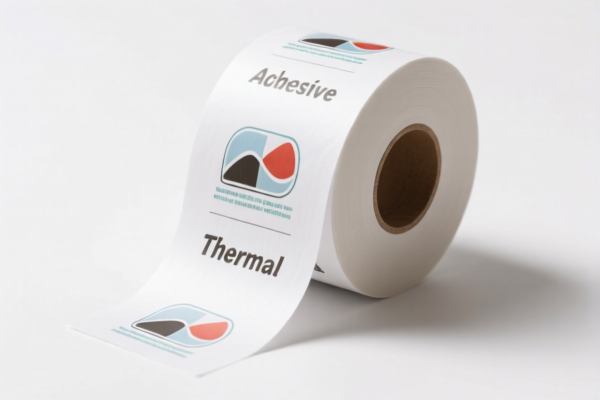
- If it is printed with specific graphics/logos before use → It may be classified under Chapter 49 (Printed Matter).
📦 II. HS Code Classification Details (2026 Latest Tariff Authoritative Comparison)
| HS Code | Product Description | Application Scenario | Key Attribute |
|---|---|---|---|
4811.90.80.30 |
Thermal Paper | Matches core attributes: Thermal coating & Paper material | ✅ Pre-coated, generic thermal roll |
4811.90.90.30 |
Thermal Paper | Matches material: Paper & Direct Thermal coating purpose | ✅ Pre-coated, specific direct thermal application |
4802.20.10.00 |
Thermal Paper | Matches material: Thermal & Use: Thermal Paper | ✅ Base paper specifically for thermal use |
4802.20.20.00 |
Thermal Paper | Matches attribute: Can be used as thermal paper | ✅ Base paper with potential for thermal conversion |
4911.99.60.00 |
Thermal Paper | Matches attribute: Other printed matter on paper | ✅ Pre-printed with content/logos |
🔍 Critical Reminder:
- Uncoated Base Paper (4802.20) vs. Finished Thermal Paper (4811.90): If the paper arrives with the chemical coating already applied, it must be classified under 4811.90. Classifying finished thermal paper under 4802 is a common error that leads to penalties.
- Printed vs. Blank: If the thermal paper already contains printed text, logos, or graphics (e.g., a restaurant menu receipt paper), it may shift to 4911.99.60.00 ("Other printed matter"), which has a different tax structure.
💰 III. 2026 Latest Tariff Rate Detailed Explanation (Including Surcharges, Policy Add-ons)
✅ Applicable Country: United States (US)
✅ Origin: China (CN)
✅ Effective Date: November 10, 2025 (and subsequent imports)
🎯 1. 4811.90.80.30 —— Thermal Paper (Generic Pre-coated)
| Item | Content |
|---|---|
| Base Rate | 0.0% (ad valorem) |
| USITC Surcharge | +25.0% (Under USITC Footnote for Section 301) |
| IEEPA Surcharge | +10.0% (Against Chinese/HK products, effective Nov 10, 2025) |
| Total Rate | 35.0% |
| Tax Calculation | CIF Value × 35% |
| De Minimis Eligibility | ❌ Not Eligible (deny_de_minimis applies to Section 301/IEEPA goods) |
| Legal Basis Path | IEEPA:9903.01.25 → IEEPA:9903.01.24 → USITC:4811.90.80.30 → FOOTNOTE:Section 301 |
📌 Explanation:
- The 25% comes from Section 301 tariffs on Chinese goods.
- The 10% is the additional IEEPA tariff applied to these specific HS codes starting Nov 2025.
- Total 35% is high. This means for every $10,000 of thermal paper, you pay $3,500 in duties alone.
🎯 2. 4811.90.90.30 —— Thermal Paper (Specific Direct Thermal Use)
| Item | Content |
|---|---|
| Base Rate | 0.0% |
| USITC Surcharge | +25.0% |
| IEEPA Surcharge | +10.0% |
| Total Rate | 35.0% |
| Tax Calculation | CIF × 35% |
| De Minimis Eligibility | ❌ Not Eligible |
| Legal Basis Path | IEEPA:9901.25 → IEEPA:9903.01.24 → USITC:4811.90.90.30 |
📌 Note:
- Tax rate is identical to4811.90.80.30.
- The distinction is administrative (subheading level), but the duty burden is the same.
🎯 3. 4802.20.10.00 & 4802.20.20.00 —— Base Paper for Thermal Use
| Item | Content |
|---|---|
| Base Rate | 0.0% |
| USITC Surcharge | +25.0% |
| IEEPA Surcharge | +10.0% |
| Total Rate | 35.0% |
| Tax Calculation | CIF × 35% |
| De Minimis Eligibility | ❌ Not Eligible |
📌 Warning:
- Even if classified as "Base Paper" (4802), if it is clearly intended for thermal use and subject to the same trade restrictions, it still incurs the 35% total rate.
- Do not assume base paper is cheaper; the surcharges apply across these thermal-related categories.
🎯 4. 4911.99.60.00 —— Pre-printed Thermal Paper (Printed Matter)
| Item | Content |
|---|---|
| Base Rate | 0.0% |
| USITC Surcharge | +7.5% |
| IEEPA Surcharge | +10.0% |
| Total Rate | 17.5% |
| Tax Calculation | CIF × 17.5% |
| De Minimis Eligibility | ❌ Not Eligible |
| Legal Basis Path | IEEPA:9903.01.25 → USITC:4911.99.60.00 |
📌 Opportunity Alert:
- If your thermal paper is pre-printed (e.g., contains store logos, terms & conditions, or barcodes) before shipment, it falls under Chapter 49.
- The Section 301 surcharge is reduced to 7.5% (instead of 25%) for certain printed matters.
- Total Rate: 17.5% is significantly lower than 35%.
- Strategy: If feasible, consider pre-printing the paper in China or using pre-printed rolls to save 17.5% in duties.
🛠️ IV. Customs Clearance Practical Advice (Battle-Tested Pitfall Avoidance)
✅ 1. Documentation Checklist (Non-Negotiable)
| Document | Mandatory? | Description |
|---|---|---|
| ✅ Product Spec Sheet | ✔️ | Must specify: Thermal coating type (BPA-free if applicable), roll diameter, core size, and whether it is pre-printed. |
| ✅ Material Safety Data Sheet (MSDS) | ✔️ | Crucial for chemical coatings. Shows if BPA/BPS is used. |
| ✅ Commercial Invoice | ✔️ | Must clearly state: "Thermal Paper for Self-Service Kiosk" and HS Code. |
| ✅ Bill of Lading | ✔️ | Ensure package dimensions match invoice. |
| ✅ Proof of Origin (CO) | ✔️ | If claiming any preferential treatment (rare for US-China), but required for verification. |
| ✅ Pre-printing Confirmation | ✔️ | If claiming 4911.99.60.00, provide a sample of the printed paper to prove it is "printed matter." |
✅ 2. Declaration Techniques (Key Mnemonics)
🔥 "Coated is 4811, Pre-printed is 4911, Base is 4802, Don't Mix Them Up!"
| Scenario | Correct Declaration | Incorrect Practice | Consequence |
|---|---|---|---|
| Blank Thermal Roll | 4811.90.80.30 or 4811.90.90.30 |
Misdeclare as 4802 (Base Paper) |
Audit Risk: Customs may reclassify and apply different rules. |
| Pre-printed Thermal Roll | 4911.99.60.00 |
Declare as 4811.90.80.30 |
Overpayment: Paying 35% instead of 17.5%. |
| Uncoated Base Paper | 4802.20.10.00 |
Declare as 4811.90.80.30 |
Underpayment Risk: If deemed "finished," penalties apply. |
| Thermal Ribbon/Carbon | Other HS Code |
Declare as Thermal Paper | Wrong Classification: Ribbons are not paper. |
✅ 3. Special Case Handling
| Situation | Handling Advice |
|---|---|
| BPA-Free Certification | Provide certificate. While not a tariff benefit, it helps avoid environmental compliance delays at US ports. |
| Mixed Shipments (Blank + Printed) | Split Declaration: Declare blank rolls under 4811 (35%) and printed rolls under 4911 (17.5%). Do not lump them together. |
| OEM Custom Sizes | Provide exact dimensions. Customs may check if it fits standard printer slots to confirm "Ready for Use." |
| Third-Party Warehouse | If stored in a US Fulfillment Center, ensure HS Code on inbound shipment is correct to avoid double taxation or disputes. |
🌍 V. Global Market Comparison for Thermal Paper (2026)
| Country/Region | Recommended HS Code | Tariff Rate (China Origin) | Certification Requirements | Notes |
|---|---|---|---|---|
| 🇺🇸 USA | 4811.90.80.30 / 4911.99.60.00 |
35% (Blank) / 17.5% (Printed) | FDA (if food contact), Prop 65 | High tariffs; pre-printed option saves money. |
| 🇨🇳 China | 4811.90.80.30 |
5% | CCC (if applicable) | No anti-dumping for thermal paper. |
| 🇪🇺 EU | 4811.90.80 |
6.5% | REACH (BPA restrictions) | Strict chemical regulations. |
| 🇯🇵 Japan | 4811.90.80 |
6.0% | JIS Standards | High quality standards. |
| 🇦🇺 Australia | 4811.90.80 |
5.0% | ACCC Compliance | Low tariffs. |
📌 Conclusion:
- USA has the highest duty burden due to Section 301 and IEEPA.
- Strategy: If your business model allows, pre-printing thermal paper (e.g., with branding) can halve your duty rate (from 35% to 17.5%).
- Alternative: Source thermal paper from Vietnam, India, or Thailand to avoid China-origin surcharges entirely (Rate: 0%~5%).
📌 VI. Common Errors & Pitfall Guide (Blood & Tears Lessons)
❌ Error 1: Declaring pre-printed thermal paper as "blank" (4811)
👉 Consequence: Overpaying 17.5% in duties.
👉 Fix: Always declare 4911.99.60.00 if any printing exists.
❌ Error 2: Declaring blank thermal paper as "base paper" (4802)
👉 Consequence: Customs may suspect undervaluation or misclassification, leading to delays and audits.
👉 Fix: Be honest. If it's coated, it's 4811.
❌ Error 3: Ignoring BPA/BPS content in MSDS
👉 Consequence: Rejection by US customs or EPA. BPA is heavily restricted.
👉 Fix: Ensure MSDS explicitly states "BPA-Free" if applicable.
❌ Error 4: Using "Paper" as a generic description on Invoice
👉 Consequence: Customs officer guesses HS Code, often incorrectly.
👉 Fix: Use precise descriptions: "Thermal Paper Roll, 57mm x 30m, BPA-Free, Uncoated Side X."
✅ Correct Approach:
"Thermal Paper for Kiosk Receipts, 50mm Width, 30m Length, Pre-printed with Company Logo, BPA-Free, HS Code 4911.99.60.00"
🎯 VII. Conclusion: Professional Declaration, Time-Saving, Cost Reduction!
🎯 Remember These Mantras:
🔹 "Blank is 35%, Printed is 17.5%, Base is 35%, Don't Guess!"
🔹 "HS Code Determines Duty, 17.5% Savings Possible, Declaration Accuracy Saves Thousands!"
📌 Pro Tip:
If your thermal paper is originated from Vietnam, Malaysia, or India, you can avoid the 35% US surcharge entirely, paying only the base rate (often 0-5%).
Consider supply chain diversification or pre-printing strategies to optimize costs.
📣 Immediate Action:
📞 Contact your customs broker + Provide Product Photos + Apply for Advance Ruling if unsure about "Pre-printed" status.
🚀 Let your thermal paper clear customs smoothly, reduce costs, and boost margins!
✨ Professional Customs Clearance Starts with Accurate Classification!
💼 Every cent of cost deserves precise calculation!
Customer Reviews
About HS Code Classification
The Harmonized System (HS) is an internationally standardized nomenclature developed by the World Customs Organization (WCO) to classify traded products. Over 200 countries use the HS system as the basis for customs tariffs, trade statistics, and import/export regulations.
Each HS code follows a hierarchical structure:
- Chapter (2 digits) — Broad category of goods (e.g., Chapter 84: Machinery and Mechanical Appliances)
- Heading (4 digits) — More specific grouping within the chapter
- Subheading (6 digits) — Internationally standardized breakdown, used by all WCO member countries
- National subdivisions (8-10 digits) — Country-specific extensions for further classification, such as US HTSUS 10-digit codes
Correct HS code classification is essential for smooth customs clearance, accurate duty payment, and compliance with trade regulations. Misclassification can lead to customs delays, overpayment of duties, or penalties.
When importing from CN to US, the applicable tariff rates may include:
- Most-Favored-Nation (MFN) rate — The standard duty rate applied to WTO members
- General rate — Applied to countries without trade agreements
- Trade remedy duties — Additional tariffs such as Section 301 (anti-dumping), Section 232 (national security), or countervailing duties
The information provided on this page is for reference purposes only. For official classification, please consult with your local customs authority or a licensed customs broker.