Thermal Sensitive Paper Sheets
CN → US| HS Code | Tariff Rate | Origin | Destination | Doc |
|---|---|---|---|---|
| 4802202000 | 35.0% | CN | US | Official Doc |
| 4802201000 | 35.0% | CN | US | Official Doc |
| 4811908030 | 35.0% | CN | US | Official Doc |
| 4811909030 | 35.0% | CN | US | Official Doc |
| 4911998000 | 17.5% | CN | US | Official Doc |
Product Images
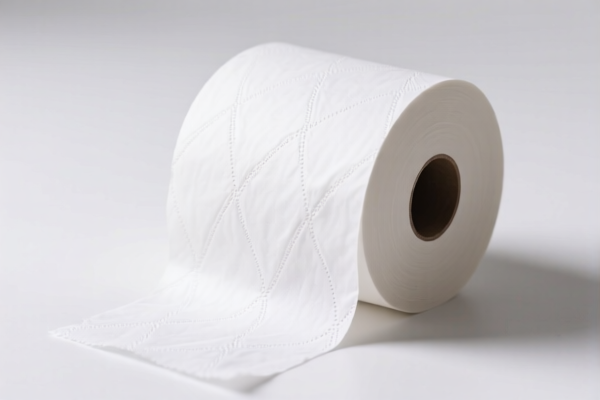
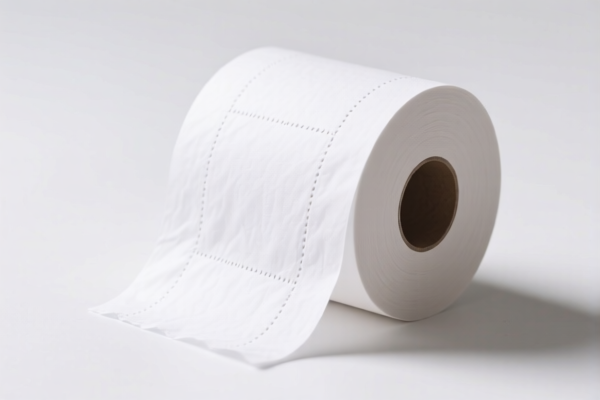
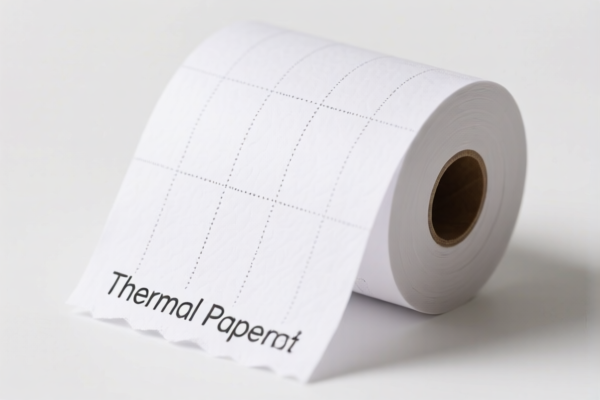
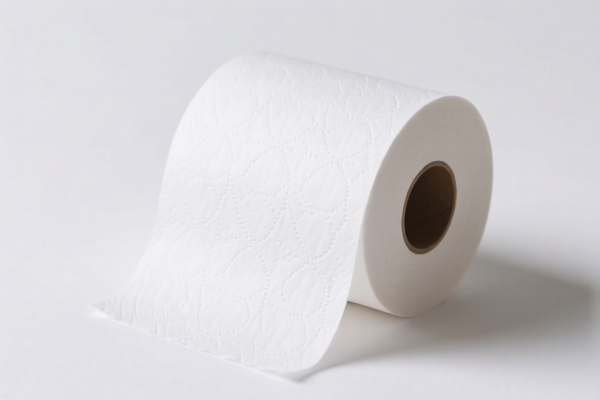
AI Analysis
🧾 Thermal Sensitive Paper Sheets (Thermal Paper)
🌐 HS Code Reference & Customs Clearance Guide | 2026 Latest Tariff Analysis | Professional Clearance Strategy
📌 I. Product Definition & Classification: Do You Really Understand "Thermal Paper"?
Thermal sensitive paper (often referred to as thermal paper) is a special coating paper that produces images or text through direct thermal printing without using ink, ribbons, or toner. It consists of a base paper coated with a thermal-sensitive coating containing leuco dyes and developers.
In international trade, it is primarily classified based on its manufacturing process and coating status: 1. Base Paper for Thermal Sensitivity: Raw paper specifically designed to accept thermal coating (uncoated or partially processed). 2. Coated Thermal Paper: Finished sheets or rolls ready for printing. 3. Printed Thermal Paper: Thermal paper that has already undergone printing (e.g., receipts, labels with pre-printed logos).
⚠️ Key Distinction:
- If the product is uncoated base paper specifically intended for thermal coating processes →归入 4802.20
- If the product is coated thermal paper (finished functional product) → 归入 4811.90
- If the product is printed thermal paper (final print media) → 归入 4911.99
📦 II. HS Code Classification Details (2026 Latest Tariff Authority Comparison)
| HS Code | Product Description | Application Scenario | Classification Logic |
|---|---|---|---|
4802.20.20.00 |
Base paper for photosensitive, thermosensitive, or electrically sensitive paper/cardboard | Raw material supply, manufacturing stage | ✅ Base Paper: Matches "Base Paper" attributes; used for thermal/electrical sensitivity. |
4802.20.10.00 |
Other base paper for photosensitive, thermosensitive, or electrically sensitive paper/cardboard | Generic base stock; material matches "Thermal" nature | ✅ Base Paper: Matches material and name consistency; preliminary fit. |
4811.90.80.30 |
Other paper, cardboard, fiberboard, and paperboard coated with adhesives or resins (includes thermal coating) | Finished thermal sheets/rolls; core attribute is "Thermal" | ✅ Coated Paper: Directly corresponds to "Thermal" core attribute; inferred paper material. |
4811.90.90.30 |
Other paper products, excluding those of heading 4811.90.80 | Other thermal coated papers not specified elsewhere | ✅ Coated Paper: Matches material (Paper) and core use (Direct Thermal Coating). |
4911.99.80.00 |
Other printed matter (including printed thermal paper) | Finished receipts, labels, or pre-printed thermal media | ✅ Printed Matter: Inferred as "Printed" due to common use; matches "Other Printed Matter". |
🔍 Key Reminder:
- Uncoated Base Paper must be classified under 4802.20; do not confuse with coated products.
- Finished Thermal Paper (Coated) falls under 4811.90; this is the most common classification for raw thermal rolls/sheets.
- Pre-printed Thermal Paper (e.g., branded receipts) may fall under 4911.99, but only if the printing is significant and defines the product's character.
💰 III. 2026 Latest Tariff Rate Details (Including Surcharges & Policy Add-ons)
✅ Applicable Country: United States (US)
✅ Country of Origin: China (CN)
✅ Effective Date: From November 10, 2025 (including subsequent imports)
🎯 1. 4802.20.20.00 & 4802.20.10.00 —— Base Paper for Thermal Sensitivity
| Item | Content |
|---|---|
| Basic Tariff | 0% (ad valorem) |
| Section 301 Surcharge | +25% (from USITC Footnote 9903.88.01) |
| IEEPA Surcharge | +10% (Targeting China/HK products, effective Nov 10, 2025) |
| Total Rate | 35% |
| Tax Calculation | CIF Value × 35% |
| De Minimis Exemption | ❌ Not Eligible (deny_de_minimis) |
| Legal Basis Path | IEEPA:9903.01.25 → IEEPA:9903.01.24 → USITC:4802.20 → FOOTNOTE:9903.88.01 |
📌 Explanation:
- "Section 301 Surcharge 25%" comes from the "Additional Duties" under Section 301 of the US Trade Act;
- "IEEPA 10%" is the additional tariff on Chinese products under the International Emergency Economic Powers Act;
- Total 35%, which is a high tariff, must be anticipated in advance!
🎯 2. 4811.90.80.30 & 4811.90.90.30 —— Coated Thermal Paper (Finished Product)
| Item | Content |
|---|---|
| Basic Tariff | 0% |
| Section 301 Surcharge | +25% |
| IEEPA Surcharge | +10% |
| Total Rate | 35% |
| Tax Calculation | CIF × 35% |
| De Minimis Exemption | ❌ Not Eligible |
| Legal Basis Path | IEEPA:9901.25 → IEEPA:9903.01.24 → USITC:4811.90 → FOOTNOTE:9903.88.01 |
📌 Note:
- Same rate as base paper;
- Even if it is "Thermal Receipt Paper," "Thermal Label Paper," or "Thermal Cash Register Paper," as long as it is coated finished paper, it applies this tariff code.
🎯 3. 4911.99.80.00 —— Printed Thermal Paper (Other Printed Matter)
| Item | Content |
|---|---|
| Basic Tariff | 0% |
| Section 301 Surcharge | +7.5% |
| IEEPA Surcharge | +10% |
| Total Rate | 17.5% |
| Tax Calculation | CIF × 17.5% |
| De Minimis Exemption | ❌ Not Eligible |
| Legal Basis Path | IEEPA:9903.01.24 → USITC:4911.99 → FOOTNOTE:9903.01.24 |
📌 Critical Distinction:
- If the thermal paper is pre-printed with significant content (e.g., branded receipts, invoices with logos), it may be classified under 4911.99.80.00.
- Rate Advantage: Only 17.5% compared to 35% for unprinted thermal paper.
- Risk: Customs may reclassify as 4811 if they deem the printing incidental (e.g., simple barcodes) rather than substantive.
🛠️ IV. Customs Clearance Practical Advice (Combat Pitfall Guide)
✅ 1. Required Documentation Checklist (Nothing is Optional)
| Material | Must Provide | Explanation |
|---|---|---|
| ✅ Product Specification Sheet | ✔️ | Include basis weight, coating type (direct/transfer), dimensions, width, length. |
| ✅ Material Composition Statement | ✔️ | Clarify if it is base paper (4802) or coated paper (4811). |
| ✅ Product Photos | ✔️ | Clear view of rolls/sheets, any pre-printing, and packaging. |
| ✅ Commercial Invoice | ✔️ | Clearly state "Thermal Sensitive Paper" or "Printed Thermal Paper." |
| ✅ Packing List | ✔️ | Detail net/gross weight, dimensions, and packaging type. |
| ✅ Certificate of Origin (CO) | ✔️ | If non-China origin, can apply for preferential rates (if applicable). |
✅ 2. Declaration Skills (Key Mantras)
🔥 "Base vs. Coated, Print vs. Plain, Name Precision Lowers Risk!"
| Scenario | Correct Declaration | Wrong Practice |
|---|---|---|
| Raw Base Paper (Uncoated) | 4802.20.20.00 / 4802.20.10.00 |
Misdeclare as "Coated Paper" → Higher scrutiny |
| Finished Thermal Paper (Unprinted) | 4811.90.80.30 / 4811.90.90.30 |
Misdeclare as "Base Paper" → Risk of penalty |
| Pre-printed Thermal Paper | 4911.99.80.00 |
Misdeclare as 4811 → Overpay 17.5% tax (35% vs 17.5%) |
| Generic "Paper" | Vague description | Customs will assign highest duty or reject |
✅ 3. Special Circumstances Handling
| Situation | Handling Advice |
|---|---|
| OEM Custom Thermal Paper | Provide customer orders + design files to prove pre-printing for 4911 classification. |
| Thermal Paper Rolls vs. Sheets | No difference in classification; ensure dimensions are clear. |
| Thermal Labels | If on a backing paper, still generally 4811 unless the label itself is the primary value driver (check adhesive classification). |
| Mixed Shipments | Separate invoices for Base Paper, Coated Paper, and Printed Paper to optimize duty rates. |
🌍 V. Global Main Market Clearance Comparison (2026 Latest)
| Country/Region | Recommended HS Code | Tariff (CN Origin) | Certification Requirements | Notes |
|---|---|---|---|---|
| 🇺🇸 United States | 4811.90 (Coated) |
35% (Full Tariff) | None specific for paper | 4911 is 17.5% if pre-printed. |
| 🇨🇳 China | 4811.90 |
0% (Export) | None | Domestic consumption may have VAT. |
| 🇪🇺 European Union | 4811.90 |
3.5% (Standard) | REACH Compliance | No Section 301 or IEEPA surcharges. |
| 🇬🇧 United Kingdom | 4811.90 |
3.5% | UKCA Mark (if applicable) | Post-Brexit rules apply. |
| 🇯🇵 Japan | 4811.90 |
6.0% | FSC/PEFC (if eco-friendly) | Stable rates, no major surcharges. |
📌 Conclusion:
- The US is the only major market imposing heavy surcharges (35%) on thermal paper.
- China-origin thermal paper faces high costs in the US market. Consider supply chain adjustments or leveraging the lower rate for printed thermal paper (17.5%) if applicable.
- EU/UK/Japan remain cost-effective markets with standard low tariffs.
📌 VI. Common Mistakes & Pitfall Guide (Blood and Tears Lessons)
❌ Mistake 1: Declaring Coated Thermal Paper as Base Paper
👉 Consequence: Customs may suspect undervaluation or misclassification → Delay or Reinspection.
❌ Mistake 2: Declaring Pre-printed Thermal Paper as Unprinted Thermal Paper
👉 Consequence: Overpaying 17.5% extra in taxes (35% vs 17.5%) → Lost Profit Margin.
❌ Mistake 3: Using vague terms like "Paper" or "Print Media"
👉 Consequence: Customs assigns highest duty or requires detailed breakdown → Clearance Delay.
❌ Mistake 4: Not specifying "Thermal" in the description
👉 Consequence: Misinterpretation as regular copy paper (different HS code) → Regulatory Non-compliance.
✅ Correct Practice:
"Thermal Sensitive Paper, Coated, 80gsm, 100mm Width, Roll, Model XYZ, For POS Printers"
(If Printed): "Pre-printed Thermal Receipt Paper, with Logo, 80gsm, Roll, Model ABC"
🎯 VII. Conclusion: Professional Declaration, Save Time, Cut Costs!
🎯 Remember the Mantra:
🔹 "Base 4802, Coated 4811, Printed 4911; Name Matters, Rates Differ!"
🔹 "US Tariff 35% for Unprinted, 17.5% for Printed; Choose Wisely!"
📌 Pro Tip:
- If your thermal paper is pre-printed, ensure the printing is substantive (e.g., branded receipts) to qualify for 4911.99.80.00 (17.5%).
- If it is blank, use 4811.90 (35%).
- Apply for an Advance Ruling from US Customs (CBP) to confirm classification, especially for new product lines.
📣 Immediate Action:
📞 Contact Professional Customs Broker + Provide Product Specs + Apply for HS Code Advance Ruling
🚀 Let your Thermal Paper, Clear Smoothly, Efficiently Global, Profit Maximized!
✨ Professional Clearance Starts with Precise Classification!
💼 Every Cent of Your Cost is Worth Precise Calculation!
Customer Reviews
About HS Code Classification
The Harmonized System (HS) is an internationally standardized nomenclature developed by the World Customs Organization (WCO) to classify traded products. Over 200 countries use the HS system as the basis for customs tariffs, trade statistics, and import/export regulations.
Each HS code follows a hierarchical structure:
- Chapter (2 digits) — Broad category of goods (e.g., Chapter 84: Machinery and Mechanical Appliances)
- Heading (4 digits) — More specific grouping within the chapter
- Subheading (6 digits) — Internationally standardized breakdown, used by all WCO member countries
- National subdivisions (8-10 digits) — Country-specific extensions for further classification, such as US HTSUS 10-digit codes
Correct HS code classification is essential for smooth customs clearance, accurate duty payment, and compliance with trade regulations. Misclassification can lead to customs delays, overpayment of duties, or penalties.
When importing from CN to US, the applicable tariff rates may include:
- Most-Favored-Nation (MFN) rate — The standard duty rate applied to WTO members
- General rate — Applied to countries without trade agreements
- Trade remedy duties — Additional tariffs such as Section 301 (anti-dumping), Section 232 (national security), or countervailing duties
The information provided on this page is for reference purposes only. For official classification, please consult with your local customs authority or a licensed customs broker.