Thermometer (Non liquid)
CN → US| HS Code | Tariff Rate | Origin | Destination | Doc |
|---|---|---|---|---|
| 9025198085 | 35.0% | CN | US | Official Doc |
| 9031808085 | 35.0% | CN | US | Official Doc |
| 9031499000 | 35.0% | CN | US | Official Doc |
| 9026806000 | 17.5% | CN | US | Official Doc |
| 9025194000 | 35.0% | CN | US | Official Doc |
Product Images
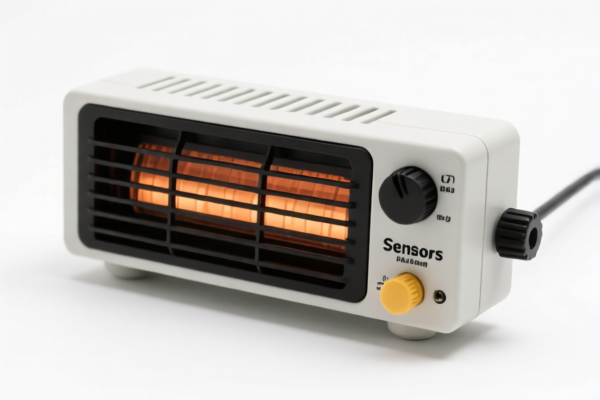
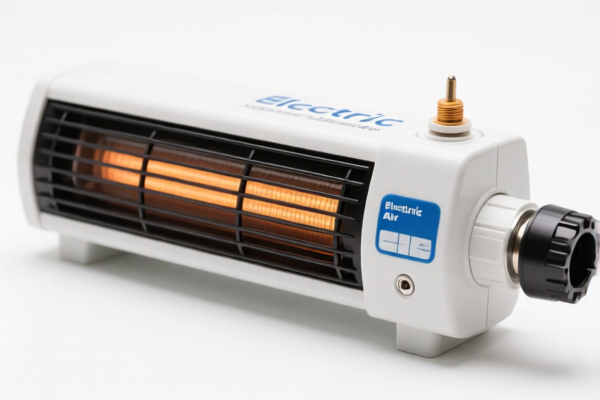
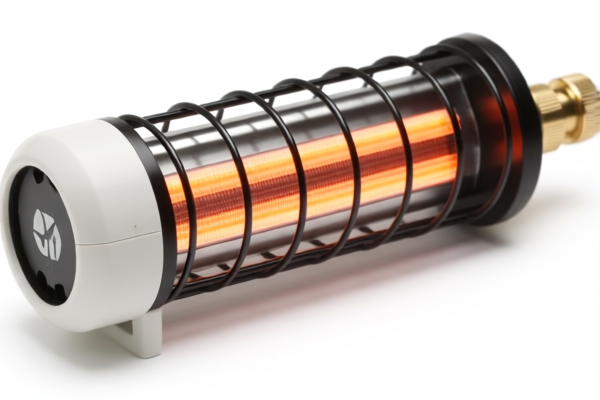
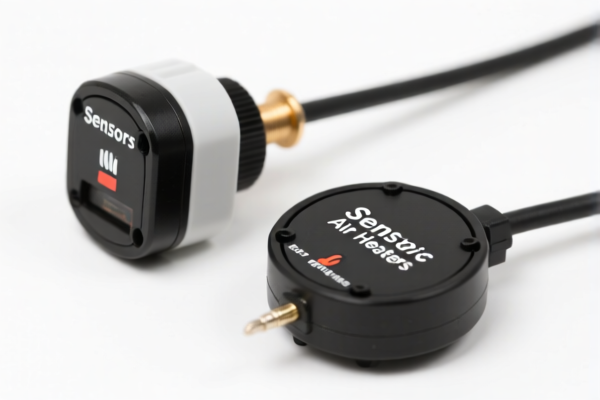
AI Analysis
🌡️ Thermometers (Non-Liquid) | High-Tech Temperature Sensors
🌐 HS Code Classification & Clearance Guide | 2026 Latest Tariff Analysis | Strategic Customs Strategy
📌 I. Product Definition: What is a "Non-Liquid Thermometer"?
Non-liquid thermometers, also known as digital, electronic, infrared, or bimetallic thermometers, rely on electrical resistance, thermal radiation, or mechanical expansion rather than mercury or alcohol. In international trade, these are classified as precision instruments (Chapter 90), not general electronics.
Key Distinction:
- Digital/Infrared Sensors: Classified under measurement instruments (Ch 90) due to their precision nature.
- Simple Mechanical Thermostats: May fall under general mechanical parts (Ch 84/85) if not classified as precision measuring devices.
- Critical Note: The classification heavily depends on the specific application and measurement principle (e.g., industrial vs. medical, optical vs. electrical).
📦 II. HS Code Classification Details (2026 Latest Tariff Authority)
| HS Code | Product Description | Application Scenario | Tax Rate (US/CN Origin) |
|---|---|---|---|
9025.19.80.85 |
Non-liquid thermometers (Other) | General purpose, industrial monitoring, HVAC systems | 35.0% |
9031.80.80.85 |
Other measuring/controlling instruments | Industrial process control, specialized testing equipment | 35.0% |
9031.49.90.00 |
Other optical/measuring instruments | High-precision optical thermometers, scientific research equipment | 35.0% |
9026.80.60.00 |
Other measuring instruments (Temperature) | Industrial process variables, automated control systems | 17.5% |
9025.19.40.00 |
Pyrometers & Optical Thermometers | High-temperature industrial furnaces, metallurgy, kilns | 35.0% |
🔍 Key Insight:
- 35% Total Rate: Applies to most standard non-liquid thermometers (9025,9031).
- 17.5% Total Rate: Specifically applies to9026.80.60.00if categorized under "Other measuring instruments for process variables."
- No Duty-Free Option: All listed codes incur significant tariffs for Chinese-origin goods.
💰 III. 2026 Latest Tariff Breakdown (With Surtaxes & Policy Add-ons)
✅ Applicable Country: United States (US)
✅ Origin: China (CN)
✅ Effective Date: November 10, 2025 (and subsequent imports)
🎯 1. 9025.19.80.85 & 9025.19.40.00 —— General & Pyrometers
| Item | Content |
|---|---|
| Base Tariff | 0% (ad valorem) |
| USITC Surtax | +25% (Under USITC Footnote 9903.88.01 for Chapter 90 instruments) |
| IEEPA Surtax | +10% (For Chinese/HK products, effective Nov 10, 2025) |
| Total Rate | 35.0% |
| Tax Calculation | CIF Value × 35% |
| De Minimis Eligibility | ❌ No (deny_de_minimis) |
| Legal Basis | IEEPA:9903.01.25 → IEEPA:9903.01.24 → USITC:9025.xx.xx.xx → FOOTNOTE:9903.88.01 |
📌 Explanation:
- The 25% USITC surtax is applied to precision instruments under Section 301.
- The 10% IEEPA surtax is the additional Trump-era tariff on Chinese goods.
- Total 35% is a significant cost driver for standard digital thermometers.
🎯 2. 9031.80.80.85 & 9031.49.90.00 —— Other Measuring Instruments
| Item | Content |
|---|---|
| Base Tariff | 0% |
| USITC Surtax | +25% |
| IEEPA Surtax | +10% |
| Total Rate | 35.0% |
| Tax Calculation | CIF × 35% |
| De Minimis Eligibility | ❌ No |
| Legal Basis | IEEPA:9903.01.25 → IEEPA:9903.01.24 → USITC:9031.xx.xx.xx → FOOTNOTE:9903.88.01 |
📌 Note:
- Even if the thermometer is part of a larger control system, if it’s a standalone measuring device, it falls under Ch 90.
- High-cost classification: Do not assume lower rates for "electronic" devices.
🎯 3. 9026.80.60.00 —— Other Measuring Instruments (Process Variables)
| Item | Content |
|---|---|
| Base Tariff | 0% |
| USITC Surtax | +7.5% |
| IEEPA Surtax | +10% |
| Total Rate | 17.5% |
| Tax Calculation | CIF × 17.5% |
| De Minimis Eligibility | ❌ No |
| Legal Basis | IEEPA:9903.01.25 → IEEPA:9903.01.24 → USITC:9026.80.60.00 → FOOTNOTE:9903.01.07 |
📌 Optimization Opportunity:
- If the thermometer is used for general process control (not high-precision lab measurement), it may qualify for the 17.5% rate under9026.
- Strategy: Justify the product as a "process variable transmitter" rather than a "precision laboratory thermometer" to reduce tariffs by 17.5%.
🛠️ IV. Clearance Practical Advice (Real-World Pitfall Guide)
✅ 1. Documentation Checklist (Mandatory)
| Document | Required | Explanation |
|---|---|---|
| ✅ Product Specification Sheet | ✔️ | Must specify type (digital, infrared, bimetallic), range, accuracy, and application. |
| ✅ Technical Diagrams | ✔️ | Show sensors, circuitry, and housing to distinguish from simple mechanical parts. |
| ✅ Photos (with Label) | ✔️ | Clear view of model number, input/output, and brand. |
| ✅ Test Reports | ✔️ | NIST traceability, calibration certificates, FCC/CE/RoHS compliance. |
| ✅ Commercial Invoice | ✔️ | Must explicitly state: "Non-Liquid Thermometer, Electronic/Digital Type, Model XYZ." |
| ✅ Certificate of Origin (CO) | ✔️ | If non-Chinese origin, to avoid surtaxes. |
| ✅ Packing List | ✔️ | Detail contents to avoid "unknown goods" flags. |
✅ 2. Declaration Strategy (Critical Keywords)
🔥 "Precision over Power, Application over Appearance!"
| Scenario | Correct Declaration | Wrong Practice |
|---|---|---|
| Industrial Process Sensor | 9026.80.60.00 (17.5%) |
Misdeclare as 9025 (35%) |
| Lab Precision Thermometer | 9025.19.80.85 (35%) |
Try to hide as "sensor" without justification |
| High-Temp Pyrometer | 9025.19.40.00 (35%) |
Declare as general "thermometer" to avoid scrutiny |
| Part of a Control System | 9031.80.80.85 (35%) |
Split into parts to lower rate (illegal if integrated) |
📌 Key Tip:
- Use "Process Variable Transmitter" or "Industrial Temperature Sensor" in descriptions to support9026classification (17.5% rate).
- Avoid vague terms like "Gadget" or "Device."
✅ 3. Special Cases
| Scenario | Handling Advice |
|---|---|
| OEM Custom Thermometers | Provide customer specs and design drawings to prove intended use. |
| Infrared (IR) Thermometers | Clearly state "Non-Contact" to justify optical/measuring instrument classification. |
| Thermocouples/RJTS | May fall under 9031 if assembled with connectors; ensure they are not just raw wires. |
| Medical Digital Thermometers | Still classified under Ch 90; no medical device exemption for tariffs. |
🌍 V. Global Market Comparison (2026 Latest)
| Country/Region | Recommended HS Code | Tariff | Certification | Notes |
|---|---|---|---|---|
| 🇺🇸 USA | 9025.19.80.85 / 9026.80.60.00 |
35% / 17.5% | FCC + RoHS | High tariffs; choose 9026 if possible. |
| 🇨🇳 China | 9025.19.80.85 |
5% | CCC + RoHS | No surtaxes; low barrier. |
| 🇪🇺 EU | 9025.19.80 |
0% (if CE) | CE + RoHS | No additional surtaxes. |
| 🇦🇺 Australia | 9025.19.80 |
5% | RCM | No surtaxes. |
| 🇯🇵 Japan | 9025.19.80 |
0% | PSE | No surtaxes. |
📌 Conclusion:
- USA is the only major market with heavy surtaxes on Chinese-origin thermometers.
- Diversify Supply Chain: Consider sourcing from Vietnam, Mexico, or Malaysia to avoid IEEPA/USITC surtaxes.
- Pre-Ruling: Apply for Advance Ruling from US CBP to confirm if your product qualifies for the 17.5%9026rate.
📌 VI. Common Errors & Pitfalls (Lessons Learned)
❌ Error 1: Declaring a digital thermometer as "Part of Machine" (Ch 84)
👉 Consequence: Incorrect classification; risk of penalty and back-tariffs.
❌ Error 2: Using "Sensor" instead of "Thermometer" to avoid scrutiny
👉 Consequence: If the sensor is calibrated and standalone, it’s still a Ch 90 instrument. Must declare accurately.
❌ Error 3: Ignoring the 10% IEEPA Surtax
👉 Consequence: Unexpected 10% additional cost on top of the 25% USITC tax. Total 35%.
❌ Error 4: Misclassifying Pyrometers as general thermometers
👉 Consequence: Pyrometers (9025.19.40.00) have specific legal definitions; misdeclaration leads to delays.
✅ Correct Approach:
"Digital Thermometer, Range -50°C to 300°C, Accuracy ±0.5°C, Industrial Process Control, Model XYZ, FCC Certified, Chinese Origin"
🎯 VII. Conclusion: Precision Classification, Cost Optimization!
🎯 Remember the Mantra:
🔹 "Process Variables = 17.5%, Precision Instruments = 35%. Choose Wisely!"
🔹 "HS Code Determines Destiny, Tariff Difference is 17.5%, One Wrong Step, Thousands Lost!"
📌 Pro Tip:
If your thermometers are originating from Vietnam, Mexico, Thailand, or Malaysia, you may qualify for IEEPA exemptions, reducing the rate to 0%–7.5%.
Recommendation: Apply for Advance Ruling with US CBP to confirm classification and avoid clearance risks.
📣 Immediate Action:
📞 Contact a Professional Customs Broker + Provide Product Specs + Apply for HS Code Advance Ruling
🚀 Ensure Smooth Clearance, Efficient Export, and Maximized Profit!
✨ Professional Clearance Starts with Accurate Classification!
💼 Every Penny of Cost Deserves Precise Calculation!
Customer Reviews
About HS Code Classification
The Harmonized System (HS) is an internationally standardized nomenclature developed by the World Customs Organization (WCO) to classify traded products. Over 200 countries use the HS system as the basis for customs tariffs, trade statistics, and import/export regulations.
Each HS code follows a hierarchical structure:
- Chapter (2 digits) — Broad category of goods (e.g., Chapter 84: Machinery and Mechanical Appliances)
- Heading (4 digits) — More specific grouping within the chapter
- Subheading (6 digits) — Internationally standardized breakdown, used by all WCO member countries
- National subdivisions (8-10 digits) — Country-specific extensions for further classification, such as US HTSUS 10-digit codes
Correct HS code classification is essential for smooth customs clearance, accurate duty payment, and compliance with trade regulations. Misclassification can lead to customs delays, overpayment of duties, or penalties.
When importing from CN to US, the applicable tariff rates may include:
- Most-Favored-Nation (MFN) rate — The standard duty rate applied to WTO members
- General rate — Applied to countries without trade agreements
- Trade remedy duties — Additional tariffs such as Section 301 (anti-dumping), Section 232 (national security), or countervailing duties
The information provided on this page is for reference purposes only. For official classification, please consult with your local customs authority or a licensed customs broker.