Thermoplastic Elastomer Plastic Pipe Fittings
CN → US| HS Code | Tariff Rate | Origin | Destination | Doc |
|---|---|---|---|---|
| 3926305000 | 22.8% | CN | US | Official Doc |
| 3917400080 | 40.3% | CN | US | Official Doc |
| 3917400095 | 40.3% | CN | US | Official Doc |
| 3926909989 | 22.8% | CN | US | Official Doc |
| 3904100000 | 41.5% | CN | US | Official Doc |
Product Images
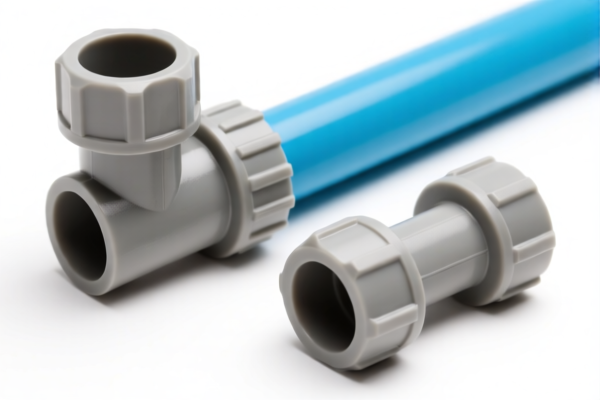
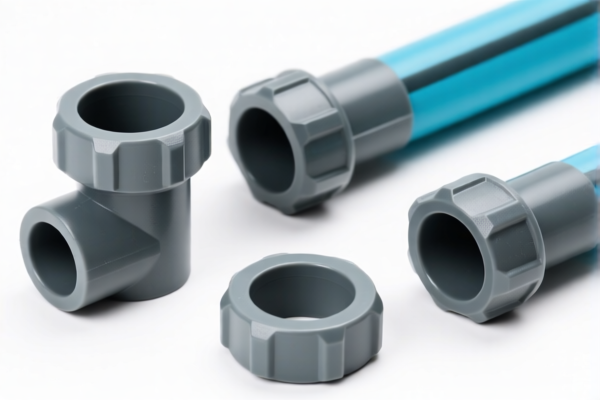
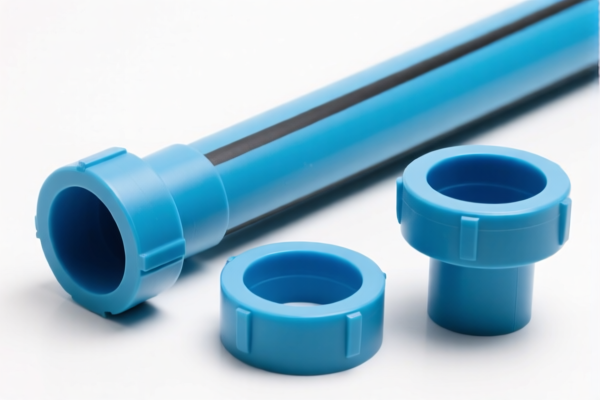
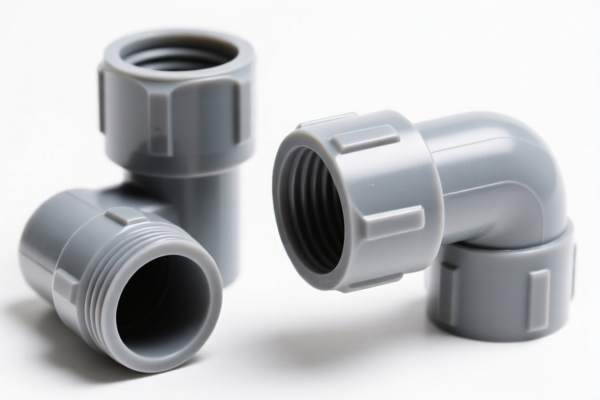
AI Analysis
🛢️ Thermoplastic Elastomer (TPE) Pipe Fittings: HS Code Classification & Tariff Deep Dive (2026 Guide)
🌐 HS Code Reference & Customs Clearance Guide | 2026 Latest Tariff Analysis | Professional Clearance Strategy
📌 Part 1: Product Definition & Classification – Do You Really Know "TPE Pipe Fittings"?
Thermoplastic Elastomer (TPE) Pipe Fittings are critical components in fluid transport systems, combining the flexibility of rubber with the processability of plastics. In international trade, their classification hinges on two key factors: Function (connection/accessory vs. base material) and Material Specificity (PVC vs. Non-PVC).
Classification Logic: 1. As General Plastic Accessories: If classified broadly as "other plastic articles," they fall under 3926.90.99.89. 2. As Specific Pipe Accessories: If identified as plastic pipe fittings not elsewhere specified, they fall under 3917.40.00.80 or 3917.40.00.95. 3. As Raw Polymer: If imported in raw form (pellets/resin) rather than finished fittings, they fall under 3904.10.00.00. 4. As Simple Connectors: Sometimes categorized under general plastic articles for fasteners/connectors, leading to 3926.30.50.00.
⚠️ Key Distinction Point:
- Are they finished fittings (flanges, couplings, elbows) → Go to Chapter 3917 or 3926.
- Are they raw materials? → Go to Chapter 3904.
- Are they PVC-based? → Different subheadings. TPE is non-PVC, triggering different duty structures.
📦 Part 2: HS Code Classification Details (2026 Official Tariff Comparison)
| HS Code | Product Description | Application Scenario | Tax Impact Reason |
|---|---|---|---|
3926.30.50.00 |
Plastic articles – Fittings (e.g., fasteners, connectors) | General plastic connectors, simple TPE joints | Lower Total Duty |
3917.40.00.80 |
Other pipes, tubes, and hoses, and fittings thereof, of plastics: Other, not PVC | Non-PVC TPE fittings (general non-PVC category) | High Total Duty |
3917.40.00.95 |
Other pipes, tubes, and hoses, and fittings thereof, of plastics: Other, not PVC (Specific non-PVC) | TPE fittings classified under specific non-PVC logic | High Total Duty |
3926.90.99.89 |
Other plastic articles: Other | Catch-all for plastic items not specified elsewhere | Lower Total Duty |
3904.10.00.00 |
Primary forms of polyamides (and other thermoplastics) | Raw TPE resin/pellets, NOT finished fittings | Highest Total Duty |
🔍 Critical Reminder:
- Fittings vs. Raw Material: Do NOT declare finished TPE elbows or couplings as3904.10.00.00(Resin). This is a common misclassification error leading to severe penalties. - PVC vs. Non-PVC: TPE is not PVC. Therefore, it does not fall under PVC-specific subheadings but under the "Other" (非PVC) categories in Chapter 3917, which often carry higher punitive tariffs. - General vs. Specific: Using3926.90.99.89or3926.30.50.00can sometimes result in lower total duties compared to the specific pipe accessory codes3917.40.x.x, depending on customs interpretation of "fittings."
💰 Part 3: 2026 Latest Tariff Rate Breakdown (Including Surtaxes)
✅ Applicable Country: United States (US)
✅ Country of Origin: China (CN)
✅ Effective Date: 2025/2026 (Current US Trade Policies)
🎯 1. 3926.30.50.00 & 3926.90.99.89 – The "Low Duty" Option
| Item | Content |
|---|---|
| Base Tariff | 5.3% (Ad Valorem) |
| Section 301 Surtax | +7.5% (Standard China Surcharge) |
| Section 122 Surcharge | +10% (Specific Trade Measure) |
| Total Effective Rate | 22.8% |
| Tax Calculation | CIF Value × 22.8% |
| De Minimis Eligibility | ❌ Not Eligible (Deny De Minimis for Section 301/122 goods) |
| Legal Basis Path | HTSUS:3926 → USITC:3926.30.50.00/3926.90.99.89 → Section 301: 7.5% → Section 122: 10% |
📌 Explanation:
- These codes are classified under "Other Plastic Articles."
- They attract a moderate surcharge of 7.5% (Section 301) plus 10% (Section 122).
- Total Cost Impact: Significantly lower than the pipe-specific codes. Ideal for general-purpose TPE connectors.
🎯 2. 3917.40.00.80 & 3917.40.00.95 – The "High Duty" Pipe Accessory Codes
| Item | Content |
|---|---|
| Base Tariff | 5.3% (Ad Valorem) |
| Section 301 Surtax | +25.0% (Aggressive China Surcharge) |
| Section 122 Surcharge | +10% (Specific Trade Measure) |
| Total Effective Rate | 40.3% |
| Tax Calculation | CIF Value × 40.3% |
| De Minimis Eligibility | ❌ Not Eligible |
| Legal Basis Path | HTSUS:3917.40 → USITC:3917.40.00.80/95 → Section 301: 25% → Section 122: 10% |
📌 Explanation:
- These codes classify TPE fittings explicitly as "Other pipes, tubes, and hoses, and fittings thereof."
- They attract the maximum Section 301 surcharge of 25% due to their classification as industrial pipe infrastructure components.
- Total Cost Impact: Very High. 40.3% duty eats deeply into margins.
- Why? Customs views these as critical industrial components, subject to stricter trade barriers.
🎯 3. 3904.10.00.00 – Raw Material (Thermoplastic Polyamides/Elastomers)
| Item | Content |
|---|---|
| Base Tariff | 6.5% (Ad Valorem) |
| Section 301 Surtax | +25.0% |
| Section 122 Surcharge | +10% |
| Total Effective Rate | 41.5% |
| Tax Calculation | CIF Value × 41.5% |
| De Minimis Eligibility | ❌ Not Eligible |
| Legal Basis Path | HTSUS:3904.10 → USITC:3904.10.00.00 → Section 301: 25% → Section 122: 10% |
📌 Explanation:
- WARNING: This code is for RAW MATERIALS (pellets, powder).
- If you ship finished fittings under this code, Customs will reject the entry, fine you, and potentially seize goods for misdeclaration.
- If you are shipping raw TPE resin, expect 41.5% duty.
🛠️ Part 4: Customs Clearance Practical Advice (Real-World Pitfall Guide)
✅ 1. Preparation Checklist (No Compromise)
| Document | Required? | Notes |
|---|---|---|
| ✅ Product Specification Sheet | ✔️ | Must specify material is TPE, not PVC, not Rubber. |
| ✅ Product Photos | ✔️ | Clearly show fittings shape (elbows, tees, couplers). Not just raw pellets. |
| ✅ Composition Statement | ✔️ | State percentage of Thermoplastic Elastomer. |
| ✅ Commercial Invoice | ✔️ | Description must match HS Code logic (e.g., "Plastic Pipe Fitting, TPE, Non-PVC"). |
| ✅ Packing List | ✔️ | Exclude raw resin if declaring fittings. |
| ✅ FCC/UL Certificates | ✔️ | If applicable for electrical/industrial use. |
✅ 2. Declaration Strategy (Key Mantras)
🔥 “Don’t call it raw material! Don’t call it PVC! Match the shape to the tax!”
| Scenario | Correct Declaration | Wrong Declaration | Consequence |
|---|---|---|---|
| Finished TPE Elbow/Coupler | 3917.40.00.80 OR 3926.90.99.89 |
3904.10.00.00 (Resin) |
Misdeclaration Penalty + Back Taxes |
| General Plastic Connector | 3926.30.50.00 |
3917.40.00.80 |
Higher Duty (22.8% vs 40.3%) |
| Non-PVC TPE Fitting | 3917.40.00.95 |
3917.29.00.00 (PVC) |
Wrong Code, 0% Base but 301 surcharges still apply |
✅ 3. Special Case Handling
| Scenario | Handling Advice |
|---|---|
| OEM Custom Fittings | Provide design drawings. If non-standard, 3926.90.99.89 is safer than 3917. |
| TPE + Rubber Blend | If >50% TPE by weight, declare as TPE. If >50% Rubber, consider Chapter 40 (Higher duties). |
| Kit with Pipes | If shipped with pipes, declare together under the pipe code 3917 unless pipes are accessories. |
| Small Sample Shipments | Do NOT use De Minimis (Section 321). All Section 301/122 goods are excluded from $800 exemption. |
🌍 Part 5: Global Market Comparison (2026)
| Country/Region | Recommended HS Code | Tariff (China Origin) | Key Certification | Notes |
|---|---|---|---|---|
| 🇺🇸 USA | 3917.40.00.80 |
40.3% | None specific | High duty due to Section 301 + 122. Try 3926 if eligible for 22.8%. |
| 🇨🇳 China | 3917.40.00.80 |
5.3% | No surcharges | Low import duty. No 301/122 equivalent. |
| 🇪🇺 EU | 3917.40.00.80 |
6.5% | REACH, RoHS | No major punitive tariffs. |
| 🇯🇵 Japan | 3917.40.00.80 |
3.0% | PSE (if electrical) | Low duty, high compliance standards. |
| 🇲🇽 Mexico | 3917.40.00.80 |
0-5% | NOM | USMCA benefits may apply if assembled in US/Canada. |
📌 Conclusion:
- USA is the most expensive market for TPE fittings due to Section 301 (25%) and Section 122 (10%) surcharges.
- Strategy: If the product can be classified as a general plastic article (3926.30.50.00or3926.90.99.89), you save 17.5% in total duties compared to the pipe-specific code.
- Crucial: Ensure the product description supports the3926classification (e.g., "Plastic Connector" vs. "Pipe Fitting").
📌 Part 6: Common Errors & Pitfalls (Lessons Learned)
❌ Error 1: Declaring finished TPE elbows as 3904.10.00.00 (Raw Resin).
👉 Result: Customs rejects entry, fines $5,000+, delays shipment.
❌ Error 2: Using 3926.30.50.00 for complex pipe fittings without justification.
👉 Result: Customs may upgrade to 3917.40.00.80 → Duty jumps from 22.8% to 40.3%.
❌ Error 3: Assuming TPE is Rubber (Chapter 40).
👉 Result: Chapter 40 duties are different, and TPE is legally a Plastic (Chapter 39). Misclassification leads to fraud accusations.
❌ Error 4: Attempting De Minimis shipment for TPE fittings.
👉 Result: Blocked. Section 301/122 goods are explicitly excluded from the $800 exemption.
✅ Correct Action:
“TPE Pipe Fitting, Non-PVC, Plastic, Model XYZ, for Fluid Transport. HS: 3917.40.00.80. Duty: 40.3%.”
🎯 Part 7: Conclusion – Precise Classification Saves Money!
🎯 Remember the Mantra:
🔹 “Fittings are Plastic, Not Resin!”
🔹 “TPE is Non-PVC, so it pays the 25%!”
🔹 “3926 saves 17.5% if you can justify ‘General Article’ status!”
📌 Pro Tip:
If your TPE fittings are imported in bulk raw form for local assembly in the US, consider shipping as 3904.10.00.00 (41.5% duty) vs. Finished Fittings (40.3%). The difference is negligible, but raw form allows manufacturing flexibility. However, if you ship finished goods, choose between 3917 (40.3%) and 3926 (22.8%) based on product function description.
📣 Immediate Action:
📞 Request a Pre-Ruling from US Customs (CBP) before large shipments.
📄 Prepare Detailed Product Specs distinguishing TPE from PVC and Rubber.
🚀 Calculate Duty Savings: 17.5% difference on $100,000 shipment = $17,500 Saved!
✨ Professional Clearance Starts with Accurate Classification!
💼 Your Cost Efficiency Depends on the Right HS Code!
Customer Reviews
About HS Code Classification
The Harmonized System (HS) is an internationally standardized nomenclature developed by the World Customs Organization (WCO) to classify traded products. Over 200 countries use the HS system as the basis for customs tariffs, trade statistics, and import/export regulations.
Each HS code follows a hierarchical structure:
- Chapter (2 digits) — Broad category of goods (e.g., Chapter 84: Machinery and Mechanical Appliances)
- Heading (4 digits) — More specific grouping within the chapter
- Subheading (6 digits) — Internationally standardized breakdown, used by all WCO member countries
- National subdivisions (8-10 digits) — Country-specific extensions for further classification, such as US HTSUS 10-digit codes
Correct HS code classification is essential for smooth customs clearance, accurate duty payment, and compliance with trade regulations. Misclassification can lead to customs delays, overpayment of duties, or penalties.
When importing from CN to US, the applicable tariff rates may include:
- Most-Favored-Nation (MFN) rate — The standard duty rate applied to WTO members
- General rate — Applied to countries without trade agreements
- Trade remedy duties — Additional tariffs such as Section 301 (anti-dumping), Section 232 (national security), or countervailing duties
The information provided on this page is for reference purposes only. For official classification, please consult with your local customs authority or a licensed customs broker.