Thermoplastic Liquid Crystal Polyester Engineering Plastic
CN → US| HS Code | Tariff Rate | Origin | Destination | Doc |
|---|---|---|---|---|
| 3907995050 | 41.5% | CN | US | Official Doc |
| 3907992000 | 35.0% | CN | US | Official Doc |
| 3902900050 | 41.5% | CN | US | Official Doc |
| 3901101000 | 41.5% | CN | US | Official Doc |
| 3902100000 | 41.5% | CN | US | Official Doc |
Product Images
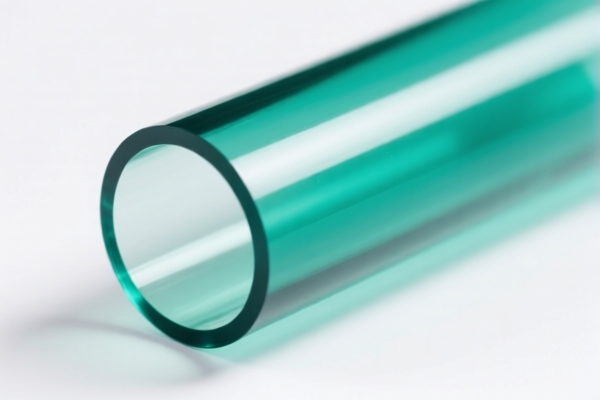

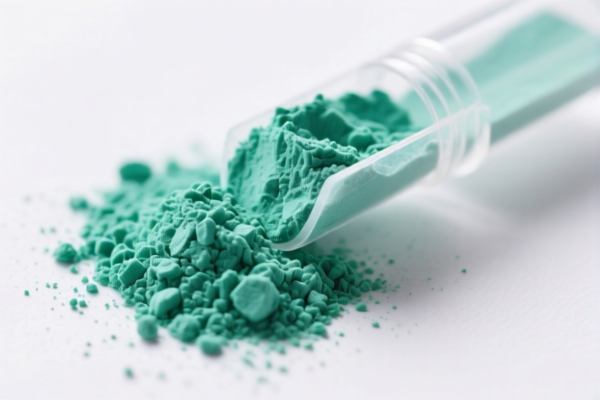
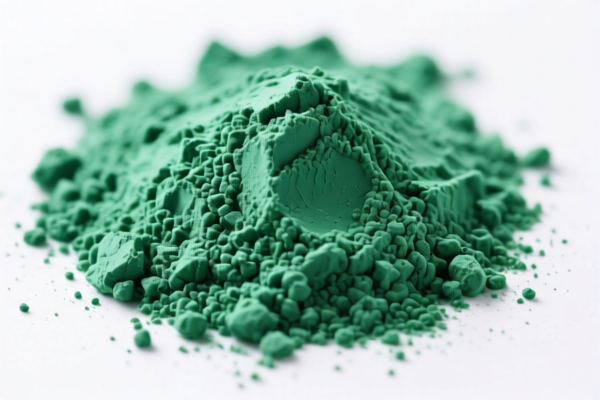
AI Analysis
🧪 Thermoplastic Liquid Crystal Polyester (LCP) Engineering Plastic
🌐 HS Code Reference & Customs Clearance Guide | 2026 Latest Tariff Breakdown | Professional Clearance Strategy
📌 I. Product Definition & Classification: What Exactly is LCP?
Thermoplastic Liquid Crystal Polyester (LCP), often referred to as "Plastic Gold" or "Liquid Crystal Polymer," is a high-performance engineering plastic known for its exceptional thermal stability, dimensional accuracy, and low coefficient of thermal expansion. In international trade, it is primarily classified based on its polymer structure and physical form (primary form/raw material vs. finished article).
Key Distinction:
- Raw Material/Granules/Pellets: If the LCP is in the form of beads, granules, or primary shapes intended for further processing (injection molding, extrusion), it falls under Chapter 39 (Plastics and Articles Thereof).
- Finished Parts: If it is already molded into connectors, housings, or components, it would generally fall under Chapter 85 (Electrical Machinery) or other end-use chapters.
(Note: The following analysis focuses on the raw material/polymer form as per the provided data.)
📦 II. HS Code Classification Details (2026 Latest Tariff Authority Match)
Based on the provided dataset, the product is classified under Subheading 3907 (Polyacetals, Other Polyethers, and Epoxide Resins; Polycarbonates, Alkyd Resins, Polyallyl Esters, and Other Polyesters) or Subheading 3902 (Polyolefins) depending on the specific chemical composition. However, LCP is chemically a Polyester.
| HS Code | Product Description | Applicability | Why This Code? |
|---|---|---|---|
3907.99.50.50 |
Thermoplastic Liquid Crystal Polyester Injection Molding Grade Raw Material | LCP Resin, Polyester Material, Primary Form | Direct match: "Material is polyester, form is raw material/primary shape." Fits the specific description for LCP engineering plastics. |
3907.99.20.00 |
Thermoplastic Liquid Aromatic Polyester Copolymer | High-purity LCP Copolymers | Matches "Highly consistent material" and "Primary form attributes." Used for specific aromatic polyester copolymers. |
3902.90.00.50 |
Thermoplastic Plastic (Polymer/Olefins Category) | Generic Thermoplastic / Fallback Category | "Falling into bottom category." Used if the specific polyester classification is disputed or if it's a non-standard thermoplastic blend. |
3901.10.10.00 |
Thermoplastic Plastic (Plastic/Polymer Original Form) | Generic Thermoplastic | "Fits polymer original form category." A broader category for thermoplastics that may not fit precise polyester subheadings. |
3902.10.00.00 |
Thermoplastic Plastic (Olefin Polymers) | Olefin-based Thermoplastics | "Fits HS 3902 code definition." Note: LCP is not an olefin, but this code appears in the data as a potential generic fallback for thermoplastics if classification fails elsewhere. |
🔍 Key Insight:
-3907.99.50.50is the most precise fit for Liquid Crystal Polyester (LCP) because LCP is a type of polyester (not polyolefin).
- Codes under 3901/3902 are generally for polyolefins (PE, PP) or generic thermoplastics. Using them for LCP might trigger customs queries unless the specific LCP variant is chemically ambiguous.
- Always prioritize 3907 for Polyesters unless the material is explicitly an olefin or copolymer not covered by 3907.
💰 III. 2026 Latest Tariff Rate Breakdown (Including Surcharges, Policy Add-ons)
✅ Applicable Country: United States (US)
✅ Origin: China (CN)
✅ Effective Date: Post-November 2025 (Current US Trade Policy)
🎯 1. 3907.99.50.50 — Thermoplastic Liquid Crystal Polyester (Injection Molding Grade)
| Item | Content |
|---|---|
| Base Tariff Rate | 6.5% (Standard MFN rate for Other Polyesters) |
| Section 301 Surcharge | +25.0% (USITC Footnote 9903.88.01 - China-specific) |
| Section 122 Tariff | +10.0% (Recent trade policy surcharge) |
| Total Tax Rate | 41.5% |
| Tax Calculation | CIF Value × 41.5% |
| De Minimis Exemption? | ❌ No (Not eligible for de minimis due to Section 301/122) |
| Legal Basis Path | USITC:3907.99.50.50 → SECTION301:9903.88.01 → SECTION122:ADDON10 |
📌 Explanation:
- Base 6.5%: Standard duty for "Other polyesters."
- +25% Section 301: Applied to all Chinese-origin polyester products in this category.
- +10% Section 122: Additional levy on certain Chinese goods.
- Total: 41.5%. This is a high-cost entry point.
🎯 2. 3907.99.20.00 — Thermoplastic Liquid Aromatic Polyester Copolymer
| Item | Content |
|---|---|
| Base Tariff Rate | 0.0% (Duty-free for specific copolymers) |
| Section 301 Surcharge | +25.0% |
| Section 122 Tariff | +10.0% |
| Total Tax Rate | 35.0% |
| Tax Calculation | CIF Value × 35.0% |
| De Minimis Exemption? | ❌ No |
| Legal Basis Path | USITC:3907.99.20.00 → SECTION301:9903.88.01 → SECTION122:ADDON10 |
📌 Note:
- If your LCP is a copolymer and qualifies for the 0% base rate, you save 6.5% compared to the standard polyester rate.
- However, the 301 and 122 surcharges remain, so the total is still 35%.
🎯 3. 3902.90.00.50 & 3901.10.10.00 & 3902.10.00.00 — Generic Thermoplastic Fallbacks
| Item | Content |
|---|---|
| Base Tariff Rate | 6.5% (Most thermoplastics in Ch 39 fall here) |
| Section 301 Surcharge | +25.0% |
| Section 122 Tariff | +10.0% |
| Total Tax Rate | 41.5% |
| Tax Calculation | CIF Value × 41.5% |
| De Minimis Exemption? | ❌ No |
📌 Warning:
- Misclassifying LCP as a generic polyolefin (3901/3902) to avoid the "Polyester" label is risky. Customs may reclassify it to 3907, leading to penalties.
- The tax rate is the same (41.5%) as the primary polyester code, so there is no tax advantage to using these codes incorrectly.
🛠️ IV. Customs Clearance Practical Advice (Real-World Pitfall Guide)
✅ 1. Required Documentation Checklist (Non-Negotiable)
| Document | Must Provide | Reason |
|---|---|---|
| ✅ Product Spec Sheet | ✔️ | Must specify "Liquid Crystal Polyester," "LCP," molecular weight, and grade (e.g., injection molding). |
| ✅ Certificate of Composition | ✔️ | Confirms chemical structure (Polyester vs. Polyolefin) to justify 3907 over 3902. |
| ✅ Product Photos (Raw Pellets/Granules) | ✔️ | Shows "Primary Form" to avoid misclassification as finished articles. |
| ✅ MSDS/SDS | ✔️ | Required for chemical safety; helps identify polymer type. |
| ✅ Commercial Invoice | ✔️ | Clearly state: "Thermoplastic Liquid Crystal Polyester Resin, Granules, for Injection Molding" |
| ✅ Packing List | ✔️ | Net weight must be clearly separated from packaging weight. |
✅ 2. Declaration Tips (Key Mnemonic)
🔥 "Name it LCP, Specify 'Primary Form', Avoid 'Olefin' Trap!"
| Scenario | Correct Declaration | Wrong Declaration | Consequence |
|---|---|---|---|
| LCP Pellets | 3907.99.50.50 - "LCP Polyester Resin" |
3902.10.00.00 - "Plastic Pellets" |
High risk of audit, potential penalty for misclassification. |
| LCP Copolymer | 3907.99.20.00 - "Aromatic Polyester Copolymer" |
3907.99.50.50 - "Polyester" |
Pay 6.5% extra base duty unnecessarily. |
| Finished LCP Parts | 8536.90 or 8543.70 (depending on use) |
3907.99.50.50 - "Polyester Resin" |
Major misclassification; goods may be seized. |
✅ 3. Special Handling for LCP
| Situation | Recommendation |
|---|---|
| High-Temperature Grade LCP | Ensure the spec sheet mentions "High-Temp" or "Flame Retardant" to support 3907.99.50.50 classification. |
| Blended LCP (e.g., LCP+Glass Fiber) | If glass fiber > 10%, it may be classified as "Reinforced Polyester" under 3907.99.90. Check local rules. |
| Recycled LCP | Must declare as "Recycled Polyester" and provide recycling process documentation. Base duty may change. |
| Small Samples (De Minimis) | Even if value < $800, Section 301/122 tariffs apply. Do not rely on de minimis exemption for Chinese LCP. |
🌍 V. Global Market Comparison (2026 Latest)
| Country/Region | Recommended HS Code | Tariff (China Origin) | Key Requirements | Notes |
|---|---|---|---|---|
| 🇺🇸 United States | 3907.99.50.50 |
41.5% | FCC, RoHS (if electronic) | Highest tariff market. Plan for 41.5% cost. |
| 🇨🇳 China (Import) | 3907.99.50.50 |
6.5% | CCC (if end-use requires) | No Section 301/122. Much cheaper for domestic use. |
| 🇪🇺 European Union | 3907.99.90 |
0% - 6.5% | REACH, RoHS | No extra surcharges. Competitive. |
| 🇯🇵 Japan | 3907.99.90 |
6.0% | JIS, RoHS | Moderate tariff. Stable trade relations. |
| 🇰🇷 South Korea | 3907.99.90 |
0% - 4% | KC Mark | FTA benefits may apply. Check KOR-US/CHINA FTA. |
📌 Conclusion:
- USA is the most expensive market for LCP due to Section 301 + 122 tariffs (41.5%).
- EU, Japan, and Korea are significantly more cost-effective.
- Consider Supply Chain Diversification: If exporting to the US, consider sourcing LCP from Vietnam, Thailand, or Malaysia to avoid US-China specific surcharges (if eligible under local content rules).
📌 VI. Common Mistakes & Pitfall Guide (Lessons Learned)
❌ Mistake 1: Classifying LCP as 3902.10.00.00 (Olefin) to avoid "Polyester" |
👉 Consequence: Customs will reject, reclassify to 3907, and impose penalties. No tax savings.
❌ Mistake 2: Claiming De Minimis ($800 exemption) for LCP shipments from China |
👉 Consequence: 41.5% tax still applies. Customs will assess duties and may delay shipment.
❌ Mistake 3: Not specifying "Primary Form" in the description |
👉 Consequence: Customs may assume it's a finished article and apply different (often higher) duties under Chapter 85 or 84.
❌ Mistake 4: Ignoring Section 122 Tariff (+10%) |
👉 Consequence: Underpaying duties by 10%, leading to audit, back-taxes, and fines.
✅ Correct Declaration Example:
"Thermoplastic Liquid Crystal Polyester (LCP) Resin, Injection Molding Grade, Granules, Primary Form, Polyester Polymer, Model XYZ, Made in China"
🎯 VII. Conclusion: Professional Classification, Cost Optimization!
🎯 Remember the Mnemonic:
🔹 "LCP is Polyester, Code 3907, Not Olefin!
🔹 41.5% in US, 0-6% in EU.
🔹 No De Minimis, Plan Ahead!"🔹 "HS Code determines your fate; a 6.5% difference can mean thousands in savings."
📌 Pro Tip:
If your LCP is a copolymer and qualifies for 3907.99.20.00, you save 6.5% on the base duty (Total 35% vs 41.5%). Verify chemical composition with your supplier to see if this code applies.
📣 Immediate Action:
📞 Contact a Professional Broker + Provide MSDS + Spec Sheet + Apply for Pre-Ruling
🚀 Ensure Smooth Customs Clearance, Control Costs, and Maximize Profit!
✨ Professional Clearance Starts with Accurate Classification!
💼 Every Penny of Your Cost Is Worth Calculating Precisely!
Customer Reviews
About HS Code Classification
The Harmonized System (HS) is an internationally standardized nomenclature developed by the World Customs Organization (WCO) to classify traded products. Over 200 countries use the HS system as the basis for customs tariffs, trade statistics, and import/export regulations.
Each HS code follows a hierarchical structure:
- Chapter (2 digits) — Broad category of goods (e.g., Chapter 84: Machinery and Mechanical Appliances)
- Heading (4 digits) — More specific grouping within the chapter
- Subheading (6 digits) — Internationally standardized breakdown, used by all WCO member countries
- National subdivisions (8-10 digits) — Country-specific extensions for further classification, such as US HTSUS 10-digit codes
Correct HS code classification is essential for smooth customs clearance, accurate duty payment, and compliance with trade regulations. Misclassification can lead to customs delays, overpayment of duties, or penalties.
When importing from CN to US, the applicable tariff rates may include:
- Most-Favored-Nation (MFN) rate — The standard duty rate applied to WTO members
- General rate — Applied to countries without trade agreements
- Trade remedy duties — Additional tariffs such as Section 301 (anti-dumping), Section 232 (national security), or countervailing duties
The information provided on this page is for reference purposes only. For official classification, please consult with your local customs authority or a licensed customs broker.