Thermoplastic Petroleum Resin Printing Ink Raw Material
CN → US| HS Code | Tariff Rate | Origin | Destination | Doc |
|---|---|---|---|---|
| 3911904500 | 40.8% | CN | US | Official Doc |
| 3907995050 | 41.5% | CN | US | Official Doc |
| 3909400000 | 41.5% | CN | US | Official Doc |
| 3909390000 | 41.5% | CN | US | Official Doc |
Product Images


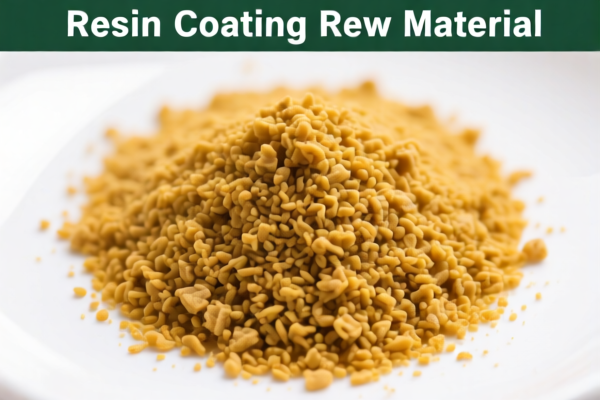
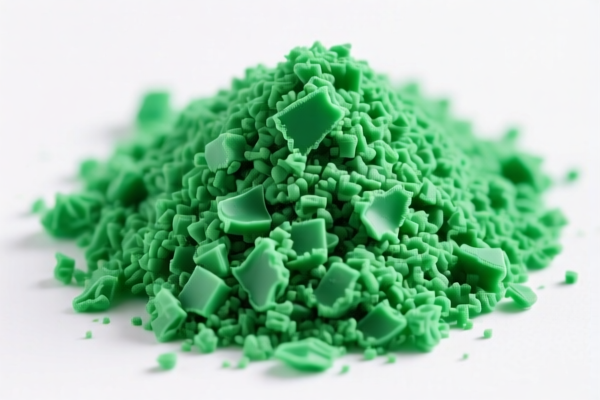
AI Analysis
🖨️ Thermoplastic Petroleum Resin Printing Ink Raw Material (Industrial Chemical Binders & Inks)
🌐 HS Code Reference & Customs Clearance Guide | 2024/2025 Tariff Analysis | Professional Entry Strategy
📌 I. Product Definition & Classification: What Exactly Are We Importing?
"Thermoplastic Petroleum Resin Printing Ink Raw Material" is not a single commodity but a complex chemical mixture. In international trade, its classification depends entirely on its chemical composition and primary function. It generally falls into two distinct categories under Chapter 38 (Chemical Products) or Chapter 32 (Inks):
- As a Binder/Preparation (Chapter 38): If the resin is a mixture used as a binding agent for foundry molds or as a general chemical preparation not specified elsewhere, it is classified as a "Prepared binder" or "Miscellaneous chemical product."
- As Printing Ink (Chapter 32): If the resin is already mixed with pigments or solvents to form a printable substance, it is classified as "Printing Ink."
⚠️ Critical Distinction:
- If the product is pure or primarily a hydrocarbon mixture (petroleum resin) used as a binder or raw chemical ingredient → HS Code 3824.99.49.00
- If the product is a mixture of halogenated hydrocarbons (often used in specific solvent-based inks) → HS Code 3824.99.55.00
- If the product is already formulated as Solid Ink (e.g., ink sticks, solid blocks for industrial printers) → HS Code 3215.19.30.00
- If the product is Liquid/Other Printing Ink not covered elsewhere → HS Code 3215.19.90.60
📦 II. HS Code Classification Details (Based on Provided Data)
| HS Code | Product Description | Primary Component/Type | Tax Rate (China + Additional) |
|---|---|---|---|
3824.99.49.00 |
Prepared binders for foundry molds or cores; Chemical products... Mixtures of hydrocarbons derived from petroleum, shale oil, or natural gas. | Petroleum-based Resin Mixtures (Non-halogenated) | 31.5% (Base 6.5% + Add. 25.0%) |
3824.99.55.00 |
Prepared binders... Mixtures of halogenated hydrocarbons. | Halogenated Hydrocarbon Mixtures | 28.7% (Base 3.7% + Add. 25.0%) |
3215.19.30.00 |
Printing Ink... Solid... Other. | Solid Printing Ink (e.g., Ink Sticks, Solid Blocks) | 0.0% (Base 0.0% + Add. 0.0%) |
3215.19.90.60 |
Printing Ink... Other... Other. | Liquid/Other Printing Ink (Non-solid) | 0.0% (Base 0.0% + Add. 0.0%) |
🔍 Key Insight:
- Chapter 38 (Chemicals) applies if the item is a raw material/binder not yet formed into a final ink product.
- Chapter 32 (Inks) applies if the item is finished printing ink (solid or liquid).
- Tax Savings Alert: Classified as Printing Ink (Ch 32), the tariff is 0%! Classified as Chemical Mixtures (Ch 38), the tariff is 28.7% - 31.5%. Proper classification is critical to save ~30% in duties.
💰 III. Detailed Tariff Breakdown & Legal Basis
✅ Applicable Jurisdiction: United States (US) / China Export Context
✅ Status: Based on provided tariff data (Standard + Section 301 Additional Duties)
🎯 1. 3824.99.49.00 – Petroleum Resin Mixtures (Non-Halogenated)
| Item | Detail |
|---|---|
| Base Duty | 6.5% |
| Additional Duty (Section 301) | 25.0% |
| Total Effective Tax Rate | 31.5% |
| Calculation Basis | CIF Value × 31.5% |
| De Minimis Exemption | ❌ Not Applicable (Commercial cargo) |
📌 Explanation:
- This code covers hydrocarbon mixtures from petroleum/shale oil used as binders or chemical preparations.
- If your "Thermoplastic Petroleum Resin" is a solvent-based resin or petroleum distillate mixture used as a raw chemical input, it likely falls here.
- High Cost: This is the default "catch-all" for unspecified chemical mixtures, attracting the full 25% additional duty on top of the base rate.
🎯 2. 3824.99.55.00 – Halogenated Hydrocarbon Mixtures
| Item | Detail |
|---|---|
| Base Duty | 3.7% |
| Additional Duty (Section 301) | 25.0% |
| Total Effective Tax Rate | 28.7% |
| Calculation Basis | CIF Value × 28.7% |
📌 Explanation:
- If the resin contains halogens (Chlorine, Bromine, etc.), it is classified here.
- Often used in specialized flame-retardant inks or specific solvent blends.
- Lower Base Rate: Base duty is lower (3.7% vs 6.5%), but the 25% add-on still makes it expensive.
🎯 3. 3215.19.30.00 – Solid Printing Ink
| Item | Detail |
|---|---|
| Base Duty | 0.0% |
| Additional Duty (Section 301) | 0.0% |
| Total Effective Tax Rate | 0.0% |
| Calculation Basis | No Duty |
📌 Explanation:
- If the resin is pre-formulated into a solid block (e.g., industrial ink sticks, 3D printer filament with ink properties, or solid offset ink forms), it may qualify as Solid Printing Ink.
- Major Tax Advantage: 0% Duty. This is the most cost-effective classification IF the product physically matches the description of "Solid Ink."
🎯 4. 3215.19.90.60 – Other Printing Ink
| Item | Detail |
|---|---|
| Base Duty | 0.0% |
| Additional Duty (Section 301) | 0.0% |
| Total Effective Tax Rate | 0.0% |
| Calculation Basis | No Duty |
📌 Explanation:
- If the product is a liquid or semi-liquid printing ink that does not fit other specific ink subheadings, it falls here.
- Major Tax Advantage: 0% Duty.
- Requirement: Must be demonstrably a "printing ink" (i.e., contains pigments/binders/solvents ready for printing), not just raw resin.
🛠️ IV. Customs Clearance Strategy & Risk Mitigation
✅ 1. Documentation Checklist (Must-Have)
| Document | Requirement | Purpose |
|---|---|---|
| Product Specification Sheet | Detailed chemical composition, CAS numbers, physical state (solid/liquid) | Proves whether it's a Resin (Ch 38) or Ink (Ch 32) |
| Formula / MSDS | Safety Data Sheet showing ingredients | Determines if it's Halogenated (3824.99.55) or Petroleum Hydrocarbon (3824.99.49) |
| Product Images | Clear photos of container, labeling, and product state | Visual proof of Solid vs. Liquid |
| Certificate of Origin | To determine country of origin for Section 301 applicability | Confirms if Additional Duties apply |
| Commercial Invoice | Must specify "Printing Ink" or "Chemical Resin" accurately | Mislabeling leads to reclassification and penalties |
✅ 2. Classification Decision Tree
🔥 "Is it Ink? If Yes → 0%. If No → Up to 31.5%!"
| Scenario | Recommended HS Code | Why? |
|---|---|---|
| Liquid/Paste with Pigments (Ready to Print) | 3215.19.90.60 |
It is Printing Ink. 0% Duty. |
| Solid Blocks/Sticks (Ready to Print) | 3215.19.30.00 |
It is Solid Printing Ink. 0% Duty. |
| Clear/White Resin (Raw Material, No Pigments) | 3824.99.49.00 |
It is a Prepared Binder/Chemical Mixture. 31.5% Duty. |
| Resin with Halogens (Flame Retardant) | 3824.99.55.00 |
It is a Halogenated Hydrocarbon Mixture. 28.7% Duty. |
⚠️ Warning:
- Do NOT misdeclare raw resin as "Printing Ink" if it lacks pigments or is not ready for use. Customs may audit and demand back taxes + penalties.
- Proof of Use: If claiming3215.19, provide evidence that the product is formulated for printing (e.g., viscosity data, pigment content).
✅ 3. Special Considerations
| Issue | Solution |
|---|---|
| Misclassification Risk | If uncertain, request a Binding Ruling from CBP before shipment. |
| Halogen Content | Even trace halogens can push the code to 3824.99.55.00. Ensure accurate MSDS. |
| Solid vs. Liquid | "Thermoplastic Resin" can be solid beads but not "Ink." Ensure it meets the definition of Printing Ink in Ch 32 Heading 32.15. |
🌍 V. Global Market Comparison (2024/2025)
| Destination | Recommended HS Code | Est. Duty | Notes |
|---|---|---|---|
| 🇺🇸 USA | 3215.19.90.60 (If Ink) |
0% | Avoid Ch 38 codes to save 30%+ |
| 🇺🇸 USA | 3824.99.49.00 (If Resin) |
31.5% | High tax due to Sec 301 |
| 🇪🇺 EU | 3824.99 or 3215 | Varies (0-6.5%) | No Section 301; Check EU Tariff |
| 🇨🇳 China (Import) | Varies | Varies | Check China Tariff Book |
📌 Conclusion:
- USA: 0% duty is possible ONLY if classified as Printing Ink (Ch 32).
- Raw Resin (Ch 38) is heavily taxed in the USA due to Section 301.
- Strategy: If your product is a resin but can be argued as a "Preparation for Printing", seek professional legal advice to support Ch 32 classification. Otherwise, budget for ~30% duty.
📌 VI. Common Mistakes & Pitfalls
❌ Mistake 1: Calling "Raw Resin" "Printing Ink"
👉 Result: Customs rejection, inspection delay, potential penalty for false declaration.
❌ Mistake 2: Ignoring Halogen Content
👉 Result: Misclassified from 31.5% to 28.7% (or vice versa) if halogens are present but not declared.
❌ Mistake 3: Assuming All Chemicals Are Tariff-Free
👉 Result: Chapter 38 chemicals are NOT tariff-free in the USA (31.5% total). Only Chapter 32 Inks are 0%.
✅ Best Practice:
Provide a detailed MSDS and Product Formula to your customs broker. If the product is not yet mixed with pigments, it is likely a Resin (Ch 38) and will incur high duties. If it is a finished ink, ensure documentation proves it is Ready-to-Print Ink to claim 0%.
🎯 VII. Final Recommendation
🎯 Action Plan:
1. Analyze Formula: Does it contain pigments? Is it ready to print?
- Yes → Use 3215.19.90.60 (Liquid) or 3215.19.30.00 (Solid) → 0% Duty.
- No (Pure Resin/Binder) → Use 3824.99.49.00 or 3824.99.55.00 → 28.7–31.5% Duty.
2. Verify Halogens: Check MSDS for Cl, Br, F, I.
- Present → 3824.99.55.00.
- Absent → 3824.99.49.00.
3. Consult Broker: Submit sample data for pre-classification review to avoid post-entry audits.
📌 Pro Tip:
"If it prints, it’s Ink (0%). If it binds, it’s Chemical (31.5%). Know the difference, save the money!"
📣 Immediate Action:
📞 Contact your customs broker today with the MSDS and product images.
📄 Prepare a "Statement of Composition" to justify your HS Code choice.
💡 Goal: Achieve 0% Duty by proving the product is Finished Printing Ink, not raw resin.
✨ Smart Classification, Smarter Savings!
💼 Don’t let 30% tax eat your profit. Classify correctly, clear quickly!
Customer Reviews
About HS Code Classification
The Harmonized System (HS) is an internationally standardized nomenclature developed by the World Customs Organization (WCO) to classify traded products. Over 200 countries use the HS system as the basis for customs tariffs, trade statistics, and import/export regulations.
Each HS code follows a hierarchical structure:
- Chapter (2 digits) — Broad category of goods (e.g., Chapter 84: Machinery and Mechanical Appliances)
- Heading (4 digits) — More specific grouping within the chapter
- Subheading (6 digits) — Internationally standardized breakdown, used by all WCO member countries
- National subdivisions (8-10 digits) — Country-specific extensions for further classification, such as US HTSUS 10-digit codes
Correct HS code classification is essential for smooth customs clearance, accurate duty payment, and compliance with trade regulations. Misclassification can lead to customs delays, overpayment of duties, or penalties.
When importing from CN to US, the applicable tariff rates may include:
- Most-Favored-Nation (MFN) rate — The standard duty rate applied to WTO members
- General rate — Applied to countries without trade agreements
- Trade remedy duties — Additional tariffs such as Section 301 (anti-dumping), Section 232 (national security), or countervailing duties
The information provided on this page is for reference purposes only. For official classification, please consult with your local customs authority or a licensed customs broker.