Thermosetting Phenolic Modified Petroleum Resin
CN → US| HS Code | Tariff Rate | Origin | Destination | Doc |
|---|---|---|---|---|
| 3910000000 | 38.0% | CN | US | Official Doc |
| 3906905000 | 39.2% | CN | US | Official Doc |
| 3911904500 | 40.8% | CN | US | Official Doc |
| 3911909150 | 41.5% | CN | US | Official Doc |
| 3906902000 | 41.3% | CN | US | Official Doc |
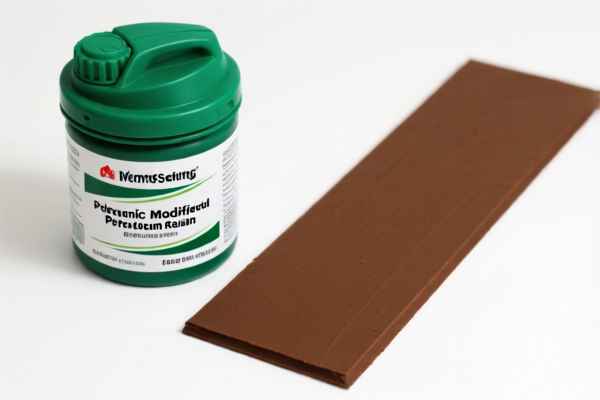
Product Images


AI Analysis
🧪 Thermosetting Phenolic Modified Petroleum Resin
🌐 HS Code Reference & Customs Clearance Guide | 2026 Latest Tariff Analysis | Professional Entry Strategy
📌 I. Product Definition & Classification: Do You Really Understand "Modified Petroleum Resin"?
Thermosetting Phenolic Modified Petroleum Resin is a specialized chemical polymer material used as an adhesive, binder, or modifier in coatings, inks, and rubber industries. In international trade, it falls under Chapter 39 (Plastics and Articles Thereof), specifically within the sub-category of Synthetic Polymers (Resins).
⚠️ Key Classification Criteria:
- Material: Petroleum Resin (derived from petroleum distillates), chemically modified with Phenolic resins.
- State: Primary Form (not processed into plates, films, or finished articles).
- Characteristics: Thermosetting (cures irreversibly when heated).
- Conflict Check: Must distinguish from pure Acrylic Resins (Ch 39.06) or unmodified Petroleum Resins (Ch 39.11/39.10). The presence of Phenolic Modification and Thermosetting nature is critical for precise HS Code selection.
📦 II. HS Code Classification Details (2026 Latest Tariff Authority Comparison)
Based on the provided data, the product matches five potential HS Codes. Here is the detailed breakdown:
| HS Code | Product Description | Matching Logic & Key Attributes | Total Tax Rate (China Origin → US) |
|---|---|---|---|
3910.00.00.00 |
Petroleum Resins (Unmodified) | Matches "Petroleum Resin" as a primary organic resin. ✅ Logic: General category for petroleum resins in primary form. ❌ Limitation: Does not explicitly account for "Phenolic Modification" or "Thermosetting" specificity, but accepted as a broad match. |
38.0% |
3906.90.50.00 |
Acrylic Polymers (Other) | Matches "Acrylic-Modified Resin" interpretation. ✅ Logic: Interprets the material as an acrylic polymer range. ❌ Limitation: High Risk. If the primary base is petroleum (not acrylic), this is a misclassification. Petroleum resins are generally not acrylic. |
39.2% |
3911.90.45.00 |
Petroleum Resins, Thermosetting/Modified | Highly Precise Match. ✅ Logic: Explicitly includes "Petroleum Resin" + "Thermosetting" + "Modified". Fits the specific explanation for petroleum resins that are thermosetting and contain modified monomer units. |
40.8% |
3911.90.91.50 |
Thermosetting Primary Resins (Other) | Highly Precise Match. ✅ Logic: Explicitly includes "Thermosetting" + "Petroleum Resin". Fits the definition for thermosetting primary form products. |
41.5% |
3906.90.20.00 |
Acrylic Polymers (Other) | Matches "Acrylic" material mention. ✅ Logic: Based on "Acrylic" keyword. ❌ Limitation: High Risk. Same as above; if the base is petroleum, not acrylic, this is incorrect. |
41.3% |
🔍 Critical Analysis:
- Best Match:3911.90.45.00or3911.90.91.50because they explicitly cover Petroleum Resin + Thermosetting/Modified attributes.
- Avoid:3906.xxxxxxcodes unless the product is primarily acrylic-based. Petroleum resin ≠ Acrylic resin. Misclassifying petroleum resin as acrylic may lead to customs audits.
- Broad Match:3910.00.00.00is safer than 3906 but less specific than 3911.
💰 III. 2026 Latest Tariff Rate Details (Including Surcharges, Policy Surcharges)
✅ Applicable Country: United States (US)
✅ Country of Origin: China (CN)
✅ Effective Date: 2025-11-10 onwards (including subsequent imports)
🎯 1. 3910.00.00.00 —— Petroleum Resins (General)
| Item | Detail |
|---|---|
| Base Tariff | 3.0% (ad valorem) |
| Section 301 Surcharge | +25.0% |
| Section 122 Surcharge | +10.0% |
| Total Tax Rate | 38.0% |
| Tax Calculation | CIF Value × 38.0% |
| De Minimis Exemption | ❌ Not Eligible (deny_de_minimis) |
| Legal Basis Path | Base Tariff:3.0% → Section 301:25.0% → Section 122:10.0% |
📌 Explanation:
- This is the lowest tax rate among the matches.
- Suitable if the product can be classified broadly as "Petroleum Resin" without emphasizing the "Thermosetting" or "Modified" nature, or if the modification level is negligible.
🎯 2. 3906.90.50.00 —— Acrylic Polymers (Other) [⚠️ High Risk]
| Item | Detail |
|---|---|
| Base Tariff | 4.2% (ad valorem) |
| Section 301 Surcharge | +25.0% |
| Section 122 Surcharge | +10.0% |
| Total Tax Rate | 39.2% |
| Tax Calculation | CIF Value × 39.2% |
| De Minimis Exemption | ❌ Not Eligible (deny_de_minimis) |
| Legal Basis Path | Base Tariff:4.2% → Section 301:25.0% → Section 122:10.0% |
📌 Warning:
- Only use this if the product is primarily acrylic. Using this for petroleum resin is a classification error.
- Tax is slightly higher than3910.
🎯 3. 3911.90.45.00 —— Petroleum Resins, Thermosetting/Modified [✅ Recommended Specific]
| Item | Detail |
|---|---|
| Base Tariff | 5.8% (ad valorem) |
| Section 301 Surcharge | +25.0% |
| Section 122 Surcharge | +10.0% |
| Total Tax Rate | 40.8% |
| Tax Calculation | CIF Value × 40.8% |
| De Minimis Exemption | ❌ Not Eligible (deny_de_minimis) |
| Legal Basis Path | Base Tariff:5.8% → Section 301:25.0% → Section 122:10.0% |
📌 Explanation:
- This code specifically addresses Petroleum Resins that are Thermosetting and Modified.
- Matches the product name "Thermosetting Phenolic Modified Petroleum Resin" most accurately.
- Tax is higher due to the specific nature, but classification is more defensible.
🎯 4. 3911.90.91.50 —— Thermosetting Primary Resins (Other) [✅ Recommended Specific]
| Item | Detail |
|---|---|
| Base Tariff | 6.5% (ad valorem) |
| Section 301 Surcharge | +25.0% |
| Section 122 Surcharge | +10.0% |
| Total Tax Rate | 41.5% |
| Tax Calculation | CIF Value × 41.5% |
| De Minimis Exemption | ❌ Not Eligible (deny_de_minimis) |
| Legal Basis Path | Base Tariff:6.5% → Section 301:25.0% → Section 122:10.0% |
📌 Explanation:
- This code focuses on Thermosetting primary resins.
- Also matches "Petroleum Resin" + "Thermosetting".
- Highest tax rate among the valid matches.
🎯 5. 3906.90.20.00 —— Acrylic Polymers (Other) [⚠️ High Risk]
| Item | Detail |
|---|---|
| Base Tariff | 6.3% (ad valorem) |
| Section 301 Surcharge | +25.0% |
| Section 122 Surcharge | +10.0% |
| Total Tax Rate | 41.3% |
| Tax Calculation | CIF Value × 41.3% |
| De Minimis Exemption | ❌ Not Eligible (deny_de_minimis) |
| Legal Basis Path | Base Tariff:6.3% → Section 301:25.0% → Section 122:10.0% |
📌 Warning:
- Same risk as3906.90.50.00. Only use if product is acrylic.
🛠️ IV. Customs Clearance Practical Advice (Combat Pitfall Guide)
✅ 1. Document Checklist (All Required)
| Document | Required | Explanation |
|---|---|---|
| ✅ Product Specification Sheet | ✔️ | Must state: "Thermosetting", "Phenolic Modified", "Primary Form", "Petroleum Resin Base". |
| ✅ Safety Data Sheet (SDS) | ✔️ | Confirms chemical composition and hazard class. |
| ✅ Structure Diagram/Formula | ✔️ | To prove it is Petroleum Resin, not Acrylic. Crucial to avoid 3906 misclassification. |
| ✅ Product Photos | ✔️ | Show raw resin form (pellets, powder, flakes), not finished articles. |
| ✅ Commercial Invoice | ✔️ | Must clearly state "Thermosetting Phenolic Modified Petroleum Resin". |
| ✅ Packing List | ✔️ | Detail weight, volume, and packaging type. |
| ✅ Certificate of Origin (CO) | ✔️ | Required for 301/122 tariff determination. |
✅ 2. Declaration Tips (Key Mantra)
🔥 "Name Accurate, Form Primary, Phenolic Key, Avoid Acrylic!"
| Scenario | Correct Declaration | Wrong Approach |
|---|---|---|
| Primary Form Resin | 3911.90.45.00 or 3911.90.91.50 |
Misreporting as "Plastic Granules" → Vague, high scrutiny |
| Petroleum Base | Emphasize Petroleum Resin | Claiming "Acrylic Resin" → 3906 codes → Audit Risk |
| Thermosetting Nature | State Thermosetting clearly | Omitting thermal properties → 3910 or 3906 confusion |
| Modified Content | Specify Phenolic Modification | Vague "Modified Resin" → Customs may assign highest rate |
📌 Key Point:
- Do NOT use HS Code3906unless you have a technical report proving the polymer is acrylic-based.
- DO use HS Code3911(specifically3911.90.45.00or3911.90.91.50) for the most accurate description.
- If uncertain,3910.00.00.00is a safer fallback than3906, as it correctly identifies the base as "Petroleum Resin".
✅ 3. Special Circumstances
| Situation | Handling Advice |
|---|---|
| OEM Custom Resin | Provide customer order + technical data sheet to prove "Phenolic Modification" level. |
| Resin in Finished Product | If sold as part of a coating or adhesive kit, classify as the finished product (e.g., Chapter 32 for adhesives/coatings), not resin. |
| Mixed Shipment | Clearly separate "Petroleum Resin" from other materials. Do not bundle. |
| Pre-Ruling | ✅ Highly Recommended. Apply for Advance Ruling (CBP) for 3911.90.45.00 to lock in classification and avoid future disputes. |
🌍 V. Global Market Customs Comparison (2026 Latest)
| Country/Region | Recommended HS Code | Tariff | Certification | Notes |
|---|---|---|---|---|
| 🇺🇸 United States | 3911.90.45.00 |
40.8% | None required for resin | 38% for 3910, 39.2% for 3906 (if acrylic). High tariffs due to 301/122. |
| 🇨🇳 China | 3911.90.45.00 |
~6-7% | None | Lower base tariff. No 301/122 surcharges. |
| 🇪🇺 EU | 3911.90.45.00 |
~0-2% | REACH Registration | REACH Compliance is Mandatory for chemical substances in EU. |
| 🇬🇧 UK | 3911.90.45.00 |
~0-2% | UK REACH | Post-Brexit UK REACH registration required. |
| 🇯🇵 Japan | 3911.90.45.00 |
~5-6% | None | Lower surcharges compared to US. |
📌 Conclusion:
- US Market: Highest cost (38-41.5%) due to punitive tariffs.
- EU/UK Market: Focus on REACH/UK REACH chemical safety compliance rather than high tariffs.
- China Market: Competitive base tariff, but ensure export compliance.
📌 VI. Common Mistakes & Pitfalls (Lessons Learned)
❌ Mistake 1: Classifying Petroleum Resin as Acrylic (3906)
👉 Consequence: Customs audit → Back taxes + fines. Petroleum ≠ Acrylic.
❌ Mistake 2: Ignoring Thermosetting nature
👉 Consequence: Misclassification as general resin (3910) or other plastics → Potential rate discrepancy.
❌ Mistake 3: Declaring as "Plastic Granules" (Vague Name)
👉 Consequence: Customs suspicion → Delay in clearance → Storage fees.
❌ Mistake 4: Not providing SDS/Technical Data
👉 Consequence: Unable to verify "Phenolic Modification" → Assigned highest duty rate.
✅ Correct Practice:
"Thermosetting Phenolic Modified Petroleum Resin, Primary Form, Non-Acrylic, Used as Adhesive Binder, HS Code: 3911.90.45.00"
🎯 VII. Conclusion: Precision Classification for Cost Efficiency
🎯 Remember the Mantra:
🔹 "Petroleum Base, Thermosetting Curing, Phenolic Modified, Avoid Acrylic!"
🔹 "HS Code 3911 is Key, 3910 is Backup, 3906 is Trap!"
📌 Tips:
- For US Imports: Budget for 40.8% total duty if using 3911.90.45.00.
- Apply for Advance Ruling to secure the classification.
- Ensure REACH Compliance if exporting to EU.
📣 Immediate Action:
📞 Contact professional customs broker + Provide SDS + Apply for CBP Advance Ruling
🚀 Ensure smooth clearance, minimize delays, and protect margins!
✨ Professional Customs Clearance Starts with Accurate Classification!
💼 Every percentage point of duty matters!
Customer Reviews
About HS Code Classification
The Harmonized System (HS) is an internationally standardized nomenclature developed by the World Customs Organization (WCO) to classify traded products. Over 200 countries use the HS system as the basis for customs tariffs, trade statistics, and import/export regulations.
Each HS code follows a hierarchical structure:
- Chapter (2 digits) — Broad category of goods (e.g., Chapter 84: Machinery and Mechanical Appliances)
- Heading (4 digits) — More specific grouping within the chapter
- Subheading (6 digits) — Internationally standardized breakdown, used by all WCO member countries
- National subdivisions (8-10 digits) — Country-specific extensions for further classification, such as US HTSUS 10-digit codes
Correct HS code classification is essential for smooth customs clearance, accurate duty payment, and compliance with trade regulations. Misclassification can lead to customs delays, overpayment of duties, or penalties.
When importing from CN to US, the applicable tariff rates may include:
- Most-Favored-Nation (MFN) rate — The standard duty rate applied to WTO members
- General rate — Applied to countries without trade agreements
- Trade remedy duties — Additional tariffs such as Section 301 (anti-dumping), Section 232 (national security), or countervailing duties
The information provided on this page is for reference purposes only. For official classification, please consult with your local customs authority or a licensed customs broker.