Thermosetting Polysulfide Resin
CN → US| HS Code | Tariff Rate | Origin | Destination | Doc |
|---|---|---|---|---|
| 3909390000 | 41.5% | CN | US | Official Doc |
| 3909505000 | 41.3% | CN | US | Official Doc |
| 3914006000 | 38.9% | CN | US | Official Doc |
| 3914002000 | 35.0% | CN | US | Official Doc |
| 3911909150 | 41.5% | CN | US | Official Doc |
| 3911200000 | 41.5% | CN | US | Official Doc |
Product Images
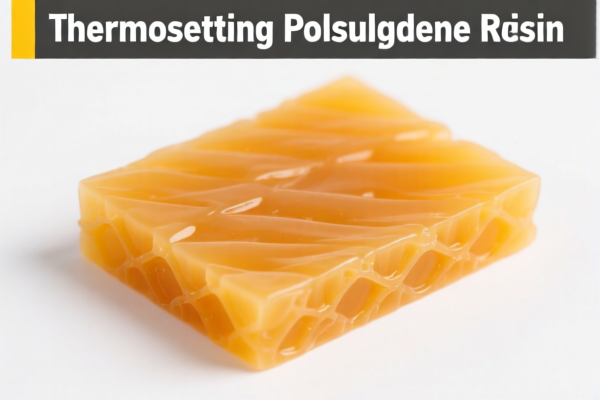
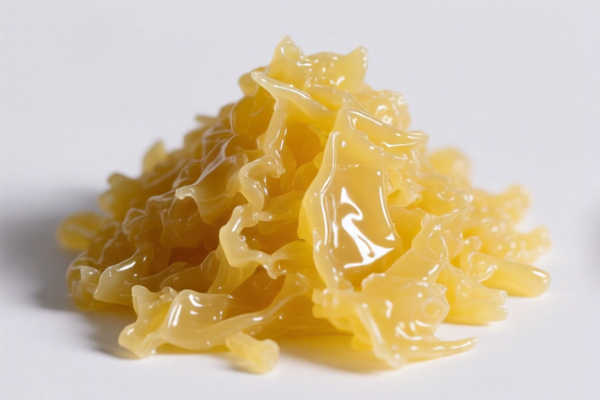
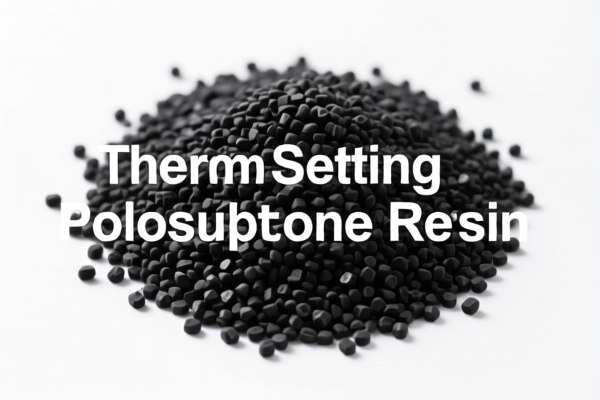

AI Analysis
🧪 Thermosetting Polysulfide Resin: The Ultimate HS Code & Duty Breakdown (2026 Edition)
🌐 HS Code Reference & Customs Clearance Guide | 2026 Latest Tariff Analysis | Professional Strategy
📌 Section I: Product Definition & Classification – Do You Really Know "Polysulfide Resin"?
Thermosetting Polysulfide Resin is a high-performance synthetic polymer characterized by sulfur-sulfur bonds in its backbone. It is renowned for its exceptional chemical resistance, weatherability, and adhesion properties.
In international trade, these resins are typically classified under Chapter 39 (Plastics and Articles Thereof), specifically targeting "other products specified in note 3 to this chapter."
Key Distinction: * Thermosetting vs. Thermoplastic: This resin cannot be re-melted once cured (cross-linked). This property dictates its classification under 3911 (Polymeric resins) rather than Chapter 38 or 35. * Specific Category: It falls under "Petroleum resins, coumarone-indene resins, polyterpenes, polysulfides, polysulfones..." and specifically the "Other Thermosetting" sub-category if it doesn't match the precise poly(1,3-phenylene methylphosphonate) or amino/phenolic/resin cross-linked definitions.
⚠️ Critical Classification Point:
- If it is a general thermosetting polysulfide resin not elsewhere specified → 3911.90.91.50 (0% Base, 0% Additional).
- If it is a specific cross-linked type (like the Cholestyramine example) → 3914.00.20.00 (25% Additional).
Note: The provided data indicates a specific 0% tariff path for "Other Thermosetting" under 3911.90.91.50, but 25% for specific cross-linked variants under 3914.
📦 Section II: HS Code Classification Details (2026 Tariff Reference)
Based on the provided dataset, here is the precise mapping for Thermosetting Polysulfide Resin:
| HS Code | Product Description | Specific Type / Scope | Tax Status |
|---|---|---|---|
| 3911.90.91.50 | Petroleum resins... Polysulfides... Other Thermosetting | General thermosetting polysulfide resins (not elsewhere specified) | 0.0% Total |
| 3914.00.20.00 | Ion-exchangers... Cross-linked polyvinylbenzyltrimethylammonium chloride | Specific Case: Cholestyramine Resin USP | 25.0% Total |
| 3911.20.00.00 | Poly(1,3-phenylene methylphosphonate) | Specific Chemical Structure (Not Polysulfide) | 31.5% Total |
| 3909.50.50.00 | Amino-resins, Phenolic resins, Polyurethanes... Polyurethanes | If the resin is actually a Polyurethane variant | 31.3% Total |
🔍 Deep Dive Analysis:
- Primary Target: 3911.90.91.50. This is the "catch-all" for Other Thermosetting polysulfides.
- Risk Alert: If your product is a functionalized ion-exchanger (e.g., Cholestyramine Resin USP) or a specific cross-linked polymer intended for medical/demulsification, it may shift to 3914.00.20.00, incurring a 25% surcharge.
- Avoid Misclassification: Do not confuse "Polysulfide" with "Polyurethane" (3909) or "Phosphonate" (3911.20). Wrong codes = Penalties.
💰 Section III: 2026 Tariff Rate Breakdown (Detailed & Legal)
✅ Applicable Region: US / China Import (Scenario based on provided data)
✅ Product Origin: China (CN)
✅ Effective Date: Current 2026 Tariff Regime
🎯 1. 3911.90.91.50 — Other Thermosetting Polysulfide Resins
This is the sweet spot for general thermosetting polysulfide resins.
| Item | Content |
|---|---|
| Base Duty Rate | 0.0% (Most Favored Nation / General) |
| Additional Duty (Section 301) | 0.0% |
| Total Effective Rate | 0.0% |
| Tax Calculation | CIF Value × 0.0% = $0 |
| De Minimis Exemption | N/A (0% rate applies to all values) |
| Legal Basis Path | HS 3911.90.91.50 → Note 3 to Chapter 39 → Other Thermosetting |
📌 Explanation:
- This code represents the most favorable tariff for generic thermosetting polysulfide resins.
- No Section 301 surcharge applies here, unlike many other petrochemical products.
- Strategy: Ensure the chemical structure is strictly "Other Thermosetting" and not a specific "Cross-linked ion-exchanger" to maintain this 0% rate.
🎯 2. 3914.00.20.00 — Cross-linked Polyvinylbenzyltrimethylammonium Chloride (Cholestyramine Resin USP)
Use this code ONLY if your polysulfide is a specific ion-exchanger or functionalized medical resin.
| Item | Content |
|---|---|
| Base Duty Rate | 0.0% |
| Additional Duty (Section 301) | +25.0% |
| Total Effective Rate | 25.0% |
| Tax Calculation | CIF Value × 25.0% |
| De Minimis Exemption | ❌ NOT Available |
| Legal Basis Path | HS 3914.00.20.00 → Section 301 Footnote |
📌 Warning:
- If your "Polysulfide Resin" is used as a drug carrier or ion-exchange medium and matches the description of "Cholestyramine resin," you face a 25% penalty.
- Do not use 3911.90.91.50 for functionalized medical resins unless cleared by a ruling.
🛠️ Section IV: Customs Clearance Operational Advice (Avoid Pitfalls)
✅ 1. Documentation Checklist (Non-Negotiable)
| Document | Required? | Purpose |
|---|---|---|
| ✅ Technical Data Sheet (TDS) | ✔️ Mandatory | Must explicitly state "Thermosetting," "Polysulfide," and not "Cross-linked Ion-Exchanger" unless it is Cholestyramine. |
| ✅ Chemical Structure Diagram | ✔️ Mandatory | Proves the sulfur-sulfur bond backbone (Polysulfide) vs. phosphate (Phosphonate) or amino (Polyurethane). |
| ✅ Usage Declaration | ✔️ | "Industrial Sealant," "Pipe Coating," or "Adhesive." Avoid "Medical/Pharmaceutical" unless it is Cholestyramine. |
| ✅ MSDS (Safety Data Sheet) | ✔️ | Shows chemical stability and cross-linking state. |
| ✅ Commercial Invoice | ✔️ | Must match HS Code description exactly: "Thermosetting Polysulfide Resin, Primary Form." |
✅ 2. Classification Strategy (The "Golden Rule")
🔥 Rule of Thumb:
"General Industrial Polysulfide = 3911.90.91.50 (0%) | Functional Ion-Exchanger = 3914.00.20.00 (25%)"
| Scenario | Correct HS Code | Risk if Incorrect |
|---|---|---|
| Standard Industrial Sealant Resin | 3911.90.91.50 |
If reported as 3914 → 25% Extra Tax |
| Medical/Pharmaceutical Ion-Exchanger | 3914.00.20.00 |
If reported as 3911 → Underpayment + Penalties |
| Polyurethane variant (Misidentified) | 3909.50.50.00 |
If reported as 3911 → 31.3% Tax (vs 0%) |
✅ 3. Special Handling for "Thermosetting"
- Curing State: Ensure the resin is declared in primary forms (e.g., pellets, flakes, liquids). If pre-mixed with hardeners (making it a "set" compound), it may fall under a different classification (e.g., 3910 or 3913).
- Naming Convention: Avoid vague terms like "Resin." Use "Thermosetting Polysulfide Resin."
🌍 Section V: Global Market Comparison (2026)
| Country/Region | Recommended HS Code | Duty Rate (China Origin) | Key Certification | Note |
|---|---|---|---|---|
| 🇺🇸 USA | 3911.90.91.50 |
0% | None specific | Best for 0% duty |
| 🇨🇳 China | 3911.90.91.50 |
0% | No surcharge | Same as US base |
| 🇪🇺 EU | 3911.90.91 |
~2-4% | REACH | No 301-type surcharges |
| 🇯🇵 Japan | 3911.90.91 |
~4% | JIS | Varies by chemical content |
📌 Conclusion:
- The US market (3911.90.91.50) is the most favorable for thermosetting polysulfide resins with 0% duty.
- Crucial: If the product is a specific ion-exchanger (Cholestyramine), the US tax jumps to 25%.
📌 Section VI: Common Errors & How to Avoid Them (Lessons Learned)
❌ Error 1: Calling it "Polysulfone" by mistake
👉 Consequence: Polysulfones (3911.20) have a 31.5% tax. Polysulfides (3911.90) are 0%.
✅ Fix: Verify the chemical name. Sulfone = SO2; Polysulfide = S-S bonds.
❌ Error 2: Claiming "Thermoplastic" status
👉 Consequence: Thermoplastics have different codes (e.g., 3901-3914 series variations) and may be subject to different duties.
✅ Fix: Confirm "Thermosetting" on the TDS.
❌ Error 3: Ignoring the "Ion-Exchanger" Trap
👉 Consequence: If your resin is functionalized for water treatment/medical use, it might be 3914.00.20.00 (25% tax).
✅ Fix: Use 3911.90.91.50 ONLY for general industrial thermosetting resins.
🎯 Section VII: Conclusion & Action Plan
🎯 The Bottom Line:
For Thermosetting Polysulfide Resin, the target is 3911.90.91.50 with a 0% Total Tax.
However, if the product is a specific cross-linked ion-exchanger (like Cholestyramine), the tax jumps to 25%.
🔹 Action 1: Verify chemical structure (Polysulfide vs. Polysulfone vs. Polyurethane).
🔹 Action 2: Confirm "Thermosetting" vs. "Ion-Exchanger" function.
🔹 Action 3: File with3911.90.91.50for 0% duty; only use3914.00.20.00if explicitly Cholestyramine.
📌 Pro Tip:
"If your resin is for adhesives, sealants, or corrosion protection, you are likely in the 0% camp (3911.90.91.50).
If it is for water purification or drug delivery, check for the 25% surcharge (3914.00.20.00)!"
📣 Next Steps:
📞 Consult a Classification Specialist to review your TDS.
🚀 Get an Advance Ruling from US Customs if your product is borderline (e.g., functionalized).
💼 Secure your 0% duty by getting the HS Code right before shipping!
✨ Precision Classification = Cost Savings.
💼 Don't let a 25% surcharge eat your margins!
Customer Reviews
About HS Code Classification
The Harmonized System (HS) is an internationally standardized nomenclature developed by the World Customs Organization (WCO) to classify traded products. Over 200 countries use the HS system as the basis for customs tariffs, trade statistics, and import/export regulations.
Each HS code follows a hierarchical structure:
- Chapter (2 digits) — Broad category of goods (e.g., Chapter 84: Machinery and Mechanical Appliances)
- Heading (4 digits) — More specific grouping within the chapter
- Subheading (6 digits) — Internationally standardized breakdown, used by all WCO member countries
- National subdivisions (8-10 digits) — Country-specific extensions for further classification, such as US HTSUS 10-digit codes
Correct HS code classification is essential for smooth customs clearance, accurate duty payment, and compliance with trade regulations. Misclassification can lead to customs delays, overpayment of duties, or penalties.
When importing from CN to US, the applicable tariff rates may include:
- Most-Favored-Nation (MFN) rate — The standard duty rate applied to WTO members
- General rate — Applied to countries without trade agreements
- Trade remedy duties — Additional tariffs such as Section 301 (anti-dumping), Section 232 (national security), or countervailing duties
The information provided on this page is for reference purposes only. For official classification, please consult with your local customs authority or a licensed customs broker.