Thermotropic Liquid Crystal Polyester Injection Molding Grade Raw Material
CN → US| HS Code | Tariff Rate | Origin | Destination | Doc |
|---|---|---|---|---|
| 3907992000 | 35.0% | CN | US | Official Doc |
| 3907995050 | 41.5% | CN | US | Official Doc |
| 3907992000 | 35.0% | CN | US | Official Doc |
| 3907995050 | 41.5% | CN | US | Official Doc |
| 3907992000 | 35.0% | CN | US | Official Doc |
Product Images
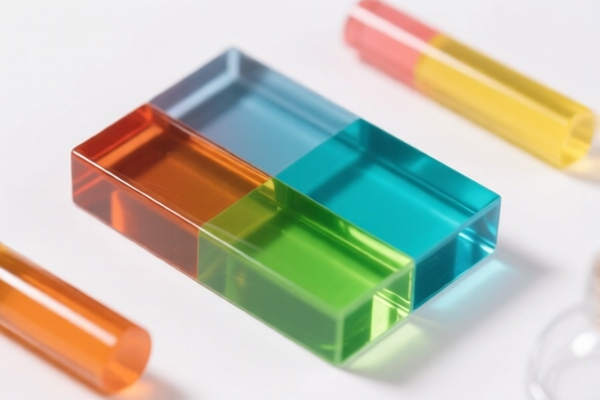
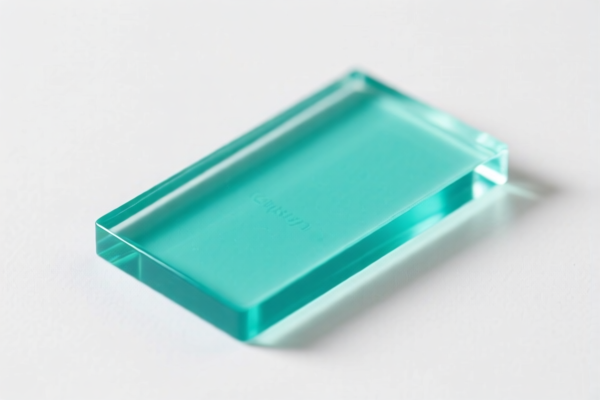

AI Analysis
🧪 Thermotropic Liquid Crystal Polyester Injection Molding Grade Raw Material
🌐 HS Code Reference & Customs Clearance Guide | 2026 Latest Tariff Analysis | Professional Compliance Strategy
📌 I. Product Definition & Classification: Do You Truly Understand "Thermotropic LCP"?
Thermotropic Liquid Crystal Polyester (LCP) is a high-performance engineering plastic known for its exceptional thermal stability, chemical resistance, and dimensional precision. In international trade, it is primarily classified based on its chemical structure and form (primary shape vs. finished articles).
For Injection Molding Grade Raw Materials (pellets/granules in primary shapes), the classification hinges on a critical distinction: 1. Aromatic Polyester Copolymers (Specific LCP Structure): Often enjoys lower base tariffs but is subject to specific trade restrictions. 2. Other Polyesters (General LCP Classification): Treated as "Other Polyesters" under HS Chapter 39, often carrying a higher base tariff rate.
⚠️ Key Distinction Point:
- If the material is chemically defined as a "Thermoplastic Liquid Crystal Aromatic Polyester Copolymer", it falls under the more specific sub-heading with 0% Base Duty.
- If classified broadly as "Other Polyester" (including some thermotropic types not meeting the specific copolymer definition for the 0% rate), it falls under 6.5% Base Duty.
- Both categories are subject to significant additional tariffs due to trade measures (Section 301 & Section 122).
📦 II. HS Code Classification Details (2026 Latest Tariff Authority Comparison)
| HS Code | Product Description | Application Scenario | Tax Implication |
|---|---|---|---|
3907.99.20.00 |
Thermoplastic Liquid Crystal Aromatic Polyester Copolymer (Primary Shape / Injection Molding Grade) |
High-end electronics, connectors, aerospace components where specific LCP chemistry applies. | Base: 0% (Low base, but high add-ons) |
3907.99.50.50 |
Other Polyester (Including Thermotropic LCP Injection Grade) (Primary Shape) |
General LCP pellets, industrial grade, or materials not fitting the specific "Aromatic Polyester Copolymer" definition for the 0% rate. | Base: 6.5% (Higher base, same add-ons) |
🔍 Important Reminder:
- Both HS Codes apply to primary shapes (pellets, granules, powder) intended for injection molding.
- The difference lies in the chemical specificity:3907.99.20.00requires the product to be explicitly identified as a Thermoplastic Liquid Crystal Aromatic Polyester Copolymer.
- If your material is a generic LCP or does not meet the strict chemical definition for the specific copolymer heading, it defaults to3907.99.50.50.
- Do NOT classify as finished articles (Chapter 39 headings for parts) if you are importing raw pellets.
💰 III. 2026 Latest Tariff Rate Breakdown (Including Additional Duties & Policy Add-ons)
✅ Applicable Country: United States (US)
✅ Country of Origin: China (CN)
✅ Effective Date: November 10, 2025 (and subsequent imports)
🎯 1. 3907.99.20.00 – Thermoplastic Liquid Crystal Aromatic Polyester Copolymer
| Item | Content |
|---|---|
| Base Duty Rate | 0.0% (Ad valorem) |
| Section 301 Additional Duty | +25.0% |
| Section 122 Duty | +10.0% |
| Total Effective Duty Rate | 35.0% |
| Tax Calculation | CIF Value × 35.0% |
| De Minimis Exemption Eligibility | ❌ NOT Eligible (deny_de_minimis) |
| Legal Basis Path | HTSUS: 3907.99.20.00 → Section 301: Footnote 9903.88.01 → Section 122: IEEPA Provisions |
📌 Explanation:
- Although the base duty is 0%, the product is subject to two layers of additional tariffs.
- Section 301 (25%): Imposed on a wide range of Chinese industrial goods under U.S. Trade Law Section 301.
- Section 122 (10%): Specific duty on certain Chinese polyester goods, effective from late 2025.
- Total Cost Impact: 35% of the CIF value is owed to US Customs. This is a significant cost factor that must be priced into imports.
🎯 2. 3907.99.50.50 – Other Polyester (Including Thermotropic LCP Injection Grade)
| Item | Content |
|---|---|
| Base Duty Rate | 6.5% (Ad valorem) |
| Section 301 Additional Duty | +25.0% |
| Section 122 Duty | +10.0% |
| Total Effective Duty Rate | 41.5% |
| Tax Calculation | CIF Value × 41.5% |
| De Minimis Exemption Eligibility | ❌ NOT Eligible (deny_de_minimis) |
| Legal Basis Path | HTSUS: 3907.99.50.50 → Section 301: Footnote 9903.88.01 → Section 122: IEEPA Provisions |
📌 Note:
- This classification applies if the material is not specifically classified as the "Aromatic Polyester Copolymer" under3907.99.20.00.
- The 6.5% base makes the total tax burden 6.5 percentage points higher than the3907.99.20.00classification.
- Even if the material is "Thermotropic," if it doesn't fit the precise chemical description for the 0% base category, it falls here.
- Total Cost Impact: 41.5% of the CIF value is owed.
🛠️ IV. Customs Clearance Practical Advice (Operational Pitfall Guide)
✅ 1. Preparation Checklist (All Required)
| Document | Mandatory | Description |
|---|---|---|
| ✅ Product Specification Sheet | ✔️ | Must explicitly state: "Thermoplastic Liquid Crystal Polyester," "Aromatic Copolymer" (if applicable), and "Primary Shape." |
| ✅ Chemical Structure Proof | ✔️ | MSDS or TDS showing the polymer structure is crucial to distinguish between 3907.99.20.00 and 3907.99.50.50. |
| ✅ Commercial Invoice | ✔️ | Must clearly state "Raw Material for Injection Molding" and "Grade: LCP." Avoid vague terms like "Plastic Pellets." |
| ✅ Packing List | ✔️ | Ensure weight and quantity match the invoice. |
| ✅ Certificate of Origin | ✔️ | Essential for verifying China origin and applying additional tariffs. |
| ✅ Declaration of No Finished Articles | ✔️ | Confirm that the shipment contains only raw pellets/granules, not molded parts. |
✅ 2. Declaration Strategy (Key Mnemonic)
🔥 “Chemistry Dictates Code, Base Rate Varies, Add-Ons Are Fixed!”
| Scenario | Correct HS Code | Incorrect Action | Result |
|---|---|---|---|
| Specific Aromatic LCP Copolymer | 3907.99.20.00 |
Misclassified as "Other Polyester" | Overpaying 6.5% on base (Total 41.5% vs 35.0%) |
| General/Other LCP Pellets | 3907.99.50.50 |
Misclassified as "Aromatic Copolymer" | Under-declaration risk → Penalties & Back Taxes |
| Molded LCP Parts | Chapter 39 (Parts) or 85 (Electrical) | Declaring as Raw Material | Seizure or Re-classification |
| Non-LCP Polyester Pellets | 3907.60.00.00 (PET/PEI, etc.) |
Declaring as LCP | Incorrect classification → Delays |
✅ 3. Special Cases Handling
| Situation | Handling Advice |
|---|---|
| Blended Materials | If LCP is blended with other polymers, the classification may change. Declare the primary polymer content clearly. |
| Private Label/OEM | Provide the supplier’s technical data sheet, not just the brand name. Customs focuses on chemical composition. |
| Small Samples | Even small quantities are subject to the 35% or 41.5% duty. De Minimis (Section 321) is NOT applicable for these HS codes. |
| Origin Marking | Ensure packages are properly marked "Made in China" to avoid additional penalties. |
🌍 V. Global Market Comparison (2026 Latest)
| Country/Region | Recommended HS Code | Duty Rate (China Origin) | Key Certifications | Notes |
|---|---|---|---|---|
| 🇺🇸 USA | 3907.99.20.00 or 50.50 |
35.0% or 41.5% | None specific to plastic, but TSCA compliant | High Additional Tariffs Apply |
| 🇨🇳 China | 3907.99.20.00 or 50.50 |
6.5% or 7.5% | RoHS (if for electronics) | Lower import duty, no Section 301 |
| 🇪🇺 EU | 3907.99.20.00 or 50.50 |
6.5% or 8.0% | REACH, RoHS | No additional trade tariffs |
| 🇬🇧 UK | 3907.99.20.00 or 50.50 |
6.5% or 8.0% | UKCA, REACH | Post-Brexit tariffs align closely with EU |
📌 Conclusion:
- The USA imposes a massive 35-41.5% effective duty on these materials, far exceeding other major markets.
- Cost optimization strategies for US imports should consider:
1. Supply Chain Diversification: Sourcing LCP from Vietnam, Thailand, or Malaysia to avoid Section 301/122 tariffs.
2. HS Code Verification: Ensuring accurate classification to avoid penalties.
3. Bonded Warehouses: Using FTZs (Foreign Trade Zones) to defer duty payments.
📌 VI. Common Errors & Pitfall Guide (Lessons Learned)
❌ Error 1: Misclassifying "LCP Pellets" as "Plastic Parts" (e.g., 3926.90.98.80)
👉 Consequence: If declared as parts but shipped as pellets, Customs may reject the entry or reclassify, leading to delays and storage fees.
❌ Error 2: Ignoring Section 122 Duty
👉 Consequence: Even if Section 301 is exempted (rare for LCP), Section 122 may still apply. Total 10% loss if missed.
❌ Error 3: Vague Description ("Plastic Resin")
👉 Consequence: Customs will likely assign a residual duty rate or 100% penalty for insufficient information.
👉 Correct Description: "Thermoplastic Liquid Crystal Aromatic Polyester Copolymer, Primary Shape, Injection Molding Grade, Unmodified"
❌ Error 4: Assuming De Minimis Applies
👉 Consequence: Sending small samples via courier (UPS/DHL) under $800 → Bill arrives for 35-41.5% duty + processing fees.
👉 Advice: Always budget for duties, even for samples.
✅ Correct Declaration Example:
"Thermoplastic Liquid Crystal Polyester, Aromatic Copolymer, Primary Shape, Injection Molding Grade, Unmodified, Model: LCP-1000"
🎯 VII. Conclusion: Precise Classification, Cost Control, and Smooth Clearance
🎯 Key Takeaways:
🔹 "Chemistry is King": The difference between
3907.99.20.00(35% total) and3907.99.50.50(41.5% total) is 6.5% of the CIF value. Accurate chemical definition saves money. 🔹 "Add-Ons Are Non-Negotiable": Section 301 (25%) + Section 122 (10%) are mandatory for Chinese-origin LCP. Plan your pricing accordingly. 🔹 "No De Minimis for LCP": Samples are NOT tax-free. Factor this into R&D shipping costs.
📌 Pro Tip:
If you are importing large volumes, consider applying for an Exclusion under Section 301 (if available for your specific LCP grade) or explore supply chain relocation to countries like Vietnam or Thailand to mitigate the 35-41.5% tariff burden.
📣 Immediate Action:
📞 Consult a Customs Broker to verify the chemical structure of your LCP material.
📝 Request a Product Technical Data Sheet (TDS) from your supplier highlighting "Aromatic Polyester Copolymer" status.
🚀 Budget Accurately: Include 35-41.5% in your landed cost calculation.
✨ Professional clearance starts with precise classification!
💼 Every percentage point counts in high-tariff industrial goods!
Customer Reviews
About HS Code Classification
The Harmonized System (HS) is an internationally standardized nomenclature developed by the World Customs Organization (WCO) to classify traded products. Over 200 countries use the HS system as the basis for customs tariffs, trade statistics, and import/export regulations.
Each HS code follows a hierarchical structure:
- Chapter (2 digits) — Broad category of goods (e.g., Chapter 84: Machinery and Mechanical Appliances)
- Heading (4 digits) — More specific grouping within the chapter
- Subheading (6 digits) — Internationally standardized breakdown, used by all WCO member countries
- National subdivisions (8-10 digits) — Country-specific extensions for further classification, such as US HTSUS 10-digit codes
Correct HS code classification is essential for smooth customs clearance, accurate duty payment, and compliance with trade regulations. Misclassification can lead to customs delays, overpayment of duties, or penalties.
When importing from CN to US, the applicable tariff rates may include:
- Most-Favored-Nation (MFN) rate — The standard duty rate applied to WTO members
- General rate — Applied to countries without trade agreements
- Trade remedy duties — Additional tariffs such as Section 301 (anti-dumping), Section 232 (national security), or countervailing duties
The information provided on this page is for reference purposes only. For official classification, please consult with your local customs authority or a licensed customs broker.