Thickened Flypaper Roll
CN → US| HS Code | Tariff Rate | Origin | Destination | Doc |
|---|---|---|---|---|
| 3808915001 | 40.0% | CN | US | Official Doc |
| 4823201000 | 35.0% | CN | US | Official Doc |
| 4823209000 | 35.0% | CN | US | Official Doc |
| 3808911000 | 37.8% | CN | US | Official Doc |
| 3926909905 | 22.8% | CN | US | Official Doc |
Product Images
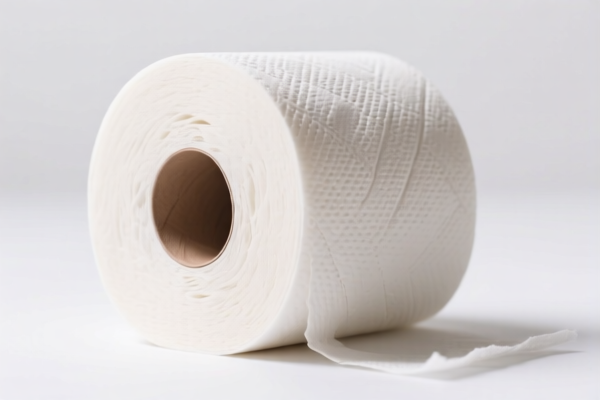
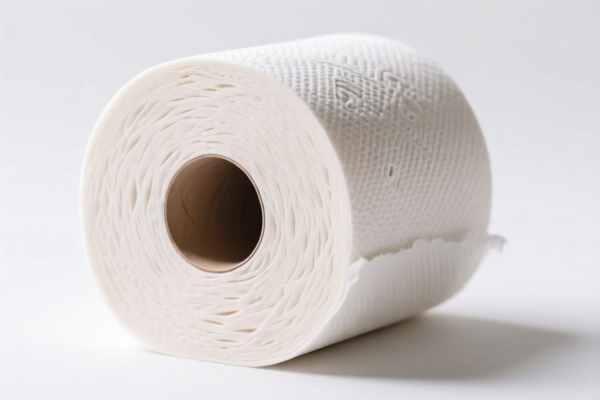
AI Analysis
🕸️ Thickened Flypaper Roll (Sticky Tape for Flies)
🌐 HS Code Reference & Customs Clearance Guide | 2026 Latest Tariff Analysis | Professional Clearance Strategy
📌 I. Product Definition & Classification: Do You Really Understand "Flypaper"?
Flypaper rolls are adhesive pest control devices used to trap flying insects. In international trade, classification depends heavily on the material composition and specific function:
Insecticides/Chemical Agents (HS 3808):
If the paper is impregnated with chemical pesticides (insecticides) to kill or repel flies, it is classified under "Insecticides."
Paper Products (HS 4823):
If the product is purely a mechanical trap (sticky glue on paper/plastic) without significant chemical insecticide content, it is classified as "Other paper articles" or "Filtration paper."
Plastic/Rubber Articles (HS 3926):
If the backing material is primarily plastic-coated or synthetic film, it may fall under "Other articles of plastics."
⚠️ Key Distinction Point:
- If the primary function is chemical killing via impregnation → HS 3808
- If the primary function is physical trapping via adhesives → HS 4823 or HS 3926
- Material conflict check: Is it paper, plastic, or chemical-laden?
📦 II. HS Code Classification Details (2026 Latest Tariff Authority Comparison)
| HS Code | Product Description | Application Scenario | Tax Rate |
|---|---|---|---|
3808.91.50.01 |
Other insecticides, insecticide preparations (Flypaper as pesticide formulation) | Flypaper impregnated with insecticides; sticky paper as a pesticide delivery form | 40.0% |
4823.20.10.00 |
Other paper articles (Flypaper roll as paper product) | Purely paper-based sticky trap; no material conflict with metal/plastic; fits "other paper items" | 35.0% |
4823.20.90.00 |
Filtration paper and paperboard, other (Flypaper as non-specific shape roll) | Flypaper as "other" category under filtration paper/纸板; material matches (paper); shape is rolled/non-specific | 35.0% |
3808.91.10.00 |
Insecticides (Flypaper definition match) | Flypaper roll; fits insecticide category definition; material inferred as paper/film with adhesive | 37.8% |
3926.90.99.05 |
Other articles of plastics (Flypaper as plastic/resin-coated) | Flypaper with plastic/resin coating; fits plastic category; rolled format matches strip/roll logic | 22.8% |
🔍 Key Reminder:
- "Chemical vs. Physical": If the flypaper contains active pesticide ingredients, it must be classified under HS 3808.
- "Material Matters": Purely adhesive paper traps without chemicals may fall under HS 4823.
- "Plastic Coating": If the base is heavily plastic-coated for durability, HS 3926 might apply, but check if chemical content overrides this.
💰 III. 2026 Latest Tariff Rate Details (Including Surcharges & Policy Add-ons)
✅ Applicable Country: United States (US)
✅ Origin: China (CN)
✅ Effective Date: From November 10, 2025 (including subsequent imports)
🎯 1. 3808.91.50.01 —— Other Insecticides (Flypaper as Pesticide Formulation)
| Item | Content |
|---|---|
| Base Tariff | 5.0% (ad valorem) |
| Section 301 Surcharge | +25% (from USITC Footnote 9903.88.01) |
| IEEPA Surcharge | +10% (Against China/HK products, from Nov 10, 2025) |
| Total Rate | 40.0% |
| Tax Calculation | CIF Value × 40% |
| De Minimis Exemption | ❌ Not Available (deny_de_minimis) |
| Legal Basis Path | IEEPA:9903.01.25 → IEEPA:9903.01.24 → USITC:3808.91.50.01 → FOOTNOTE:9903.88.01 |
📌 Explanation:
- "USITC Surcharge 25%" comes from the "Additional Tariffs" under Section 301 of the US Trade Act;
- "IEEPA 10%" is the additional tariff against China under the International Emergency Economic Powers Act;
- Total 40%, considered a high tariff, must be anticipated in advance!
🎯 2. 4823.20.10.00 & 4823.20.90.00 —— Other Paper Articles / Filtration Paper
| Item | Content |
|---|---|
| Base Tariff | 0.0% |
| Section 301 Surcharge | +25% |
| IEEPA Surcharge | +10% |
| Total Rate | 35.0% |
| Tax Calculation | CIF × 35% |
| De Minimis Exemption | ❌ Not Available |
| Legal Basis Path | IEEPA:9901.25 → IEEPA:9903.01.24 → USITC:4823.20.10.00 / 4823.20.90.00 → FOOTNOTE:9903.88.01 |
📌 Note:
- Both subheadings have the same tariff structure;
- Whether it's "other paper items" or "filtration paper," as long as it's non-chemical sticky paper, it applies here.
🎯 3. 3808.91.10.00 —— Insecticides (Flypaper Definition Match)
| Item | Content |
|---|---|
| Base Tariff | 2.8% |
| Section 301 Surcharge | +25% |
| IEEPA Surcharge | +10% |
| Total Rate | 37.8% |
| Tax Calculation | CIF × 37.8% |
| De Minimis Exemption | ❌ Not Available |
| Legal Basis Path | IEEPA:9903.01.25 → IEEPA:9903.01.24 → USITC:3808.91.10.00 → FOOTNOTE:9903.88.01 |
📌 Note:
- Slightly lower base rate than 3808.91.50.01, but total rate is still high;
- Applies if flypaper is specifically defined as an insecticide in customs records.
🎯 4. 3926.90.99.05 —— Other Articles of Plastics
| Item | Content |
|---|---|
| Base Tariff | 5.3% |
| Section 301 Surcharge | +7.5% |
| IEEPA Surcharge | +10% |
| Total Rate | 22.8% |
| Tax Calculation | CIF × 22.8% |
| De Minimis Exemption | ❌ Not Available |
| Legal Basis Path | IEEPA:9901.25 → IEEPA:9903.01.24 → USITC:3926.90.99.05 → FOOTNOTE:9903.88.01 |
📌 Note:
- Lowest total rate (22.8%) among all options;
- Applies only if the product is primarily plastic-based and not classified as an insecticide;
- Risk: Customs may reclassify as HS 3808 if chemical content is detected.
🛠️ IV. Customs Clearance Practical Advice (Practical Pitfall Avoidance Guide)
✅ 1. Preparation Material Checklist (No Exceptions)
| Material | Must Provide | Explanation |
|---|---|---|
| ✅ Product Spec Sheet | ✔️ | Includes dimensions, adhesive type, insecticidal ingredients (if any), weight |
| ✅ Material Composition Report | ✔️ | Confirms paper vs. plastic base; chemical content (pesticide % or "non-chemical") |
| ✅ Product Photos (incl. Label) | ✔️ | Clear view of model, brand, ingredients list, usage instructions |
| ✅ Third-Party Test Report | ✔️ | If chemical: EPA/pesticide registration; If physical: Adhesion strength, material safety |
| ✅ Commercial Invoice | ✔️ | Must specify "Sticky Flypaper Roll" or "Insecticide-Infused Flypaper" accurately |
| ✅ Certificate of Origin (CO) | ✔️ | If not China-made, claim preferential rates if applicable |
| ✅ Packing List | ✔️ | Clarify if rolls are standalone or include dispensers/hooks |
✅ 2. Declaration Tips (Key Mantra)
🔥 "Material First, Function Second, Chemical Clear, Tariff Lower!"
| Situation | Correct Declaration | Wrong Practice |
|---|---|---|
| Flypaper with insecticide | 3808.91.10.00 or 3808.91.50.01 |
Misdeclare as "paper" → 35% |
| Purely adhesive paper trap | 4823.20.10.00 |
Misdeclare as "insecticide" → 40% |
| Plastic-coated sticky roll | 3926.90.99.05 |
Misdeclare as "paper" → 35% |
| Flypaper + Dispenser Box | Declare as one unit | Split declaration → Each item taxed separately, higher total |
✅ 3. Special Case Handling
| Situation | Handling Advice |
|---|---|
| OEM Custom Flypaper | Provide client order + design specs to avoid "non-standard" classification |
| Chemical-Free Flypaper | Provide test report proving no pesticide → Claim HS 4823 or 3926 |
| Flypaper with Chemicals | Must provide pesticide registration/ingredient list → Claim HS 3808 |
| Flypaper + Dispenser | Declare as "Flypaper Roll with Dispenser" → Avoid splitting, use main item HS |
🌍 V. Global Market Clearance Comparison (2026 Latest)
| Country/Region | Recommended HS Code | Tariff | Certification | Note |
|---|---|---|---|---|
| 🇺🇸 USA | 3808.91.10.00 / 3808.91.50.01 |
37.8%-40% (China) | EPA (if chemical) | High tariff due to 301 + IEEPA |
| 🇨🇳 China | 4823.20.10.00 |
5% | No extra surcharge | Low duty, but check chemical rules |
| 🇪🇺 EU | 4823.20.10.00 |
0% (if paper) | CE (if chemical) | No surcharge, but chemical rules strict |
| 🇦🇺 Australia | 3808.91.50.01 |
5% | APVMA (if chemical) | No surcharge, but chemical approval needed |
| 🇯🇵 Japan | 4823.20.10.00 |
0% | FFI (if chemical) | No surcharge |
📌 Conclusion:
- USA has the highest tariff burden for flypaper due to additional surcharges;
- Paper/Plastic classifications (HS 4823/3926) offer lower rates but carry reclassification risk;
- Chemical content dictates HS 3808, which incurs higher base tariffs in the US.
📌 VI. Common Errors & Pitfall Guide (Blood-and-Tears Lessons)
❌ Error 1: Declaring "Chemical Flypaper" as "Paper Product"
👉 Consequence: Customs reclassifies to HS 3808 → 40% tariff + penalty!
❌ Error 2: Declaring "Plastic Flypaper" as "Paper"
👉 Consequence: Misclassification → Delay or return!
❌ Error 3: Failing to disclose chemical ingredients
👉 Consequence: EPA/Customs seizure → Fine or destruction!
❌ Error 4: Splitting "Flypaper + Dispenser" into separate lines
👉 Consequence: Higher total duty → Cost increase!
✅ Correct Practice:
"Thickened Flypaper Roll, 12x100 inches, Adhesive-only, Paper-based, Non-chemical, Model XYZ"
OR
"Insecticide-Infused Flypaper Roll, Contains Imiprothrin 0.5%, Paper-based, For Pest Control, EPA Reg. No. XXXXX"
🎯 VII. Conclusion: Professional Declaration, Time-Saving, Cost-Effective!
🎯 Remember Mantra:
🔹 "Material First, Function Second, Chemical Clear, Tariff Lower!"
🔹 "HS Code Determines Fate, Rate Differs 25 Points, One Declaration Step, Save Thousands!"
📌 Pro Tip:
If your flypaper originates from Vietnam, Mexico, Thailand, Malaysia, you may apply for IEEPA Exemption, reducing rates to 0%~5%;
Recommend Advance Ruling application to avoid clearance risks.
📣 Take Action Now:
📞 Contact Professional Customs Broker + Provide Product Photos + Apply for HS Code Advance Ruling
🚀 Let your flypaper clear smoothly, export efficiently, profit double!
✨ Professional Clearance Starts with Accurate Classification!
💼 Every Cent of Your Cost Deserves Precise Calculation!
Customer Reviews
About HS Code Classification
The Harmonized System (HS) is an internationally standardized nomenclature developed by the World Customs Organization (WCO) to classify traded products. Over 200 countries use the HS system as the basis for customs tariffs, trade statistics, and import/export regulations.
Each HS code follows a hierarchical structure:
- Chapter (2 digits) — Broad category of goods (e.g., Chapter 84: Machinery and Mechanical Appliances)
- Heading (4 digits) — More specific grouping within the chapter
- Subheading (6 digits) — Internationally standardized breakdown, used by all WCO member countries
- National subdivisions (8-10 digits) — Country-specific extensions for further classification, such as US HTSUS 10-digit codes
Correct HS code classification is essential for smooth customs clearance, accurate duty payment, and compliance with trade regulations. Misclassification can lead to customs delays, overpayment of duties, or penalties.
When importing from CN to US, the applicable tariff rates may include:
- Most-Favored-Nation (MFN) rate — The standard duty rate applied to WTO members
- General rate — Applied to countries without trade agreements
- Trade remedy duties — Additional tariffs such as Section 301 (anti-dumping), Section 232 (national security), or countervailing duties
The information provided on this page is for reference purposes only. For official classification, please consult with your local customs authority or a licensed customs broker.