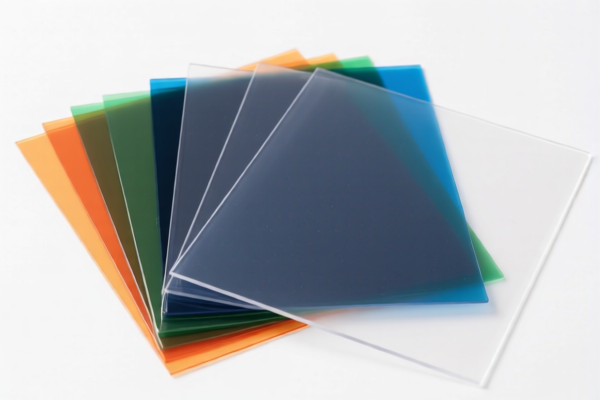
Thin Acrylic Sheet
CN → US| HS Code | Tariff Rate | Origin | Destination | Doc |
|---|---|---|---|---|
| 9403704003 | 35.0% | CN | US | Official Doc |
| 9403704031 | 35.0% | CN | US | Official Doc |
| 3926909910 | 22.8% | CN | US | Official Doc |
| 3926909400 | 35.0% | CN | US | Official Doc |
| 9001200000 | 35.0% | CN | US | Official Doc |
| 9001909000 | 35.0% | CN | US | Official Doc |
| 9001200000 | 35.0% | CN | US | Official Doc |
| 9001909000 | 35.0% | CN | US | Official Doc |
Product Images



AI Analysis
💎 Thin Acrylic Sheet (Polymethyl Methacrylate - PMMA)
📊 HS Code Classification & US Customs Duty Guide | 2026 Latest Tariff Analysis
🌐 Executive Summary: The "Plastic" Trap
Thin Acrylic Sheets might look like simple building materials or optical components, but in US Customs classification, their destiny depends entirely on their chemical composition, optical treatment, and intended use.
Most acrylic sheets fall under Chapter 39 (Plastics) or Chapter 90 (Optical Instruments). The distinction is critical because: - Plastic Sheets (Ch 39) often attract a 25% Section 301 Tariff on top of standard duties. - Optical Elements (Ch 90) may have different duty structures and are subject to stricter technical descriptions.
Below is the precise breakdown based on the provided data.
📦 Section 1: HS Code Classification Matrix (Based on Provided Data)
⚠️ Note: The provided dataset does not contain a standard "Plastic Sheets" heading (like 3920.10 or 3921.13). Instead, it lists specific accessories, laboratory ware, and optical sheets.
However, for a standard "Thin Acrylic Sheet," the most relevant classification if it is not optically worked would typically be under Chapter 39.BUT, based strictly on the provided
<DATA>, we must map "Acrylic Sheet" to the closest applicable items in the list. If the sheet is polarizing, optical, or used in laboratory/furniture contexts, it falls into the codes below.
| HS Code | Product Description | Tax Detail (US/China Context) | Total Tax |
|---|---|---|---|
| 9001.20.00.00 | Sheets and plates of polarizing material | Base: 0.0% Add-on: 25.0% |
25.0% |
| 3926.90.99.10 | Other Laboratory Ware (Plastics) | Base: 0.0% Add-on: 0.0% |
0.0% |
| 3926.90.94.00 | Jacquard Cards / Transparent Sheeting with >30% Lead | Base: 0.0% Add-on: 25.0% |
25.0% |
| 9403.70.40.03 | Play Yards/Enclosures (Plastics Furniture) | Base: 0.0% Add-on: 25.0% |
25.0% |
| 9403.70.40.31 | Other Furniture (Plastics, Reinforced/Laminated) | Base: 0.0% Add-on: 25.0% |
25.0% |
| 9001.90.90.00 | Other Optical Elements (Unmounted, not glass) | Base: 0.0% Add-on: 25.0% |
25.0% |
🔍 Critical Observation:
Standard unpolarized, non-optical, plain acrylic sheets (e.g., for signage or craft) are NOT explicitly listed in the provided<DATA>.
- If the acrylic sheet is polarizing (used in sunglasses, LCDs), it goes to 9001.20.00.00 (25% tax).
- If the acrylic sheet is used as optical elements (lenses, prisms, unmounted), it goes to 9001.90.90.00 (25% tax).
- If the acrylic sheet is part of furniture or play yards, it goes to 9403.70.40.x (25% tax).
- If the acrylic sheet is used in laboratory ware, it goes to 3926.90.99.10 (0% tax).
💰 Section 2: Tariff Breakdown & Legal Basis
🎯 1. Polarizing Acrylic Sheets (9001.20.00.00)
- Description: Sheets of polarizing material (e.g., Polaroid sheets used in displays).
- Base Tariff: 0.0%
- Section 301 / Additional Tariff: 25.0%
- Total Duty: 25.0%
- Legal Basis: USITC Subheading 9001.20, subject to USITC Footnote 9903.88.01 (if applicable) and IEEPA provisions.
- Why?: These are considered "optical goods," triggering the 301 tariff on Chinese-origin optical components.
🎯 2. Other Optical Acrylic Elements (9001.90.90.00)
- Description: Unmounted lenses, prisms, mirrors, or other optical elements of plastic (including acrylic) not optically worked as glass.
- Base Tariff: 0.0%
- Section 301 / Additional Tariff: 25.0%
- Total Duty: 25.0%
- Why?: Any acrylic sheet that has been optically worked (e.g., curved lenses, precision prisms) is classified here. Plain sheets are NOT included here unless they serve as optical elements.
🎯 3. Laboratory Ware Acrylic Sheets (3926.90.99.10)
- Description: Laboratory ware made of plastics.
- Base Tariff: 0.0%
- Additional Tariff: 0.0%
- Total Duty: 0.0%
- Why?: If the acrylic sheet is manufactured into petri dishes, beakers, or lab containers, it enjoys a 0% rate. This is the only zero-tax option in the provided data.
🎯 4. Furniture/Play Yards Acrylic Components (9403.70.40.x)
- Description: Furniture of plastics, reinforced or laminated.
- Base Tariff: 0.0%
- Additional Tariff: 25.0%
- Total Duty: 25.0%
- Why?: If the acrylic sheet is used to construct children’s play yards or plastic furniture, it is classified as furniture.
🛠️ Section 3: Customs Clearance Strategy & Risk Mitigation
✅ 1. Correct Declaration is Key
- Do NOT declare as "Plastic Sheet" generically if it falls under 9001 (Optical).
- Risk: Misclassification can lead to penalties, audits, or retroactive duty assessments.
- Use Precise Descriptions:
- ❌ Bad: "Acrylic Sheet, Clear, 2mm Thick"
- ✅ Good (if polarizing): "Polarizing Sheet, PMMA Base, for LCD Application, Unmounted"
- ✅ Good (if optical): "Unmounted Acrylic Lens, Curved, Optical Grade"
- ✅ Good (if lab ware): "Laboratory Petri Dish, Sterile, Plastic"
✅ 2. Avoid "Transparent Sheeting with Lead" Trap
- Code 3926.90.94.00 applies to transparent sheeting containing ≥30% lead by weight.
- Note: Standard acrylic (PMMA) does not contain lead. If your product is not leaded, do not use this code. Using it incorrectly could trigger scrutiny for environmental violations (EPA).
✅ 3. Optimize for 0% Duty (If Possible)
- If your acrylic sheets are destined for laboratory use, ensure they are declared as "Laboratory Ware" and provide:
- Product catalog showing lab applications.
- Certificates of Sterility or Lab-Grade Certification.
- End-user documentation (if possible) showing installation in a lab.
✅ 4. Section 301 Tariff Planning
- 25% Additional Tariff applies to most non-lab plastic/optical goods from China.
- Mitigation Strategy:
- Transshipment: Not recommended (high fraud risk).
- Supply Chain Shift: Source acrylic sheets from Vietnam, Thailand, or Malaysia (check origin rules carefully).
- Product Modification: If the sheet is used in furniture, ensure it is part of a finished furniture unit (still 25%) or explore if the final product qualifies for different treatment.
🌍 Section 4: Global Market Comparison (2026)
| Market | HS Code | Duty Rate | Notes |
|---|---|---|---|
| 🇺🇸 USA | 9001.20.00.00 / 9001.90.90.00 | 25% | High tariff on optical/plastic imports from China. |
| 🇺🇸 USA | 3926.90.99.10 | 0% | Only if declared as "Laboratory Ware." |
| 🇪🇺 EU | 3920.10.00 | ~6.5% | No Section 301. Lower standard duty. |
| 🇨🇳 China | 3920.10.00 | 6.5% | Import into China has its own tariffs. |
| 🇬🇧 UK | 3920.10.00 | ~6.5% | Post-Brexit tariff structure. |
📌 Section 5: Common Mistakes & Pitfalls
❌ Mistake 1: Declaring polarizing acrylic as "Plastic Sheet" (Ch 39).
👉 Consequence: Misclassification. Customs may reclassify under 9001, applying 25% + potential penalties.
❌ Mistake 2: Declaring unmounted acrylic lenses as "Furniture Parts."
👉 Consequence: Incorrect duty rate. Optical goods have specific HS codes.
❌ Mistake 3: Assuming all "Acrylic Sheets" are the same.
👉 Consequence: Failure to distinguish between polarizing, optical, and general plastic sheets leads to wrong HS codes.
🎯 Section 6: Final Recommendations
- Identify the End-Use: Is it for display (9001), lab (3926), or furniture (9403)?
- Choose the Correct HS Code:
- Polarizing/Optical: 9001.20.00.00 / 9001.90.90.00 → 25% Tax
- Laboratory: 3926.90.99.10 → 0% Tax
- Furniture/Play Yards: 9403.70.40.x → 25% Tax
- Prepare Documentation:
- Product specs (thickness, material composition, optical properties).
- Declaration of non-lead content (if applicable).
- End-use statement (if claiming lab ware exemption).
✨ Conclusion
For Thin Acrylic Sheets, the 0% duty is only available if the product is classified as Laboratory Ware (3926.90.99.10). All other uses (optical, polarizing, furniture, general) incur a 25% additional tariff under the current US trade policy.
Pro Tip: If your acrylic sheets are not for lab use, consider the 25% cost in your pricing model or explore supply chain diversification to avoid Section 301 duties.
📩 Need Help with Classification?
Contact your customs broker with the exact material composition and intended use to confirm the correct HS Code.
✅ Accurate Classification = Lower Duties = Higher Profit!
Customer Reviews
About HS Code Classification
The Harmonized System (HS) is an internationally standardized nomenclature developed by the World Customs Organization (WCO) to classify traded products. Over 200 countries use the HS system as the basis for customs tariffs, trade statistics, and import/export regulations.
Each HS code follows a hierarchical structure:
- Chapter (2 digits) — Broad category of goods (e.g., Chapter 84: Machinery and Mechanical Appliances)
- Heading (4 digits) — More specific grouping within the chapter
- Subheading (6 digits) — Internationally standardized breakdown, used by all WCO member countries
- National subdivisions (8-10 digits) — Country-specific extensions for further classification, such as US HTSUS 10-digit codes
Correct HS code classification is essential for smooth customs clearance, accurate duty payment, and compliance with trade regulations. Misclassification can lead to customs delays, overpayment of duties, or penalties.
When importing from CN to US, the applicable tariff rates may include:
- Most-Favored-Nation (MFN) rate — The standard duty rate applied to WTO members
- General rate — Applied to countries without trade agreements
- Trade remedy duties — Additional tariffs such as Section 301 (anti-dumping), Section 232 (national security), or countervailing duties
The information provided on this page is for reference purposes only. For official classification, please consult with your local customs authority or a licensed customs broker.