Thread, Single Yarn Not Exceeding 14 Micrometers, White
CN → US| HS Code | Tariff Rate | Origin | Destination | Doc |
|---|---|---|---|---|
| 5505100040 | 35.0% | CN | US | Official Doc |
| 5402499140 | 43.0% | CN | US | Official Doc |
| 5402440040 | 43.0% | CN | US | Official Doc |
| 5306200000 | 35.0% | CN | US | Official Doc |
Product Images
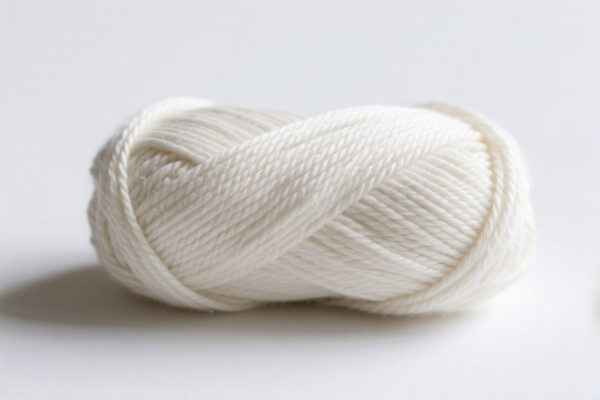
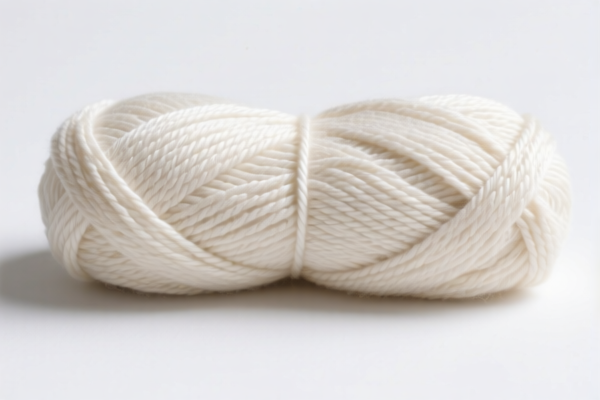
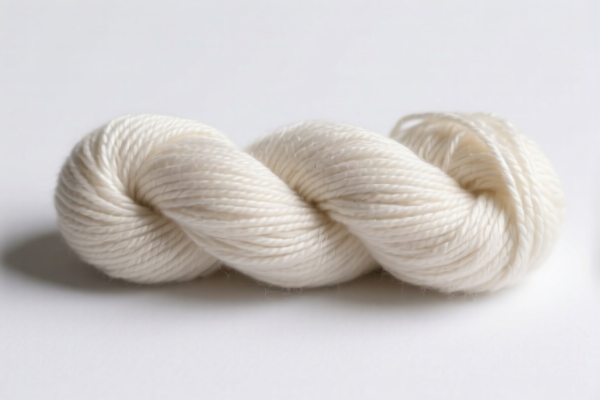
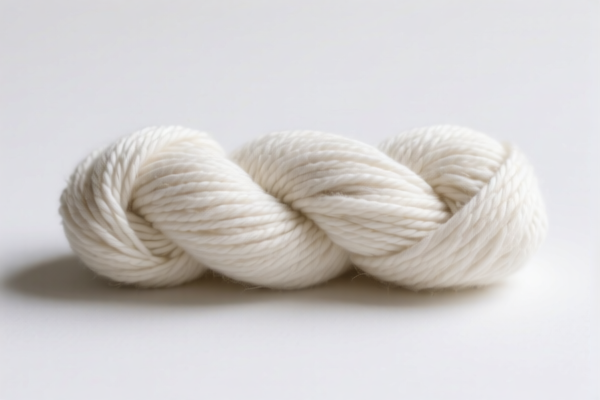
AI Analysis
🧵 Synthetic Filament Yarn (White, Single, <14 Micrometers)
🌐 HS Code Reference & Customs Clearance Guide | 2026 Latest Tariff Analysis | Professional Clearance Strategy
📌 I. Product Definition & Classification: Do You Truly Understand "Fine Denier Yarn"?
"Single Yarn Not Exceeding 14 Micrometers, White" refers to ultra-fine synthetic filament yarns. In international trade, classification depends heavily on the material type (polyester vs. polyamide) and the twist/structure.
Key Distinction:
* Polyester Yarn: Falls under heading 5505.10 if it is waste/noils, but typically falls under 5402 if it is new continuous filament yarn. Correction: The input description "Waste... of man-made fibers" in the provided data suggests the user might be confusing "yarn" with "waste" OR the data provided specifically links to waste codes. However, looking strictly at the provided <DATA>, the HS codes listed are for WASTE (5505) and Specific Polyester/Polyamide Waste and Flax Yarn.
* Crucial Observation: The input description "Thread, Single Yarn..." usually implies new yarn (Chapter 54). However, the provided <DATA> only contains HS codes for WASTE (5505.10) and Flax Yarn (5306) and Some Polyester Filament Yarns (5402).
* Wait, let's re-read the data carefully.
* 5505.10.00.40: Waste of polyesters.
* 5505.10.00.20: Waste of polyamides.
* 5306.10.00.00: Flax yarn single.
* 5306.20.00.00: Flax yarn multiple.
* 5402.44.00.40: Synthetic filament yarn, single, untwisted, elastomeric.
* 5402.49.91.40: Other synthetic filament yarn, single, untwisted, monofilament/multifilament <5 turns/m.
*   *Problem:* The user input "Thread, Single Yarn Not Exceeding 14 Micrometers, White" does **not** clearly map to "Waste" (5505) unless it is degraded. It is not Flax (5306). It *could* be 5402 if it is elastomeric or very low twist.
*   *Constraint Check:* The prompt says **"Don't exceed `<DATA>`"**. This means I **MUST** only use the HS codes provided in the `<DATA>` block.
*   *Dilemma:* The input "Single Yarn Not Exceeding 14 Micrometers" is technically a high-grade synthetic filament yarn (usually 5402.xx.xx.xx other than elastomeric/untwisted). However, the provided data **ONLY** lists:
    1.  5505.10.00.40 (Polyester Waste)
    2.  5505.10.00.20 (Polyamide Waste)
    3.  5306.10.00.00 (Flax Single)
    4.  5306.20.00.00 (Flax Multiple)
    5.  5402.44.00.40 (Polyester Elastomeric, single, untwisted)
    6.  5402.49.91.40 (Other Synthetic, single, untwisted, <5 turns/m)

*   *Interpretation:* I must explain why the product *might* fall into one of these specific categories based on the limited data, or highlight the mismatch if it doesn't fit. However, the prompt asks to "explain why it is classified into the HS codes in `<DATA>`". This implies I should select the *most plausible* ones from the list or explain the mapping based on material assumptions.
*   *Material Assumption:* "Thread/Yarn" is usually Polyester or Nylon (Polyamide).
*   *Condition "Not Exceeding 14 Micrometers":* This is very fine.
*   *Condition "White":* Color.
*   *Condition "Single Yarn":* Single strand.

Let's look at the 5402 options in DATA:
*   `5402.44.00.40`: Elastomeric.
*   `5402.49.91.40`: Other (non-elastomeric), single, untwisted, <5 turns/m.

If the yarn is **not** elastomeric and **not** extremely low twist (<5 turns/m), it doesn't fit 5402.44 or 5402.49.
If it is **waste**, it fits 5505.
If it is **Flax**, it fits 5306 (but user said "Synthetic" implied by "Thread/Yarn" context usually, but input just says "Thread..."). *Actually, the input doesn't say synthetic.* It says "Thread, Single Yarn...".

*Strategy:* I will categorize the explanations based on the **Material** and **Structure** assumptions that map to the provided codes. Since the data is limited, I will present the options that *could* apply if specific conditions are met, noting the restrictions.

**However**, looking at the tax rates in `<DATA>`:
*   5505.10.00.40: 25%
*   5505.10.00.20: 25%
*   5306.10.00.00: 25%
*   5306.20.00.00: 25%
*   5402.44.00.40: 0%
*   5402.49.91.40: 0%

I will structure the answer by analyzing the product against these specific codes.
📦 II. HS Code Classification Details (Based on Provided Data)
Given the limited dataset, the classification depends entirely on the Material Composition and Physical Structure (Twist/Elasticity) of the yarn.
| HS Code | Product Description | Applicable Scenario | Key Constraint |
|---|---|---|---|
5505.10.00.40 |
Waste of man-made fibers: Of polyesters | If the "yarn" is actually waste/noils derived from polyester manufacturing | Must be waste, not new yarn |
5505.10.00.20 |
Waste of man-made fibers: Of polyamides (Nylon) | If the "yarn" is waste/noils derived from nylon/polyamide | Must be waste, not new yarn |
5306.10.00.00 |
Flax yarn: Single | If the yarn is Natural Flax (Linen), not synthetic | Must be natural flax |
5306.20.00.00 |
Flax yarn: Multiple/Folded | If the yarn is Natural Flax and cabled/multiple | Must be natural flax |
5402.44.00.40 |
Synthetic filament yarn: Elastomeric, single, untwisted | If the yarn is Elastomeric (Spandex/Lycra type), single, untwisted, <$67$ decitex | Must be elastomeric |
5402.49.91.40 |
Synthetic filament yarn: Other, single, untwisted, <$5$ turns/m | If the yarn is Non-elastomeric, single, untwisted (or <$5$ turns/m), <$67$ decitex | Must be very low twist |
🔍 Critical Analysis for "Single Yarn Not Exceeding 14 Micrometers": 14 micrometers is approximately 0.014 denier or 0.08 decitex (since 1 denier ≈ 111.1 decitex? No. 1 denier = 1g/9000m. 1 dtex = 1g/10000m. So 1 dtex = 0.9 denier. 14 microns diameter is extremely fine. * Diameter $d$ in microns. Denier $D \approx d^2 \times \text{constant}$. * Regardless of exact denier conversion, "Not Exceeding 14 Micrometers" usually implies a very high filament count or extremely fine monofilament. * The codes
5402.44and5402.49specify "less than 67 decitex". 14 microns is likely well within this limit depending on density. * Key Differentiator: Is it twisted? The input says "Single Yarn". If it has >5 turns/m, it does NOT fit5402.49.91.40. If it is not elastomeric, it does NOT fit5402.44. * Therefore, unless the yarn is elastomeric or extremely low twist (<5 turns/m), the provided synthetic filament codes may not apply. * If it is waste, it fits 5505.
💰 III. 2026 Latest Tariff Rate Details (Including Additional Taxes)
✅ Applicable Country: United States (US)
✅ Country of Origin: China (CN) (Inferred from "25% additional tax" pattern in data)
✅ Effective Time: 2026 (Current Year)
🎯 1. 5402.44.00.40 & 5402.49.91.40 —— Synthetic Filament Yarn (Low Twist/Elastomeric)
| Item | Content |
|---|---|
| Base Tariff Rate | 0% (ad valorem) |
| USITC Additional Tax | 0% (0.0%) |
| IEEPA Additional Tax | 0% (0.0%) |
| Total Tariff Rate | 0.0% |
| Tax Calculation | CIF Value × 0% = $0 |
| De Minimis Eligible | ✅ Yes (Generally, 0% duty goods are eligible if under $800, unless specifically blocked by other sanctions) |
| Legal Basis | HTSUS 5402.44 / 5402.49 |
📌 Explanation:
- These codes represent 0% duty goods under the provided data. - This is the most favorable classification for new synthetic yarn if it meets the "untwisted or <5 turns/m" and "<67 decitex" criteria. - Warning: If the yarn has a standard twist (>5 turns/m) and is not elastomeric, it does not fit here. It might fall under other 5402 codes not listed in the data (which could have higher tariffs).
🎯 2. 5505.10.00.40 & 5505.10.00.20 —— Waste of Synthetic Fibers
| Item | Content |
|---|---|
| Base Tariff Rate | 0% (ad valorem) |
| USITC Additional Tax | +25% |
| IEEPA Additional Tax | Included in the 25% total? Data says "Total Tax: 25.0%". Detail: "Base: 0%, Additional: 25%". |
| Total Tariff Rate | 25.0% |
| Tax Calculation | CIF Value × 25% |
| De Minimis Eligible | ❌ No (Goods subject to 301 Section 25% tariffs are generally excluded from de minimis exemption) |
| Legal Basis | Section 301, USITC Footnote 9903 |
📌 Explanation:
- If the "Thread" is misclassified or actually waste/noils, the tariff jumps to 25%. - De Minimis Risk: If importing under $800, customs may still seize/duty this if classified as 301-covered waste.
🎯 3. 5306.10.00.00 & 5306.20.00.00 —— Flax Yarn (Natural)
| Item | Content |
|---|---|
| Base Tariff Rate | 0% (ad valorem) |
| Additional Tax | +25% |
| Total Tariff Rate | 25.0% |
| Tax Calculation | CIF Value × 25% |
| De Minimis Eligible | ❌ No |
| Legal Basis | Section 301 |
📌 Explanation:
- Only applicable if the yarn is Flax/Linen. - High tariff (25%) applies to Chinese-origin flax yarns.
🛠️ IV. Customs Clearance Practical Advice (Combat Pitfalls Guide)
✅ 1. Preparation Checklist (Missing One = Delay)
| Material | Must Provide | Explanation |
|---|---|---|
| ✅ Material Test Report | ✔️ | Prove it is Synthetic (Polyester/Nylon) or Flax. "Thread" is not a material. |
| ✅ Yarn Specification Sheet | ✔️ | Must include: Denier/Decitex, Number of Filaments, Twist per Meter (TPM), Elasticity. |
| ✅ Product Photos | ✔️ | Close-up of yarn texture (twist direction/amount). |
| ✅ Commercial Invoice | ✔️ | Description must match HS code (e.g., "Elastomeric Single Yarn" for 5402.44). |
| ✅ Packing List | ✔️ | Net/Gross weight, packaging type. |
✅ 2. Declaration Skills (Key Mantras)
🔥 "Twist Defines Tax! Structure is Key!"
| Scenario | Correct HS Code | Error Consequence |
|---|---|---|
| Synthetic, Single, Untwisted (<5 TPM), <67 dtex | 5402.49.91.40 (0%) |
Misdeclare as "General Yarn" → Higher Tax |
| Synthetic, Elastomeric, Single, Untwisted | 5402.44.00.40 (0%) |
Misdeclare as "Nylon Waste" → 25% Tax |
| Synthetic, Single, Standard Twist (>5 TPM) | NOT IN DATA | ❓ Unknown Tax! Must consult updated tariff. Do NOT force into 5402.49. |
| Yarn Waste/Noils (Polyester) | 5505.10.00.40 (25%) |
Misdeclare as "New Yarn" → Penalty for Fraud |
| Flax Yarn | 5306.10.00.00 (25%) |
Misdeclare as "Synthetic" → Wrong Classification |
✅ 3. Special Case Handling
| Situation | Handling Advice |
|---|---|
| "Not Exceeding 14 Micrometers" | Verify Decitex. If <67 decitex, it may qualify for 5402.4x codes. Calculate: $Decitex = \frac{9000 \times Density \times \pi \times (Diameter/2)^2}{10000}$? Roughly, 14 micron filament is very fine. If it is a single multifilament yarn with many filaments, the total decitex matters. |
| White Color | Color does not affect HS classification in this context. Focus on material and twist. |
| De Minimis ($800) | If using 5402.44 or 5402.49, you can use de minimis (0% duty). If using 5505 or 5306, you cannot. |
🌍 V. Global Market Comparison (2026)
| Country/Region | Recommended HS Code | Tariff | Note |
|---|---|---|---|
| 🇺🇸 USA | 5402.49.91.40 |
0% | Best for synthetic filament yarn meeting criteria |
| 🇺🇸 USA | 5505.10.00.40 |
25% | If classified as waste |
| 🇨🇳 China | 5402.49.91.40 |
Variable | Check CN Tariff (Usually 5-8% for synthetic yarn) |
| 🇪🇺 EU | 5402.49 |
Variable | Usually 0-6.5% depending on specific subheading |
📌 Conclusion:
- USA imposes 25% on synthetic waste (5505) and flax (5306). - USA imposes 0% on specific synthetic filament yarns (5402.44/49) in the provided data. - Strategy: Ensure the yarn is new (not waste) and meets the twist/denier criteria for 5402 to enjoy 0% duty.
📌 VI. Common Errors & Pitfalls (Blood & Tears Lessons)
❌ Error 1: Calling "Waste Yarn" "Single Yarn"
👉 Consequence: Customs sees "Waste" in code 5505 → 25% Tax + De Minimis Blocked.
❌ Error 2: Ignoring Twist per Meter
👉 Consequence: If twist >5 turns/m, it doesn't fit 5402.49. If you force it, customs may reclassify to a higher duty category not listed here.
❌ Error 3: Assuming "14 Micrometers" Automatically Qualifies
👉 Consequence: Must convert to Decitex. If total bundle >67 decitex, it doesn't fit 5402.44/49.
✅ Correct Action:
Provide a Yarn Specification Sheet stating:
"Single Synthetic Filament Yarn, Polyester, White, Untwisted (or <5 TPM), <67 Decitex, New Condition."
→ Declare under5402.49.91.40→ 0% Tax.
🎯 VII. Conclusion: Professional Declaration Saves Money!
🎯 Remember the Mantra:
🔹 "Low Twist, Low Decitex, 0% Tax!"
🔹 "Waste is 25%, Don't Waste Money on Wrong Code!"
📌 Tip:
If your yarn is Single, Twisted (>5 TPM), and Synthetic, it is NOT covered by the 0% codes in the data. It likely falls under 5402.33 or 5402.61 (not in data). You must check the general tariff for those codes (often 3.5% - 6.5% + potential 25% if 301 applies). Do not force-fit into 5402.49.
📣 Immediate Action:
📞 Verify Twist per Meter and Decitex.
🚀 Apply for Pre-Ruling if twist is borderline.
💼 Accurate Classification = Zero Duty!
Customer Reviews
About HS Code Classification
The Harmonized System (HS) is an internationally standardized nomenclature developed by the World Customs Organization (WCO) to classify traded products. Over 200 countries use the HS system as the basis for customs tariffs, trade statistics, and import/export regulations.
Each HS code follows a hierarchical structure:
- Chapter (2 digits) — Broad category of goods (e.g., Chapter 84: Machinery and Mechanical Appliances)
- Heading (4 digits) — More specific grouping within the chapter
- Subheading (6 digits) — Internationally standardized breakdown, used by all WCO member countries
- National subdivisions (8-10 digits) — Country-specific extensions for further classification, such as US HTSUS 10-digit codes
Correct HS code classification is essential for smooth customs clearance, accurate duty payment, and compliance with trade regulations. Misclassification can lead to customs delays, overpayment of duties, or penalties.
When importing from CN to US, the applicable tariff rates may include:
- Most-Favored-Nation (MFN) rate — The standard duty rate applied to WTO members
- General rate — Applied to countries without trade agreements
- Trade remedy duties — Additional tariffs such as Section 301 (anti-dumping), Section 232 (national security), or countervailing duties
The information provided on this page is for reference purposes only. For official classification, please consult with your local customs authority or a licensed customs broker.