Thread Cutter
CN → US| HS Code | Tariff Rate | Origin | Destination | Doc |
|---|---|---|---|---|
| 8214909000 | 0.0% | CN | US | Official Doc |
| 8214906000 | 0.0% | CN | US | Official Doc |
| 8466100110 | 38.9% | CN | US | Official Doc |
| 8466100130 | 38.9% | CN | US | Official Doc |
| 8203406000 | 38.3% | CN | US | Official Doc |
| 8203403000 | 41.0% | CN | US | Official Doc |
Product Images
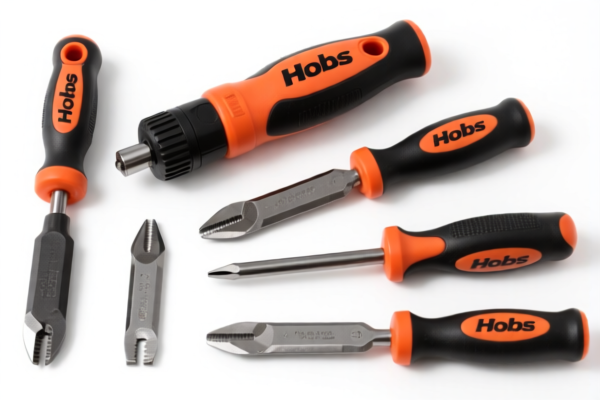
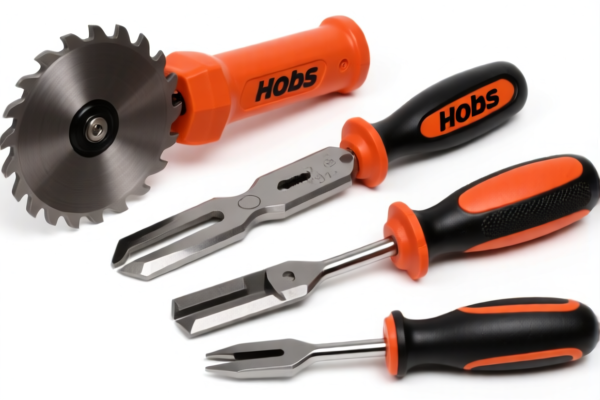
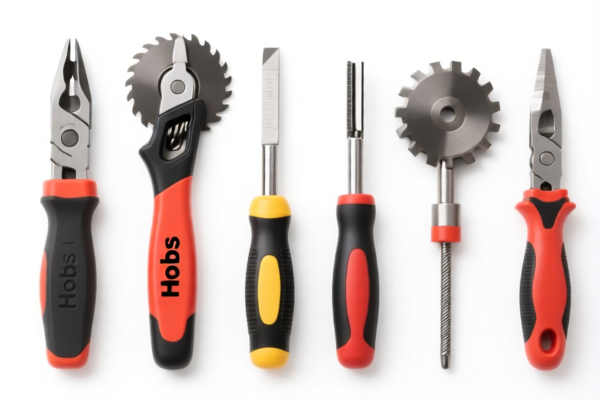
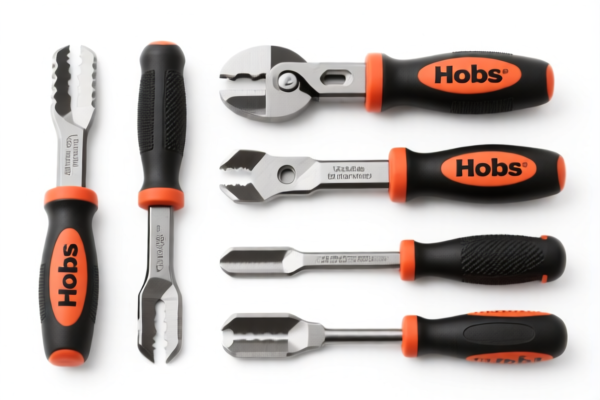
AI Analysis
🧵 Thread Cutter (Thread Cutters & Similar Hand Tools)
🌐 HS Code Reference & Customs Clearance Guide | 2026 Latest Tariff Analysis | Professional Clearance Strategy
📌 I. Product Definition & Classification: What is a "Thread Cutter"?
A Thread Cutter (often referring to specialized hand tools for cutting threads, pipe threads, or similar manual cutting instruments) falls under Chapter 82: Tools, Implements, and Parts Thereof of the Harmonized System.
In international trade, these are primarily classified as Hand Tools involving base metal parts or specific cutting mechanisms. The classification depends heavily on the material composition (specifically alloy content like Chromium, Molybdenum, Tungsten, or Vanadium) and the specific function (pipe cutting vs. general cutting).
⚠️ Key Distinction Point:
- If the tool is a hand-operated pipe cutter or bolt cutter, it falls under 8203.40.
- If it is a specialized cutting part with high alloy content (>0.2% Cr, Mo, or W; or >0.1% V), it has a specific subheading.
- If it contains less alloy than the threshold, it falls under "Other".
📦 II. HS Code Classification Details (2026 Latest Tariff Authority对照)
Based on the provided <DATA>, here are the relevant HS Codes for Thread Cutters and similar hand tools:
| HS Code | Product Description | Applicable Scenario | Alloy Content Threshold |
|---|---|---|---|
8203.40.30.00 |
Pipe cutters, bolt cutters, perforating punches, and similar tools; With cutting part containing by weight over 0.2 percent of chromium, molybdenum, or tungsten or over 0.1 percent of vanadium | High-performance professional cutters, industrial-grade pipe cutters | ✅ High Alloy |
8203.40.60.00 |
Pipe cutters, bolt cutters, perforating punches, and similar tools; Other (including parts) | Standard household or light industrial cutters, parts thereof | ❌ Low/No Alloy |
8466.10.01.10 |
Tool holders and self-opening dieheads; Tool holders for forming-type or cutting-type dies | Machine tool accessories, NOT manual hand tools | 🛠️ Machine Accessory |
8466.10.01.30 |
Tool holders and self-opening dieheads; Holders for replaceable cutting or drill inserts | Machine tool accessories, NOT manual hand tools | 🛠️ Machine Accessory |
🔍 Focus on Hand Tools:
For a standalone Thread Cutter (hand tool), the relevant codes are 8203.40.30.00 and 8203.40.60.00.
Codes8466...are for machine accessories (tool holders for CNC or lathe machines), not manual thread cutters. Misclassifying a hand tool as a machine accessory can lead to customs delays.
💰 III. 2026 Latest Tariff Rate Details (Detailed Tax Clauses)
✅ Applicable Country: United States (US)
✅ Origin: China (CN) (Assumed based on typical tariff queries; adjust if origin differs)
✅ Effective Time: Current rates apply (as per<DATA>)
🎯 1. 8203.40.30.00 —— High-Alloy Pipe Cutters & Similar Tools
| Item | Content |
|---|---|
| Base Tariff Rate | 0.0% (ad valorem) |
| Additional Tariff (Section 301) | 0.0% |
| Total Tariff Rate | 0.0% |
| Tax Detail | 基础关税: 0.0%, 加征关税: 0.0% |
| Legal Basis | HTSUS 8203.40.30.00 |
📌 Explanation:
- Tools with high alloy content (Cr, Mo, W, V) are classified here.
- Notably, the total tax is 0.0%. This is a favorable classification for high-performance tools.
- Ensure the alloy content is documented in your product specs to justify this classification if challenged.
🎯 2. 8203.40.60.00 —— Other Pipe Cutters & Similar Tools (Including Parts)
| Item | Content |
|---|---|
| Base Tariff Rate | 0.0% (ad valorem) |
| Additional Tariff (Section 301) | 0.0% |
| Total Tariff Rate | 0.0% |
| Tax Detail | 基础关税: 0.0%, 加征关税: 0.0% |
| Legal Basis | HTSUS 8203.40.60.00 |
📌 Explanation:
- This is the "catch-all" for pipe cutters, bolt cutters, etc., that do not meet the high-alloy threshold.
- Also 0.0% total tax.
- Includes parts of these tools. If you import replacement blades or jaws, they may still fall under this heading if "solely or principally used" with the cutter.
🚫 3. Machine Tool Accessories (8466.10.01.10 & .30) – For Context Only
⚠️ Important Distinction:
If your "Thread Cutter" is actually a machine tool holder (e.g., a die holder for a lathe), it falls under 8466.
- Base Tariff: 3.9%
- Additional Tariff: 25.0%
- Total Tariff: 28.9%
- Tax Detail:基础关税: 3.9%, 加征关税: 25.0%
- Conclusion: If it's a hand tool, DO NOT use these codes, or you will pay 28.9% unnecessarily. If it's a machine accessory, you MUST use these codes, or risk misdeclaration.
🛠️ IV. Customs Clearance Practical Advice (Real-World Pitfall Guide)
✅ 1. Essential Documentation Checklist
| Document | Required? | Purpose |
|---|---|---|
| ✅ Product Specification Sheet | ✔️ | Must specify: Material composition (Cr, Mo, W, V percentages), dimensions, and whether it's a hand tool or machine accessory. |
| ✅ Product Photos | ✔️ | Clear images showing the tool is hand-operated (to justify 8203) vs. a machine part. |
| ✅ Commercial Invoice | ✔️ | Describe as "Hand Pipe Cutter" or "Thread Cutting Tool", not "Machine Accessory". |
| ✅ Material Test Report | ✔️ | Crucial for distinguishing between 8203.40.30.00 and 8203.40.60.00. |
| ✅ Packing List | ✔️ | List parts separately if included. |
✅ 2. Declaration Tips (Key Mantra)
🔥 “Hand Tool = 8203 (0% Tax), Machine Accessory = 8466 (28.9% Tax)!”
| Scenario | Correct HS Code | Risk of Wrong Classification |
|---|---|---|
| Manual Pipe Cutter (Hand-held) | 8203.40.30.00 or 8203.40.60.00 |
If misclassified as 8466, you pay 28.9% extra. |
| Lathe Die Holder (Machine part) | 8466.10.01.10 or 8466.10.01.30 |
If misclassified as 8203, you under-declare tax. |
| Replacement Blades for Cutter | 8203.40.60.00 (Parts) |
Must prove they are "parts solely for use with" the hand tool. |
| General Cutters (No specific function) | Check Chapter 82 other headings | Do not force into 8203 if not pipe/bolt cutters. |
✅ 3. Special Situation Handling
| Situation | Handling Advice |
|---|---|
| Alloy Content Uncertainty | If unsure, declare as 8203.40.60.00 (Other) to be safe. Both have 0% tax, so the risk is minimal. |
| Importing Parts | Ensure the invoice states "Replacement parts for Hand Pipe Cutters". If they are generic, they might not qualify as "parts thereof". |
| Machine vs. Hand Tool | If the tool has a motor or is designed to be mounted in a machine, it is NOT 8203. It is likely 8466 or 8207 (interchangeable tools for machine-tools). |
🌍 V. Global Market Comparison (2026)
| Country/Region | Recommended HS Code | Tariff Rate | Note |
|---|---|---|---|
| 🇺🇸 USA | 8203.40.30.00 / .60.00 |
0.0% | Favorable for hand tools. |
| 🇺🇸 USA | 8466.10.01.10 / .30 |
28.9% | High tariff for machine accessories. |
| 🇪🇺 EU | 8203.40 | ~0% - 2.5% | Check local EU tariff schedule. |
| 🇨🇳 China | 8203.40 | ~0% - 5% | Check Chinese customs tariff. |
📌 Conclusion:
- USA offers 0% duty for most hand-operated thread/pipe cutters under Chapter 82.
- The key is to correctly identify it as a hand tool and not a machine accessory.
📌 VI. Common Errors & Pitfalls (Lessons Learned)
❌ Error 1: Classifying a Hand Pipe Cutter as 8466 (Machine Accessory)
👉 Consequence: Pay 28.9% tax instead of 0%. Unnecessary cost!
❌ Error 2: Declaring a Machine Die Holder as 8203 (Hand Tool)
👉 Consequence: Under-declaration of duty. Risk of penalties and audits.
❌ Error 3: Not providing Material Composition for 8203.40.30.00
👉 Consequence: Customs may default to 8203.40.60.00 (still 0% tax, so minor issue) or require further inspection.
✅ Correct Declaration Example:
"Hand-held Pipe Cutter, Steel, Model XYZ, For Cutting Pipes up to 2 inches. HS Code: 8203.40.60.00"
🎯 VII. Conclusion: Precision Classification for Cost Savings
🎯 Remember the Mantra:
🔹 "Hand Tool = 0% Tax (8203), Machine Accessory = 28.9% Tax (8466)!"
🔹 "Alloy Content Matters for Sub-classification, but Both 8203 Subheadings are 0% Duty!"
🔹 "Check if it's Motorized or Hand-Held – This Decision Saves You 28.9%!"
📌 Pro Tip:
If your thread cutter is motorized (electric or pneumatic), it likely falls under Chapter 84 (Machinery) or Chapter 82 other headings (interchangeable tools). Do not use 8203.40 for motorized tools. Consult a customs broker for motorized thread cutters.
📣 Immediate Action:
📞 Verify if your tool is hand-operated or machine-mounted.
📄 Confirm alloy content if you want to specify8203.40.30.00.
🚀 Use HS Code 8203.40.60.00 as a safe default for hand-held pipe/thread cutters (0% Tax).
✨ Professional Customs Clearance Starts with Accurate Classification!
💼 Every percent of duty saved is pure profit!
Customer Reviews
About HS Code Classification
The Harmonized System (HS) is an internationally standardized nomenclature developed by the World Customs Organization (WCO) to classify traded products. Over 200 countries use the HS system as the basis for customs tariffs, trade statistics, and import/export regulations.
Each HS code follows a hierarchical structure:
- Chapter (2 digits) — Broad category of goods (e.g., Chapter 84: Machinery and Mechanical Appliances)
- Heading (4 digits) — More specific grouping within the chapter
- Subheading (6 digits) — Internationally standardized breakdown, used by all WCO member countries
- National subdivisions (8-10 digits) — Country-specific extensions for further classification, such as US HTSUS 10-digit codes
Correct HS code classification is essential for smooth customs clearance, accurate duty payment, and compliance with trade regulations. Misclassification can lead to customs delays, overpayment of duties, or penalties.
When importing from CN to US, the applicable tariff rates may include:
- Most-Favored-Nation (MFN) rate — The standard duty rate applied to WTO members
- General rate — Applied to countries without trade agreements
- Trade remedy duties — Additional tariffs such as Section 301 (anti-dumping), Section 232 (national security), or countervailing duties
The information provided on this page is for reference purposes only. For official classification, please consult with your local customs authority or a licensed customs broker.