Threaded Plastic Pipe Fitting
CN → US| HS Code | Tariff Rate | Origin | Destination | Doc |
|---|---|---|---|---|
| 3926305000 | 22.8% | CN | US | Official Doc |
| 3926909987 | 22.8% | CN | US | Official Doc |
| 3917400050 | 40.3% | CN | US | Official Doc |
| 3917400095 | 40.3% | CN | US | Official Doc |
| 8481909085 | 85.0% | CN | US | Official Doc |
| 8481805090 | 38.0% | CN | US | Official Doc |
Product Images
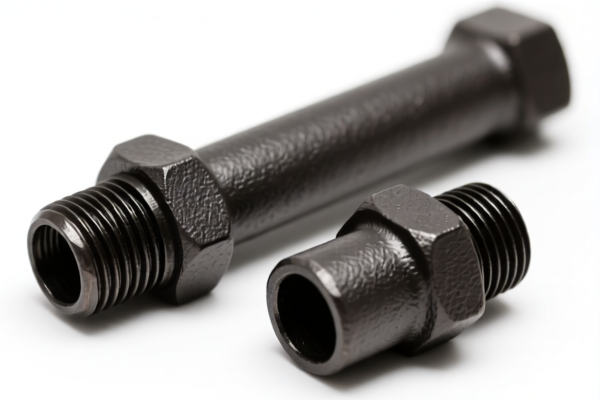
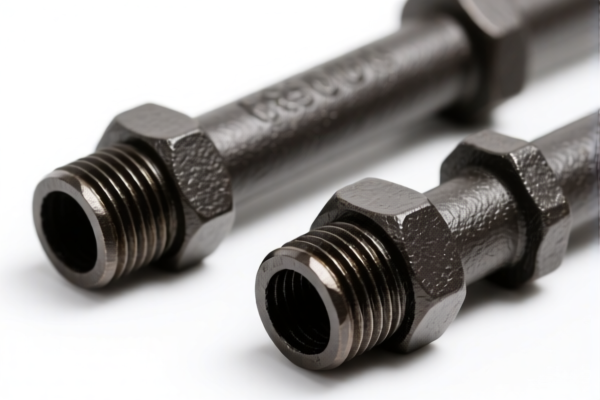
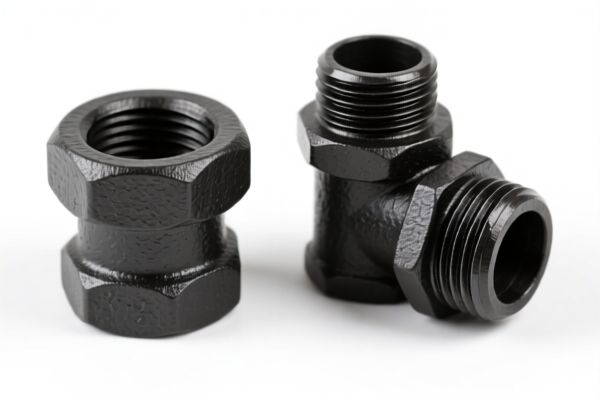
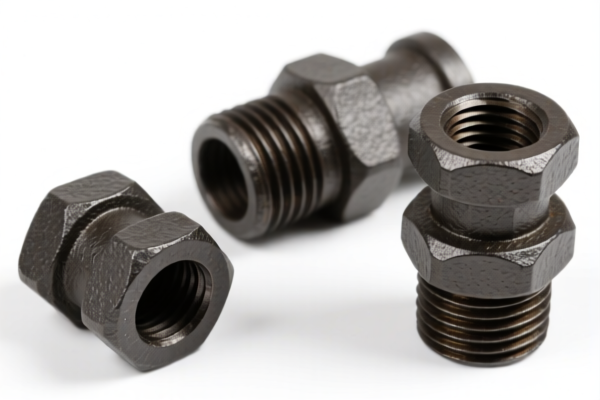
AI Analysis
🚰 Threaded Plastic Pipe Fittings (Plastic Pipe Fittings)
🌐 HS Code Reference & Customs Clearance Guide | 2026 Latest Tariff Analysis | Professional Clearance Strategy for US Imports
📌 I. Product Definition & Classification: Do You Really Understand "Threaded Plastic Pipe Fittings"?
Threaded Plastic Pipe Fittings are components used to connect, control, or terminate plastic pipes. In international trade, their classification depends heavily on their primary function (is it just a connector, or does it regulate flow?) and material composition.
Key Distinction: - Pure Pipe Fittings (Connectors/Ellows/Tees): Designed solely for connection without flow regulation mechanisms. → Generally classified under Chapter 39 (Plastics). - Valves/Regulators: Designed to control, direct, or regulate fluid flow. → Generally classified under Chapter 84 (Machinery/Nuclear Reactors).
⚠️ Critical Classification Point:
- If the product is only for connecting pipes (elbows, tees, couplings) → It is a "Plastic Article" or "Tube/Pipe" accessory.
- If the product includes a mechanism to open/close/adjust flow (even if plastic) → It is often considered a "Valve" (Chapter 84).
- Misclassification Risk: Declaring a valve as a simple fitting can lead to significant duty discrepancies and customs penalties.
📦 II. HS Code Classification Details (2026 Latest Tariff Authority对照)
| HS Code | Product Description | Application Scenario | Key Characteristics |
|---|---|---|---|
3926.30.50.00 |
Other articles of plastic: Internal threaded plastic pipe fittings | Standard threaded connectors, elbows, tees made of plastic | ✅ Plastic Article. Focus on "plastic parts/fittings". |
3926.90.99.87 |
Other plastic articles: Internal threaded plastic pipe fittings | General plastic pipe fittings, categorized as tubes/pipes accessories | ✅ Plastic Article. Broader category for plastic tubes/pipes. |
3917.40.00.50 |
Plastic Pipe Fittings & Valves | Fittings that include valve-like functions or are classified as pipe accessories with valve attributes | ⚠️ Hybrid. Classified as plastic pipe accessories but may imply valve usage. |
3917.40.00.95 |
Plastic Pipe Fittings & Valves (Valve Application) | Plastic pipe accessories specifically for valve applications | ⚠️ Hybrid. Focus on the valve application within plastic piping. |
8481.90.90.85 |
Parts of Valves (Plastic) | Plastic components identified as valve parts due to functional inference | 🔴 High Risk. Classified as Valve Parts. High duties apply. |
8481.80.50.90 |
Other Valves (Plastic) | Plastic pipe fittings explicitly classified as Valves (e.g., ball valves, gate valves) | 🔴 Valve. Functional classification overrides material. |
🔍 Key Reminder:
- Standard Connectors: Must be declared under Chapter 39 (3926or3917) to avoid the high "Valve" tariffs.
- Flow-Control Devices: If the item stops, starts, or regulates flow, it must be declared under Chapter 84 (8481). Do not try to hide a valve as a simple fitting.
- Material Conflict: Even if made of plastic, if the function is "valve," Chapter 84 often takes precedence in US Customs interpretation for duty purposes.
💰 III. 2026 Latest Tariff Rate Breakdown (Including Additional Duties & Policy Add-ons)
✅ Applicable Country: United States (US)
✅ Origin: China (CN)
✅ Effective Date: Ongoing (Section 301 & Section 232/122 implications)
🎯 1. 3926.30.50.00 & 3926.90.99.87 —— Standard Plastic Pipe Fittings (Non-Valve)
| Item | Details |
|---|---|
| Base Tariff | 5.3% (Ad Valorem) |
| Section 301 Additional Duty | 7.5% (Standard for many plastic goods) |
| Section 122 Duty | 10% (Under specific trade measures) |
| Total Tariff Rate | 22.8% |
| Tax Calculation | CIF Value × 22.8% |
| De Minimis Exemption? | ❌ NO (Denied. Section 301/122 duties apply even to low-value shipments if not de minimis exempt, but typically Section 301 applies to all imports from China). |
| Legal Basis Path | Section 301: 7.5% + Section 122: 10% + MFN: 5.3% |
📌 Explanation:
- These are the lowest cost options for plastic fittings.
- The 22.8% rate is relatively moderate compared to metal or machinery.
- Ensure the product description strictly says "Fitting," "Connector," or "Elbow" to stay in this bracket.
🎯 2. 3917.40.00.50 & 3917.40.00.95 —— Plastic Pipe Fittings with Valve Attributes
| Item | Details |
|---|---|
| Base Tariff | 5.3% |
| Section 301 Additional Duty | 25.0% (Higher bracket for certain plastic pipes/fittings) |
| Section 122 Duty | 10% |
| Total Tariff Rate | 40.3% |
| Tax Calculation | CIF Value × 40.3% |
| De Minimis Exemption? | ❌ NO |
| Legal Basis Path | Section 301: 25% + Section 122: 10% + MFN: 5.3% |
📌 Warning:
- If your product is borderline (e.g., a simple stop-cock), declaring it as3917might trigger a 40.3% rate if Customs interprets it as having valve characteristics.
- The 25% Section 301 rate is significantly higher than the 7.5% rate for general plastic fittings.
🎯 3. 8481.90.90.85 —— Plastic Valve Parts
| Item | Details |
|---|---|
| Base Tariff | 0.0% |
| Section 301 Additional Duty | 25.0% |
| Section 122 Duty | 10% |
| Section 232/Other Add-on | 50% (Steel, Aluminum, Copper products surcharge may apply if deemed related, or specific high-tier plastic valve parts) |
| Total Tariff Rate | 85.0% |
| Tax Calculation | CIF Value × 85.0% |
| De Minimis Exemption? | ❌ NO |
| Legal Basis Path | Section 301: 25% + Section 122: 10% + Steel/Aluminum/Copper Surcharge: 50% |
📌 Critical Alert:
- This is the MOST EXPENSIVE classification.
- Why so high? If Customs determines the item is a part of a valve, it may trigger the 50% surcharge under recent trade acts for metal/aluminum/copper-related components or specific high-priority goods. Even if plastic, if it's deemed a "valve part," the risk is extreme.
- Avoid this classification unless it is explicitly a replaceable part of a larger metal/aluminum valve system.
🎯 4. 8481.80.50.90 —— Other Plastic Valves
| Item | Details |
|---|---|
| Base Tariff | 3.0% |
| Section 301 Additional Duty | 25.0% |
| Section 122 Duty | 10% |
| Total Tariff Rate | 38.0% |
| Tax Calculation | CIF Value × 38.0% |
| De Minimis Exemption? | ❌ NO |
| Legal Basis Path | Section 301: 25% + Section 122: 10% + MFN: 3.0% |
📌 Note:
- If the item is clearly a valve (not a part), the duty is 38.0%.
- This is cheaper than8481.90.90.85(85%) but more expensive than standard plastic fittings (22.8%).
- Use this only if the item is unmistakably a valve (e.g., Ball Valve, Gate Valve) and not a simple connector.
🛠️ IV. Customs Clearance Practical Advice (Real-World Pitfall Avoidance)
✅ 1. Documentation Checklist (Non-Negotiable)
| Document | Required? | Description |
|---|---|---|
| ✅ Product Spec Sheet | ✔️ | Must clearly state "No flow control mechanism" for fittings, or "Valve Type" for valves. |
| ✅ Product Photos | ✔️ | Clear shots showing connections (threaded), absence of handles/spindles (if claiming non-valve). |
| ✅ Commercial Invoice | ✔️ | Description must be precise: e.g., "Plastic Threaded Elbow Fitting" vs. "Plastic Valve". |
| ✅ Packing List | ✔️ | Item count and weight. |
| ✅ HS Code Justification Letter | ✔️ | Explain why it is NOT a valve (if claiming Chapter 39). |
✅ 2. Declaration Tips (Key Mantra)
🔥 "Function over Material, Threaded vs. Valve, Avoid the 85% Trap!"
| Scenario | Correct Declaration | Wrong Declaration | Consequence |
|---|---|---|---|
| Simple Connector (Elbow/Tee) | 3926.30.50.00 |
8481.80.50.90 (Valve) |
Overpayment: 22.8% vs 38.0% (15.2% extra!) |
| Simple Connector | 3926.30.50.00 |
8481.90.90.85 (Valve Part) |
Catastrophic: 22.8% vs 85.0% (62.2% extra!) |
| Ball Valve | 8481.80.50.90 |
3926.30.50.00 |
Underpayment: Leads to penalties, back taxes, and seizure. |
| Valve Part | 8481.90.90.85 |
3926.30.50.00 |
Severe Penalties: 85% duty owed + fines. |
✅ 3. Special Case Handling
| Situation | Handling Advice |
|---|---|
| Plastic Ball Valve | Must declare as 8481.80.50.90. Do NOT declare as plastic fitting. |
| Plastic Coupling with Gasket | Declare as 3926.30.50.00. Gaskets do not make it a valve. |
| Threaded Adapter | Declare as 3926.90.99.87 or 3926.30.50.00. Focus on "adapter" or "connector". |
| Set Screw Valve | If it requires a tool to operate, it might be seen as a valve. Provide proof of simplicity. |
| Import from Vietnam/Mexico | IEEPA Exemption: If not originating from China, 0-5% tariff may apply. Check Certificate of Origin. |
🌍 V. Global Main Market Customs Comparison (2026 Latest)
| Country/Region | Recommended HS Code | Tariff Rate (CN Origin) | Certification | Notes |
|---|---|---|---|---|
| 🇺🇸 USA | 3926.30.50.00 (Fitting) |
22.8% | No specific | High Risk Zone. Section 301/122 duties apply. |
| 🇨🇳 China | 3926.30.50.00 |
5% - 10% | CCC (if applicable) | Lower base duty. |
| 🇪🇺 EU | 3917.40.00 |
0% - 3% | CE (if pressurized) | Generally low tariffs. |
| 🇬🇧 UK | 3917.40.00 |
0% - 3% | UKCA | Post-Brexit rules apply. |
| 🇦🇺 Australia | 3917.40.00 |
5% | RCM | Moderate tariffs. |
📌 Conclusion:
- USA is the most expensive market for plastic pipe fittings due to Section 301 and Section 122 add-ons.
- Chapter 84 (Valves) should be avoided for simple fittings to prevent the 85% duty trap.
- Chapter 39 (Plastics) is the safest and most cost-effective for non-valve connectors.
📌 VI. Common Mistakes & Pitfall Guide (Blood & Tears Lessons)
❌ Mistake 1: Declaring a Plastic Ball Valve as a "Plastic Fitting" (3926)
👉 Consequence: Customs audits will find the flow-control mechanism. Back taxes (15.2% diff) + Penalties + Seizure!
❌ Mistake 2: Declaring a Valve Part as a "General Plastic Article" (3926)
👉 Consequence: 85% Duty is owed instead of 22.8%. Loss of 62.2% in profit!
❌ Mistake 3: Not providing a Description of Function
👉 Consequence: Customs uses "Red Flag" algorithm. If HS code doesn't match description, Manual Review → Delay.
❌ Mistake 4: Using "Valve" in the name for a simple Connector
👉 Consequence: Even if it's a "Quick Disconnect Valve," if it stops flow, it's a valve. Name matters.
✅ Correct Practice:
"Plastic Threaded Elbow Fitting, PP-R Material, No Flow Control Mechanism, Used for Water Pipe Connection, Model XYZ"
🎯 VII. Conclusion: Precise Classification Saves Money!
🎯 Remember the Mantra:
🔹 "Fittings are 22.8%, Valves are 38%, Valve Parts are 85%!"
🔹 "If it stops flow, it's a Valve. If it connects, it's a Fitting."
🔹 "Misclassification costs more than proper declaration."
📌 Pro Tip:
If your fittings are originally from Vietnam, Mexico, Thailand, or Malaysia, you can apply for IEEPA Exemption (Tariffs reduced to 0%-5%).
Always get a Pre-Ruling (Advance Ruling) from US Customs if you are unsure if your product is a "Valve" or "Fitting."
📣 Immediate Action:
📞 Contact a licensed customs broker + Provide Product Photos + Request HS Code Pre-Ruling
🚀 Ensure your Threaded Plastic Pipe Fittings clear customs smoothly, maximize profit, and avoid the 85% duty trap!
✨ Professional Clearance, Starting with Precise Classification!
💼 Every cent of your cost deserves to be calculated accurately!
Customer Reviews
About HS Code Classification
The Harmonized System (HS) is an internationally standardized nomenclature developed by the World Customs Organization (WCO) to classify traded products. Over 200 countries use the HS system as the basis for customs tariffs, trade statistics, and import/export regulations.
Each HS code follows a hierarchical structure:
- Chapter (2 digits) — Broad category of goods (e.g., Chapter 84: Machinery and Mechanical Appliances)
- Heading (4 digits) — More specific grouping within the chapter
- Subheading (6 digits) — Internationally standardized breakdown, used by all WCO member countries
- National subdivisions (8-10 digits) — Country-specific extensions for further classification, such as US HTSUS 10-digit codes
Correct HS code classification is essential for smooth customs clearance, accurate duty payment, and compliance with trade regulations. Misclassification can lead to customs delays, overpayment of duties, or penalties.
When importing from CN to US, the applicable tariff rates may include:
- Most-Favored-Nation (MFN) rate — The standard duty rate applied to WTO members
- General rate — Applied to countries without trade agreements
- Trade remedy duties — Additional tariffs such as Section 301 (anti-dumping), Section 232 (national security), or countervailing duties
The information provided on this page is for reference purposes only. For official classification, please consult with your local customs authority or a licensed customs broker.