Threading Tool
CN → US| HS Code | Tariff Rate | Origin | Destination | Doc |
|---|---|---|---|---|
| 8207403000 | 40.7% | CN | US | Official Doc |
| 8207406000 | 39.8% | CN | US | Official Doc |
Product Images
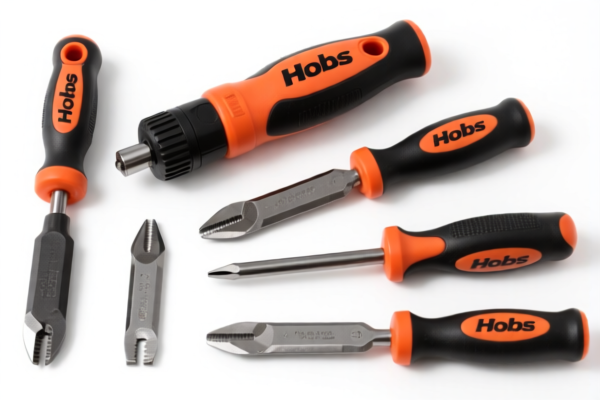
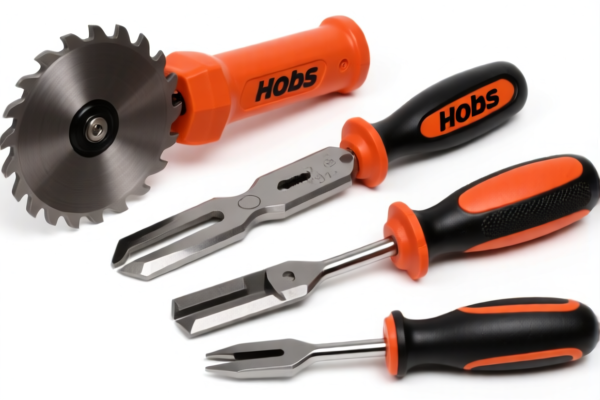
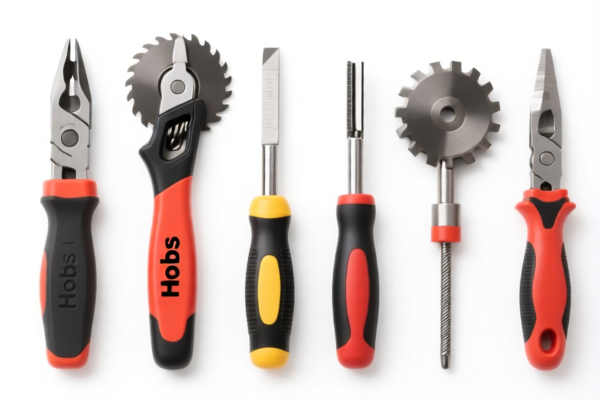
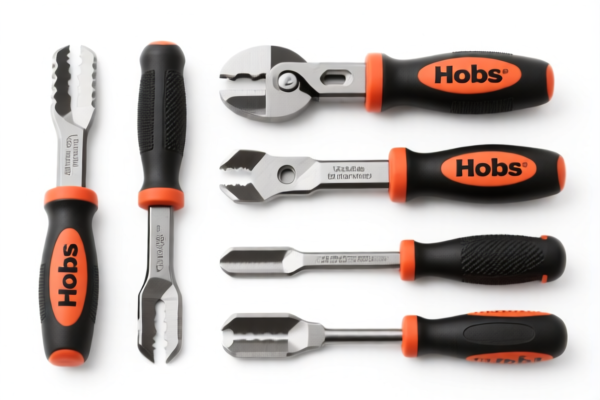
AI Analysis
🛠️ Threading & Tapping Tools (Interchangeable Tools for Handtools/Machine-Tools)
🌐 HS Code Reference & Customs Clearance Guide | 2026 Latest Tariff Analysis | Professional Entry Strategy
📌 1. Product Definition: Do You Understand "Threading Tools"?
Threading tools, specifically in the context of international trade classification, refer to interchangeable tools used for tapping (cutting internal threads) or threading (cutting external threads). These tools are designed for hand tools (power or non-power operated) or machine tools.
In the Harmonized System (HS), these fall under Chapter 82: Tools, Implements, Cutlery, Spoons and Forks, of Base Metal; Parts Thereof of Base Metal.
⚠️ Key Distinction Point:
- With High-Alloy Cutting Parts: If the cutting part contains >0.2% Chromium/Molybdenum/Tungsten OR >0.1% Vanadium by weight → It is considered a high-speed steel or alloy tool.
- Other/Standard Steel: If the chemical composition does not meet the above thresholds → It is classified as "Other."
📦 2. HS Code Classification Details (2026 Latest Tariff Authority Match)
Based on the provided <DATA>, there are exactly two relevant HS codes for this product description. The classification depends strictly on the chemical composition of the cutting part.
| HS Code | Product Description | Chemical Composition Requirement | Applicable Scenario |
|---|---|---|---|
8207.40.30.00 |
Tools for tapping or threading, and parts thereof: With cutting part containing by weight over 0.2 percent of chromium, molybdenum, or tungsten or over 0.1 percent of vanadium | High-Alloy: - Cr/Mo/W > 0.2% OR - V > 0.1% |
High-speed steel taps, hardened alloy threading dies, professional-grade machinist tools. |
8207.40.60.00 |
Tools for tapping or threading, and parts thereof: Other | Standard/Low-Alloy: - Does not meet the thresholds above |
Standard carbon steel taps, basic machine taps, commercial-grade tools not meeting high-alloy specs. |
🔍 Critical Clarification:
- Do NOT confuse these with "parts of hand tools" (HS 8205) or "machine parts" (HS 8466). These are interchangeable tool inserts. - The chemical breakdown (mill certificates or material test reports) is the primary evidence for choosing between30.00and60.00.
💰 3. 2026 Latest Tariff Rate Breakdown
✅ Applicable Country: United States (US)
✅ Origin: China (CN)
✅ Effective Time: Current 2025/2026 Trade Regulations
🎯 1. 8207.40.30.00 — High-Alloy Threading Tools
| Item | Detail |
|---|---|
| Base Duty Rate | 0.0% |
| Section 301 Additional Duty | 0.0% |
| Total Tax Rate | 0.0% |
| Tax Calculation | CIF Value × 0.0% = $0 |
| De Minimis Eligibility | ✅ Yes (Typically eligible if under $800, subject to current CBP enforcement) |
| Legal Basis | HS 8207.40.30.00 → HTSUS 8207.40.30.00 |
📌 Explanation:
- Despite being industrial tools, this specific subheading currently carries no base tariff and no additional Section 301 tariffs (based on the provided<DATA>). - This makes it a highly favorable classification for cost optimization, provided the material composition is accurately declared.
🎯 2. 8207.40.60.00 — Other Threading Tools
| Item | Detail |
|---|---|
| Base Duty Rate | 0.0% |
| Section 301 Additional Duty | 0.0% |
| Total Tax Rate | 0.0% |
| Tax Calculation | CIF Value × 0.0% = $0 |
| De Minimis Eligibility | ✅ Yes (Typically eligible if under $800) |
| Legal Basis | HS 8207.40.60.00 → HTSUS 8207.40.60.00 |
📌 Note:
- Like its high-alloy counterpart, the "Other" category also enjoys a 0% total tax rate. - There is no tariff differential between the two codes in the current dataset. Therefore, classification accuracy is driven by compliance and material truthfulness, not cost saving.
🛠️ 4. Customs Clearance Practical Advice (Avoid Pitfalls)
✅ 1. Documentation Checklist (Non-Negotiable)
| Document | Required? | Purpose |
|---|---|---|
| Material Test Report (MTR) | ✔️ Yes | Crucial. Proves whether Cr, Mo, W, or V levels exceed the thresholds (0.2%/0.1%). Without this, CBP may reclassify or hold shipment. |
| Product Specifications | ✔️ Yes | Clear definition: "Tap," "Die," or "Threading Tool." Specify if it is for hand or machine use. |
| Commercial Invoice | ✔️ Yes | Must clearly state the HS Code and product description. Avoid vague terms like "Metal Part." |
| Packing List | ✔️ Yes | Quantity and weight details. |
| Photos of Product | ✔️ Yes | Show the tool clearly, including any markings indicating steel grade (e.g., HSS, Carbide). |
✅ 2. Declaration Strategy (Key Mnemonic)
🔥 "Material Dictates Code, 0% Tax is the Goal, But Truth is the Rule!"
| Scenario | Correct Declaration | Wrong Action | Consequence |
|---|---|---|---|
| High-Speed Steel (HSS) Tap | 8207.40.30.00 with MTR proving >0.2% Cr/W |
Misdeclare as 60.00 to "simplify" |
Risk of audit if MTR shows high alloy. |
| Standard Carbon Steel Tap | 8207.40.60.00 |
Misdeclare as 30.00 |
False declaration; risk of penalties. |
| Complete Hand Tool (e.g., Tap Wrench) | NOT these codes. Likely HS 8205 or 8206. | Declare whole wrench as "Tool Insert" | Major Misclassification Error. |
| Carbide Inserts | Usually HS 8207.20 or 8207.30 (Check specific carbide rules) | Declare as 8207.40 |
Incorrect heading; Carbide has different rules. |
📌 Important Warning:
- Ensure the tool is truly an "Interchangeable Tool" (a separate insert or bit) and not the hand tool itself (like a T-handle tap wrench). Hand tools have different classifications.
✅ 3. Special Cases Handling
| Situation | Recommendation |
|---|---|
| Carbide-Tipped Tools | These are NOT steel. They may fall under 8207.20 (Carbide Tipped). Do NOT use 8207.40. |
| Plated Tools | If plated with titanium/nitride, it does NOT change the base steel classification. The 0.2% rule still applies to the base metal. |
| Set of Tools | If shipped as a kit (e.g., Tap Wrench + Taps), declare the Tools separately from the Wrench if possible, to ensure accurate classification. |
🌍 5. Global Market Comparison (2026)
| Market | Recommended HS Code | Duty Rate | Certification | Notes |
|---|---|---|---|---|
| 🇺🇸 USA | 8207.40.30.00 / 8207.40.60.00 |
0.0% | None Specific | No Section 301 tariffs on these specific codes currently. |
| 🇨🇳 China (Import) | Similar HS Structure | ~0-5% | N/A | Check local Chinese tariff book. |
| 🇪🇺 EU | 8207 40 90 (Typically) | 0% | CE (if machinery component) | EU may combine subheadings. |
| 🇬🇧 UK | 8207 40 90 | 0% | UKCA | Post-Brexit tariff alignment with EU. |
📌 Conclusion:
- The USA currently offers a 0% duty rate for these specific threading tools, making them highly competitive. - However, compliance is key. Misdeclaring a carbide tool as a steel tool can lead to severe penalties.
📌 6. Common Errors & Pitfall Guide (Blood & Tears Lessons)
❌ Mistake 1: Declaring a Carbide Insert as 8207.40 (Steel)
👉 Result: Customs may reclassify to 8207.20 (Carbide), potentially changing duty rates and requiring different documentation.
👉 Fix: Always specify material: "High-Speed Steel" vs. "Carbide."
❌ Mistake 2: Declaring a Tap Wrench (Hand Tool) as 8207.40 (Interchangeable Tool)
👉 Result: Incorrect Classification. Hand tools are Chapter 82 but different headings (e.g., 8205).
👉 Fix: Is it the tool bit or the handle/wrench? Declare accordingly.
❌ Mistake 3: Ignoring Chemical Composition
👉 Result: If you claim 8207.40.30.00 but provide no MTR, CBP may assume "Other" (60.00) or hold for testing.
👉 Fix: Provide Mill Certificates or Material Test Reports for every batch.
❌ Mistake 4: Vague Description "Metal Tool Part"
👉 Result: Delays in clearance, queries from CBP, potential audit.
👉 Fix: Use precise language: "HSS Tapping Tool, M6x1.0, Interchangeable, Contains 12% Tungsten."
✅ Correct Approach:
"Interchangeable Tapping Tool, High-Speed Steel (HSS), M10x1.5 Thread, Contains 18% Tungsten and 4% Chromium. For CNC Machine Tools."
🎯 7. Conclusion: Precision in Classification, Peace in Clearance
🎯 Key Takeaway:
🔹 "Zero Tax is Sweet, But Material Proof is Key!"
🔹 "Alloy Over 0.2%? Go to 30.00. Otherwise, 60.00."
🔹 "Carbide is Not Steel. Don't Mix Them Up!"
📌 Pro Tip:
Even though the tariff is 0%, maintain rigorous documentation of material composition. Customs audits for Chapter 82 tools are common due to the potential for misclassification of carbide vs. steel. A simple Material Test Report can save days of delay.
📣 Immediate Action:
📞 Consult your supplier for the exact alloy composition.
📄 Attach the MTR to your customs entry.
🚀 Declare accurately to enjoy the 0% tariff and smooth clearance!
✨ Professional Customs Clearance Starts with Accurate HS Codes!
💼 Your Supply Chain Efficiency Depends on Details!
Customer Reviews
About HS Code Classification
The Harmonized System (HS) is an internationally standardized nomenclature developed by the World Customs Organization (WCO) to classify traded products. Over 200 countries use the HS system as the basis for customs tariffs, trade statistics, and import/export regulations.
Each HS code follows a hierarchical structure:
- Chapter (2 digits) — Broad category of goods (e.g., Chapter 84: Machinery and Mechanical Appliances)
- Heading (4 digits) — More specific grouping within the chapter
- Subheading (6 digits) — Internationally standardized breakdown, used by all WCO member countries
- National subdivisions (8-10 digits) — Country-specific extensions for further classification, such as US HTSUS 10-digit codes
Correct HS code classification is essential for smooth customs clearance, accurate duty payment, and compliance with trade regulations. Misclassification can lead to customs delays, overpayment of duties, or penalties.
When importing from CN to US, the applicable tariff rates may include:
- Most-Favored-Nation (MFN) rate — The standard duty rate applied to WTO members
- General rate — Applied to countries without trade agreements
- Trade remedy duties — Additional tariffs such as Section 301 (anti-dumping), Section 232 (national security), or countervailing duties
The information provided on this page is for reference purposes only. For official classification, please consult with your local customs authority or a licensed customs broker.