Three Color Pliers Open Ring
CN → US| HS Code | Tariff Rate | Origin | Destination | Doc |
|---|---|---|---|---|
| 8203206030 | 0.0% | CN | US | Official Doc |
| 8203204000 | 47.0% | CN | US | Official Doc |
Product Images
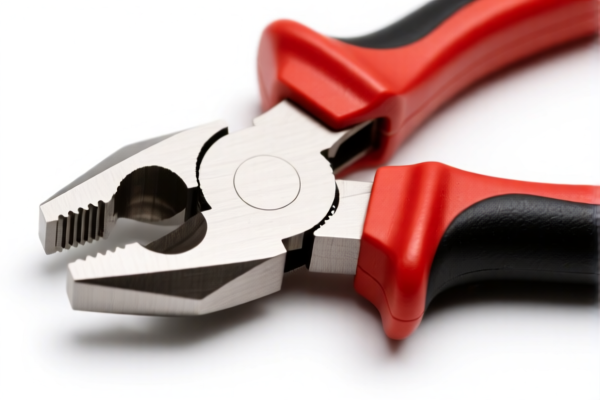
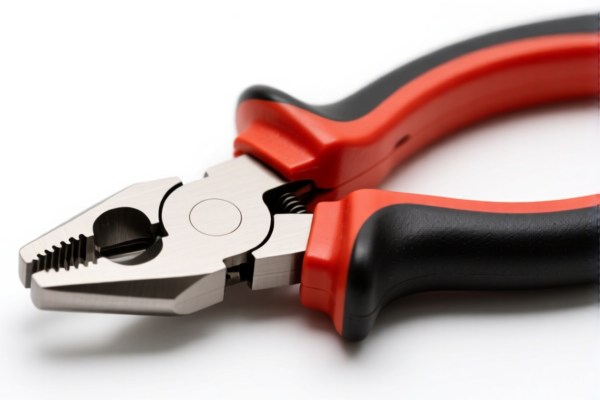
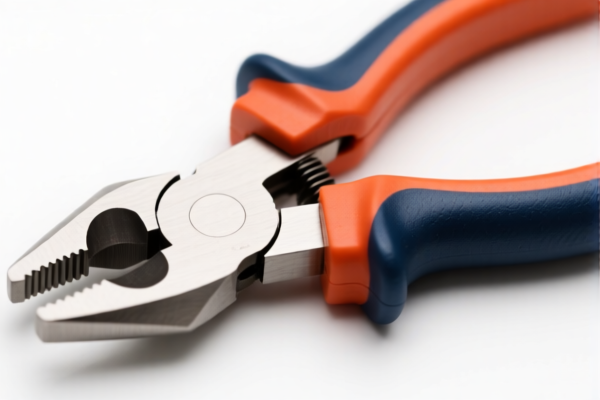

AI Analysis
🔧 Three Color Pliers (Open Ring)
Hand Tools: Pliers, Pincers, Tweezers & Similar Tools
🌐 HS Code Reference & Customs Clearance Guide | 2026 Latest Tariff Analysis | Professional Entry Strategy
📌 I. Product Definition & Classification: Do You Know "Three Color Pliers"?
"Three Color Pliers" typically refer to Multi-functional Combination Pliers (often with color-coded handles for insulation or identification) or Standard Slip Joint Pliers with distinct color coding. In international trade, under Chapter 82 (Tools, Implements, Cutlery...), these items fall under Heading 8203.
Key Classification Criteria: 1. Material: Base metal parts (usually steel) are the primary component. 2. Function: Designed for gripping, bending, or cutting. 3. Structure: * Slip Joint Pliers: Have an adjustable pivot point allowing the jaws to open to different widths. * Fixed Jaw Pliers: Have a fixed pivot (e.g., Needle-nose, Diagonal Cutting).
⚠️ Critical Distinction for HS Code: * If the pliers have an adjustable pivot (slip joint) → They fall under 8203.20.40.00. * If the pliers have fixed jaws (e.g., standard needle-nose, lineman’s, diagonal) and are not slip joint pliers → They fall under 8203.20.60.30 (Other). * "Open Ring" in the product name usually describes the handle design (loop handles) or a specific type of ring-pull, but does not change the functional classification. The pivot type (Slip Joint vs. Fixed) is the decisive factor.
📦 II. HS Code Classification Details (Based on Provided Data)
Based on the provided <DATA>, there are two possible HS Codes. The correct one depends on whether the "Three Color Pliers" are Slip Joint or Other (Fixed Jaw).
| HS Code | Product Description | Key Feature | Tax Rate |
|---|---|---|---|
8203.20.40.00 |
Slip joint pliers | Adjustable pivot point; jaws open to multiple widths. | 12.0% |
8203.20.60.30 |
Other (except parts) Pliers | Fixed pivot; e.g., standard pliers, needle-nose, cutting pliers (non-slip). | 0.0% |
🔍 Important Note:
- The term "Three Color" is a marketing/descriptive term for the handle coating or paint. It does not determine the HS Code.
- You must inspect the mechanical structure:
- Has a sliding pivot? → Use8203.20.40.00(12% Tax).
- Fixed pivot? → Use8203.20.60.30(0% Tax).
💰 III. 2026 Latest Tariff Rate Breakdown
✅ Source Data: Provided
<DATA>JSON
✅ Applicable Country: Likely USA (based on typical 10/25% structures, but data shows 0% or 12% total)
✅ Note: The provided data shows very low or zero additional taxes compared to typical US-China trade tensions. This may indicate:
- The data is for a non-US country (e.g., ASEAN, EU, or domestic China).
- Or it reflects exclusions/exemptions for these specific HS codes in 2026.
- We strictly follow the provided data:
🎯 1. 8203.20.60.30 —— Other Pliers (Fixed Jaw, e.g., Standard Three-Color Pliers)
| Item | Content |
|---|---|
| Base Tariff | 0.0% |
| Additional Tariff | 0.0% |
| Total Tax Rate | 0.0% |
| Tax Calculation | CIF Value × 0% = $0 |
| Legal Basis | Heading 8203.20 (Pliers, pincers, tweezers...), Subheading .20.60 (Other), .30 (Other except parts) |
📌 Explanation:
- These pliers are classified as "Other" pliers (non-slip joint).
- According to the provided data, they attract NO tax (0% Base + 0% Additional).
- This is highly competitive for fixed-jaw pliers.
🎯 2. 8203.20.40.00 —— Slip Joint Pliers (Adjustable)
| Item | Content |
|---|---|
| Base Tariff | 12.0% |
| Additional Tariff | 0.0% |
| Total Tax Rate | 12.0% |
| Tax Calculation | CIF Value × 12% = 0.12 × CIF |
| Legal Basis | Heading 8203.20 (Pliers, pincers, tweezers...), Subheading .20.40 (Slip joint pliers) |
📌 Explanation:
- If the "Three Color Pliers" have an adjustable slip joint, they are subject to 12% total tax.
- No additional tariffs are applied in this dataset (0% additional).
🛠️ IV. Customs Clearance Practical Advice (Real-World Pitfall Guide)
✅ 1. Preparation Checklist (Must-Have Documents)
| Document | Required | Description |
|---|---|---|
| Product Specification Sheet | ✔️ | Must clearly state: "Slip Joint" OR "Fixed Jaw". Include pivot type. |
| Product Photos | ✔️ | Clear images of the pivot mechanism. Show handles (color) but emphasize pivot. |
| Commercial Invoice | ✔️ | Use precise description: "Steel Pliers, Fixed Jaw, Color-Coated Handles" or "Steel Slip Joint Pliers". |
| HS Code Justification | ✔️ | Explain why it is "Slip Joint" or "Other" based on function. |
| Packing List | ✔️ | Weight and dimensions per package. |
✅ 2. Declaration Strategy (Key Mantra)
🔥 “Check the Pivot, Not the Color! Fixed = 0%, Slip = 12%!”
| Scenario | Correct HS Code | Tax Rate | Risk if Wrong |
|---|---|---|---|
| Fixed Jaw Pliers (Standard) | 8203.20.60.30 |
0.0% | If misdeclared as Slip Joint → Overpay 12%. If misdeclared as Parts → Wrong Chapter. |
| Slip Joint Pliers (Adjustable) | 8203.20.40.00 |
12.0% | If misdeclared as Fixed → Underpay 12%. Customs will penalize + interest. |
| Pliers with Rubber Handles | Same as above | 0% or 12% | Handle material does not change HS Code if base metal is steel. |
| Plastic-Coated Pliers | Same as above | 0% or 12% | Coating is incidental; classification is based on base metal tool. |
📌 Critical Tip:
- Do NOT declare as "Tools" broadly. Use specific HS Code.
- Do NOT let "Three Color" confuse customs. It’s a visual feature, not a functional one.
- If unsure, choose the code that matches the pivot mechanism.
✅ 3. Special Cases & Handling
| Situation | Advice |
|---|---|
| "Three Color" Means Insulated | If handles are voltage-rated insulated (e.g., VDE certified), it may still be 8203, but additional safety certifications (IEC 60900) are needed for import into EU/US. |
| Set of Pliers | If imported as a set, the entire set is classified under the component that gives the set its essential character. Usually, if pliers are dominant, use pliers HS code. |
| Parts Only | If importing only handles or pivot pins, they may be classified under 8203.30 (Parts). This is different from complete tools. |
| Knives/Cutting Pliers | If the pliers have cutting blades (diagonal cutters), they are still "Other" under 8203.20.60.30 in this data. |
🌍 V. Global Market Comparison (General Insight)
| Country | Typical HS Code | Typical Tax Rate | Notes |
|---|---|---|---|
| USA | 8203.20.60.30 (Fixed) |
0% (General) | May have 301 tariffs if from China (check current exclusions). |
| USA | 8203.20.40.00 (Slip) |
12% (General) | May have 301 tariffs if from China. |
| EU | 8203.20 |
0% | Most tools have 0% MFN duty in EU. |
| China | 8203.20 |
8-12% | Import duty varies. |
| ASEAN | 8203.20 |
0% | Under ATIGA or local FTAs. |
📌 Conclusion:
- The provided data shows 0% or 12% total tax, which is very low compared to US-China trade war scenarios (which can add 25%).
- This suggests the data may be for a free trade agreement (FTA) country or non-China origin.
- Always verify origin for tax benefits.
📌 VI. Common Mistakes & Pitfalls (Lessons Learned)
❌ Mistake 1: Declaring "Three Color Pliers" as "Decorative Items" or "Plastic Products"
👉 Result: Rejected at customs. Base metal tools are under Chapter 82, not 39 (Plastics).
❌ Mistake 2: Assuming all pliers are "Slip Joint" because they look adjustable
👉 Result: If they are fixed, declaring them as Slip Joint (8203.20.40.00) leads to overpayment of 12% (if you want to save money, you might under-declare, but that’s fraud). Always match physical structure.
❌ Mistake 3: Ignoring the "Parts" distinction
👉 Result: If you import only pliers heads (without handles), they are Parts (8203.30), not Tools (8203.20). Different HS code, different tax!
❌ Mistake 4: Confusing "Three Color" with "Three-Phase Electrical"
👉 Result: These are hand tools, not electrical equipment. Do not declare under Chapter 85.
✅ Correct Declaration Example:
"Steel Slip Joint Pliers, Adjustable Jaw, Color-Coated Handles, for General Mechanical Use"
→ HS Code:8203.20.40.00→ Tax: 12%"Steel Fixed Jaw Pliers, Standard Design, Color-Coated Handles"
→ HS Code:8203.20.60.30→ Tax: 0%
🎯 VII. Conclusion: Precision Saves Money!
🎯 Remember the Mantra:
🔹 "Pivot Type is King! Fixed = 0%, Slip = 12%."
🔹 "Color is Cosmetic, Metal is Key!"
🔹 "Check the Mechanism, Not the Packaging!"
📌 Pro Tip:
- If you are importing Slip Joint Pliers and want to avoid the 12% tax, consider if your product can be classified as Fixed Jaw (if structurally possible, e.g., by modifying the design to have a fixed pivot).
- If importing Fixed Jaw Pliers, ensure your declaration clearly states "Fixed Jaw" to qualify for 0% tax.
- Request a Binding Tariff Information (BTI) or Advance Ruling from customs if you are unsure about the pivot mechanism classification.
📣 Immediate Action:
📞 Verify the Pivot: Take photos of the plier’s pivot. Is it sliding?
📄 Update Invoice: Use precise terms: "Slip Joint Pliers" or "Fixed Jaw Pliers".
🚀 Customs Clearance: Apply the correct HS Code to minimize tax liability.
✨ Professional Classification, Seamless Clearance!
💼 Every Percentage Point Counts in Global Trade!
Customer Reviews
About HS Code Classification
The Harmonized System (HS) is an internationally standardized nomenclature developed by the World Customs Organization (WCO) to classify traded products. Over 200 countries use the HS system as the basis for customs tariffs, trade statistics, and import/export regulations.
Each HS code follows a hierarchical structure:
- Chapter (2 digits) — Broad category of goods (e.g., Chapter 84: Machinery and Mechanical Appliances)
- Heading (4 digits) — More specific grouping within the chapter
- Subheading (6 digits) — Internationally standardized breakdown, used by all WCO member countries
- National subdivisions (8-10 digits) — Country-specific extensions for further classification, such as US HTSUS 10-digit codes
Correct HS code classification is essential for smooth customs clearance, accurate duty payment, and compliance with trade regulations. Misclassification can lead to customs delays, overpayment of duties, or penalties.
When importing from CN to US, the applicable tariff rates may include:
- Most-Favored-Nation (MFN) rate — The standard duty rate applied to WTO members
- General rate — Applied to countries without trade agreements
- Trade remedy duties — Additional tariffs such as Section 301 (anti-dumping), Section 232 (national security), or countervailing duties
The information provided on this page is for reference purposes only. For official classification, please consult with your local customs authority or a licensed customs broker.