Throwing Arm Ball
CN → US| HS Code | Tariff Rate | Origin | Destination | Doc |
|---|---|---|---|---|
| 9506694000 | 22.9% | CN | US | Official Doc |
| 9506696020 | 22.4% | CN | US | Official Doc |
Product Images
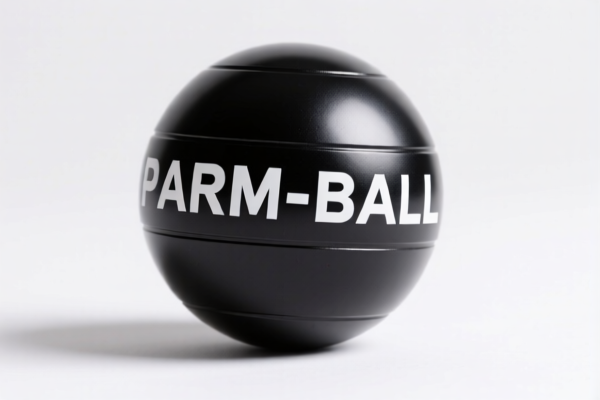
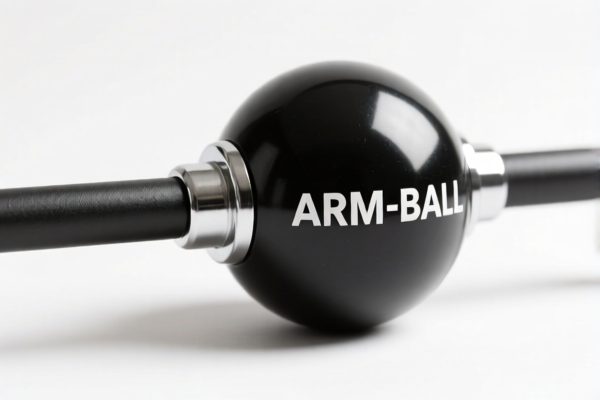
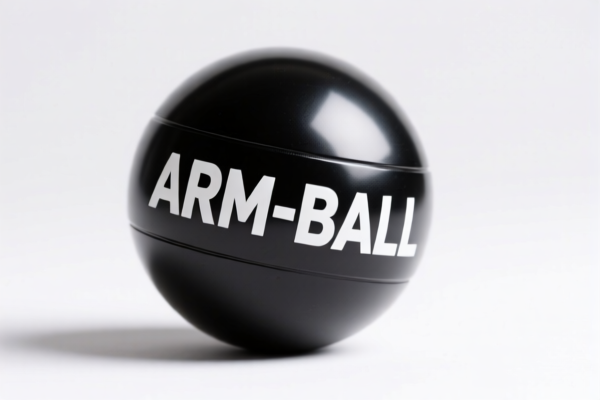
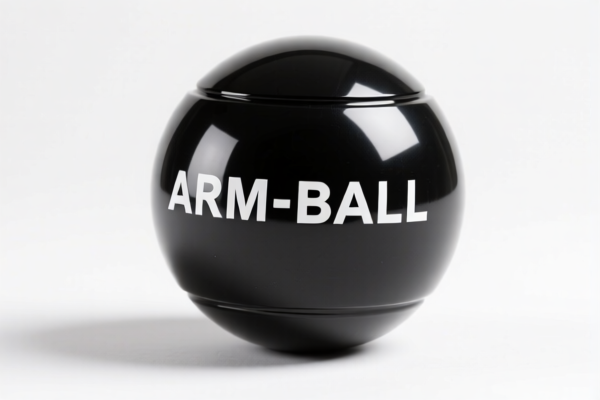
AI Analysis
🎯 Throwing Arm Ball (Training Equipment)
🌐 HS Code Reference & Customs Clearance Guide | 2026 Latest Tariff Analysis | Professional Clearance Strategy
📌 I. Product Definition & Classification: What is a "Throwing Arm Ball"?
A Throwing Arm Ball (often referred to as a weighted medicine ball, throwing ball, or rotational training ball) is a specialized piece of sports equipment designed for physical exercise, gymnastics, athletics, and outdoor games. It is typically used for strength training, rotational power development, and rehabilitation.
In international trade, it falls under Chapter 95: Toys, games and sports goods and parts and accessories thereof. Specifically, it is classified under Heading 9506: Articles and equipment for general physical exercise, gymnastics, athletics, other sports (including table-tennis) or outdoor games....
⚠️ Key Distinction:
- If the ball is non-inflatable, hollow, and has a diameter of 19 cm or less, it falls under 9506.69.40.00.
- If the ball is non-inflatable but is not hollow OR has a diameter over 19 cm, it falls under 9506.69.60.20.
📦 II. HS Code Classification Details (2026 Latest Tariff Authority Comparison)
| HS Code | Product Description | Application Scenario | Inflatable? | Diameter | Internal Structure |
|---|---|---|---|---|---|
9506.69.40.00 |
Noninflatable hollow balls, not over 19 cm in diameter | Small training balls, pediatric therapy balls, small weighted balls | ❌ No | ≤ 19 cm | Hollow |
9506.69.60.20 |
Other balls (Other Other) | Large training balls, solid weighted balls, balls > 19 cm | ❌ No | > 19 cm or Solid | Solid or Non-Hollow |
🔍 Key Reminder:
- Check Diameter: Measure the ball precisely. If it is 19 cm or less AND hollow, use 9506.69.40.00.
- Check Material/Structure: If the ball is solid (filled with sand/lead shot) or larger than 19 cm, use 9506.69.60.20.
- Inflatable Balls: If the ball is inflatable (e.g., rubber yoga ball), it does NOT fall under these codes. It would fall under 9506.62.00.00 (Inflatable balls). This guide assumes non-inflatable training balls.
💰 III. 2026 Latest Tariff Rate Detail (Including Additional Duties & Policy Add-ons)
✅ Applicable Country: United States (US)
✅ Country of Origin: China (CN)
✅ Effective Date: 2025年11月10日起 (Including subsequent imports)
🎯 1. 9506.69.40.00 —— Noninflatable hollow balls, ≤ 19 cm
| Item | Content |
|---|---|
| Base Duty Rate | 5.4% (ad valorem) |
| Additional Duty (USITC Section 301) | +7.5% |
| Total Duty Rate | 12.9% |
| Tax Calculation | CIF Value × 12.9% |
| De Minimis Exemption Available? | ❌ No (Due to additional duties under Section 301/IEEPA for Chinese goods) |
| Legal Basis Path | USITC:9506.69.40.00 → FOOTNOTE:301.06.04 (Example path for 7.5% additional) |
📌 Explanation:
- The base tariff is 5.4%.
- An additional 7.5% is levied under Section 301 of the Trade Act of 1974 (as amended) on goods from China.
- Total: 12.9%. This is a moderate tariff compared to electronics or steel, but still significant for low-value items.
🎯 2. 9506.69.60.20 —— Other balls (Other Other)
| Item | Content |
|---|---|
| Base Duty Rate | 4.9% (ad valorem) |
| Additional Duty (USITC Section 301) | +7.5% |
| Total Duty Rate | 12.4% |
| Tax Calculation | CIF Value × 12.4% |
| De Minimis Exemption Available? | ❌ No (Due to additional duties under Section 301/IEEPA for Chinese goods) |
| Legal Basis Path | USITC:9506.69.60.20 → FOOTNOTE:301.06.04 (Example path for 7.5% additional) |
📌 Note:
- This code applies to balls that are not the specific "noninflatable hollow balls ≤ 19 cm".
- The base tariff is slightly lower (4.9%) than the 19 cm hollow category, but the additional 7.5% duty is the same.
- Total: 12.4%.
🛠️ IV. Customs Clearance Practical Advice (Pitfall Avoidance Guide)
✅ 1. Document Checklist (Essential)
| Document | Mandatory | Description |
|---|---|---|
| ✅ Product Specifications | ✔️ | Must state: Material (Rubber/Plastic), Diameter (exact cm), Weight, Hollow/Solid. |
| ✅ Product Photos | ✔️ | Clear images showing the ball, any seams, and internal structure (if visible). |
| ✅ Commercial Invoice | ✔️ | Must explicitly describe the item as "Sports Training Ball" or "Throwing Ball," NOT "Toy" or "Golf Ball." |
| ✅ Packing List | ✔️ | List quantity and net weight per package. |
| ✅ Certificate of Origin (CO) | ✔️ | Critical for proving Chinese origin to apply (or avoid) additional duties. |
✅ 2. Declaration Tips (Key Mnemonic)
🔥 “Check Size, Check Hollow, Choose Right Code, Save Money!”
| Scenario | Correct HS Code | Wrong Action | Consequence |
|---|---|---|---|
| Ball ≤ 19 cm + Hollow | 9506.69.40.00 |
Use 9506.69.60.20 |
Overpay by 0.5% (Minor) |
| Ball > 19 cm OR Solid | 9506.69.60.20 |
Use 9506.69.40.00 |
Misdeclaration. Risk of penalty + back taxes. |
| Inflatable Yoga/Exercise Ball | 9506.62.00.00 |
Use 9506.69.xxxx |
Major Misclassification. Higher audit risk. |
| Table Tennis Balls | 9506.61.xxxx |
Use 9506.69.xxxx |
Error. Table tennis has its own subheading. |
✅ 3. Special Cases
| Situation | Handling Advice |
|---|---|
| Set with Stand | If the ball is sold with a specific throwing stand, consider classifying the set as a whole or declare separately. If the stand is essential, it may affect classification. |
| OEM Custom Balls | Provide client order and design specs. If the ball has custom branding, ensure the description in the invoice matches the physical product. |
| Sample Shipments | Even for samples, duties apply. Do not claim "Free Sample" to avoid taxes unless genuinely qualifying for de minimis (which is blocked for Chinese goods under Section 301). |
🌍 V. Global Market Clearance Comparison (2026 Latest)
| Country/Region | Recommended HS Code | Duty Rate (China Origin) | Certification Requirement | Remarks |
|---|---|---|---|---|
| 🇺🇸 USA | 9506.69.40.00 or 9506.69.60.20 |
12.9% or 12.4% | None (General) | Subject to Section 301 additional duties. |
| 🇨🇳 China | 9506.69.40.00 or 9506.69.60.20 |
0% (Import) | None | Export from China has no duty. |
| 🇪🇺 EU | 9506.69.90 |
0% | CE (if marketed as toy/general safety) | No additional tariffs for sports equipment. |
| 🇦🇺 Australia | 9506.69.90 |
5% | None | Standard MFN rate. |
| 🇯🇵 Japan | 9506.69.90 |
0% | None | Free trade under JETP. |
📌 Conclusion:
- The US is the most expensive market for this product due to Section 301 tariffs.
- EU and Japan offer 0% duty, making them more competitive for exporters.
- Cost Optimization: For US markets, consider if the product can be shipped from a third country (e.g., Vietnam) with substantial transformation to avoid the 7.5% additional duty, though supply chain complexity increases.
📌 VI. Common Errors & Pitfalls (Lessons Learned)
❌ Error 1: Classifying a solid weighted ball (e.g., lead-filled) as a hollow ball (9506.69.40.00).
👉 Consequence: Misclassification. The correct code is 9506.69.60.20. While the rate difference is small (12.9% vs 12.4%), accuracy is key for compliance.
❌ Error 2: Classifying an inflatable exercise ball (yoga ball) as a throwing arm ball.
👉 Consequence: Major Error. Inflatable balls fall under 9506.62.00.00. Different tariff rates and regulatory requirements may apply.
❌ Error 3: Not declaring the exact diameter.
👉 Consequence: If the diameter is ambiguous, Customs may select the higher duty rate or request additional information, causing delays.
❌ Error 4: Assuming De Minimis exemption applies.
👉 Consequence: For Chinese-origin goods, Section 301 duties block the $800 de minimis exemption. Do not rely on it.
✅ Correct Description Example:
"Noninflatable Training Ball, Rubber, Hollow, Diameter: 18 cm, Weight: 1 kg, for Sports Exercise, Model: TB-18H"
🎯 VII. Conclusion: Precise Classification, Efficient Clearance!
🎯 Key Takeaways:
🔹 "Size Matters": ≤ 19 cm + Hollow =
9506.69.40.00(12.9%).
🔹 "Elsewhere": > 19 cm or Solid =9506.69.60.20(12.4%).
🔹 "Inflatable?": If yes, do NOT use these codes. Use9506.62.00.00.
🔹 "China Origin?": Expect 7.5% additional duty on top of base rates.
📌 Pro Tip:
If you are exporting to the US, calculate the total landed cost carefully. A 12.9% duty can significantly impact margins for low-cost training balls. Consider advance rulings from CBP if your product structure is ambiguous.
📣 Action Required:
📞 Verify Diameter & Structure before booking shipment.
📄 Update Invoice Description to include exact dimensions and material type.
🚀 Clearance Success: Accurate HS Code = Faster Release + Predictable Costs.
✨ Professional Clearance Starts with Accurate Classification!
💼 Every Percent Counts in Global Trade!
Customer Reviews
About HS Code Classification
The Harmonized System (HS) is an internationally standardized nomenclature developed by the World Customs Organization (WCO) to classify traded products. Over 200 countries use the HS system as the basis for customs tariffs, trade statistics, and import/export regulations.
Each HS code follows a hierarchical structure:
- Chapter (2 digits) — Broad category of goods (e.g., Chapter 84: Machinery and Mechanical Appliances)
- Heading (4 digits) — More specific grouping within the chapter
- Subheading (6 digits) — Internationally standardized breakdown, used by all WCO member countries
- National subdivisions (8-10 digits) — Country-specific extensions for further classification, such as US HTSUS 10-digit codes
Correct HS code classification is essential for smooth customs clearance, accurate duty payment, and compliance with trade regulations. Misclassification can lead to customs delays, overpayment of duties, or penalties.
When importing from CN to US, the applicable tariff rates may include:
- Most-Favored-Nation (MFN) rate — The standard duty rate applied to WTO members
- General rate — Applied to countries without trade agreements
- Trade remedy duties — Additional tariffs such as Section 301 (anti-dumping), Section 232 (national security), or countervailing duties
The information provided on this page is for reference purposes only. For official classification, please consult with your local customs authority or a licensed customs broker.