Tie and Scarf Rack
CN → US| HS Code | Tariff Rate | Origin | Destination | Doc |
|---|---|---|---|---|
| 3926305000 | 22.8% | CN | US | Official Doc |
| 8302500000 | 85.0% | CN | US | Official Doc |
| 8302423065 | 71.4% | CN | US | Official Doc |
| 7616995175 | 37.5% | CN | US | Official Doc |
| 3926909989 | 22.8% | CN | US | Official Doc |
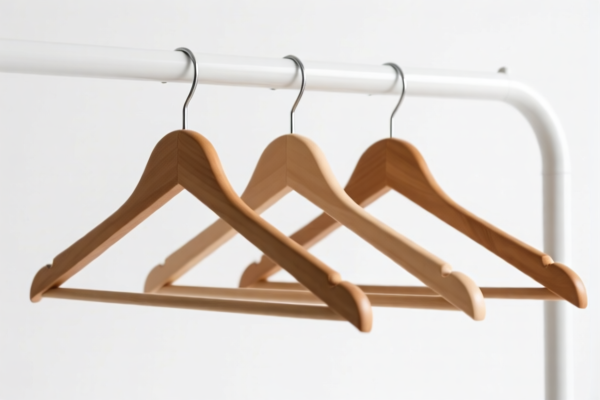
Product Images



AI Analysis
🧣 Tie & Scarf Rack (Accessory Hangers)
🌐 HS Code Reference & Customs Clearance Guide | 2026 Latest Tariff Analysis | Strategic Compliance for Metal & Plastic Storage Solutions
📌 I. Product Definition & Classification: What Exactly Is a "Tie and Scarf Rack"?
A Tie and Scarf Rack is a storage fixture designed to organize neckwear. In international trade, the classification depends strictly on the material composition and functional design. It is not a single category but rather a split between Plastic Consumer Goods and Metal Hardware/Furniture Parts.
Key Distinction:
- Plastic Racks: Regarded as "Plastic Articles" or "Furniture Accessories" (Chapter 39). Lower duties, simpler clearance.
- Metal Racks: Regarded as "Base Metal Mounting Fittings" or "Other Base Metal Articles" (Chapter 83/76). Significantly higher duties due to Section 301 (China tariffs) and specific metal tariffs.
⚠️ Critical Compliance Point:
- If the rack is plastic → It falls under Chapter 39.
- If the rack is metal (steel, aluminum, zinc, copper) → It falls under Chapter 83 or 76.
- Do NOT mix materials in the same HS code claim without proper breakdown; customs will assess the whole based on the principal material or misclassify, leading to penalties.
📦 II. HS Code Classification Matrix (2026 Latest Tariff Data)
Based on the provided dataset, here are the five potential HS codes and their specific tax implications.
| HS Code | Product Description (Summary) | Material | Category Logic |
|---|---|---|---|
3926.30.50.00 |
Plastic tie/scarf racks; considered furniture/body connection parts | Plastic | Chapter 39: Other plastic articles |
8302.50.00.00 |
Base metal supports for storing ties/scarves | Base Metal (General) | Chapter 83: Base metal mountings/fittings |
8302.42.30.65 |
Metal accessory racks (Iron/Steel/Aluminum/Zinc); furniture-like accessories | Base Metal (Steel/Alum/Zinc) | Chapter 83: Other base metal mountings |
7616.99.51.75 |
Aluminum wire/thread products for home hanging racks | Aluminum | Chapter 76: Articles of aluminum |
3926.90.99.89 |
Plastic or other material articles; home storage items like tie/scarf racks | Plastic (Other) | Chapter 39: Other plastic articles |
🔍 Key Insight:
- Plastic (3926) vs. Metal (8302/7616): The tax difference is massive. Plastic incurs ~22.8%, while Steel/Aluminum can incur up to 85%.
- Why so many Metal Codes? Customs authorities distinguish between "General Mountings" (8302.50) and "Specific Metal Articles" (8302.42or7616). Misclassifying a steel rack as "other metal articles" (8302.50) when it fits a more specific subheading (8302.42) can lead to audits.
💰 III. Detailed Tariff Rate Breakdown (USA Market Focus)
✅ Applicable Country: United States (US)
✅ Origin: China (CN) (Based on tariff details like "122 Clause" and "Section 301" context in the data)
✅ Status: High Tariff Environment for Metals; Moderate for Plastics.
🎯 1. 3926.30.50.00 —— Plastic Tie/Scarf Rack (Furniture Connection Part)
| Item | Detail |
|---|---|
| Base Duty | 5.3% |
| Section 301 (Additional) | 7.5% |
| 122 Clause Tariff | 10% |
| Total Effective Rate | 22.8% |
| Calculation Base | CIF Value × 22.8% |
| De Minimis Eligibility | ❌ Likely Denied if total value exceeds $800, but generally applicable for B2B. |
📌 Explanation:
- This is the most cost-effective classification for plastic racks.
- The "122 Clause" refers to specific trade remedy measures.
- Strategy: If possible, design racks using plastic to lock in this lower rate.
🎯 2. 3926.90.99.89 —— Other Plastic Articles (Home Storage)
| Item | Detail |
|---|---|
| Base Duty | 5.3% |
| Section 301 (Additional) | 7.5% |
| 122 Clause Tariff | 10% |
| Total Effective Rate | 22.8% |
| Calculation Base | CIF Value × 22.8% |
📌 Explanation:
- Similar to3926.30but for "other" plastic articles not specifically listed as furniture connections.
- Risk: Customs may prefer3926.30if the rack is clearly a "connection part" or "furniture accessory." Using3926.90might trigger a reclassification audit if the "furniture accessory" nature is obvious.
🎯 3. 8302.50.00.00 —— Base Metal Supports (General)
| Item | Detail |
|---|---|
| Base Duty | 0.0% |
| Section 301 (Additional) | 25.0% |
| 122 Clause Tariff | 10% |
| Steel/Alum/Copper Surtax | 50% |
| Total Effective Rate | 85.0% |
| Calculation Base | CIF Value × 85.0% |
📌 Explanation:
- PITFALL ALERT: Although the base duty is 0%, the 50% surtax for Steel/Aluminum/Copper kicks in.
- Combined with Section 301 (25%) and 122 Clause (10%), the total hits 85%.
- Recommendation: Avoid this code for standard steel racks unless you have a specific exemption.
🎯 4. 8302.42.30.65 —— Metal Fittings (Iron/Steel/Aluminum/Zinc)
| Item | Detail |
|---|---|
| Base Duty | 3.9% |
| Section 301 (Additional) | 7.5% |
| 122 Clause Tariff | 10% |
| Steel/Alum/Copper Surtax | 50% |
| Total Effective Rate | 71.4% |
| Calculation Base | CIF Value × 71.4% |
📌 Explanation:
- This code is more specific than8302.50.
- The 50% surtax still applies to steel/铝/aluminum products.
- Total rate is 71.4%, slightly lower than8302.50due to a higher base duty (3.9% vs 0%), but the surtax dominates.
🎯 5. 7616.99.51.75 —— Aluminum Wire/Other Articles
| Item | Detail |
|---|---|
| Base Duty | 2.5% |
| Section 301 (Additional) | 25.0% |
| 122 Clause Tariff | 10% |
| Steel/Alum/Copper Surtax | 50% |
| Total Effective Rate | 37.5% |
| Calculation Base | CIF Value × 37.5% |
📌 Explanation:
- Best Option for Metal? Yes. This code applies to Aluminum articles (not steel/iron).
- The 50% surtax applies, but the base duty is low (2.5%).
- Crucial: This code is specific to Aluminum. If your rack is steel, you cannot use this code. It must be8302.
- Rate: 37.5% is significantly better than the 71-85% range for steel.
🛠️ IV. Customs Clearance Practical Advice
✅ 1. Material Declaration is Key
| Scenario | Correct Declaration | Risk if Incorrect |
|---|---|---|
| Plastic Rack | "Plastic Tie Hanger" | Use 3926 codes (22.8%). |
| Aluminum Rack | "Aluminum Alloy Scarf Rack" | Use 7616.99.51.75 (37.5%). |
| Steel/Iron Rack | "Steel Base Metal Support" | Use 8302 codes (71-85%). |
| Mixed Materials | Declare principal material | If >50% plastic, may argue for 3926. If mixed, likely 8302. |
⚠️ Warning:
- Steel/Aluminum Surtax (50%) is the biggest cost driver.
- If you import Steel racks, expect 71-85% tax.
- If you import Aluminum racks, expect 37.5% tax.
- If you import Plastic racks, expect 22.8% tax.
✅ 2. Documentation Checklist
| Document | Requirement | Purpose |
|---|---|---|
| Product Photo | Clear shot of material texture/finish | Proves Plastic vs. Metal |
| Material Certificate | Mill test report or supplier declaration | Confirms Alloy type (Aluminum vs. Steel) |
| HS Code Justification | Explanation of "Furniture Accessory" vs. "Wire Product" | Supports 3926.30 vs 7616 |
| Commercial Invoice | Must state "Tie and Scarf Rack" | Clear commodity description |
| Country of Origin | China (if applicable) | Triggers Section 301 & 122 Clause |
✅ 3. Strategic Cost-Saving Tips
- Material Switch: If cost is critical, consider switching from Steel to Plastic (
3926, 22.8%) or Aluminum (7616, 37.5%). The tax savings are substantial. - Avoid "General" Metal Codes: Do not use
8302.50for metal racks if a more specific code like8302.42or7616applies. While8302.50has a 0% base duty, the total with surtaxes is highest (85%). - Precise Description:
- ❌ Bad: "Metal Hanger"
- ✅ Good: "Aluminum Alloy Tie Rack, Surface Anodized, for Closet Organization"
- Pre-Ruling: For large shipments, apply for an Advance Ruling from US Customs (CBP) to confirm whether your specific rack is classified as
3926(Plastic) or8302(Metal).
🌍 V. Global Market Comparison (Quick Reference)
| Market | Recommended HS (Plastic) | Recommended HS (Metal) | Notes |
|---|---|---|---|
| 🇺🇸 USA | 3926.30.50.00 (22.8%) |
7616.99.51.75 (37.5%) |
High Section 301 tariffs on China-origin goods. |
| 🇪🇺 EU | 3926.90 |
8302.42 |
Generally lower duties, no Section 301 equivalent. |
| 🇨🇳 China | 3926 |
8302 |
Import duties vary, check FTA benefits. |
📌 Conclusion:
The US market imposes a heavy tax burden on metal accessories from China.
- Plastic: 22.8%
- Aluminum: 37.5%
- Steel: 71-85%
Recommendation: Prioritize Plastic or Aluminum materials for export to the US to minimize landed cost.
🎯 VI. Common Mistakes & Pitfalls
❌ Mistake 1: Declaring a Steel rack as 7616 (Aluminum).
👉 Result: Customs inspection will reveal steel → Penalty + Retaxation.
❌ Mistake 2: Using 8302.50 for a Steel rack.
👉 Result: Highest tax rate (85%) due to 50% surtax + 25% Section 301 + 10% 122 Clause.
❌ Mistake 3: Claiming "Plastic" for a Plastic-Coated Metal rack.
👉 Result: If metal is the essential character, it will be classified as Metal (71-85%).
✅ Correct Approach:
"Aluminum Tie Hanger, Model T-100, Anodized Finish, Imported from China"
→ Use7616.99.51.75(37.5% tax).
📣 Final Action Plan
- Identify Material: Confirm if your rack is Plastic, Aluminum, or Steel.
- Select HS Code:
- Plastic →
3926.30.50.00 - Aluminum →
7616.99.51.75 - Steel/Iron →
8302.42.30.65(or8302.50if generic)
- Plastic →
- Calculate Landed Cost: Add CIF value + Tax Rate.
- Document Precisely: Ensure invoices and packing lists match the declared HS code description.
🚀 Pro Tip:
Aluminum is the sweet spot for metal racks. It avoids the exorbitant steel surtaxes while offering durability. If plastic is an option, it remains the cheapest at 22.8%.
✨ Smart Classification Saves 50%+ in Duties!
💼 Don't let material misclassification bankrupt your margin.
Customer Reviews
About HS Code Classification
The Harmonized System (HS) is an internationally standardized nomenclature developed by the World Customs Organization (WCO) to classify traded products. Over 200 countries use the HS system as the basis for customs tariffs, trade statistics, and import/export regulations.
Each HS code follows a hierarchical structure:
- Chapter (2 digits) — Broad category of goods (e.g., Chapter 84: Machinery and Mechanical Appliances)
- Heading (4 digits) — More specific grouping within the chapter
- Subheading (6 digits) — Internationally standardized breakdown, used by all WCO member countries
- National subdivisions (8-10 digits) — Country-specific extensions for further classification, such as US HTSUS 10-digit codes
Correct HS code classification is essential for smooth customs clearance, accurate duty payment, and compliance with trade regulations. Misclassification can lead to customs delays, overpayment of duties, or penalties.
When importing from CN to US, the applicable tariff rates may include:
- Most-Favored-Nation (MFN) rate — The standard duty rate applied to WTO members
- General rate — Applied to countries without trade agreements
- Trade remedy duties — Additional tariffs such as Section 301 (anti-dumping), Section 232 (national security), or countervailing duties
The information provided on this page is for reference purposes only. For official classification, please consult with your local customs authority or a licensed customs broker.