Tile and Glass Moving Tools
CN → US| HS Code | Tariff Rate | Origin | Destination | Doc |
|---|---|---|---|---|
| 7326908688 | 87.9% | CN | US | Official Doc |
| 7326190080 | 87.9% | CN | US | Official Doc |
| 8205100000 | 41.2% | CN | US | Official Doc |
| 8205517500 | 38.7% | CN | US | Official Doc |
| 8428900390 | 35.0% | CN | US | Official Doc |
Product Images
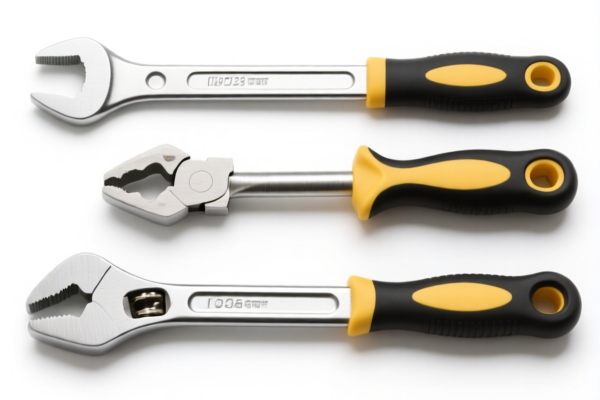
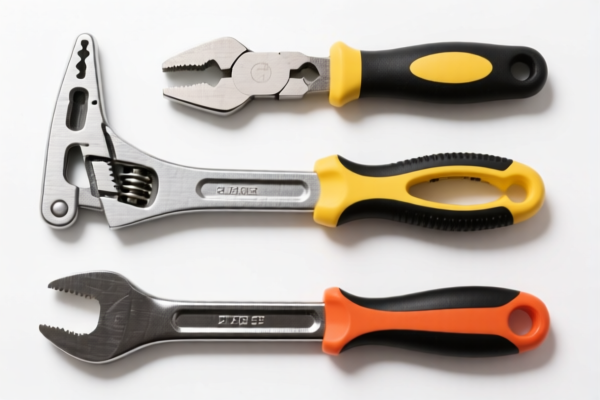
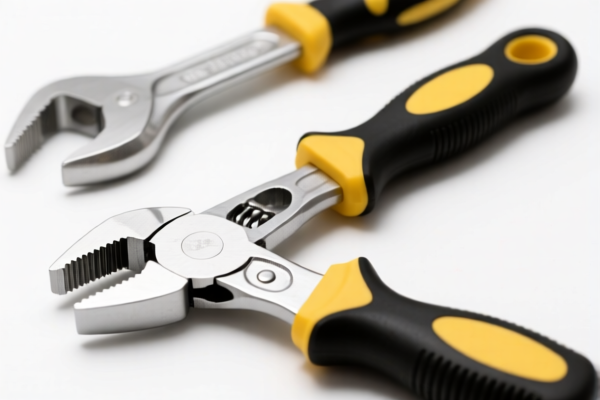
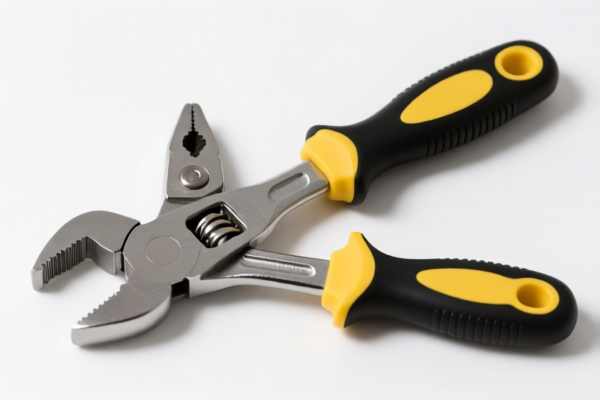
AI Analysis
🧱 Tile & Glass Moving Tools (Manual & Mechanical Handling Equipment)
🌐 HS Code Reference & Customs Clearance Guide | 2026 Latest Tariff Analysis | Professional Customs Strategy
📌 I. Product Definition & Classification: Do You Really Understand "Tile and Glass Moving Tools"?
Tile and glass moving tools are essential equipment in the construction and interior decoration industries. In international trade, they are broadly categorized into two types based on their power source and mechanism:
Manual Tools (Hand Tools): Tools operated purely by human force, such as suction cups, vacuum lifters without motors, and gripping clamps. These fall under the category of "hand tools." Mechanical Handling Equipment: Powered devices (electric, pneumatic, or hydraulic) used for lifting, transporting, loading, or unloading tiles and glass. These fall under the category of "other machinery."
⚠️ Key Distinction Point:
- If the tool is powered and performs lifting/loading functions → Classified under Chapter 84 (Machinery);
- If the tool is manual (hand-held, no motor) → Classified under Chapter 82 (Hand Tools).
📦 II. HS Code Classification Details (2026 Latest Tariff Authority Reference)
Based on the provided data <DATA>, here is the precise classification and corresponding tax breakdown. Note that some HS codes are repeated in the source data but represent the same tariff treatment.
| HS Code | Product Description | Applicable Scenario | Tax Rate (Total) |
|---|---|---|---|
8205.10.00.00 |
Manual Operation Tools: Specifically for moving tiles and glass; falls under the category of hand tools. | Manual suction cups, handheld glass clamps, manual tile lifters. | 41.2% |
8205.51.75.00 |
Household Hand Tools: For moving/carrying; material may be metal or composite. | General-purpose manual handling tools, household-grade lifting aids. | 38.7% |
8428.90.03.10 |
Lifting/Handling Machinery: Mechanical equipment for lifting, transporting, loading, or unloading; falls under "other machinery." | Electric vacuum lifters, pneumatic glass cranes, motorized tile transporters. | 35.0% |
8428.90.03.90 |
Cranes & Loading Machinery: Specifically for moving tiles and glass; falls under "other machinery." | Specialized mechanical lifts for heavy glass panels, industrial tile movers. | 35.0% |
🔍 Key Reminder:
- Manual vs. Mechanical: The primary differentiator is the presence of a power source. Manual tools go to 8205, while motorized/mechanical lifts go to 8428.
- Tax Impact: Mechanical tools (8428) generally have a lower total tax rate (35.0%) compared to manual tools (38.7% - 41.2%) due to lower base duties, but both are subject to significant additional tariffs.
💰 III. 2026 Latest Tariff Rate Breakdown (Including Surcharge & Policy Add-ons)
✅ Applicable Country: United States (US)
✅ Origin: China (CN)
✅ Effective Date: From 2025-11-10 onwards (including subsequent imports)
🎯 1. 8205.10.00.00 & 8205.51.75.00 —— Manual Handling Tools (Hand Tools)
| Item | Content |
|---|---|
| Base Tariff | 6.2% (for 8205.10) / 3.7% (for 8205.51) |
| Section 301 Surcharge | +25.0% |
| Section 122 Tariff | +10.0% |
| Total Tax Rate | 41.2% (for 8205.10) / 38.7% (for 8205.51) |
| Tax Calculation | CIF Value × Total Rate |
| De Minimis Eligibility | ❌ Not Applicable (Denied) |
| Legal Basis Path | USITC Base Rate → Section 301: 25% → Section 122: 10% |
📌 Explanation:
- Base Tariff: Varies slightly depending on the specific sub-category of hand tools.
- Section 301 Surcharge (+25%): Imposed under the US Trade Act Section 301 against Chinese imports.
- Section 122 Tariff (+10%): Imposed under the International Emergency Economic Powers Act (IEEPA) or related national security provisions for specific categories.
- Total: The combined effect results in a high effective tax rate, making manual tools costly for US importers.
🎯 2. 8428.90.03.10 & 8428.90.03.90 —— Mechanical Lifting & Handling Machinery
| Item | Content |
|---|---|
| Base Tariff | 0.0% |
| Section 301 Surcharge | +25.0% |
| Section 122 Tariff | +10.0% |
| Total Tax Rate | 35.0% |
| Tax Calculation | CIF Value × 35% |
| De Minimis Eligibility | ❌ Not Applicable (Denied) |
| Legal Basis Path | USITC Base Rate (0%) → Section 301: 25% → Section 122: 10% |
📌 Note:
- Zero Base Rate: Mechanical machinery often benefits from a 0% base tariff under the Harmonized Tariff Schedule.
- Same Surcharges: Despite the low base rate, the 25% Section 301 and 10% Section 122 surcharges apply equally, resulting in a 35% total tax.
- Comparison: This is 3.2% - 6.2% lower than manual tools, making mechanical equipment slightly more tax-efficient for importers from China.
🛠️ IV. Customs Clearance Practical Advice (Real-World Pitfall Avoidance)
✅ 1. Required Documentation Checklist (Must-Provide)
| Document | Required | Description |
|---|---|---|
| ✅ Product Specification Sheet | ✔️ | Must clearly state: Power source (Manual vs. Electric), Weight capacity, Material. |
| ✅ Technical Diagram | ✔️ | For mechanical tools: Show motor, battery, or hydraulic components to justify Chapter 84. |
| ✅ Product Photos (with Label) | ✔️ | Clear view of brand, model, input voltage (if electric), and safety certifications. |
| ✅ Third-Party Test Report | ✔️ | CE, UL, ETL, or ANSI standards compliance (especially for electric models). |
| ✅ Commercial Invoice | ✔️ | Must explicitly state "Tile and Glass Moving Tool" – avoid vague terms like "Construction Accessory." |
| ✅ Certificate of Origin (CO) | ✔️ | If not China-origin, may apply for preferential rates. |
| ✅ Packing List | ✔️ | Detail individual units vs. kits to prevent "component split" penalties. |
✅ 2. Declaration Tips (Key Mantras)
🔥 “Power Determines Chapter, Manual goes to 82, Mechanical to 84, Label Clearly, Rate Drops Half!”
| Scenario | Correct Declaration | Wrong Approach |
|---|---|---|
| Electric Vacuum Lifter | 8428.90.03.10 |
Misdeclare as "Hand Tool" → 41.2% |
| Manual Suction Cup | 8205.10.00.00 |
Misdeclare as "Machinery" → 35% (Risk of penalty for incorrect classification) |
| Hydraulic Glass Crane | 8428.90.03.90 |
Split into parts → Each part taxed separately, higher total cost |
| Composite Material Gripper | 8205.51.75.00 |
Generic "Tool" → Delay in clearance |
✅ 3. Special Case Handling
| Situation | Handling Advice |
|---|---|
| OEM Custom Tools | Provide customer PO + design drawings to prove specific use case. |
| Battery-Powered Tools | Must declare battery type (Li-ion, etc.) and UN38.3 certification for air/sea freight. |
| Large Glass Panels with Lifters | If the lifter is permanently attached, declare as a single unit under 8428. |
| Non-Chinese Origin | If manufactured in Vietnam, Mexico, etc., apply for IEEPA Exemption to reduce or eliminate surcharges. |
🌍 V. Global Market Clearance Comparison (2026 Latest)
| Country/Region | Recommended HS Code | Tariff (China Origin) | Certification Requirements | Notes |
|---|---|---|---|---|
| 🇺🇸 USA | 8428.90.03.10 (Mech) / 8205.10.00.00 (Manual) |
35.0% (Mech) / 41.2% (Manual) | UL, ETL, OSHA compliance | High additional tariffs due to Section 301 & 122. |
| 🇨🇳 China | 8428.90.03.10 |
Varies (Low) | CCC (if electric) | Lower base tariffs, no surcharges. |
| 🇪🇺 EU | 8428.90.03.10 |
0% - 4% (if MFN) | CE, RoHS, Machinery Directive | No anti-dumping surcharges typically. |
| 🇦🇺 Australia | 8428.90.03.10 |
5% | RCM | No Section 301 equivalent. |
| 🇯🇵 Japan | 8428.90.03.10 |
0% - 5% | PSE, JIS | Competitive market, low tariffs. |
📌 Conclusion:
- The US market is the most expensive for these tools due to the 35%-41% total tax burden.
- EU, Japan, and Australia offer significantly lower tariff barriers, making them more attractive for cost-sensitive supply chains.
- Consider re-routing supply chains through third countries (if eligible for origin rules) to mitigate US surcharges.
📌 VI. Common Mistakes & Pitfall Avoidance (Lessons Learned)
❌ Mistake 1: Declaring an electric glass lifter as a "manual tool"
👉 Consequence: Incorrect classification → Penalties + Back Taxes + Delayed Release.
❌ Mistake 2: Splitting a kit (lifter + suction pads + case) into multiple HS codes
👉 Consequence: Each part taxed separately → Total tax exceeds single-item rate.
❌ Mistake 3: Omitting power source details on the invoice
👉 Consequence: Customs cannot distinguish between Chapter 82 and 84 → Holds for inspection.
❌ Mistake 4: Using vague terms like "Construction Tool"
👉 Consequence: Customs assigns highest possible duty or delays for clarification → Fines & Storage Fees.
✅ Correct Approach:
"Electric Vacuum Glass Lifter, 300kg Capacity, 110V/60Hz, Model XYZ, UL Certified, For Tile & Glass Handling"
🎯 VII. Conclusion: Professional Declaration, Save Time & Money!
🎯 Remember the Mantra:
🔹 "Power Source is Key: Manual=82, Electric=84. Label Clearly, Avoid Penalties!"
🔹 "US Tariffs are High: 35%-41%, Plan Ahead, Source Wisely!"
📌 Pro Tip:
If your tools are originated in Vietnam, Mexico, or Thailand, you may be eligible for IEEPA Exemptions or Section 301 exclusions, reducing taxes to 0%~5%.
Recommend pre-applying for Advance Rulings (Ruling Letter) from US Customs to avoid clearance risks.
📣 Immediate Action:
📞 Contact a professional customs broker + Provide product photos + Apply for HS Code Advance Ruling
🚀 Let your Tile & Glass Tools clear smoothly, expand globally, and maximize profits!
✨ Professional Clearance Starts with Accurate Classification!
💼 Every penny of cost deserves precise calculation!
Customer Reviews
About HS Code Classification
The Harmonized System (HS) is an internationally standardized nomenclature developed by the World Customs Organization (WCO) to classify traded products. Over 200 countries use the HS system as the basis for customs tariffs, trade statistics, and import/export regulations.
Each HS code follows a hierarchical structure:
- Chapter (2 digits) — Broad category of goods (e.g., Chapter 84: Machinery and Mechanical Appliances)
- Heading (4 digits) — More specific grouping within the chapter
- Subheading (6 digits) — Internationally standardized breakdown, used by all WCO member countries
- National subdivisions (8-10 digits) — Country-specific extensions for further classification, such as US HTSUS 10-digit codes
Correct HS code classification is essential for smooth customs clearance, accurate duty payment, and compliance with trade regulations. Misclassification can lead to customs delays, overpayment of duties, or penalties.
When importing from CN to US, the applicable tariff rates may include:
- Most-Favored-Nation (MFN) rate — The standard duty rate applied to WTO members
- General rate — Applied to countries without trade agreements
- Trade remedy duties — Additional tariffs such as Section 301 (anti-dumping), Section 232 (national security), or countervailing duties
The information provided on this page is for reference purposes only. For official classification, please consult with your local customs authority or a licensed customs broker.