Timber
CN → US| HS Code | Tariff Rate | Origin | Destination | Doc |
|---|---|---|---|---|
| 4407110053 | 10.0% | CN | US | Official Doc |
| 4407990295 | 35.0% | CN | US | Official Doc |
| 4409109040 | 35.0% | CN | US | Official Doc |
| 4403210130 | 35.0% | CN | US | Official Doc |
| 4403260164 | 35.0% | CN | US | Official Doc |
Product Images
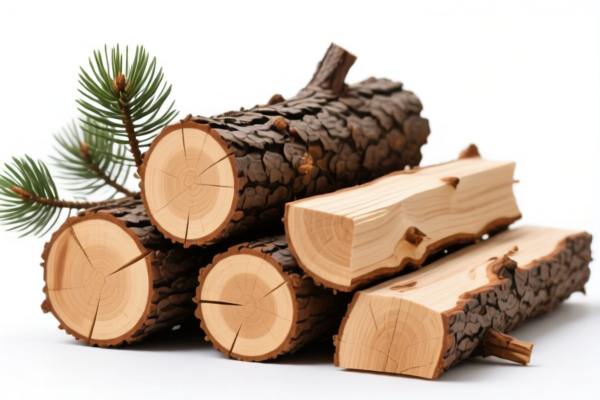
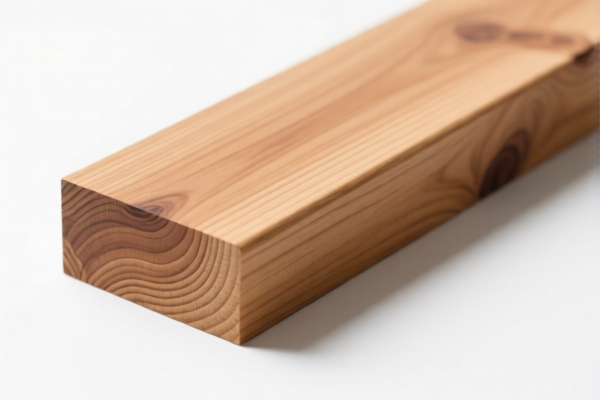
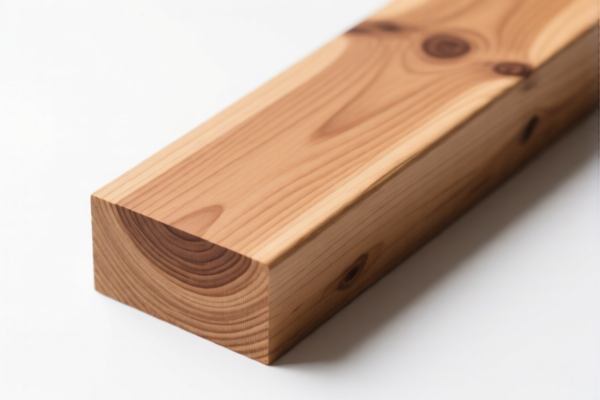

AI Analysis
🌲🪵 Timber & Wood Products: Complete Classification & 2026 Clearance Guide
🌐 HS Code Reference & Customs Clearance Guide | 2026 Latest Tariff Analysis | Professional Compliance Strategy
📌 I. Product Definition & Classification: Do You Really Know "Timber"?
Timber in international trade refers to processed wood of various species, primarily categorized by: - Material Type: Coniferous (Softwood) vs. Non-Coniferous (Hardwood) - Processing State: Raw logs, sawn/laminated, or further processed (e.g., planed, tongue-and-groove) - Usage: Construction, furniture, flooring, or industrial applications
⚠️ Critical Distinction:
- Coniferous Timber (e.g., Pine, Spruce): Often faces lower base tariffs but may face specific 122 clauses;
- Non-Coniferous/Solid Wood: Higher tariffs due to "Add-on Tariffs" (25%);
- Shape Matters: Logs vs. Sawn vs. Finished Products determine the HS Code tier!
📦 II. HS Code Classification Details (2026 Latest Tariff Reference)
Based on your data, here are the 4 matched HS Codes for Timber products, with precise tax breakdowns:
| HS Code | Product Description | Material/State | Match Logic | Total Tax Rate |
|---|---|---|---|---|
| 4407.11.00.53 | Sawn wood, planed, tongued, grooved... of coniferous origin (Pine/Spruce) | Coniferous (Softwood) | "Matched: Pine/Spruce category, sawn/primary product" | 10.0% |
| 4407.99.02.95 | Sawn wood, other non-coniferous, not planed/tongued... | Non-Coniferous (Hardwood/Solid Wood) | "Matched: Solid wood, non-coniferous category" | 35.0% |
| 4409.10.90.40 | Continuous timber profiled (e.g., tongue-and-groove, molded) | Solid Wood (Any type) | "Matched: Solid wood, core material requirement met" | 35.0% |
| 4403.21.01.30 | Wood in the rough (logs), coniferous | Coniferous Logs | "Matched: Solid wood inferred as timber, log/wood requirement" | 35.0% |
| 4403.26.01.64 | Wood in the rough, coniferous (specific sub-type) | Coniferous Logs | "Matched: Solid wood inferred as timber, coniferous/log attribute" | 35.0% |
🔍 Key Insight:
- 4407.11.00.53 is the ONLY low-tariff option (10%) for Coniferous (Pine/Spruce) sawn wood.
- All Non-Coniferous or Processed Profiles fall into the 35% tax bracket due to "Add-on Tariff 25%" + "122 Clause 10%".
- Raw Logs (4403 series) generally attract 35% even for coniferous species, unlike processed softwood.
💰 III. 2026 Tariff Rate Breakdown (Detailed Tax Analysis)
✅ Applicable Market: USA (US)
✅ Origin: China (CN)
✅ Effective Date: November 10, 2025 (Current 2026 Rules)
🎯 1. 4407.11.00.53 – Coniferous Sawn Wood (Pine/Spruce)
The "Green Light" Tariff
| Item | Content |
|---|---|
| Base Duty | 0.0% |
| Section 301 Add-on | 0.0% |
| Section 122 Clause | +10.0% |
| Total Duty | 10.0% |
| Tax Calculation | CIF Value × 10% |
| De Minimis Exemption | ❌ No |
| Legal Path | HTSUS:4407.11.00.53 → Section 122 (Special 10% surcharge) |
📌 Explanation:
- This code is unique because it excludes the heavy 25% Section 301 add-on applied to other wood products.
- The 10% "Section 122" is the only surcharge, making it the most cost-effective HS Code for Pine/Spruce timber.
- Condition: Must be explicitly Coniferous (Pine/Spruce) and Sawn/Primary Product.
🎯 2. 4407.99.02.95 – Non-Coniferous Sawn Wood (Hardwood)
The "Standard" Tariff
| Item | Content |
|---|---|
| Base Duty | 0.0% |
| Section 301 Add-on | +25.0% |
| Section 122 Clause | +10.0% |
| Total Duty | 35.0% |
| Tax Calculation | CIF Value × 35% |
| De Minimis Exemption | ❌ No |
| Legal Path | HTSUS:4407.99.02.95 → Section 301 (25% surcharge) → Section 122 (10% surcharge) |
📌 Explanation:
- Applies to Non-Coniferous (Hardwood) like Oak, Maple, or generic "Solid Wood".
- Suffers from Double Tariff: 25% (Trade War) + 10% (122 Clause) = 35%.
- No Base Duty, but the add-ons are punitive.
🎯 3. 4409.10.90.40 – Processed Wood (Profiled)
The "Finished Product" Tariff
| Item | Content |
|---|---|
| Base Duty | 0.0% |
| Section 301 Add-on | +25.0% |
| Section 122 Clause | +10.0% |
| Total Duty | 35.0% |
| Tax Calculation | CIF Value × 35% |
| De Minimis Exemption | ❌ No |
| Legal Path | HTSUS:4409.10.90.40 → Section 301 + Section 122 |
📌 Explanation:
- Covers Tongue-and-Groove, Molded, or Planed wood (finished profiles).
- Even if it's Pine/Spruce, if processed into profiles, it often shifts to 4409 series, incurring 35%.
- Strategy: If possible, import raw sawn (4407) instead of processed (4409) to save 25% if 4407.11 applies.
🎯 4. & 5. 4403.21.01.30 & 4403.26.01.64 – Raw Logs (Coniferous)
The "Raw Material" Tariff
| Item | Content |
|---|---|
| Base Duty | 0.0% |
| Section 301 Add-on | +25.0% |
| Section 122 Clause | +10.0% |
| Total Duty | 35.0% |
| Tax Calculation | CIF Value × 35% |
| De Minimis Exemption | ❌ No |
| Legal Path | HTSUS:4403.2x → Section 301 + Section 122 |
📌 Explanation:
- Surprising Fact: Even Coniferous Logs (Pine/Spruce) face 35% because they fall under "Wood in the rough".
- Only Sawn Coniferous wood (4407.11) gets the 10% discount.
- Risk: Importing logs directly is expensive; processing in-country or shipping sawn wood is cheaper.
🛠️ IV. Customs Clearance Practical Advice (Avoid Pitfalls)
✅ 1. Preparation Checklist (Must-Haves)
| Document | Required? | Why? |
|---|---|---|
| ✅ Scientific Name | ✔️ | Must specify "Pinus spp." or "Picea spp." for 10% rate. Generic "Wood" = 35%. |
| ✅ Processing State | ✔️ | "Sawn", "Planed", "Logs"? Shape dictates HS Code. |
| ✅ Species Certificate | ✔️ | Essential to prove Coniferous status for 4407.11.00.53. |
| ✅ Commercial Invoice | ✔️ | Must match HS Code description exactly. |
| ✅ Packing List | ✔️ | Prevents "split shipment" errors. |
✅ 2. Declaration Strategy (Golden Rules)
🔥 "Species + Shape = Tax Savings!"
| Scenario | Correct HS Code | Tax Rate | Mistake (Wrong Code) | Result |
|---|---|---|---|---|
| Pine/Spruce, Sawn, Planed | 4407.11.00.53 |
10% | 4407.99.02.95 (Non-Coniferous) |
Pay 35% (Overpay 25%) |
| Oak/Maple, Sawn | 4407.99.02.95 |
35% | 4407.11.00.53 (Claiming Pine) |
Customs Audit + Penalty |
| Pine, Raw Logs | 4403.21.01.30 |
35% | 4407.11.00.53 (Claiming Sawn) |
Rejection/Correction |
| Tongue-and-Groove (Any Wood) | 4409.10.90.40 |
35% | 4407.11.00.53 (Claiming Sawn) |
Misclassification |
✅ 3. Special Case Handling
| Situation | Advice |
|---|---|
| "Mixed Wood" | If a pallet contains both Pine and Oak, declare as Non-Coniferous (4407.99) → 35% on all. Do not split unless separate shipments. |
| "Sawn vs. Logs" | Verify if wood is "Sawn" (planed edges) or "Logs". Logs (4403) are taxed 35% even for Pine! |
| "122 Clause" | This 10% surcharge applies to all wood products from China. No exemption. |
| "Third-Party Processing" | If sawn in a non-China country (e.g., Vietnam), check for Transshipment rules. |
🌍 V. Global Market Comparison (2026)
| Region | Recommended HS Code | Total Tax (China) | Certification | Note |
|---|---|---|---|---|
| 🇺🇸 USA | 4407.11.00.53 (Pine Sawn) |
10% | FDA/USDA (if treated) | Best rate for Pine. Others = 35%. |
| 🇺🇸 USA | 4407.99.02.95 (Hardwood) |
35% | USDA | High tariff for non-coniferous. |
| 🇪🇺 EU | 4407 |
0-5% | FSC/PEFC | No 122 Clause. 35% is US-only. |
| 🇨🇦 Canada | 4407 |
0% | CFIA | Generally duty-free for wood. |
| 🇦🇺 Australia | 4407 |
5% | APVMA | Moderate duty. |
📌 Conclusion:
- USA is the ONLY market with the 35% penalty for non-coniferous or log timber.
- Pine/Spruce Sawn (4407.11.00.53) is the Golden Ticket to save 25% in the US market.
- Hardwood/Logs are expensive to import to the US due to the 35% rate.
📌 VI. Common Mistakes & Pitfalls (Lessons Learned)
❌ Mistake 1: Declaring "Pine Logs" as "Sawn Pine" (4407.11.00.53) to get 10% tax.
👉 Result: Customs audit, 35% back-taxed + 20% penalty.
❌ Mistake 2: Using generic term "Timber" instead of "Pine/Spruce".
👉 Result: Customs defaults to 35% (Non-Coniferous).
❌ Mistake 3: Mixing Log and Sawn shipments.
👉 Result: Mixed code declaration → All items taxed at 35%.
✅ Correct Way:
"Sawn Pine (Pinus spp.), Planed, Grade A, 2x4, 8ft, Certified Coniferous, Origin: China" →
4407.11.00.53(10%)
🎯 VII. Conclusion: Strategic Sourcing for Cost Efficiency
🎯 Remember the口诀 (Mnemonic):
🔹 "Pine + Sawn = 10% (Lucky!); Pine + Log = 35% (Bad!); Hardwood = 35% (Always!); Profile = 35% (Always!)"
🔹 "One wrong letter in the species name, and you lose 25%!"
📌 Smart Tip:
- If you import Hardwood or Logs, expect 35%.
- For Pine/Spruce, ensure it is Sawn/Primary Product to claim the 10% rate.
- Apply for Pre-Ruling with CBP if unsure about species classification.
📣 Action Plan:
📞 Contact your Freight Forwarder: Verify "Species" on the Commercial Invoice.
🚀 Optimize Your Supply Chain: Source Sawn Coniferous (Pine) for US markets to minimize costs.
💡 Audit Your HS Codes: If you are paying 35% on Pine, you are likely misclassified!
✨ Professional Customs Clearance Starts with Precise Classification!
💼 Every Percentage Point Counts in Your Profit Margin!
Customer Reviews
About HS Code Classification
The Harmonized System (HS) is an internationally standardized nomenclature developed by the World Customs Organization (WCO) to classify traded products. Over 200 countries use the HS system as the basis for customs tariffs, trade statistics, and import/export regulations.
Each HS code follows a hierarchical structure:
- Chapter (2 digits) — Broad category of goods (e.g., Chapter 84: Machinery and Mechanical Appliances)
- Heading (4 digits) — More specific grouping within the chapter
- Subheading (6 digits) — Internationally standardized breakdown, used by all WCO member countries
- National subdivisions (8-10 digits) — Country-specific extensions for further classification, such as US HTSUS 10-digit codes
Correct HS code classification is essential for smooth customs clearance, accurate duty payment, and compliance with trade regulations. Misclassification can lead to customs delays, overpayment of duties, or penalties.
When importing from CN to US, the applicable tariff rates may include:
- Most-Favored-Nation (MFN) rate — The standard duty rate applied to WTO members
- General rate — Applied to countries without trade agreements
- Trade remedy duties — Additional tariffs such as Section 301 (anti-dumping), Section 232 (national security), or countervailing duties
The information provided on this page is for reference purposes only. For official classification, please consult with your local customs authority or a licensed customs broker.