Time Recording Device
CN → US| HS Code | Tariff Rate | Origin | Destination | Doc |
|---|---|---|---|---|
| 8517620090 | 35.0% | CN | US | Official Doc |
| 8472300000 | 36.8% | CN | US | Official Doc |
| 8471609030 | 35.0% | CN | US | Official Doc |
| 8517690000 | 35.0% | CN | US | Official Doc |
| 8472909080 | 35.0% | CN | US | Official Doc |
Product Images
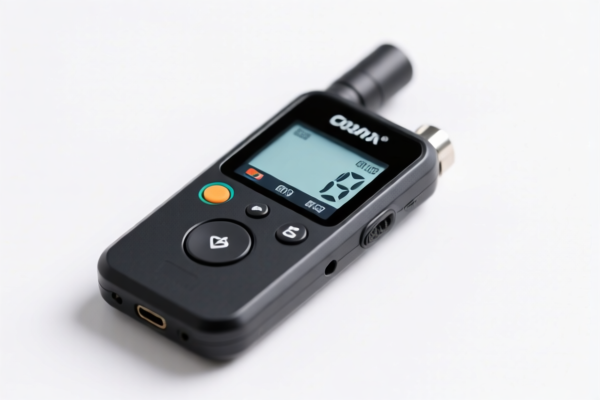
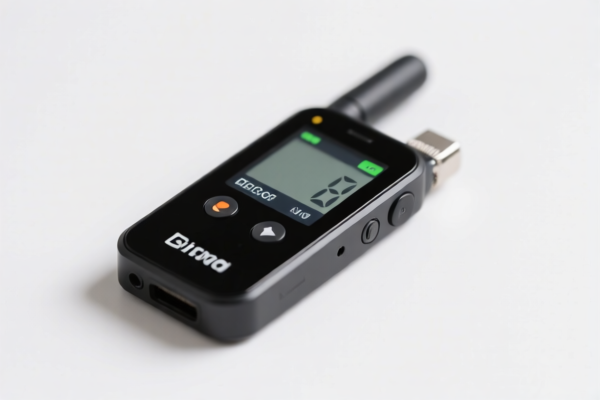
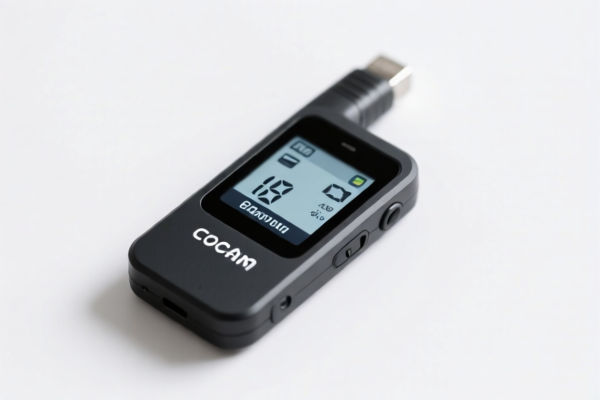
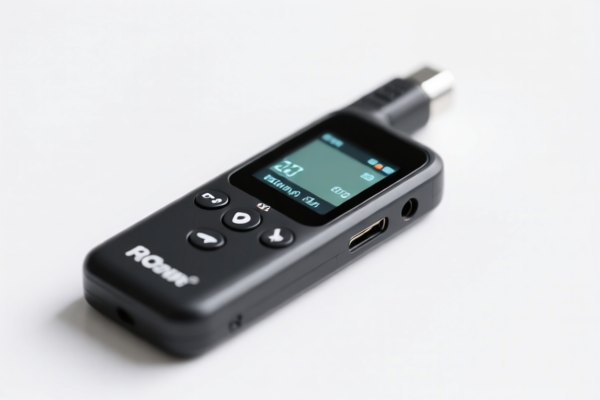
AI Analysis
⏱️ Time Recording Device (Attendance Machine / Biometric Clock)
🌐 HS Code Reference & Customs Clearance Guide | 2026 Latest Tariff Analysis | Professional Clearance Strategy
📌 I. Product Definition & Classification: Do You Really Understand “Time Recording Devices”?
A Time Recording Device (often called an Attendance Machine, Biometric Clock, or Time & Attendance System) is a specialized electronic device used to record employee attendance data. It typically integrates sensors (fingerprint, facial recognition, RFID), a display interface, and data transmission modules.
In international trade, its classification is controversial and complex, as it straddles the line between Office Machinery, Data Processing Input/Output Units, and Telecommunication Data Equipment. The correct HS Code depends heavily on the primary function, hardware composition, and specific technical capabilities.
⚠️ Key Classification Dilemma:
- If it acts primarily as an office machine for record-keeping → 8472 Series
- If it acts primarily as a data input device for computer systems → 8471 Series
- If it acts primarily as a data transmission/reception network device → 8517 Series
📦 II. HS Code Classification Details (Based on Provided Data)
The following table outlines the five potential HS Codes derived from the analysis of "Time Recording Devices," along with their specific rationales and tax implications.
| HS Code | Summary of Logic | Total Tax Rate | Tax Detail Breakdown |
|---|---|---|---|
8517.69.00.00 |
Telecom/Data Transmission Focus: Classified as equipment for transmitting/receiving voice, images, or other data. Matches the definition of network/data transmission devices. | 35.0% | Base: 0.0% Add-on: 25.0% Section 122: 10% |
8472.90.90.80 |
Office Automation Focus: Classified as Office Automation Equipment (OA). Used for office tasks. Composed of electronic/plastic/metal parts. Fits "Other Office Machines." | 35.0% | Base: 0.0% Add-on: 25.0% Section 122: 10% |
8471.60.90.50 |
Data Processing Input/Output Focus: Classified as an Input/Output unit for Automatic Data Processing (ADP) machines. Core function: Record/Identify personnel info. Matches Input/Output category. | 35.0% | Base: 0.0% Add-on: 25.0% Section 122: 10% |
8517.62.00.90 |
Data Conversion/Processing Focus: Classified as equipment for receiving/converting voice/image/data. Includes data collection & processing functions. Fits "Other" category for data reception. | 35.0% | Base: 0.0% Add-on: 25.0% Section 122: 10% |
8472.30.00.00 |
Office Machine (Specific): Specifically inferred for office attendance management. Fits "Other Office Machines" logically. No material/shape conflict. | 36.8% | Base: 1.8% Add-on: 25.0% Section 122: 10% |
8471.60.90.30 |
Card/Magnetic Input Focus: Classified as ADP Input/Output Unit. Core function: Identify & record personnel info. Logic matches "Card Key & Magnetic Medium Input Devices." | 35.0% | Base: 0.0% Add-on: 25.0% Section 122: 10% |
🔍 Critical Observation:
- Four out of six classifications carry a 35.0% total tax rate.
- One classification (8472.30.00.00) carries a higher 36.8% due to a 1.8% Base Tariff.
- All classifications are subject to heavy additional tariffs: 25% Add-on + 10% Section 122.
💰 III. 2026 Latest Tariff Rate Detailed Explanation
✅ Applicable Country: United States (US)
✅ Origin: China (CN) (Implied by Section 122 and Add-on Tariffs)
✅ Effective Date: Current (Post-2025 Policy Implementation)
🎯 1. The 35.0% Tax Bracket (Codes: 8517.69, 8472.90, 8471.60.90.50, 8517.62, 8471.60.90.30)
| Item | Content |
|---|---|
| Base Tariff | 0.0% (Ad Valorem) |
| USITC Add-on Tariff (Section 301) | +25.0% |
| Section 122 Tariff | +10.0% (Specific Chinese-origin surcharge) |
| Total Effective Rate | 35.0% |
| Tax Calculation | CIF Value × 35.0% |
| De Minimis Exemption | ❌ Not Applicable (High tariffs usually block $800 de minimis) |
📌 Interpretation:
- The 0% base suggests these items are often viewed as "technological" or "office" goods that do not carry inherent duty.
- However, the 25% Add-on is the standard Section 301 tariff for many Chinese electronics.
- The 10% Section 122 is a specific punitive tariff layer often applied to broader categories of Chinese imports.
- Total Cost Impact: A $1,000 device incurs $350 in duties.
🎯 2. The 36.8% Tax Bracket (Code: 8472.30.00.00)
| Item | Content |
|---|---|
| Base Tariff | 1.8% |
| USITC Add-on Tariff (Section 301) | +25.0% |
| Section 122 Tariff | +10.0% |
| Total Effective Rate | 36.8% |
| Tax Calculation | CIF Value × 36.8% |
📌 Interpretation:
- This code carries a higher burden due to the 1.8% base tariff.
- Recommendation: Avoid this code if other classifications apply, as it increases landed cost without benefit.
🛠️ IV. Customs Clearance Practical Advice (Real-World Pitfall Avoidance)
✅ 1. Documentation Checklist (Non-Negotiable)
| Document | Required? | Purpose |
|---|---|---|
| Product Specification Sheet | ✔️ | Must detail: Input type (RFID/Fingerprint/Face), Interface (USB/Ethernet/Wi-Fi), and Power Supply. |
| Flowchart/Logic Diagram | ✔️ | Crucial for HS Code Dispute: Shows if data is processed locally (Office Machine) or transmitted to a server (Data/Telecom Device). |
| Product Photos (Front/Rear/Label) | ✔️ | To verify no embedded printing/currency reading functions (which would change HS Code). |
| Commercial Invoice | ✔️ | Clearly state: "Time Recording Device for Employee Attendance." Avoid vague terms like "Electronic Device." |
| Certificate of Origin (CO) | ✔️ | Required for Section 122 assessment. |
| FCC ID / Compliance Certificate | ✔️ | Mandatory for electronic devices emitting RF signals or connected to networks. |
✅ 2. Declaration Strategy (Key Mantra)
🔥 "Function Dictates Code, Transmission Defines Category!"
| Scenario | Recommended HS Code | Why? |
|---|---|---|
| Device connects to PC/Server via USB/Ethernet to upload data | 8471.60.90.50 or 8471.60.90.30 |
It is an Input Device for the ADP system. |
| Device has Wi-Fi/Ethernet and sends data directly to Cloud/Server | 8517.69.00.00 or 8517.62.00.90 |
It is a Data Transmission/Reception Device. |
| Standalone Device with no network, prints paper slips or logs locally | 8472.90.90.80 |
It is a pure Office Automation Machine. |
| Device with Card Reader Only (No complex processing) | 8471.60.90.30 |
Matches "Card Key Input" logic. |
✅ 3. Special Handling Tips
| Situation | Advice |
|---|---|
| Multi-Function Device (e.g., Attendance + Access Control + CCTV) | Declare as Attendance Machine only. If CCTV is dominant, it may shift to security equipment codes. |
| Biometric Data | Ensure compliance with privacy laws. US Customs may inspect data storage capabilities. |
| Kit vs. Assembly | Declare as a complete unit. Do not split into "Screen" + "Chassis" + "Board" → This triggers high tariff on components. |
| Section 122 Exemption? | ❌ Unlikely. Current data shows 10% is applied. Check for specific exclusion lists, but generally, Chinese electronics are included. |
🌍 V. Global Market Comparison (Contextual Note)
| Region | Typical HS Code | Tariff Impact | Note |
|---|---|---|---|
| 🇺🇸 USA | 8472 / 8517 / 8471 | High (35-37%) | Due to 25% Section 301 + 10% Section 122. |
| 🇨🇳 China | 8472.30 / 8471.60 | Low (0-5%) | Domestic duty is minimal. |
| 🇪🇺 EU | 8472.30 / 8517.62 | Low (0-2%) | Standard MFN rates are low. No Section 301 equivalent. |
| 🇯🇵 Japan | 8472.30 / 8517.62 | Low (0-3%) | FTA benefits may apply for specific components. |
📌 Conclusion:
- The US market is the most challenging for Time Recording Devices due to the cumulative 35-37% duty load.
- Cost Calculation: For a $500 device, expect $175 - $184 in duties alone.
- Supply Chain Impact: Many manufacturers consider Vietnam or Mexico for final assembly to mitigate Section 301/122 tariffs, though "Transshipment" rules are strictly enforced.
📌 VI. Common Errors & Pitfalls (Lessons Learned)
❌ Error 1: Declaring as "Computer Accessory" (8471) when it is standalone office gear.
👉 Result: Misclassification audit, potential penalties, and delay.
❌ Error 2: Ignoring the Section 122 impact.
👉 Result: Underquoting landed cost. 10% is significant for low-margin items.
❌ Error 3: Using vague terms like "Smart Clock" or "Electronic Device."
👉 Result: CBP (Customs and Border Protection) may assign a higher, ambiguous duty code or request a Formal Entry with heavy documentation.
❌ Error 4: Assuming "Biometric" devices are exempt from Section 301.
👉 Result: Not exempt. Electronic biometric devices are fully subject to 25% + 10% tariffs.
✅ Correct Action:
"Fingerprint Time Recorder, Model XYZ, USB & Ethernet Enabled, 3500 Capacity, FCC Certified."
→ Supports classification as Input Device (8471) or Data Transmission (8517), ensuring clear duty calculation.
🎯 VII. Conclusion: Precision is Profit
🎯 Remember:
🔹 "Transparency wins, ambiguity costs."
🔹 "35% is not a guess; it’s the law."
🔹 "Choose the code that matches the primary function: Input, Output, or Transmission."
📌 Pro Tip:
If you are importing large volumes, consider Applying for a Binding Tariff Ruling (BTR) from CBP before shipment. This locks in the HS Code and tariff rate, providing legal certainty against future audits.
📣 Immediate Action:
📞 Consult your freight forwarder with Technical Specs.
📄 Prepare Circuit Diagrams if challenged.
💰 Budget for 35% Landed Duty in your pricing model.
✨ Professional clearance begins with accurate classification.
💼 Don’t let hidden tariffs eat your margin.
Customer Reviews
About HS Code Classification
The Harmonized System (HS) is an internationally standardized nomenclature developed by the World Customs Organization (WCO) to classify traded products. Over 200 countries use the HS system as the basis for customs tariffs, trade statistics, and import/export regulations.
Each HS code follows a hierarchical structure:
- Chapter (2 digits) — Broad category of goods (e.g., Chapter 84: Machinery and Mechanical Appliances)
- Heading (4 digits) — More specific grouping within the chapter
- Subheading (6 digits) — Internationally standardized breakdown, used by all WCO member countries
- National subdivisions (8-10 digits) — Country-specific extensions for further classification, such as US HTSUS 10-digit codes
Correct HS code classification is essential for smooth customs clearance, accurate duty payment, and compliance with trade regulations. Misclassification can lead to customs delays, overpayment of duties, or penalties.
When importing from CN to US, the applicable tariff rates may include:
- Most-Favored-Nation (MFN) rate — The standard duty rate applied to WTO members
- General rate — Applied to countries without trade agreements
- Trade remedy duties — Additional tariffs such as Section 301 (anti-dumping), Section 232 (national security), or countervailing duties
The information provided on this page is for reference purposes only. For official classification, please consult with your local customs authority or a licensed customs broker.