Timer 6 piece set
CN → US| HS Code | Tariff Rate | Origin | Destination | Doc |
|---|---|---|---|---|
| 9105195000 | 0.0% | CN | US | Official Doc |
| 9105996000 | 0.0% | CN | US | Official Doc |
Product Images
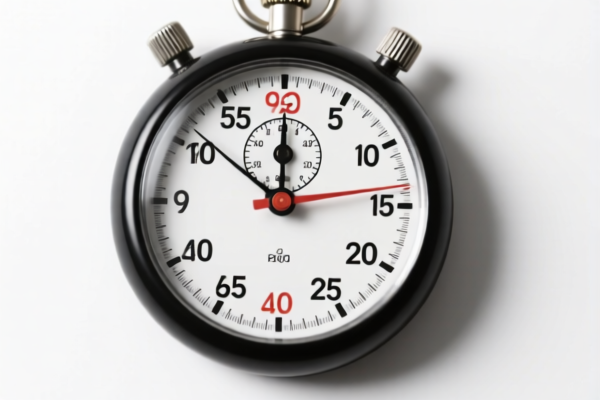
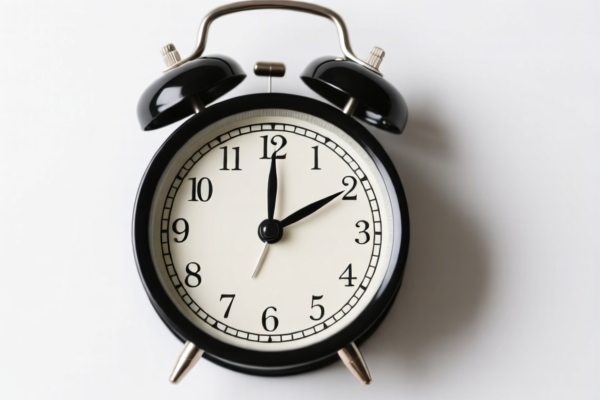
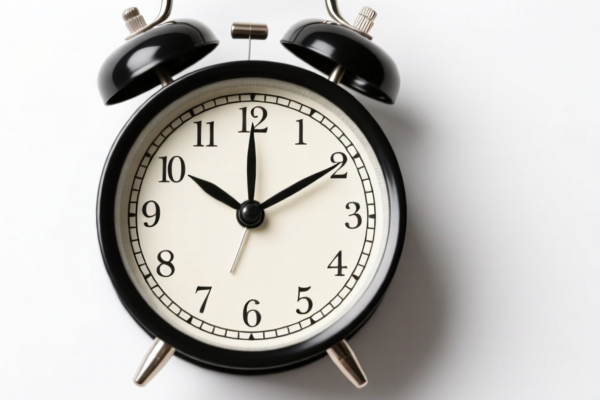
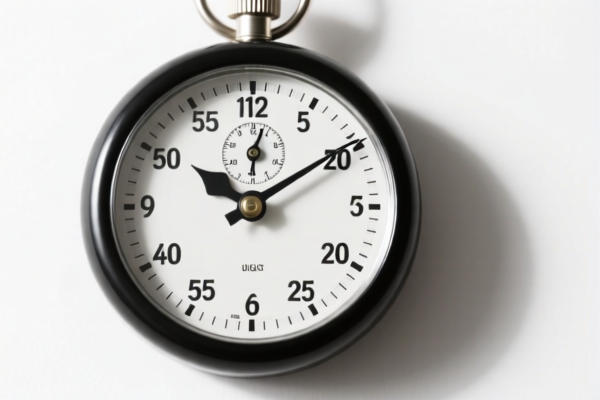
AI Analysis
⏱️ Timer 6-Piece Set (Electronic Timers)
🌐 HS Code Reference & Clearance Guide | 2026 Latest Tariff Analysis | Professional Clearance Strategy
📌 One, Product Definition & Classification: Do You Really Understand "Timers"?
A "Timer 6-piece set" typically refers to a household or industrial kit containing six identical or similar timing devices. In international trade, the classification of timers depends heavily on their specific function and type.
- Digital/Electronic Timers: Plug-in or battery-operated devices that count down or up. These are generally classified under Chapter 91 (Watches and Clocks) or Chapter 85 (Electrical Machinery) depending on complexity.
- Analog/Mechanical Timers: Often found in kitchen appliances or industrial machinery.
- Smart/Wi-Fi Timers: Connected devices that may fall under communication apparatus.
⚠️ Critical Distinction:
- If the timer is a standalone plug-in device for general household use (e.g., kitchen, garden), it is usually classified as a "Clock" under Chapter 91.
- If the timer is an integral part of a machine (e.g., a washing machine cycle timer), it is classified as a part of that machine.
- If it is a programmable logic controller (PLC) or industrial automation timer, it may fall under 8537.
For a standard "Timer 6-piece set" sold as a consumer product (likely plug-in or digital), the most common HS Codes fall under 9105 (Other Clocks).
📦 Two, HS Code Classification Details (2026 Latest Tariff Authority)
Based on the provided <DATA>, the relevant HS Codes for Timers (classified as "Other Clocks") are:
| HS Code | Product Description | Application Scenario | Key Characteristics |
|---|---|---|---|
9105.19.50.00 |
Other clocks: Alarm clocks: Other: Other: Valued over $5 each | Plug-in Digital Timers, Kitchen Timers, Desk Timers | Electronic/Digital, standalone, unit value > $5 |
9105.99.60.00 |
Other clocks: Other: Other: Other: Valued over $5 each | General Purpose Timers, Industrial Timers (non-alarm), Specialty Timers | Non-alarm function, standalone, unit value > $5 |
🔍 Key Note for "6-Piece Set":
- When importing a set, customs typically evaluates the primary value and essential character.
- If all 6 timers are identical and valued over $5 each, the individual unit value determines the classification.
- Do not classify as "Valued $5 or less" unless each individual timer is strictly under $5. Most high-quality electronic timers exceed $5/unit.
💰 Three, 2026 Latest Tariff Rate Breakdown (Including Additional Duties & Policy Surcharges)
✅ Applicable Country: United States (US)
✅ Country of Origin: China (CN)
✅ Effective Time: From November 10, 2025 (and subsequent imports)
🎯 1. 9105.19.50.00 — Other Clocks: Alarm Clocks: Other (Valued > $5)
| Item | Content |
|---|---|
| Base Tariff Rate | 23¢ each + 3.2% (Ad Valorem) |
| Section 301 Surcharge | +7.5% |
| Total Tariff | 23¢ each + 3.2% + 7.5% = 10.7% + 23¢ per unit |
| Tax Calculation | (CIF Value × 10.7%) + ($0.23 × Number of Units) |
| De Minimis Exemption | ❌ Not Eligible (Denied for this HS Code under current trade restrictions) |
| Legal Basis Path | USITC:9105.19.50.00 → Section 301: 7.5% |
📌 Explanation:
- The base duty is a mixed rate: a fixed fee per unit (23 cents) plus a percentage (3.2%).
- The Section 301 tariff adds an additional 7.5% on the CIF value for Chinese-origin goods.
- Total Effective Rate: Approximately 10.7% ad valorem plus $0.23 per timer.
- Example: For 6 timers at $10 each (Total CIF $60):
- Base Duty:$60 × 3.2% = $1.92+6 × $0.23 = $1.38→ Total Base:$3.30
- Section 301:$60 × 7.5% = $4.50
- Total Tax:$7.80(Effective rate ~13%)
🎯 2. 9105.99.60.00 — Other Clocks: Other (Valued > $5)
| Item | Content |
|---|---|
| Base Tariff Rate | 23¢ each + 3.2% (Ad Valorem) |
| Section 301 Surcharge | +7.5% |
| Total Tariff | 23¢ each + 3.2% + 7.5% = 10.7% + 23¢ per unit |
| Tax Calculation | (CIF Value × 10.7%) + ($0.23 × Number of Units) |
| De Minimis Exemption | ❌ Not Eligible |
| Legal Basis Path | USITC:9105.99.60.00 → Section 301: 7.5% |
📌 Note:
- This code is for non-alarm timers or timers where the primary function is not waking the user.
- The tariff structure is identical to9105.19.50.00.
- Misclassification between "Alarm" and "Other" can lead to audits if the product clearly has an alarm function.
🛠️ Four, Practical Clearance Advice (Best Practices to Avoid Pitfalls)
✅ 1. Essential Documentation Checklist
| Document | Required | Purpose |
|---|---|---|
| ✅ Product Specification Sheet | ✔️ | Must state: Voltage, Frequency, Timer Range, Alarm Function (Yes/No), Unit Value |
| ✅ Commercial Invoice | ✔️ | Must clearly list: "Timer, Electronic, Model XYZ, Valued at $X.XX each". Do not just write "6 Piece Set". |
| ✅ Packing List | ✔️ | Confirm quantity (6 units) and individual packaging. |
| ✅ Product Photos | ✔️ | Show the timer interface, display, and any "Alarm" indicators. |
| ✅ Declaration of Unit Value | ✔️ | Crucial to prove value > $5 to avoid incorrect classification under "Valued $5 or less" codes. |
✅ 2. Declaration Strategy
🔥 Golden Rule:
"Declare Individually, Not as a Bulk Lot. Specify Function Clearly."
| Scenario | Correct Declaration | Incorrect Declaration | Consequence |
|---|---|---|---|
| Standard Plug-in Timer | 9105.19.50.00 (if alarm) or 9105.99.60.00 |
"Kitchen Accessories" or "Gadget Set" | Misclassification, potential penalty |
| 6-Piece Set | List as 6 individual units, each valued separately. | "1 Set of 6 Timers" | Customs may undervalue or reject |
| Timer with Alarm | Explicitly state "With Alarm Function" | "Timer, No Alarm" | Risk of penalty for false declaration |
| Timer < $5 per unit | Use codes for "Valued $5 or less" | Use codes for "Valued > $5" | Incorrect tax calculation |
✅ 3. Special Considerations
| Situation | Advice |
|---|---|
| Smart/Wi-Fi Timers | If the timer connects to Wi-Fi and has Bluetooth, it may be classified under 8517 (Telecommunications), NOT 9105. Check if it has data transmission capabilities. |
| Industrial Programmable Timers | If it has complex programming capabilities, it may fall under 8537 (Boards for Control). Do not use 9105 for industrial PLCs. |
| Bulk Import (Container Load) | Ensure each unit is individually packaged or clearly separable. Customs may inspect random samples. |
| Origin Marking | Each timer must be marked "Made in China" clearly. |
🌍 Five, Global Market Comparison (2026 Latest)
| Country/Region | Recommended HS Code | Tariff Rate | Certification Requirement | Notes |
|---|---|---|---|---|
| 🇺🇸 USA | 9105.19.50.00 / 9105.99.60.00 |
23¢/ea + 10.7% | FCC (if electronic) | Section 301 applies. De minimis denied. |
| 🇨🇳 China | 9105.19.90 / 9105.99.90 |
0% - 5% | CCC (if applicable) | Low tariff for domestic or FTA partners. |
| 🇪🇺 EU | 9105.19.90 / 9105.99.90 |
0% - 4% | CE Marking | No Section 301 equivalent, but strict safety rules. |
| 🇬🇧 UK | 9105.19.90 / 9105.99.90 |
0% - 4% | UKCA Marking | Post-Brexit rules apply. |
| 🇨🇦 Canada | 9105.19.80 / 9105.99.80 |
0% (if CUSMA) | IC Certification | Free trade with US/Mexico under CUSMA. |
📌 Conclusion:
- The US market is the most costly for Chinese-made timers due to the Section 301 tariff and per-unit fee.
- Certifications are critical: In the US, FCC ID is mandatory for electronic timers. Without it, goods will be detained.
- Value Declaration: Ensure the unit value is accurately stated. If the total set is $30 but consists of 6 timers, declare each as $5.00 (or more) if applicable, to match the HS Code threshold.
📌 Six, Common Mistakes & Pitfalls (Lessons from Experience)
❌ Mistake 1: Declaring the entire 6-piece set as one item with a single HS Code without specifying unit value.
👉 Consequence: Customs may apply a different valuation method, leading to higher duties or delays.
❌ Mistake 2: Using "Valued $5 or less" codes when the timer is actually $10 each.
👉 Consequence: Seizure of goods, fines, and potential blacklisting for repeated errors.
❌ Mistake 3: Ignoring FCC Certification for electronic timers.
👉 Consequence: Goods will not be released by CBP. Return to China or destruction. Costly!
❌ Mistake 4: Claiming "Alarm Function" when the timer is purely a countdown device.
👉 Consequence: Misclassification under 9105.19 instead of 9105.99, leading to audit scrutiny.
✅ Correct Practice:
"6x Electronic Plug-in Timers, Model ABC, Voltage 110V, With Alarm Function, FCC ID: XXXXX, Made in China, Unit Value $8.00 Each"
🎯 Seven, Conclusion: Precision in Classification, Savings in Cost!
🎯 Remember:
🔹 "Timers are Clocks: Check the Alarm!"
🔹 "Unit Value > $5: Use 9105 Codes!"
🔹 "FCC is Mandatory: Don't Forget It!"
🔹 "Declare Individually: Avoid Bulk Errors!"
📌 Pro Tip:
If your timers are smart/Wi-Fi enabled, consider HS Code 8517.62 (Machines for Data Transmission) which may have different tariff implications. Consult a customs broker for smart devices.
📣 Immediate Action:
📞 Verify FCC ID for all electronic timers.
📝 Declare Unit Value Clearly on the Commercial Invoice.
🚀 Ensure Proper Origin Marking to avoid penalties.
✨ Professional Customs Clearance Starts with Accurate Classification!
💼 Every Cent Saved is a Cent Earned!
Customer Reviews
About HS Code Classification
The Harmonized System (HS) is an internationally standardized nomenclature developed by the World Customs Organization (WCO) to classify traded products. Over 200 countries use the HS system as the basis for customs tariffs, trade statistics, and import/export regulations.
Each HS code follows a hierarchical structure:
- Chapter (2 digits) — Broad category of goods (e.g., Chapter 84: Machinery and Mechanical Appliances)
- Heading (4 digits) — More specific grouping within the chapter
- Subheading (6 digits) — Internationally standardized breakdown, used by all WCO member countries
- National subdivisions (8-10 digits) — Country-specific extensions for further classification, such as US HTSUS 10-digit codes
Correct HS code classification is essential for smooth customs clearance, accurate duty payment, and compliance with trade regulations. Misclassification can lead to customs delays, overpayment of duties, or penalties.
When importing from CN to US, the applicable tariff rates may include:
- Most-Favored-Nation (MFN) rate — The standard duty rate applied to WTO members
- General rate — Applied to countries without trade agreements
- Trade remedy duties — Additional tariffs such as Section 301 (anti-dumping), Section 232 (national security), or countervailing duties
The information provided on this page is for reference purposes only. For official classification, please consult with your local customs authority or a licensed customs broker.