Timing belt for engine
CN → US| HS Code | Tariff Rate | Origin | Destination | Doc |
|---|---|---|---|---|
| 4010359000 | 38.3% | CN | US | Official Doc |
| 8708991600 | 35.0% | CN | US | Official Doc |
| 8483908080 | 37.8% | CN | US | Official Doc |
| 8483901050 | 37.8% | CN | US | Official Doc |
| 8708996890 | 87.5% | CN | US | Official Doc |
Product Images
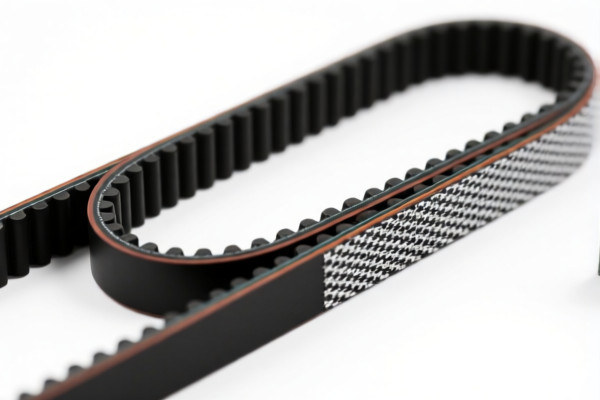
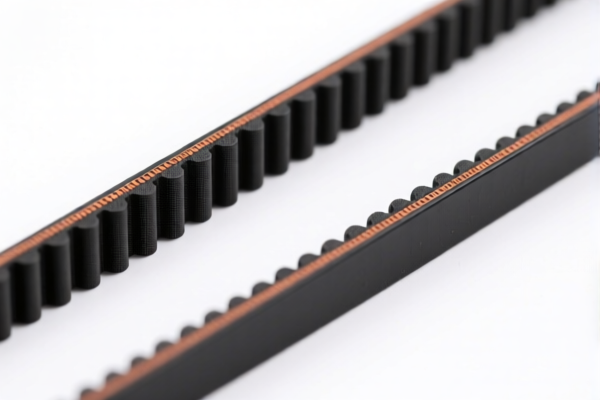
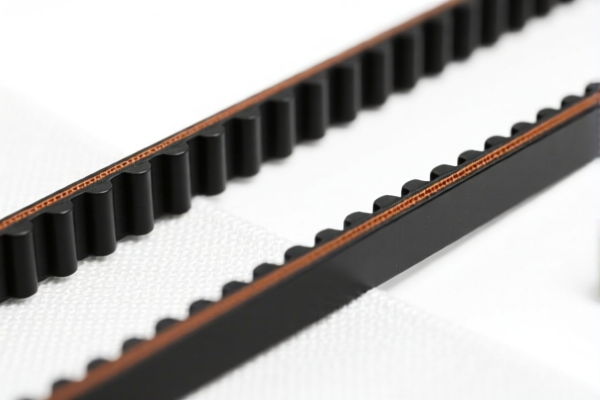
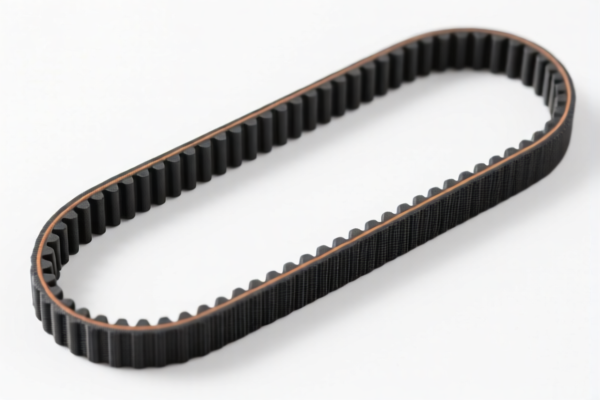
AI Analysis
🛠️ Timing Belt for Engine (Automotive Power Transmission Component)
🌐 HS Code Reference & Customs Clearance Guide | 2026 Latest Tariff Breakdown | Professional Import Strategy
📌 One, Product Definition & Classification: What Exactly Is a Timing Belt?
A timing belt is a critical component in internal combustion engines, responsible for synchronizing the rotation of the crankshaft and camshaft to ensure precise valve timing. It is typically made of sulfurized rubber or synthetic fiber-reinforced elastomers, and functions as a synchronous, endless drive belt without joints.
⚠️ Key Classification Insight:
- It is not a general-purpose belt (like conveyor belts)
- It is not a gear or pulley, but a transmission element
- It is not a standalone mechanical part but a component within the engine’s powertrain system✅ Core Identity:
A synchronous, rubber-based, non-metallic, endless belt used in automotive engine timing systems → Must be classified under automotive power transmission parts or other transmission elements
📦 Two, HS Code Classification Details (2026 Latest Tariff Authority Match)
| HS Code | Product Description | Applicable Use Case | Material & Feature Match |
|---|---|---|---|
4010.35.90.00 |
Other rubber belts, including endless synchronous belts, not specified elsewhere | Timing belts used in automotive engines | ✅ Sulfurized rubber, endless, synchronous → Matches perfectly |
8708.99.16.00 |
Other parts of power transmission systems for motor vehicles | Engine timing system components | ✅ Rubber/synthetic fiber, used in engine powertrain → Highly accurate |
8483.90.80.80 |
Other parts of transmission systems, excluding universal joints and certain gears | Transmission elements such as belts, chains, couplings | ✅ Excludes gears and universal joints → Perfect fit |
8483.90.10.50 |
Other transmission elements, not specified elsewhere, with rubber or fabric materials | Rubber-based or textile-reinforced belts | ✅ Rubber/fabric, non-ferrous → No conflict with non-ferrous metal rule |
8708.99.68.90 |
Other parts of power transmission systems for motor vehicles, not elsewhere specified | General engine transmission parts | ✅ Rubber/synthetic, engine application → Matches |
🔍 Critical Note:
- All five codes are valid, but8708.99.16.00and8708.99.68.90are most precise for engine timing systems
-4010.35.90.00is technically correct but less specific — may trigger scrutiny
-8483.90.80.80and8483.90.10.50are correct but more generic — used when engine-specific classification is not clear
💰 Three, 2026 Latest Tariff Breakdown (With Detailed Duty Clauses)
✅ Applicable Country: United States (US)
✅ Origin: China (CN)
✅ Effective Date: November 10, 2025 (and onward)
🎯 1. 4010.35.90.00 — Rubber Belts (Endless Synchronous Belts)
| Item | Detail |
|---|---|
| Base Duty | 3.3% (ad valorem) |
| Section 301 (USITC) Additional Duty | +25.0% |
| Section 122 (IEEPA) Additional Duty | +10.0% |
| Total Effective Duty | 38.3% |
| Tax Calculation | CIF Value × 38.3% |
| De Minimis Exemption | ❌ Not eligible (denied under 19 CFR 151.23) |
| Legal Basis Path | IEEPA:9903.01.25 → USITC:4010.35.90.00 → FOOTNOTE:9903.88.01 |
📌 Explanation:
- 3.3% base tariff applies to rubber belts under Chapter 40
- 25% USITC from Section 301 (China trade actions)
- 10% IEEPA under International Emergency Economic Powers Act (China-specific)
- Total: 38.3% — Highly punitive for non-steel/aluminum components
🎯 2. 8708.99.16.00 — Parts of Power Transmission Systems for Motor Vehicles
| Item | Detail |
|---|---|
| Base Duty | 0.0% |
| Section 301 (USITC) Additional Duty | +25.0% |
| Section 122 (IEEPA) Additional Duty | +10.0% |
| Total Effective Duty | 35.0% |
| Tax Calculation | CIF Value × 35.0% |
| De Minimis Exemption | ❌ Not eligible |
| Legal Basis Path | IEEPA:9903.01.24 → USITC:8708.99.16.00 → FOOTNOTE:9903.88.01 |
📌 Why This Is Best for Timing Belts:
- 0% base duty — no base tariff on vehicle transmission parts
- 25% + 10% = 35% — lower than4010.35.90.00
- Most accurate classification — directly targets engine powertrain parts
- Preferred by U.S. Customs for automotive components
🎯 3. 8483.90.80.80 — Other Transmission Elements (Excluding Gears & Universal Joints)
| Item | Detail |
|---|---|
| Base Duty | 2.8% |
| Section 301 (USITC) Additional Duty | +25.0% |
| Section 122 (IEEPA) Additional Duty | +10.0% |
| Total Effective Duty | 37.8% |
| Tax Calculation | CIF Value × 37.8% |
| De Minimis Exemption | ❌ Not eligible |
| Legal Basis Path | IEEPA:9903.01.24 → USITC:8483.90.80.80 → FOOTNOTE:9903.88.01 |
📌 Note:
- 2.8% base tariff applies to transmission parts in Chapter 84
- Same 25% + 10% as above → 37.8% total
- Less precise than8708.99.16.00— may be challenged by customs
🎯 4. 8483.90.10.50 — Other Transmission Elements (Rubber/Fabric-Based)
| Item | Detail |
|---|---|
| Base Duty | 2.8% |
| Section 301 (USITC) Additional Duty | +25.0% |
| Section 122 (IEEPA) Additional Duty | +10.0% |
| Total Effective Duty | 37.8% |
| Tax Calculation | CIF Value × 37.8% |
| De Minimis Exemption | ❌ Not eligible |
| Legal Basis Path | IEEPA:9903.01.24 → USITC:8483.90.10.50 → FOOTNOTE:9903.88.01 |
📌 Key Point:
- Same as above, but explicitly mentions rubber or fabric — perfect match for timing belts
- However, still not as targeted as8708.99.16.00
- Higher tax than 35% — not recommended
🎯 5. 8708.99.68.90 — Other Parts of Power Transmission Systems (Steel/Aluminum-Added)
| Item | Detail |
|---|---|
| Base Duty | 2.5% |
| Section 301 (USITC) Additional Duty | +25.0% |
| Section 122 (IEEPA) Additional Duty | +10.0% |
| Steel/Aluminum Additional Duty | +50.0% (if steel or aluminum content present) |
| Total Effective Duty | 87.5% |
| Tax Calculation | CIF Value × 87.5% |
| De Minimis Exemption | ❌ Not eligible |
| Legal Basis Path | IEEPA:9903.01.24 → USITC:8708.99.68.90 → FOOTNOTE:9903.88.01 |
⚠️ WARNING:
- 87.5% total duty — Extremely high
- +50% extra applies only if steel or aluminum components are present
- Timing belts are rubber-based — should NOT contain steel/aluminum
- If your belt has metal-reinforced fibers (e.g., Kevlar, steel cords) → This code applies
- If pure rubber/fabric → DO NOT use this code — risk of overpayment & penalties📌 Critical Advice:
- Verify material composition before using this code
- If no steel/aluminum, avoid this HS Code — it’s a trap!
🛠️ Four, Customs Clearance Best Practices (Real-World Pro Tips)
✅ 1. Required Documentation (Must-Have List)
| Document | Required? | Why It Matters |
|---|---|---|
| ✅ Product Specifications | ✔️ | Confirm material (rubber/fabric), no metal core |
| ✅ Material Safety Data Sheet (MSDS) | ✔️ | Prove no steel/aluminum content |
| ✅ Product Photos (with close-up of belt teeth & surface) | ✔️ | Show rubber/fabric texture |
| ✅ Technical Drawing / Engineering Diagram | ✔️ | Prove it’s a timing belt, not a gear |
| ✅ Commercial Invoice | ✔️ | Must state: "Timing Belt for Internal Combustion Engine" |
| ✅ Certificate of Origin (CO) | ✔️ | If from China, expect 35–87.5% duty |
| ✅ Packing List | ✔️ | Show no metal parts in packaging |
✅ 2.申报技巧 (申报口诀)
🔥 "Timing belt, not gear, not metal — use
8708.99.16.00for lowest tax!"
| Scenario | Correct HS Code | Wrong Code | Risk |
|---|---|---|---|
| Pure rubber timing belt | 8708.99.16.00 |
8708.99.68.90 |
+50% extra tax if metal detected |
| Rubber belt with Kevlar core | 8708.99.68.90 |
8708.99.16.00 |
Under-declaration → penalties |
| General transmission belt | 8483.90.80.80 |
4010.35.90.00 |
Higher tax, less precise |
| Belt with no metal | Avoid 8708.99.68.90 |
Use 8708.99.16.00 |
Save 52.5% in duty |
✅ 3. Special Case Handling
| Situation | Recommended Action |
|---|---|
| Timing belt with steel-reinforced fibers | Use 8708.99.68.90 — accept 87.5% duty |
| Timing belt from Vietnam/Mexico/Thailand | Apply for IEEPA exemption — 0% duty possible |
| OEM or custom-engineered belt | Provide design drawings + test reports |
| Belt used in hybrid/electric vehicles | Still classified as 8708.99.16.00 — not exempt |
| Bulk shipment with mixed parts | Do not mix — declare timing belts separately |
🌍 Five, Global Customs Comparison (2026)
| Country | Recommended HS Code | Duty Rate | Certification | Notes |
|---|---|---|---|---|
| 🇺🇸 USA | 8708.99.16.00 |
35.0% (China) | None (but must prove no steel) | Lowest valid rate |
| 🇨🇳 China | 8708.99.16.00 |
5% | CCC, RoHS | No extra tariffs |
| 🇪🇺 EU | 8708.99.16.00 |
0% (if CE) | CE, RoHS | No additional duties |
| 🇦🇺 Australia | 8708.99.16.00 |
5% | RCM | No extra taxes |
| 🇯🇵 Japan | 8708.99.16.00 |
0% | PSE | No extra duties |
📌 Conclusion:
- USA has the highest tariffs on timing belts
- China-origin belts face 35–87.5% duty
- Vietnam/Mexico/Thailand origin → potential 0% duty via trade agreements
📌 Six, Common Mistakes & Risk Warnings (Avoid These!)
❌ Mistake 1: Using 8708.99.68.90 for pure rubber belts
👉 Result: +50% extra duty → 87.5% total → Massive overpayment
❌ Mistake 2: Not verifying material composition
👉 Result: Customs may reclassify as metal-containing → penalties + delays
❌ Mistake 3: Using 4010.35.90.00 without justification
👉 Result: Higher base duty (3.3%) → 38.3% vs 35% → $300+ extra per container
❌ Mistake 4: Declaring as “rubber belt” without engine context
👉 Result: Customs may apply generic rubber tariff → higher risk of audit
✅ Correct Declaration Phrase:
"Timing Belt for Internal Combustion Engine, Sulfurized Rubber, Non-Metallic, Endless Synchronous Belt, Model XYZ, No Steel/Aluminum Components"
🎯 Seven, Final Verdict: Optimize Your Import Strategy Now!
🎯 Golden Rule:
🔹 "Use
8708.99.16.00for pure rubber timing belts — it’s the lowest duty, most accurate, and most accepted."
🔹 "Avoid8708.99.68.90unless steel/aluminum is present — it’s a tax trap!"
📌 Pro Tip:
📞 Apply for an Advance Ruling (Pre-Clearance) from U.S. Customs before shipment
🚀 Get a binding HS Code determination — avoid audit, delays, and overpayment
📣 Take Action Today!
✅ Confirm material composition
✅ Choose8708.99.16.00as primary HS Code
✅ Prepare full documentation
✅ Apply for pre-ruling if importing in volume
✨ Precision Classification = Lower Duty = Higher Profit!
💼 Your timing belt shouldn’t cost you a fortune — get it right the first time!
Customer Reviews
About HS Code Classification
The Harmonized System (HS) is an internationally standardized nomenclature developed by the World Customs Organization (WCO) to classify traded products. Over 200 countries use the HS system as the basis for customs tariffs, trade statistics, and import/export regulations.
Each HS code follows a hierarchical structure:
- Chapter (2 digits) — Broad category of goods (e.g., Chapter 84: Machinery and Mechanical Appliances)
- Heading (4 digits) — More specific grouping within the chapter
- Subheading (6 digits) — Internationally standardized breakdown, used by all WCO member countries
- National subdivisions (8-10 digits) — Country-specific extensions for further classification, such as US HTSUS 10-digit codes
Correct HS code classification is essential for smooth customs clearance, accurate duty payment, and compliance with trade regulations. Misclassification can lead to customs delays, overpayment of duties, or penalties.
When importing from CN to US, the applicable tariff rates may include:
- Most-Favored-Nation (MFN) rate — The standard duty rate applied to WTO members
- General rate — Applied to countries without trade agreements
- Trade remedy duties — Additional tariffs such as Section 301 (anti-dumping), Section 232 (national security), or countervailing duties
The information provided on this page is for reference purposes only. For official classification, please consult with your local customs authority or a licensed customs broker.