Tin Harmonica Giraffe
CN → US| HS Code | Tariff Rate | Origin | Destination | Doc |
|---|---|---|---|---|
| 8306290000 | 10.0% | CN | US | Official Doc |
| 8306100000 | 15.8% | CN | US | Official Doc |
| 7616995190 | 87.5% | CN | US | Official Doc |
| 7616995175 | 37.5% | CN | US | Official Doc |
| 9205901900 | 17.5% | CN | US | Official Doc |
| 9205901800 | 12.6% | CN | US | Official Doc |
Product Images
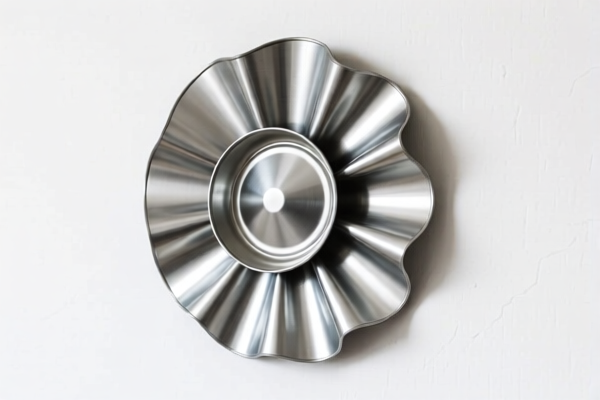
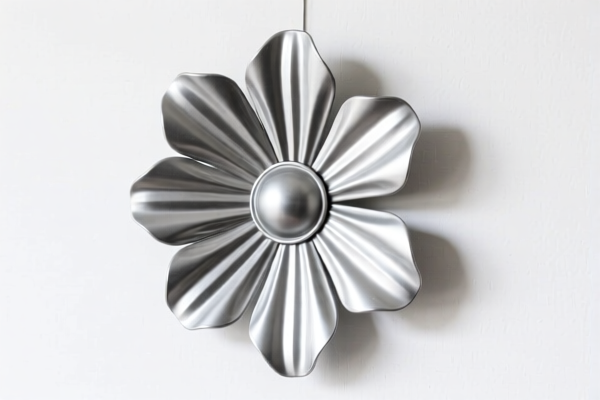
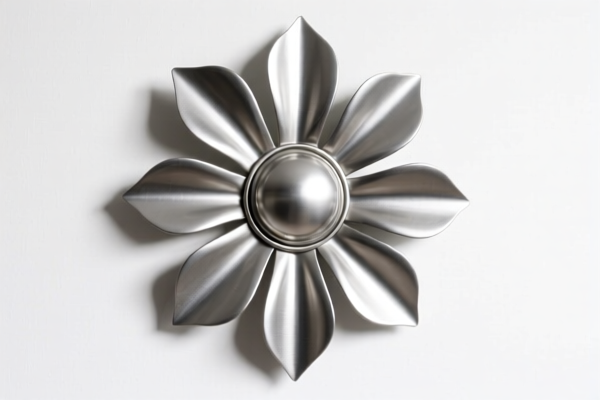
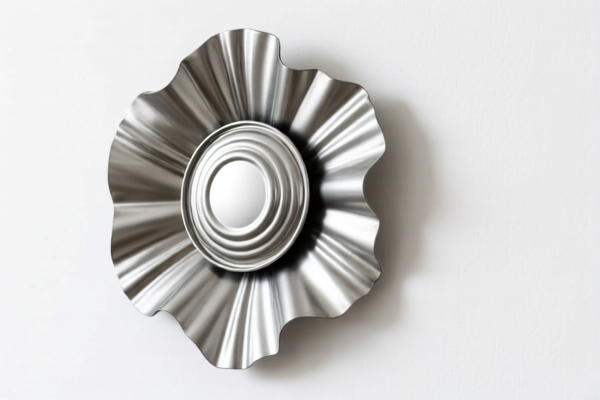
AI Analysis
🎷🦒 Tin Harmonica Giraffe (Wind Musical Instruments & Ornamental Statuettes)
🌐 HS Code Reference & Customs Clearance Guide | 2026 Latest Tariff Analysis | Professional Strategy
📌 One: Product Definition & Classification: Is it a Toy, a Musical Instrument, or Decor?
The "Tin Harmonica Giraffe" is a hybrid product that poses a significant classification challenge. In international trade, the distinction between a musical instrument and an ornamental item dictates the HS Code and, crucially, the tax burden.
- Musical Instrument Perspective: If the item is designed to be played and produces sound via airflow (breath), it falls under Chapter 92 (Musical Instruments). Specifically, harmonicas are "mouth organs."
- Ornamental Perspective: If the item is primarily for display, cannot produce clear musical tones, or is a "gag gift" with negligible sound quality, it may fall under Chapter 83 (Miscellaneous Articles of Base Metal) as statuettes or ornaments.
⚠️ Critical Distinction Point:
- If it plays music (even poorly) and is marketed as a harmonica → Classify under 9205.90...
- If it is strictly decorative or a non-functional toy → Classify under 8306.29.00.00
- Note: Customs often scrutinize "toy instruments." If it has functional reeds, it is almost always classified as a musical instrument.
📦 Two: HS Code Classification Details (Based on Provided Data)
The provided data contains specific entries for aluminum articles, base metal ornaments, bells, and musical instruments. We must map the "Tin Harmonica Giraffe" to the most accurate codes from the <DATA> list.
| HS Code | Product Description | Applicability to "Giraffe" | Reasoning |
|---|---|---|---|
9205.90.19.00 |
Wind musical instruments: Mouth organs: Mouth organs | ✅ Highly Likely | If the giraffe is a functional harmonica (tin body, metal reeds, breath-operated), it falls here. "Tin" is a base metal often classified under this umbrella for mouth organs. |
9205.90.18.00 |
Wind musical instruments: Other: Accordions and similar instruments... Accordions | ❌ Unlikely | Harmonicas are not accordions. This code is for bellows-driven instruments. |
8306.29.00.00 |
Bells, gongs... statuettes and other ornaments, of base metal... Other | ⚠️ Possible (Non-Functional) | If the giraffe is purely decorative (e.g., a wind chime that doesn't produce musical notes, or a statue with no functional reeds), it goes here. |
8306.10.00.00 |
Bells, gongs and the like, nonelectric, of base metal... | ❌ Unlikely | Unless the giraffe is designed specifically as a "gong" or "bell" and sold as such, this is less accurate than the musical instrument or ornament codes. |
7616.99.51.90 |
Other articles of aluminum: Other | ❌ Low Probability | Only if the item is made primarily of aluminum (not tin) and is neither a musical instrument nor a standard ornament (e.g., a structural part). "Tin" harmonicas are usually steel or alloy, not pure aluminum articles. |
7616.99.51.75 |
Other articles of aluminum: Articles of wire | ❌ Irrelevant | Not applicable to a shaped giraffe object. |
🔍 Key Insight:
- The highest priority is9205.90.19.00if it functions as a harmonica.
- The backup is8306.29.00.00if it is deemed a non-musical ornament.
💰 Three: 2026 Latest Tariff Rate Breakdown (Detailed Tax Analysis)
✅ Applicable Country: USA (Based on tariff structure in data)
✅ Origin: China (CN)
✅ Effective Date: Current rates apply
🎯 1. 9205.90.19.00 —— Wind Musical Instruments: Mouth Organs (Functional Harmonica)
This is the most likely classification for a playing harmonica.
| Item | Content |
|---|---|
| Base Tariff | 0.0% (ad valorem) |
| Additional Tariff (Section 301/Other) | 7.5% |
| Total Tariff Rate | 7.5% |
| Tax Detail | 基础关税: 0.0%, 加征关税: 7.5% |
| Legal Basis | Harmonized Tariff Schedule (HTSUS) Chapter 92 |
📌 Explanation:
- Musical instruments often have low base tariffs to encourage import.
- The 7.5% additional tariff is likely due to specific trade measures (e.g., Section 301 or other retaliatory tariffs on Chinese goods).
- Cost Impact: For a $100 harmonica, the tax is $7.50. This is relatively low compared to electronics or aluminum articles.
🎯 2. 8306.29.00.00 —— Statuettes and Other Ornaments, of Base Metal (Non-Functional/Decorative)
If Customs deems the giraffe a non-functional ornament.
| Item | Content |
|---|---|
| Base Tariff | 0.0% (ad valorem) |
| Additional Tariff | 0.0% |
| Total Tariff Rate | 0.0% |
| Tax Detail | 基础关税: 0.0%, 加征关税: 0.0% |
| Legal Basis | HTSUS Chapter 83 |
📌 Explanation:
- Base metal ornaments often enjoy duty-free entry under these specific codes.
- Strategic Note: If the product can be legitimately argued as a "decorative statue" rather than a "musical instrument," the tariff drops to 0%. However, this requires strong evidence that it does not function as a harmonica.
🎯 3. 8306.10.00.00 —— Bells, Gongs, and the Like (If Misclassified or Specific Design)
| Item | Content |
|---|---|
| Base Tariff | 5.8% |
| Additional Tariff | 0.0% |
| Total Tariff Rate | 5.8% |
| Tax Detail | 基础关税: 5.8%, 加征关税: 0.0% |
| Legal Basis | HTSUS Chapter 83 |
📌 Explanation:
- If the giraffe is shaped like a gong or is marketed as a "wind chime/gong," this code applies.
- Cost Impact: $5.80 per $100. Higher than the musical instrument rate (7.5% vs 5.8%? Wait, 7.5% > 5.8%). Actually, the musical instrument is higher here due to the 7.5% add-on.
🚫 Excluded Codes (Why not Aluminum?)
7616.99.51.90(77.5% Tax):- Total Tax: 77.5% (2.5% Base + 25% Section 301 + 50% Steel/Aluminum Add-on).
-
Why Not?: "Tin Harmonica" is not typically classified as a general "article of aluminum." Unless it is explicitly made of aluminum and has no musical function, this high-risk code should be avoided. Misclassification here could lead to massive penalties.
-
7616.99.51.75(27.5% Tax): - Total Tax: 27.5% (2.5% Base + 25% Section 301).
- Why Not?: This is for "articles of wire." A giraffe statue/harmonica is not wire.
🛠️ Four: Customs Clearance Practical Advice (Avoid Pitfalls)
✅ 1. Preparation Checklist (Essential Documents)
| Document | Required? | Description |
|---|---|---|
| Product Photos | ✔️ Mandatory | Show the giraffe from all angles. Highlight reeds/mouthpiece if it's a harmonica. |
| Functionality Statement | ✔️ Critical | A signed statement from the manufacturer: "This item is a functional musical instrument (harmonica) capable of producing distinct musical tones." OR "This item is a decorative statue and does not produce musical tones." |
| Bill of Materials (BOM) | ✔️ Recommended | List materials (e.g., Tinplate, Steel Reeds, Paint). Helps confirm Chapter 92 vs 83. |
| Commercial Invoice | ✔️ Mandatory | Must clearly describe the item. Do NOT just write "Giraffe Toy." Write: "Tinplate Harmonica in Shape of Giraffe - Musical Instrument" or "Decorative Base Metal Giraffe Statue - Non-Functional." |
| Customs Ruling (Optional) | ✔️ Recommended | If the volume is high, apply for an Advance Ruling from CBP to confirm if it's 9205 or 8306. |
✅ 2. Declaration Strategy (Key Mnemonic)
🔥 "Function Defines Code: Play = Music, Look = Ornament!"
| Scenario | Correct HS Code | Risk if Wrong |
|---|---|---|
| Plays Sound | 9205.90.19.00 (7.5%) |
If declared as Ornament (0%), Customs may audit, assess back-taxes + penalties for misclassification. |
| No Sound / Decor Only | 8306.29.00.00 (0%) |
If declared as Musical Instrument, you overpay tax. No penalty, but lost profit. |
| Mixed (Toy Instrument) | 9205.90.19.00 (7.5%) |
Never declare as Aluminum Article (7616...) unless it's actually aluminum. High risk of 77.5% penalty. |
✅ 3. Special Cases
| Situation | Handling Advice |
|---|---|
| Packaging as "Toy" | Even if boxed as a toy, if it has functional reeds, Customs classifies it as a Musical Instrument (9205). Do not rely on toy packaging for classification. |
| Material Confusion | "Tin" is often steel coated with tin. Ensure the BOM reflects this. If it is Aluminum, you risk the 7616 codes. Confirm material: Steel/Tinplate = 9205/8306; Aluminum = 7616 (Risky). |
| Gift Sets | If the harmonica is part of a gift set with other items, declare separately to avoid mixed classification issues. |
🌍 Five: Global Market Comparison (2026 Snapshot)
| Country/Region | Recommended HS Code | Tariff Rate | Notes |
|---|---|---|---|
| 🇺🇸 USA | 9205.90.19.00 |
7.5% | High risk of scrutiny if misclassified as decoration. |
| 🇪🇺 EU | 9205.90 (8-digit) |
0% - 5% | Often lower tariffs for musical instruments. No Section 301 equivalent. |
| 🇨🇳 China | 9205.90.19 |
0% - 2% | Import duties may be low, but VAT applies. |
| 🇬🇧 UK | 9205.90 |
0% | Post-Brexit tariffs may be favorable for musical instruments. |
📌 Conclusion:
- The US market has the highest complexity due to the 7.5% additional tariff vs 0% for ornaments.
- Clear labeling is vital. If it’s a harmonica, pay the 7.5%. If it’s a statue, declare it as such (0%) but ensure it has no functional reeds.
📌 Six: Common Errors & Pitfalls (Lessons Learned)
❌ Error 1: Declaring a functional harmonica as "Decorative Ornament" (8306.29.00.00) to save 7.5%.
👉 Consequence: Customs inspection finds reeds. Back-taxes + 2x penalty.
✅ Fix: Be honest. 7.5% is manageable.
❌ Error 2: Declaring a tin harmonica as "Aluminum Article" (7616.99.51.90).
👉 Consequence: Tax jumps to 77.5%. Immediate rejection or massive duty bill.
✅ Fix: Verify material. "Tin" is not "Aluminum" in HS codes. Use Chapter 92 or 83.
❌ Error 3: Vague Description "Giraffe Toy."
👉 Consequence: Customs may assign their own code, potentially choosing the highest tariff one (7616...).
✅ Fix: Use precise language: "Metal Harmonica, Giraffe Shaped, Functional, Model XYZ."
🎯 Seven: Conclusion: Strategic Classification for Maximum Profit
🎯 Key Takeaway:
🔹 If it Sings:
9205.90.19.00(7.5% Tax)
🔹 If it Sits:8306.29.00.00(0% Tax)
🔹 NEVER:7616(77.5% Tax Trap!)📌 Pro Tip:
If the harmonica has very poor sound quality, consult a customs broker to see if it can be classified as a "Novelty Ornament" under8306.29.00.00. Some brokers argue that items failing to meet musical standards are decorations. However, this is a gray area and requires robust evidence.
📣 Immediate Action:
📞 Audit Your Product: Does it play?
📄 Update Invoice: "Functional Harmonica" vs "Decorative Statue"
📉 Calculate Cost: 7.5% vs 0% Impact on Margins
✨ Accurate Classification Saves 7.5% in Duties and Millions in Penalties!
💼 Your Giraffe Harmonica, Cleared Smoothly.
Customer Reviews
About HS Code Classification
The Harmonized System (HS) is an internationally standardized nomenclature developed by the World Customs Organization (WCO) to classify traded products. Over 200 countries use the HS system as the basis for customs tariffs, trade statistics, and import/export regulations.
Each HS code follows a hierarchical structure:
- Chapter (2 digits) — Broad category of goods (e.g., Chapter 84: Machinery and Mechanical Appliances)
- Heading (4 digits) — More specific grouping within the chapter
- Subheading (6 digits) — Internationally standardized breakdown, used by all WCO member countries
- National subdivisions (8-10 digits) — Country-specific extensions for further classification, such as US HTSUS 10-digit codes
Correct HS code classification is essential for smooth customs clearance, accurate duty payment, and compliance with trade regulations. Misclassification can lead to customs delays, overpayment of duties, or penalties.
When importing from CN to US, the applicable tariff rates may include:
- Most-Favored-Nation (MFN) rate — The standard duty rate applied to WTO members
- General rate — Applied to countries without trade agreements
- Trade remedy duties — Additional tariffs such as Section 301 (anti-dumping), Section 232 (national security), or countervailing duties
The information provided on this page is for reference purposes only. For official classification, please consult with your local customs authority or a licensed customs broker.