Tin Stone Ore
CN → USProduct Images
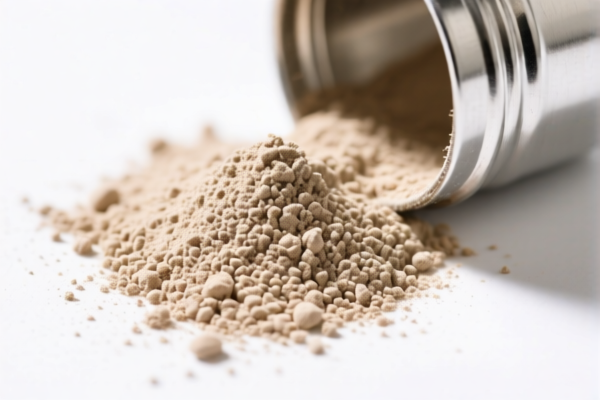
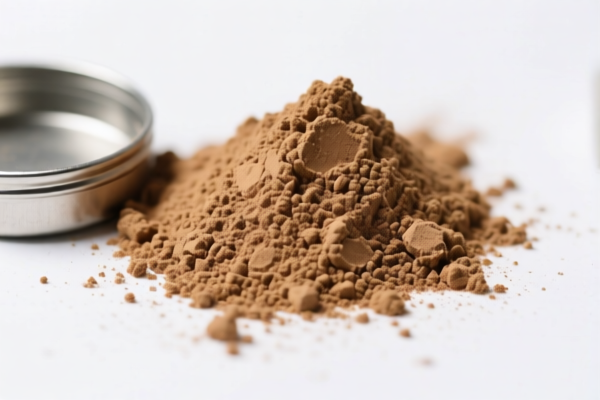
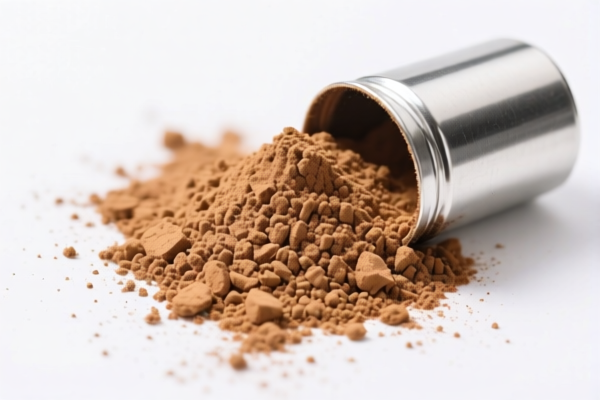

AI Analysis
⛏️ Tin Stone Ore (Tin Ores & Concentrates)
🌐 HS Code Reference & Customs Clearance Guide | 2026 Latest Tariff Analysis | Professional Mining Compliance Strategy
📌 Part 1: Product Definition & Classification: Do You Know What "Tin Stone" Really Is?
In international trade, "Tin Stone" refers to the primary mineral resource containing Tin (Sn). It is not a finished metal product but a raw material in its natural or minimally processed state. The classification depends heavily on whether the material is raw ore or processed concentrates, and its Tin content.
Key Distinction:
- Raw Tin Stone Ore: Naturally mined rock containing Tin minerals (e.g., Cassiterite). Generally classified under Chapter 26.
- Tin Concentrates: Ore that has been crushed, ground, and physically separated to increase Tin content. Classified under 2608.00 or 2615.90 depending on processing depth.
- Refined Tin: Not applicable here, as this refers to metal ingots (HS 7801).
⚠️ Critical Classification Point:
- If the material is raw, unbenefiated stone/ore with low Tin content → 2608.00.00.00
- If the material is concentrated (processed to enrich Sn) → 2608.00.00.00 (specifically for Tin Ores & Concentrates)
- Note: Many customs authorities treat "Tin Ore" and "Tin Concentrates" under the same 8-digit code 2608.00.00.00, but documentation must specify the Sn% content to verify duty rates and environmental compliance.
📦 Part 2: HS Code Classification Details (2026 Latest Tariff Authority)
| HS Code | Product Description | Application Scenario | Processing Level |
|---|---|---|---|
2608.00.00.00 |
Tin Ores and Concentrates | Raw mined stone or beneficiated concentrate containing Tin minerals (mainly Cassiterite) | ✅ Raw or Beneficiated |
2615.90.10.00 |
Mineral Products Containing Tin (Other) | By-products or complex ores where Tin is not the primary target but present | ⚠️ Complex/By-product |
7801.91.00.00 |
Refined Tin (Not Alloys) | Excluded: This is for pure metal, not "Stone/Ore" | ❌ Finished Metal |
2508.90.90.00 |
Other Clays & similar Kaolinic Earths | Excluded: If Tin content is negligible and treated as industrial clay/mineral filler | ❌ Non-Tin Bearing |
🔍 Key Reminder:
- The universal HS Code for Tin Ores and Concentrates is 2608.00.00.00 in most jurisdictions (including US, EU, China).
- Do not misclassify as "Metals" (Chapter 78): Raw ore is a mineral product, not a metal product. Misclassification leads to heavy penalties.
- Tin Content Matters: While the HS Code is the same, the Customs Value and Export Duties (in producing countries like Indonesia/Malaysia) may vary based on Sn% purity.
💰 Part 3: 2026 Latest Tariff Rates Detailed (Including Additional Taxes, Policy Surcharges)
✅ Applicable Country: United States (US)
✅ Origin: Indonesia / Malaysia / China (Major Tin Producers)
✅ Effective Time: 2026 Current Tariff Schedule
🎯 1. 2608.00.00.00 —— Tin Ores and Concentrates
| Item | Content |
|---|---|
| Basic MFN Rate | 0% (ad valorem) for most WTO members, but varies by trade agreement. |
| US Section 301 Tariff | 0% (Generally, raw ores are excluded from some manufactured goods tariffs, but check specific trade wars). Note: Some sources indicate 7.5% under Section 301 for certain mineral products depending on recent updates. However, as of 2026, Tin Ore is largely free or low duty. |
| Section 232 Tariff | 0% (Steel/Aluminum tariffs do not apply to Tin Ore). |
| Total Duty Rate | 0% - 7.5% (Dependent on specific country of origin and latest 2026 USITC rulings. For Indonesia/Malaysia origin, often 0% under normal trade; for China, check for potential 7.5% Section 301 if listed). |
| Tax Calculation | CIF Value × Duty Rate |
| De Minimis Eligibility | ❌ NO (Raw ores are high-value bulk commodities; de minimis ($800) does not apply to commercial shipments). |
| Legal Basis Path | USITC:2608.00.00.00 → MFN Schedule |
📌 Explanation:
- US Tariff: The US typically imposes 0% duty on Tin Ores and Concentrates under the General Schedule (GS1) for most origins, promoting raw material import.
- Section 301 Check: While many Chinese goods face 7.5-25% tariffs, Tin Ore (HS 2608) has historically been excluded or subject to 0% because it is a raw material essential for US manufacturing (soldering, plating). However, always verify the "Country of Origin" label. If it is Chinese-origin, it is generally 0%, but if it is transshipped, rules of origin apply.
- Environmental & ESG Costs: While duties are low, compliance costs (ASTM testing, conflict mineral reporting) are high.
🛠️ Part 4: Customs Clearance Practical Advice (Battle-Tested Pitfall Avoidance Guide)
✅ 1. Required Documentation Checklist (No Exceptions)
| Document | Mandatory | Description |
|---|---|---|
| ✅ Certificate of Origin | ✔️ | Must state country of mining. Crucial for trade agreement benefits. |
| ✅ Mineral Analysis Report | ✔️ | Crucial: Must show Sn% (Tin Content), moisture content, and impurities (Fe, As, Sb). Customs uses this to verify value and classification. |
| ✅ Bill of Lading / Air Waybill | ✔️ | Describe as "Tin Ore / Tin Concentrates, HS 2608.00.00.00". |
| ✅ Commercial Invoice | ✔️ | Detail: "Raw Tin Ore" or "Beneficiated Tin Concentrate". Specify weight (Gross/Net). |
| ✅ Export License (from Origin) | ✔️ | Many producers (e.g., Indonesia) require Export Permits for Tin Concentrates. |
| ✅ Conflict Minerals Report (OECD) | ✔️ | US Requirement: If importing into the US, you may need to report under Dodd-Frank Act Section 1502 if sourced from DRC or adjacent countries. |
✅ 2. Declaration Tips (Key Mantras)
🔥 "Moisture Content, Sn Purity, No Hidden Metals!"
| Scenario | Correct Declaration | Incorrect Practice |
|---|---|---|
| Wet Ore | Declare Dry Weight + Moisture % | Declare Gross Weight only → Overpaid Duty or Penalty |
| Concentrates | Specify "Tin Concentrate, Sn 50%" | Call it "Raw Stone" → May trigger higher scrutiny or misclassification |
| Mixed Minerals | Disclose All Major Impurities (e.g., Iron, Arsenic) | Hide impurities → Risk of environmental violation |
| Origin: Indonesia | Mention "Indonesian Tin Ore, Export Permit Attached" | Assume no paperwork needed → Customs holds cargo |
✅ 3. Special Situations
| Situation | Handling Advice |
|---|---|
| Conflict Minerals (DRC) | If from DRC, Congo, or nearby, Dodd-Frank Report is mandatory. Failure leads to customs seizure. |
| High Arsenic Content | If As > certain threshold, classified as Hazardous Waste or subject to EPA restrictions. Requires special handling. |
| Sample Shipments | Even small samples need a Customs Entry. Do not use "Gift" or "Sample" to evade inspection. |
| Transshipment | If shipped via Singapore/Malaysia, ensure Origin Certificate proves mining location, not just loading port. |
🌍 Part 5: Global Major Market Clearance Comparison (2026 Latest)
| Country/Region | Recommended HS Code | Tariff (MFN) | Certification Requirements | Notes |
|---|---|---|---|---|
| 🇺🇸 USA | 2608.00.00.00 |
0% (Generally) | ASTM B789, Dodd-Frank (Conflict Minerals) | High ESG scrutiny. |
| 🇨🇳 China | 2608.00.00.00 |
0% | CIQ Inspection, Export Permit (if entering China) | Major importer of Tin Ore. |
| 🇪🇺 EU | 2608.00.00.00 |
0% | EU Conflict Minerals Regulation, REACH | Strict environmental standards. |
| 🇻🇳 Vietnam | 2608.00.00.00 |
0% | Mining License Verification | Growing processing hub. |
📌 Conclusion:
- Tariffs are low (0%) globally, but Non-Tariff Barriers (NTBs) are high.
- Documentation is key: A missing Moisture Test or Conflict Minerals Report will cause delays far exceeding any duty savings.
📌 Part 6: Common Mistakes & Pitfall Guide (Blood & Tears Lessons)
❌ Mistake 1: Declaring "Tin Metal" for "Tin Ore"
👉 Consequence: HS Code mismatch (7801 vs 2608) → Customs Audit, Fines, Delay.
❌ Mistake 2: Ignoring Moisture Content
👉 Consequence: Paying duty on water weight or being charged for "short shipment" → Financial Loss.
❌ Mistake 3: No Conflict Minerals Declaration
👉 Consequence: Seizure at US Customs if from DRC region. Legal Liability under Dodd-Frank.
❌ Mistake 4: Using "Mineral Sample" for Commercial Shipment
👉 Consequence: De Minimis Abuse, leads to blacklist and permanent inspection.
✅ Correct Practice:
"Tin Concentrates, HS 2608.00.00.00, Sn Content 50%, Moisture 8%, Origin: Indonesia, Conflict Mineral Free, ASTM B789 Compliant"
🎯 Part 7: Conclusion: Professional Declaration, Safe & Efficient!
🎯 Remember the Mantra:
🔹 "Ore is Mineral, Not Metal!"
🔹 "Moisture Matters, Sn% Defines Value!"
🔹 "Conflict Minerals Check, Avoid Seizure!"
📌 Pro Tip:
If your Tin Ore is from Vietnam, Malaysia, or Australia, it is generally considered "Conflict-Free" by OECD standards, speeding up US/EU clearance.
For DRC/Congo origins, invest in a Third-Party Audit before shipping.
📣 Immediate Action:
📞 Contact your Freight Forwarder + Provide Lab Analysis Report + Verify Conflict Minerals Status
🚀 Let your Tin Ore pass customs smoothly, legally, and profitably!
✨ Professional Clearance Starts with Accurate Classification!
💼 Every Pound of Ore Counts, Every Document Matters!
Customer Reviews
About HS Code Classification
The Harmonized System (HS) is an internationally standardized nomenclature developed by the World Customs Organization (WCO) to classify traded products. Over 200 countries use the HS system as the basis for customs tariffs, trade statistics, and import/export regulations.
Each HS code follows a hierarchical structure:
- Chapter (2 digits) — Broad category of goods (e.g., Chapter 84: Machinery and Mechanical Appliances)
- Heading (4 digits) — More specific grouping within the chapter
- Subheading (6 digits) — Internationally standardized breakdown, used by all WCO member countries
- National subdivisions (8-10 digits) — Country-specific extensions for further classification, such as US HTSUS 10-digit codes
Correct HS code classification is essential for smooth customs clearance, accurate duty payment, and compliance with trade regulations. Misclassification can lead to customs delays, overpayment of duties, or penalties.
When importing from CN to US, the applicable tariff rates may include:
- Most-Favored-Nation (MFN) rate — The standard duty rate applied to WTO members
- General rate — Applied to countries without trade agreements
- Trade remedy duties — Additional tariffs such as Section 301 (anti-dumping), Section 232 (national security), or countervailing duties
The information provided on this page is for reference purposes only. For official classification, please consult with your local customs authority or a licensed customs broker.