Tire (HS Code 4011101060)
CN → US| HS Code | Tariff Rate | Origin | Destination | Doc |
|---|---|---|---|---|
| 4011801010 | 35.0% | CN | US | Official Doc |
| 4011205030 | 38.4% | CN | US | Official Doc |
| 4011205050 | 38.4% | CN | US | Official Doc |
| 4011101060 | 39.0% | CN | US | Official Doc |
| 4011205010 | 38.4% | CN | US | Official Doc |
Product Images
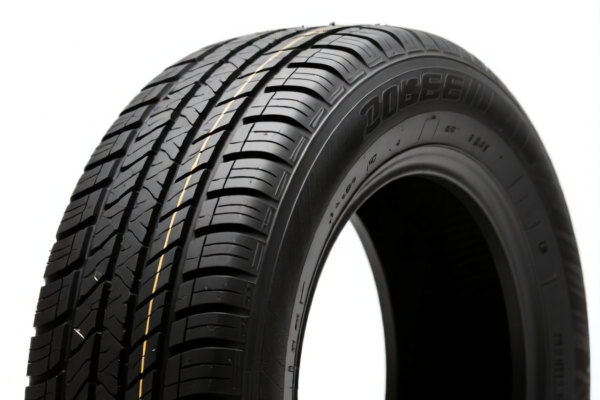
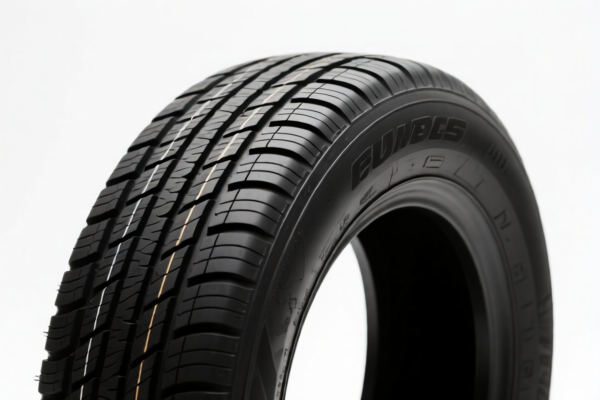
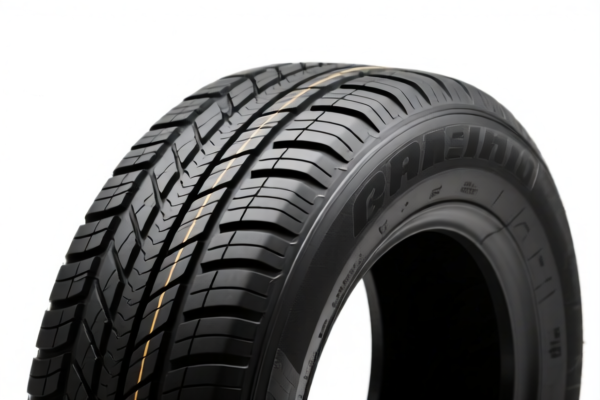
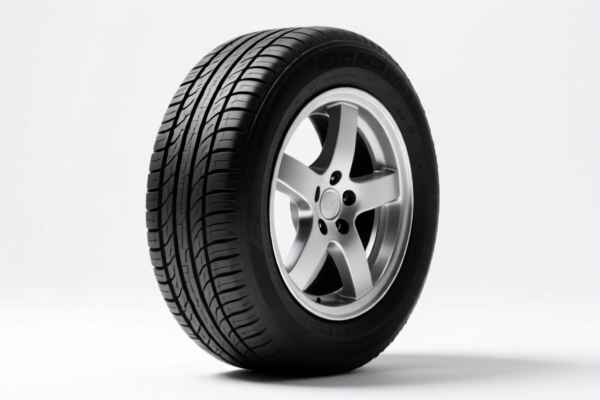
AI Analysis
🛞 Tires (Tires for Passengercars/General Vehicles)
🌐 HS Code 4011.10.10.60 / 4011.80.10.10 Reference & Customs Guide | 2026 Latest Tariff Analysis | Professional Clearance Strategy
📌 I. Product Definition & Classification: Do You Really Understand "Tires"?
Tires are critical safety components for vehicles. In international trade, they are strictly categorized by vehicle type and construction. For the HS Code 4011101060 and related codes provided in the data, the focus is on Rubber Pneumatic Tires.
The key distinction lies in the application: * Passenger Vehicles (General Vehicles): Cars, SUVs, MPVs. * Commercial Vehicles (Bus/Truck): Heavy-duty trucks, buses. * Off-Road/Special: Agricultural or industrial vehicles.
⚠️ Critical Distinction:
- If the tire is for a car/passenger vehicle, it generally falls under 4011.10 series.
- If the tire is for a bus or truck, it falls under 4011.20 series.
- Misclassification Risk: Declaring a truck tire as a car tire (4011.10) to avoid higher tariffs is a major compliance violation.
📦 II. HS Code Classification Details (Based on Provided Data)
The provided dataset contains specific entries for rubber tires. Below is the detailed breakdown of the HS Codes and their corresponding tax implications.
| HS Code | Product Description | Total Tax Rate | Tax Breakdown (Base + Surtaxes) |
|---|---|---|---|
4011.80.10.10 |
Rubber tires for general vehicles | 35.0% | Base: 0.0% Surtax: 25.0% Section 301 (122): 10% |
4011.20.50.30 |
Pneumatic tires for buses or trucks | 38.4% | Base: 3.4% Surtax: 25.0% Section 301 (122): 10% |
4011.20.50.50 |
Pneumatic tires for off-road/use | 38.4% | Base: 3.4% Surtax: 25.0% Section 301 (122): 10% |
4011101060 |
Tire (Specific Code: 4011101060) | 39.0% | Base: 4.0% Surtax: 25.0% Section 301 (122): 10% |
🔍 Key Observation:
- The code4011101060(often corresponding to 4011.10.10.60) is associated with a 39.0% total tax rate.
- Note: There is a discrepancy in the provided data where4011.80.10.10is listed at 35.0%, while4011101060is at 39.0%. For the specific input "Tire (HS Code 4011101060)", we must strictly adhere to the 39.0% rate provided in the data.
- All codes listed include USITC Section 301 Surtax (25%) and Section 122/IEEPA Additional Tariff (10%).
💰 III. 2026 Tariff Rate Breakdown for HS Code 4011101060
✅ Applicable Country: United States (US)
✅ Origin: China (CN)
✅ Status: Subject to significant retaliatory and national security tariffs.
🎯 1. 4011101060 – Rubber Tires (General/Passenger Vehicles)
| Item | Details |
|---|---|
| Base Tariff Rate | 4.0% (Ad Valorem) |
| Section 301 Surtax (25%) | +25.0% |
| Section 122 / IEEPA Tariff | +10.0% |
| Total Effective Rate | 39.0% |
| Tax Calculation | CIF Value × 39.0% |
| De Minimis Eligibility | ❌ NO (deny_de_minimis) |
| Legal Basis Path | HTSUS:4011101060 → Section301:Footnote25 → IEEPA:122 |
📌 Explanation:
- Base Tariff (4.0%): The standard Most Favored Nation (MFN) duty for rubber tires.
- Section 301 Surtax (25%): Applied to goods from China under Trade Act of 1974, Section 301. This is a flat 25% on top of the base rate.
- Section 122 / IEEPA (10%): An additional 10% tariff applied under specific national security or trade emergency provisions (often referred to as the "122 tariff" or IEEPA surcharge).
- Total Impact: The cumulative rate is 39%, making US-bound tires from China extremely cost-sensitive.
🎯 2. Comparison with Other Codes in Dataset
| HS Code | Total Tax | Why Higher/Lower? |
|---|---|---|
4011.80.10.10 |
35.0% | Lower base tariff (0%) compared to 4011101060 (4%). Still subject to 35% total surcharge. |
4011.20.50.30 |
38.4% | Higher base tariff (3.4%) + 35% surcharge. Common for Bus/Truck tires. |
4011101060 |
39.0% | Highest Base (4%) + 35% surcharge. Strictly for general/passenger vehicle tires under this specific 10-digit classification. |
🛠️ IV. Customs Clearance Practical Advice (Pitfall Avoidance Guide)
✅ 1. Documentation Checklist (Mandatory)
| Document | Required? | Notes |
|---|---|---|
| ✅ Commercial Invoice | ✔️ | Must clearly state "Rubber Tire", HS Code 4011101060, and Country of Origin (China). |
| ✅ Packing List | ✔️ | Include quantity, gross/net weight, and tire sizes (e.g., 205/55R16). |
| ✅ Manufacturer Certificate | ✔️ | Proof of origin is critical to avoid misdeclaration. |
| ✅ Tire Identification Number (TIN) | ✔️ | DOT code must be visible for US customs and DOT compliance. |
| ✅ Filing for Section 301 Exclusion? | ❌ | No Exclusion Available for standard passenger tires. |
✅ 2. Classification Strategy (Key Tips)
🔥 "Right Code, Right Rate, No Surprises!"
| Scenario | Correct HS Code | Risk if Misclassified |
|---|---|---|
| Passenger Car Tire | 4011101060 (39.0%) |
If declared as 4011.80.10.10 (35.0%), Seizure & Penalty for underpayment. |
| Truck/Bus Tire | 4011.20.50.30 (38.4%) |
If declared as passenger tire, Double Duty + Fine. |
| Tubeless vs. Tube-Type | Check specific subheading | Both may fall under 4011, but ensure exact 10-digit match. |
| Off-Road Tire | 4011.20.50.50 (38.4%) |
Cannot be classified as passenger tire. |
✅ 3. Special Handling for US Customs
- Section 301 Compliance: Ensure the entry summary explicitly mentions the 25% Section 301 surcharge. Failure to pay this results in liquidation at higher rates + penalties.
- DOT Marking: All tires must have a DOT (Department of Transportation) marking. Without it, CBP will seize the shipment regardless of tax classification.
- Anti-Dumping/Countervailing Duties (AD/CVD): Check if AD/CVD applies. The provided data does not list AD/CVD rates. However, many Chinese tires are subject to AD/CVD in addition to Section 301 tariffs. If AD/CVD applies, the total cost could exceed 100%. Action: Verify with customs broker if AD/CVD case numbers are active for this specific HS Code.
🌍 V. Global Market Comparison (2026)
| Country | HS Code | Base Tariff | Total Impact | Notes |
|---|---|---|---|---|
| 🇺🇸 USA | 4011101060 |
39.0% | Extremely High | 4% Base + 25% Sec 301 + 10% IEEPA/122. |
| 🇨🇳 China (Export) | Varies | 0-10% | Low | China exports these freely; the burden is on the importer. |
| 🇪🇺 EU | 4011.10 |
4.5% | Moderate | No Section 301. Standard MFN rate applies. |
| 🇯🇵 Japan | 4011.10 |
3.8% | Low | Competitive market, no major surcharges for China. |
📌 Conclusion:
- USA is the most expensive market due to layered tariffs.
- EU and Japan are more favorable, but still require strict compliance with safety standards (ECE, JIS).
📌 VI. Common Errors & Pitfalls (Blood & Tears Lessons)
❌ Error 1: Declaring "Tires" without specifying vehicle type.
👉 Result: CBP requests information, delays shipment, or assigns a default higher rate.
❌ Error 2: Ignoring the DOT Code.
👉 Result: Seizure. No DOT marking = No entry into the US.
❌ Error 3: Assuming Section 301 exemptions apply.
👉 Result: Penalties. Passenger tires are not exempt from Section 301 tariffs.
❌ Error 4: Misdeclaring Truck Tires as Passenger Tires to save 0.6%.
👉 Result: Audit & Fraud Charges. The difference between 4011.20 and 4011.10 is clear and auditable.
✅ Correct Action:
"Rubber Pneumatic Tires, for Passenger Vehicles, Size: 205/55R16, DOT Certified, Origin: China, HS Code: 4011101060, Subject to 39.0% Total Duty."
🎯 VII. Conclusion: Professional Clearance, Cost Control!
🎯 Key Takeaway:
🔹 HS Code
4011101060carries a 39.0% total tax burden.
🔹 Base (4%) + Section 301 (25%) + IEEPA/122 (10%) = 39%.
🔹 No de minimis exemption. No exclusion.
📌 Pro Tip:
If you are importing tires to the US, factor in the full 39% duty in your pricing model. Additionally, verify AD/CVD applicability, as that could add another 50-200% to your costs. Work with a licensed customs broker to ensure the DOT marking and Section 301 payment are correctly recorded.
📣 Immediate Action:
📞 Contact your customs broker to confirm:
1. Correct HS Code (4011101060vs4011.80.10.10)
2. AD/CVD status
3. DOT marking compliance
🚀 Avoid seizure, avoid penalties, protect your profit margin!
✨ Precision in Classification, Profitability in Clearance!
💼 Every tariff percentage counts. Plan ahead.
Customer Reviews
About HS Code Classification
The Harmonized System (HS) is an internationally standardized nomenclature developed by the World Customs Organization (WCO) to classify traded products. Over 200 countries use the HS system as the basis for customs tariffs, trade statistics, and import/export regulations.
Each HS code follows a hierarchical structure:
- Chapter (2 digits) — Broad category of goods (e.g., Chapter 84: Machinery and Mechanical Appliances)
- Heading (4 digits) — More specific grouping within the chapter
- Subheading (6 digits) — Internationally standardized breakdown, used by all WCO member countries
- National subdivisions (8-10 digits) — Country-specific extensions for further classification, such as US HTSUS 10-digit codes
Correct HS code classification is essential for smooth customs clearance, accurate duty payment, and compliance with trade regulations. Misclassification can lead to customs delays, overpayment of duties, or penalties.
When importing from CN to US, the applicable tariff rates may include:
- Most-Favored-Nation (MFN) rate — The standard duty rate applied to WTO members
- General rate — Applied to countries without trade agreements
- Trade remedy duties — Additional tariffs such as Section 301 (anti-dumping), Section 232 (national security), or countervailing duties
The information provided on this page is for reference purposes only. For official classification, please consult with your local customs authority or a licensed customs broker.