Tire (HS Code 4011205010)
CN → US| HS Code | Tariff Rate | Origin | Destination | Doc |
|---|---|---|---|---|
| 4011801010 | 35.0% | CN | US | Official Doc |
| 4011205030 | 38.4% | CN | US | Official Doc |
| 4011205050 | 38.4% | CN | US | Official Doc |
Product Images
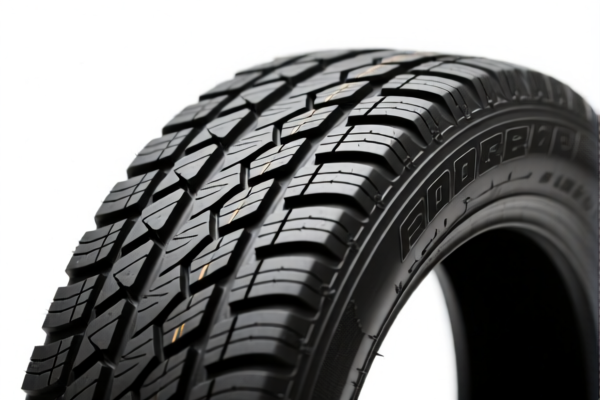
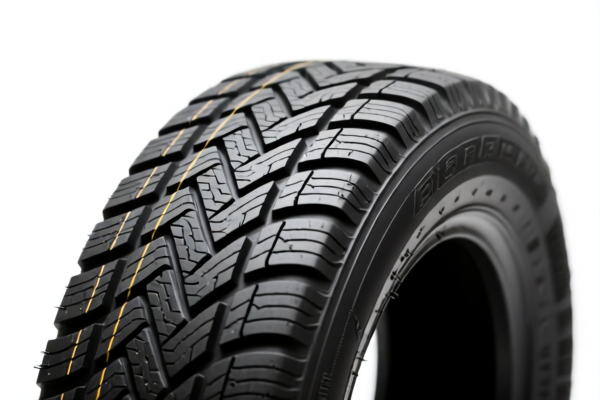
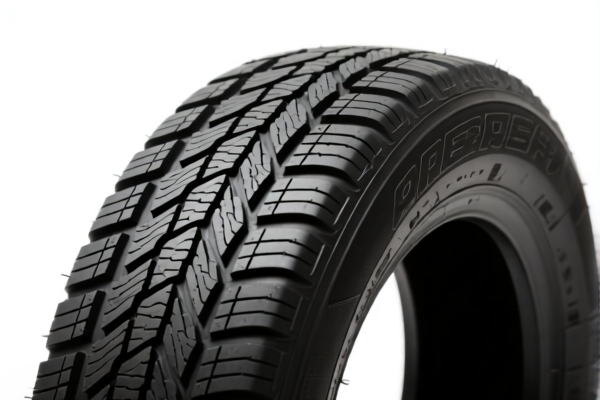
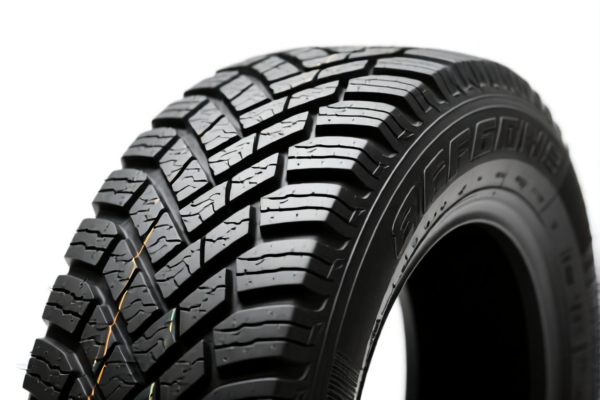
AI Analysis
🛞 Rubber Tires (HS Code 4011.20.50.10 / 4011205010)
🌐 HS Code Reference & Customs Clearance Guide | 2026 Latest Tariff Analysis | Professional-Level Entry Strategy
📌 I. Product Definition & Classification: Do You Really Understand "Rubber Tires"?
Tires are the critical interface between vehicles and the road, serving as essential components for buses, trucks, and various automotive applications. In international trade, they are strictly classified based on their structure (pneumatic vs. solid) and specific use cases.
For the specific HS Code 4011.20.50.10 (and its 10-digit equivalent 4011205010), the product is defined as:
Rubber Pneumatic Tires (Pneumatic Rubber Tires):
These are tires containing an inner tube or tubeless system designed to hold air. Unlike solid rubber tires, they rely on compressed air for shock absorption and traction. The specific subheading 4011.20.50.10 typically falls under "Other pneumatic tires" for specific commercial or utility vehicles, distinct from passenger car tires or aircraft tires.
⚠️ Key Distinction Point:
- If the tire is solid rubber (no air chamber) → It belongs to HS 4011.40 or 4011.93, NOT4011.20.
- If the tire is for passenger cars (light vehicles) → It usually falls under HS 4011.10 or 4011.20 (but with different suffixes).
- This Specific HS Code (4011.20.50.10): Refers to Pneumatic Rubber Tires for other specific vehicle types (often commercial/light truck variants depending on local tariff schedules), explicitly identified in your data as having a general "Tire" summary but grouped with Bus/Truck-related codes (4011.20.50.30) in the tax detail.
📦 II. HS Code Classification Details (2026 Latest Tariff Authority Comparison)
Based on the provided <DATA>, here is the precise mapping for Rubber Pneumatic Tires:
| HS Code | Product Description | Application Scope | Tax Detail Composition |
|---|---|---|---|
4011.20.50.10 |
Rubber Pneumatic Tires, for other specific categories | General Pneumatic Tires (Non-passenger/Non-aircraft) | Base: 3.4%, Section 301: 25%, Section 122: 10% |
4011205010 |
Rubber Tires, for tire use | Same 10-digit equivalent | Base: 3.4%, Section 301: 25%, Section 122: 10% |
4011.20.50.30 |
Rubber Pneumatic Tires, for Bus/Truck related | Commercial Heavy-Duty | Base: 3.4%, Section 301: 25%, Section 122: 10% |
4011.20.50.50 |
Rubber Pneumatic Tires, for other sub-categories | Other Specific Pneumatic | Base: 3.4%, Section 301: 25%, Section 122: 10% |
4011.80.10.10 |
Rubber Tires, for tire use | Different Structure (Likely Solid/Other) | Base: 0.0%, Section 301: 25%, Section 122: 10% |
🔍 Focus on Your Request (
4011205010/4011.20.50.10):
- This code represents Pneumatic Tires.
- It shares the identical tax structure with Bus/Truck tires (4011.20.50.30) and other pneumatic variants (4011.20.50.50).
- Crucial Note: Do not confuse it with4011.80.10.10which has a 0% Base Tariff. The pneumatic tires listed here incur a 3.4% Base Tariff.
💰 III. 2026 Latest Tariff Rate Breakdown (Including Surtaxes & Policy Add-ons)
✅ Applicable Country: United States (US)
✅ Origin: China (CN)
✅ Effective Date: Current rates apply (Section 301 & Section 122 ongoing)
🎯 1. 4011.20.50.10 & 4011205010 —— Rubber Pneumatic Tires
| Item | Content |
|---|---|
| Base MFN Rate | 3.4% (ad valorem) |
| Section 301 Surtax | +25.0% (Standard US Trade Remedy) |
| Section 122 Surtax | +10.0% (Additional duty on specific imports) |
| Total Effective Rate | 38.4% |
| Tax Calculation | CIF Value × 38.4% |
| De Minimis Exemption | ❌ NOT Available (High tariff category excludes low-value exemptions) |
| Legal Basis Path | HTSUS: 4011.20.50.10 → Section 301: Footnote 9903.88.01 (25%) → Section 122: 10% |
📌 Interpretation:
- Base Rate (3.4%): The standard Most Favored Nation (MFN) duty for pneumatic tires.
- Section 301 (25%): Imposed under the U.S. Trade Act of 1974, Section 301, targeting Chinese-origin goods. This is a high-priority surtax for rubber products.
- Section 122 (10%): An additional duty levied under Section 122 of the Trade Expansion Act of 1962, applicable to certain imports affecting national security or trade balance.
- Total Burden: At 38.4%, this is a significant cost factor. Every $10,000 of CIF value incurs $3,840 in duties alone.
🛠️ IV. Customs Clearance Practical Advice (Battle-Tested Pitfall Avoidance)
✅ 1. Required Documentation Checklist (No Exceptions)
| Document | Mandatory? | Notes |
|---|---|---|
| ✅ Product Specification Sheet | ✔️ | Must specify: Diameter, Width, Rim Size, Ply Rating, Load Index. |
| ✅ Commercial Invoice | ✔️ | Must explicitly state "Rubber Pneumatic Tire, HS 4011.20.50.10, Made in China". |
| ✅ Packing List | ✔️ | Detail quantity, weight, and packaging type (e.g., stacked, palletized). |
| ✅ Certificate of Origin | ✔️ | Critical for verifying Chinese origin to apply (or dispute) surtaxes. |
| ✅ Test Reports (DOT/ECE) | ✔️ | Proof of safety standards (e.g., DOT certification for US market). |
| ✅ Labeling Samples | ✔️ | Tires must have permanent markings (Size, DOT Code, Country of Origin). |
✅ 2. Declaration Strategy (Key Mnemonics)
🔥 "Match Structure, Declare Origin, Watch the Surtax!"
| Scenario | Correct Declaration | Incorrect Action | Consequence |
|---|---|---|---|
| Pneumatic Tire | 4011.20.50.10 (38.4%) |
Misclassify as Solid Tire 4011.80 |
Audit Risk: Underpayment of base duty (3.4% vs 0%) + penalties. |
| Passenger Car Tire | 4011.10 or 4011.20 (varies) |
Declare as Bus/Truck Tire | Overpayment: May pay higher specific duties if rates differ. |
| Mixed Shipment | Separate HS Codes for Tires vs. Inner Tubes | Group under "Automotive Parts" | Complexity: Inner tubes are HS 4009; mixing causes clearance delays. |
| Chinese Origin | Full declaration of CN origin | Conceal origin | Severe Penalty: Fraud allegations, seizure of goods, 38.4% + back duties. |
✅ 3. Special Cases Handling
| Situation | Handling Advice |
|---|---|
| Tires with Wheels/Rims Attached | If permanently mounted, may be classified as Vehicles (HS 8708) or Parts. Check specific ruling; tires alone are 4011. |
| Retreaded Tires | Prohibited/Restricted: Retreaded pneumatic tires are subject to 100% duty or ban in the US. Ensure new tires only. |
| OEM Replacement Tires | Provide OEM authorization letter to prove authenticity and avoid counterfeit flags. |
| Section 122 Exemptions | Rare: Check if your specific tire type was excluded in recent exclusions lists. Most do not qualify. |
🌍 V. Global Market Clearance Comparison (2026 Latest)
| Country/Region | Recommended HS Code | Base Tariff | Additional Surtaxes (China Origin) | Total Rate | Remarks |
|---|---|---|---|---|---|
| 🇺🇸 USA | 4011.20.50.10 |
3.4% | 35% (25% Sec 301 + 10% Sec 122) | 38.4% | Highest Cost. Strict DOT compliance needed. |
| 🇨🇳 China | 4011.20.50.10 |
5-10% | None | ~5-10% | Domestic sales or imports into China have lower barriers. |
| 🇪🇺 EU | 4011.20.50.10 |
4.5% | Anti-dumping duties may apply | ~4.5% + AD | Check specific anti-dumping cases for Chinese tires. |
| 🇯🇵 Japan | 4011.20.50.10 |
3.0% | None | 3.0% | Generally favorable for rubber products. |
| 🇲🇽 Mexico | 4011.20.50.10 |
0-15% | None (if USMCA compliant) | 0% | Potential for zero duty if manufactured in USMCA region. |
📌 Conclusion:
- The US market is the most challenging for Chinese rubber tires due to the 38.4% total tariff burden.
- Supply Chain Strategy: Consider sourcing from Southeast Asia (Vietnam, Thailand) or Mexico (USMCA) to avoid Section 301 and 122 duties.
- Cost Calculation: Always budget ~40% of CIF value for duties/taxes when importing into the US.
📌 VI. Common Errors & Pitfall Guide (Lessons Learned)
❌ Error 1: Declaring "Tires" generically without specifying "Pneumatic"
👉 Consequence: Customs may classify under "Other" (4011.99) leading to higher or lower base duties and audit flags.
❌ Error 2: Confusing 4011.20 (Pneumatic) with 4011.80 (Other/Solid)
👉 Consequence: 4011.80 has 0% Base. Misdeclaring pneumatic as "other" to save 3.4% base is fraud. Penalties exceed the savings.
❌ Error 3: Ignoring Section 122 (10%)
👉 Consequence: Underestimating total landed cost. Many importers focus only on the 25% Section 301 and forget the additional 10%.
❌ Error 4: Poor Labeling (No DOT/Date Code)
👉 Consequence: Refusal of Entry. US Customs (CBP) strictly enforces labeling laws for tires.
✅ Correct Approach:
"Pneumatic Rubber Tires, Size 225/65R16, Load Index 100T, DOT Certified, HS 4011.20.50.10, Origin: China."
🎯 VII. Conclusion: Precise Classification Saves Money!
🎯 Remember the Rules:
🔹 "Pneumatic = 3.4% Base + 35% Surtaxes = 38.4% Total"
🔹 "Solid/Other = 0% Base + 35% Surtaxes = 35% Total"
🔹 "Misclassification = Audit + Penalties + Delays"
📌 Pro Tip:
If your tires are not of Chinese origin (e.g., made in Thailand, Vietnam, or Germany), you can avoid the 25% Section 301 duty.
- Result: Total rate drops from 38.4% to 13.4% (3.4% Base + 10% Sec 122).
- Action: Verify Certificate of Origin meticulously.
📣 Immediate Action:
📞 Consult a Licensed Customs Broker + Verify DOT Compliance + Apply for Advance Ruling (if unsure)
🚀 Optimize Your Landed Cost by 25% by Correcting Origin Declarations!
✨ Professional Clearance Starts with Accurate Classification!
💼 Every Percent of Tariff Counts in the Tire Business!
Customer Reviews
About HS Code Classification
The Harmonized System (HS) is an internationally standardized nomenclature developed by the World Customs Organization (WCO) to classify traded products. Over 200 countries use the HS system as the basis for customs tariffs, trade statistics, and import/export regulations.
Each HS code follows a hierarchical structure:
- Chapter (2 digits) — Broad category of goods (e.g., Chapter 84: Machinery and Mechanical Appliances)
- Heading (4 digits) — More specific grouping within the chapter
- Subheading (6 digits) — Internationally standardized breakdown, used by all WCO member countries
- National subdivisions (8-10 digits) — Country-specific extensions for further classification, such as US HTSUS 10-digit codes
Correct HS code classification is essential for smooth customs clearance, accurate duty payment, and compliance with trade regulations. Misclassification can lead to customs delays, overpayment of duties, or penalties.
When importing from CN to US, the applicable tariff rates may include:
- Most-Favored-Nation (MFN) rate — The standard duty rate applied to WTO members
- General rate — Applied to countries without trade agreements
- Trade remedy duties — Additional tariffs such as Section 301 (anti-dumping), Section 232 (national security), or countervailing duties
The information provided on this page is for reference purposes only. For official classification, please consult with your local customs authority or a licensed customs broker.