Tire (HS Code 4012128029)
CN → US| HS Code | Tariff Rate | Origin | Destination | Doc |
|---|---|---|---|---|
| 4011205030 | 38.4% | CN | US | Official Doc |
| 4011205050 | 38.4% | CN | US | Official Doc |
| 4011801010 | 35.0% | CN | US | Official Doc |
Product Images
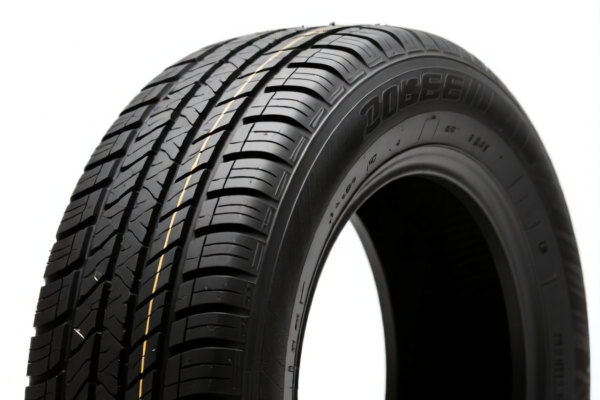
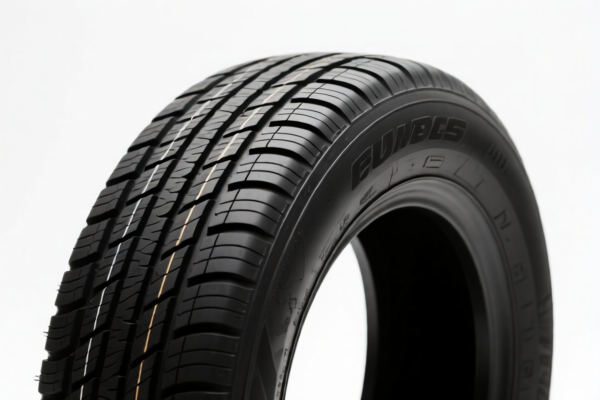
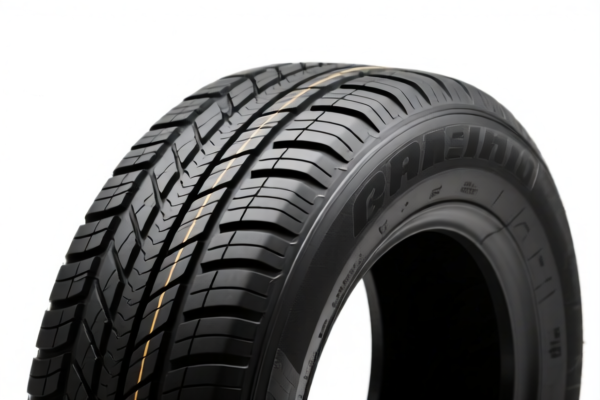
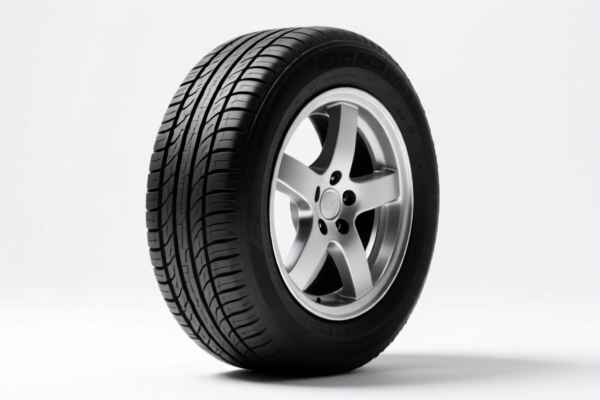
AI Analysis
🚛 Heavy-Duty Rubber Pneumatic Tires (Tires for Buses, Trucks & Other Commercial Vehicles)
🌐 HS Code Classification & Customs Clearance Guide | 2024/2025 Latest Tariff Analysis | Professional Compliance Strategy
📌 I. Product Definition & Classification: Do You Really Understand "Commercial Tires"?
Rubber pneumatic tires are essential components for ground vehicles. In international trade, they are strictly categorized by material, structure, and intended use. For commercial vehicles like buses and trucks, the classification hinges on whether the tire is "new" or "retreaded" and its specific fitment.
Rubber Pneumatic Tires (New): Newly manufactured tires made of rubber, containing cords or other reinforcing materials, designed to be inflated.
Key Distinction:
- Tires for Buses/Trucks (HS 4011.20): Specifically designed for heavy-duty vehicles.
- Retreaded Tires (HS 4012.12): Used casings rebuilt with new tread. Note: The user input 4012128029 refers to Retreaded tires, but the provided Data (4011...) refers to New tires. We will analyze the Provided Data as requested, while clarifying the distinction.
⚠️ Critical Classification Point:
- If the tire is NEW and for buses/trucks → HS 4011.20.xx (e.g.,4011.20.50.30,4011.20.50.50) - If the tire is RETREADED → HS 4012.12.xx (e.g.,4012.12.80.29) - The Data provided below focuses on NEW tires (4011series) as per the source content.
📦 II. HS Code Classification Details (Based on Provided Data)
| HS Code | Product Description | Matching Criteria | Intended Use |
|---|---|---|---|
4011.20.50.30 |
Rubber Pneumatic Tires, New | Material: Rubber; Form: Pneumatic; Match: Direct correspondence to HS 4011.20 definition | Buses, Trucks, Commercial Vehicles |
4011.20.50.50 |
Rubber Pneumatic Tires, New (Other) | Material: Rubber; Form: Pneumatic; Inferred for non-specified sub-categories within 4011.20 | Other Commercial/Road Vehicles |
4011.80.10.10 |
Other Rubber Pneumatic Tires | Material: Rubber; Form: Pneumatic; Broader category for tires not specifically in 4011.20 | Various commercial/industrial applications |
🔍 Analysis of Provided Data:
- Codes4011.20.50.30&4011.20.50.50: Both fall under Chapter 40, Heading 4011 (New rubber pneumatic tires). Subheading 4011.20 specifically covers "of a kind used on buses or trucks." - Code4011.80.10.10: Falls under 4011.80 ("Other"), used for tires that do not fit the specific "bus/truck" criteria or are general-purpose pneumatic tires.
💰 III. 2024/2025 Tariff Rate Details (US Imports from China)
✅ Applicable Country: United States (US)
✅ Origin: China (CN)
✅ Effective Date: Ongoing (Subject to Section 301 and IEEPA)
🎯 1. 4011.20.50.30 & 4011.20.50.50 —— New Tires for Buses/Trucks
| Item | Content |
|---|---|
| Base Tariff Rate | 3.4% (Ad Valorem) |
| Section 301 Surcharge | +25.0% |
| IEEPA Section 122 Surcharge | +10.0% |
| Total Tariff Rate | 38.4% |
| Tax Calculation | CIF Value × 38.4% |
| De Minimis Eligibility | ❌ Not Eligible (Tires are generally excluded from de minimis relief due to high tariffs and regulatory scrutiny) |
| Legal Basis | USITC:4011.20.50.30 → 301:Footnote 9903.88.01 → IEEPA:9903.01.25 |
📌 Explanation:
- Base 3.4%: Standard MFN rate for new rubber tires. - 25% Section 301: Imposed under the US Trade Act of 1974, Section 301, targeting Chinese imports. - 10% IEEPA: Additional surcharge under the International Emergency Economic Powers Act, often applied to specific Chinese goods. - Total 38.4%: This is a very high combined duty rate. Importers must carefully calculate landed costs.
🎯 2. 4011.80.10.10 —— Other Rubber Pneumatic Tires
| Item | Content |
|---|---|
| Base Tariff Rate | 0.0% |
| Section 301 Surcharge | +25.0% |
| IEEPA Section 122 Surcharge | +10.0% |
| Total Tariff Rate | 35.0% |
| Tax Calculation | CIF Value × 35.0% |
| De Minimis Eligibility | ❌ Not Eligible |
| Legal Basis | USITC:4011.80.10.10 → 301:Footnote 9903.88.01 → IEEPA:9903.01.25 |
📌 Explanation:
- Although the base rate is 0%, the 35.0% total rate still applies due to the mandatory surcharges. - The slight difference (3.4% vs 0% base) results in a 3.4% lower total duty compared to bus/truck-specific tires. However, classification must be accurate; misclassification can lead to penalties.
🛠️ IV. Customs Clearance Practical Advice (Real-World Pitfall Guide)
✅ 1. Required Documentation Checklist
| Document | Required | Description |
|---|---|---|
| ✅ Product Specification Sheet | ✔️ | Must state: Material (Rubber), Type (Pneumatic), Size, Load Index, Speed Rating, Intended Vehicle (Bus/Truck/Other) |
| ✅ Commercial Invoice | ✔️ | Clearly describe as "New Rubber Pneumatic Tire" |
| ✅ Packing List | ✔️ | Detail quantity, weight, and packaging |
| ✅ Certificate of Origin (CO) | ✔️ | Confirm Chinese origin for accurate tariff application |
| ✅ HTS Classification Letter | ✔️ | Optional but recommended for high-value shipments |
✅ 2. Classification Tips (Key Rules)
🔥 "Material is Rubber, Form is Inflated, Use Determines Subheading!"
| Scenario | Correct HS Code | Wrong Action |
|---|---|---|
| New tire for Bus/Truck | 4011.20.50.30 / 4011.20.50.50 |
Misclassify as "Other" to avoid 3.4% base? → Risk of audit |
| New tire for Passenger Car | 4011.10.xx |
Misclassify as Bus/Truck tire → Different duty structure |
| Retreaded Tire | 4012.12.80.29 |
Misclassify as New Tire (4011) → Severe Penalty (Fraud) |
| Inner Tubes | 4009.xx |
Misclassify as Tire → Wrong duty rate |
📌 Critical Warning:
- Do NOT confuse "New" (4011) with "Retreaded" (4012).
-4012.12.80.29(Retreaded) has a different base rate and potentially different surcharge applicability. Ensure the physical product matches the declared HS Code.
- For New tires, the destination vehicle type is crucial: Buses/Trucks =4011.20; Others =4011.80.
✅ 3. Special Handling
| Scenario | Recommendation |
|---|---|
| OEM Tires | Provide original manufacturer's label and specification sheet proving it is "New" |
| Mixed Shipment | If shipment contains both Bus/Truck tires and Passenger Car tires, separate them for clear declaration |
| High Value Shipment | Consider applying for an Advance Ruling from CBP to lock in the classification |
🌍 V. Global Market Comparison (2024/2025)
| Country/Region | Recommended HS Code | Total Duty (China Origin) | Key Certification | Notes |
|---|---|---|---|---|
| 🇺🇸 USA | 4011.20.50.30 |
38.4% | DOT, USDOT | High tariffs due to Section 301 & IEEPA |
| 🇨🇳 China | 4011.20.50.30 |
Varies | CCC (if applicable) | Import duties vary; export taxes may apply |
| 🇪🇺 EU | 4011.20.00.00 |
4.5% | E-Mark, REACH | No Section 301/IEEPA surcharges |
| 🇦🇺 Australia | 4011.20.00.00 |
5% | ADR, ECE | Lower tariffs, no US-style surcharges |
📌 Conclusion:
- USA imposes the highest burden on Chinese tires due to 38.4% total duty.
- EU and Australia are significantly more cost-effective for Chinese tire imports.
- Always verify if the tires are New or Retreaded, as the HS Code structure differs significantly (4011 vs 4012).
📌 VI. Common Errors & Pitfalls (Lessons Learned)
❌ Error 1: Declaring Retreaded Tires as New Tires (4011 instead of 4012)
👉 Consequence: High risk of Customs Fraud Charges, seizure of goods, and heavy fines.
❌ Error 2: Misidentifying the Vehicle Type (e.g., declaring a Light Truck tire as a Passenger Car tire)
👉 Consequence: Potential misclassification, audit triggers, and duty underpayment penalties.
❌ Error 3: Ignoring IEEPA Section 122 Surcharges
👉 Consequence: Underestimating landed cost by 10%, impacting profit margins.
❌ Error 4: Failing to distinguish between 4011.20 (Bus/Truck) and 4011.80 (Other)
👉 Consequence: Although total duty is similar (38.4% vs 35.0%), incorrect classification violates US Customs regulations.
✅ Correct Practice:
"New Rubber Pneumatic Tire, Size 11R22.5, Load Index 146/143, Speed Rating L, Intended for Heavy-Duty Trucks, DOT Certified, Made in China"
🎯 VII. Conclusion: Professional Classification Saves Money!
🎯 Key Takeaways:
🔹 New Tires for Buses/Trucks: HS
4011.20.50.30→ 38.4% Total Duty
🔹 Other New Tires: HS4011.80.10.10→ 35.0% Total Duty
🔹 Retreaded Tires: HS4012.12.80.29→ Different Rate (Not in Provided Data)📌 Pro Tip:
If your tires are Retreaded, do NOT use4011codes. Use4012codes. The provided data only covers New tires. Ensure your product matches the declared category.
📣 Immediate Action Required:
📞 Verify Product Type (New vs. Retreaded)
📞 Confirm Vehicle Application (Bus/Truck vs. Other)
📞 Calculate Landed Cost with 38.4% (or 35.0%) duty included
🚀 Ensure Compliance, Avoid Penalties, Maximize Profit!
✨ Accurate Classification is the First Step to Smooth Customs Clearance!
💼 Your Duty Costs are Real; Plan Accordingly!
Customer Reviews
About HS Code Classification
The Harmonized System (HS) is an internationally standardized nomenclature developed by the World Customs Organization (WCO) to classify traded products. Over 200 countries use the HS system as the basis for customs tariffs, trade statistics, and import/export regulations.
Each HS code follows a hierarchical structure:
- Chapter (2 digits) — Broad category of goods (e.g., Chapter 84: Machinery and Mechanical Appliances)
- Heading (4 digits) — More specific grouping within the chapter
- Subheading (6 digits) — Internationally standardized breakdown, used by all WCO member countries
- National subdivisions (8-10 digits) — Country-specific extensions for further classification, such as US HTSUS 10-digit codes
Correct HS code classification is essential for smooth customs clearance, accurate duty payment, and compliance with trade regulations. Misclassification can lead to customs delays, overpayment of duties, or penalties.
When importing from CN to US, the applicable tariff rates may include:
- Most-Favored-Nation (MFN) rate — The standard duty rate applied to WTO members
- General rate — Applied to countries without trade agreements
- Trade remedy duties — Additional tariffs such as Section 301 (anti-dumping), Section 232 (national security), or countervailing duties
The information provided on this page is for reference purposes only. For official classification, please consult with your local customs authority or a licensed customs broker.