Tire Buffer Pad
CN → US| HS Code | Tariff Rate | Origin | Destination | Doc |
|---|---|---|---|---|
| 3926904590 | 38.5% | CN | US | Official Doc |
| 3926909989 | 22.8% | CN | US | Official Doc |
| 4016996050 | 37.5% | CN | US | Official Doc |
| 4016995500 | 37.5% | CN | US | Official Doc |
| 4016996050 | 37.5% | CN | US | Official Doc |
Product Images
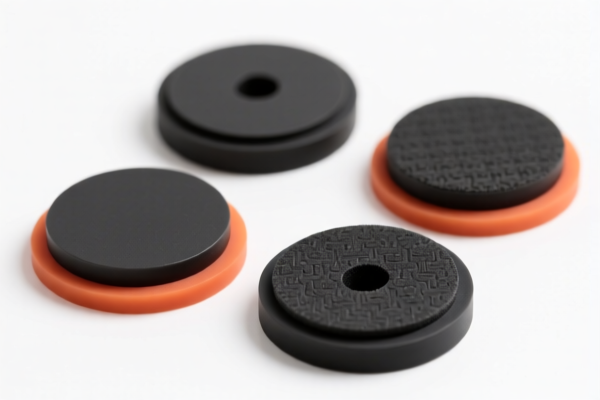
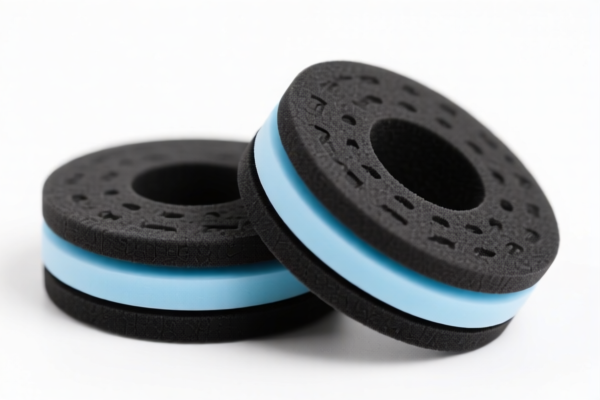
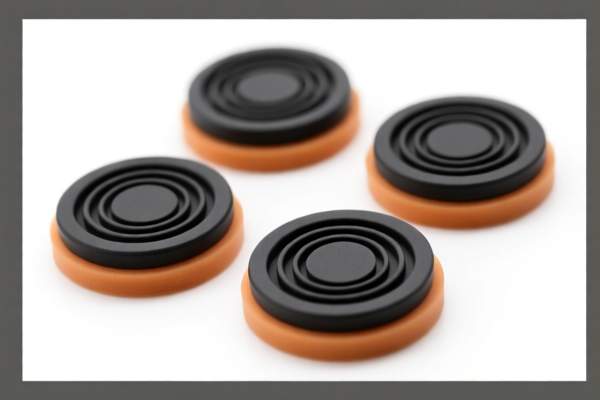
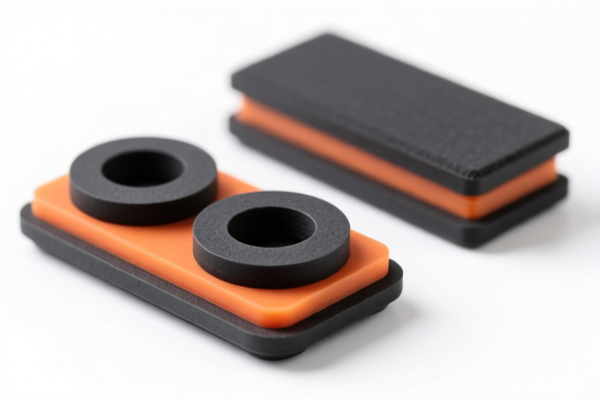
AI Analysis
🛡️ Tire Buffer Pad (Shock Absorber / Gasket)
🌐 HS Code Reference & Customs Clearance Guide | 2026 Latest Tariff Analysis | Professional Customs Strategy
📌 I. Product Definition: What is a "Tire Buffer Pad"?
A Tire Buffer Pad (often referred to as a bump stop, suspension buffer, or shock absorber pad) is a critical component used in vehicle suspension systems, industrial machinery, or logistics equipment. Its primary function is to absorb impact energy, limit travel range, and prevent metal-to-metal contact during heavy loading or rough operation.
In international trade, these pads are classified based on their material composition, which directly determines their Harmonized System (HS) code and applicable tariff rates. The two main material categories are: 1. Rubber/Silicone-based: Viscous, elastic, designed for heavy-duty shock absorption. 2. Plastic/Synthetic-based: Rigid or semi-rigid, often used for light-duty buffering or as spacers.
⚠️ Critical Distinction:
- If the pad is made of vulcanized rubber or silicone (a type of rubber) → It falls under Chapter 40.
- If the pad is made of polyurethane, PVC, or other plastics → It falls under Chapter 39.
📦 II. HS Code Classification Details (2026 Latest Tariff Mapping)
Based on the provided data, here are the four valid HS codes for "Tire Buffer Pads," categorized by material inference.
| HS Code | Material Inference | Product Description & Scope | Classification Logic |
|---|---|---|---|
| 4016.99.60.50 | Sulfur-Vulcanized Rubber | Buffer pads made of vulcanized rubber (excluding hard rubber). | Most common for heavy-duty vehicle buffers. Falls under "Other vulcanized rubber goods." |
| 4016.99.55.00 | Rubber (Shock Control) | Pads specifically designed for shock absorption/vibration control. | Classified under "Articles of vulcanized rubber other than hard rubber, for shock absorbing purposes." |
| 3926.90.45.90 | Plastic | Buffer pads made of plastic (e.g., PU, PE, PVC). | Falls under "Other articles of plastics, including gaskets/seals." |
| 3926.90.99.89 | Plastic/Synthetic | General-purpose plastic buffers or composite material pads. | Falls under "Other plastic articles, not specified elsewhere." |
🔍 Key Insight:
- 4016.99.60.50 and 4016.99.55.00 are for Rubber/Silicone.
- 3926.90.45.90 and 3926.90.99.89 are for Plastic.
- Do not mix materials: If your product is a composite (e.g., rubber bonded to plastic), customs may classify based on the essential character (usually the rubber part if it provides the shock-absorbing function), pushing it toward Chapter 40.
💰 III. 2026 Latest Tariff Rate Breakdown (Including Additional Duties)
✅ Applicable Country: United States (US)
✅ Country of Origin: China (CN)
✅ Effective Date: Ongoing (Subject to current Section 301 & 122 Clause tariffs)
🎯 1. Rubber Category (High Tariff Impact)
📌 Option A: 4016.99.60.50 (Other Sulfur-Vulcanized Rubber Goods)
| Item | Content |
|---|---|
| Base Tariff Rate | 2.5% |
| Section 301 Additional Tariff | +25.0% |
| Clause 122 Tariff | +10.0% |
| Total Effective Tax Rate | 37.5% |
| Tax Calculation Basis | CIF Value × 37.5% |
| De Minimis Exemption | ❌ Not Applicable (Deny De Minimis for China-origin goods under current US policy) |
📌 Explanation:
- The 25% is from the Section 301 Trade Act (targeting Chinese manufactured goods).
- The 10% is from "Clause 122" (often associated with specific national security or trade defense measures).
- Total 37.5% is significantly high, making rubber buffer pads expensive to import from China.
📌 Option B: 4016.99.55.00 (Shock Absorbing Rubber Articles)
| Item | Content |
|---|---|
| Base Tariff Rate | 2.5% |
| Section 301 Additional Tariff | +25.0% |
| Clause 122 Tariff | +10.0% |
| Total Effective Tax Rate | 37.5% |
| Tax Calculation Basis | CIF Value × 37.5% |
| De Minimis Exemption | ❌ Not Applicable |
📌 Note:
- Identical tax structure to4016.99.60.50.
- Use4016.99.55.00if the product is explicitly marketed or documented as a "shock absorber" or "vibration damper."
- Use4016.99.60.50as a general "other rubber goods" fallback if specific shock-absorbing designation is ambiguous.
🎯 2. Plastic Category (Lower Tax Impact)
📌 Option C: 3926.90.45.90 (Other Plastic Articles)
| Item | Content |
|---|---|
| Base Tariff Rate | 3.5% |
| Section 301 Additional Tariff | +25.0% |
| Clause 122 Tariff | +10.0% |
| Total Effective Tax Rate | 38.5% |
| Tax Calculation Basis | CIF Value × 38.5% |
| De Minimis Exemption | ❌ Not Applicable |
📌 Explanation:
- Despite being "plastic," the Section 301 and Clause 122 tariffs still apply heavily.
- Total rate (38.5%) is slightly higher than rubber due to the higher base rate (3.5% vs 2.5%).
📌 Option D: 3926.90.99.89 (Other Plastic Articles, Not Elsewhere Specified)
| Item | Content |
|---|---|
| Base Tariff Rate | 5.3% |
| Section 301 Additional Tariff | +7.5% |
| Clause 122 Tariff | +10.0% |
| Total Effective Tax Rate | 22.8% |
| Tax Calculation Basis | CIF Value × 22.8% |
| De Minimis Exemption | ❌ Not Applicable |
📌 Critical Observation:
- This is the LOWEST tax option (22.8%).
- Why is Section 301 only 7.5% here? This specific subheading may be excluded from the highest tier of Section 301 lists, or the data reflects a specific preferential or reduced additional duty applicable to this "catch-all" plastic category.
- Strategy: If your buffer pad can be legally classified as a general "plastic article" (not specifically a gasket or seal under more restrictive codes), Option D offers significant cost savings.
🛠️ IV. Customs Clearance Practical Advice (Pitfall Avoidance Guide)
✅ 1. Preparation Checklist (Non-Negotiable)
| Document | Required? | Purpose |
|---|---|---|
| ✅ Product Specifications | ✔️ | Must clearly state Material (e.g., "90% Silicone Rubber, 10% Polyester Reinforcement"). |
| ✅ Material Safety Data Sheet (MSDS) | ✔️ | Proves chemical composition; critical for distinguishing Rubber vs. Plastic. |
| ✅ Product Photos (Clear View) | ✔️ | Show cross-section if composite; label showing model and material. |
| ✅ Commercial Invoice | ✔️ | Description must match HS Code logic (e.g., "Rubber Shock Absorber Pad"). |
| ✅ Packaging List | ✔️ | Item count, weight, dimensions. |
| ✅ Bill of Lading/Air Waybill | ✔️ | Standard shipping docs. |
✅ 2. Declaration Strategy (Key Mnemonic)
🔥 "Material First, Function Second; Avoid Ambiguity to Save Money!"
| Scenario | Recommended HS Code | Why? |
|---|---|---|
| Pure Rubber/Silicone Pad | 4016.99.60.50 |
Standard classification for vulcanized rubber goods. |
| Pure Plastic (PU/PE) Pad | 3926.90.99.89 |
Best Rate (22.8%) if it doesn't fit into more specific plastic gasket codes. |
| Composite (Rubber + Plastic) | 4016.99.60.50 |
Rubber provides essential character (shock absorption). |
| Metal-Reinforced Rubber | 4016.99.60.50 |
Still rubber-based; metal is secondary. |
⚠️ Warning:
- Do NOT declare a rubber pad as "Plastic" to get the 22.8% rate. Customs will inspect, find the rubber, and penalize you for misclassification + back taxes.
- If the product is Silicone, it is legally considered Rubber (Chapter 40), not Plastic (Chapter 39).
✅ 3. Special Cases
| Case | Handling Advice |
|---|---|
| OEM Custom Pads | Provide the design drawing and material spec sheet from the client to prove material composition. |
| Small Samples (De Minimis) | ❌ Avoid: China-origin goods are generally not eligible for $800 de minimis exemption. Expect full inspection. |
| Vibration Control vs. Buffer | If the primary function is "vibration damping" for machinery, 4016.99.55.00 is more precise, but tax is same as 4016.99.60.50. |
🌍 V. Global Market Comparison (2026 Snapshot)
| Market | Recommended HS Code | Est. Tariff (China Origin) | Key Requirement |
|---|---|---|---|
| 🇺🇸 USA | 4016.99.60.50 or 3926.90.99.89 |
37.5% (Rubber) / 22.8% (Plastic) | High scrutiny on origin; Section 301 applies. |
| 🇪🇺 EU | 4016.99 (Rubber) |
~4-6% (Base) + VAT | No Section 301. Anti-dumping may apply to specific rubber types. |
| 🇨🇳 China | 4016.99 |
~5% | Standard import duty. |
| 🇲🇽 Mexico | 4016.99 |
0% (under USMCA if local content met) | Excellent alternative if manufacturing shifts. |
📌 Conclusion:
- USA is the highest cost market due to additional duties.
- Plastic classification (3926.90.99.89) offers the best savings (22.8%), but must be truthful.
- Rubber is expensive (37.5%). Consider supply chain diversification if margins are thin.
📌 VI. Common Mistakes & Pitfalls (Lessons Learned)
❌ Mistake 1: Declaring Silicone Rubber as "Plastic" to get lower tax.
👉 Consequence: Customs detects silicone via lab test → Penalty + Back Taxes + Audit.
❌ Mistake 2: Using vague terms like "Rubber Pad" without specifying "Vulcanized."
👉 Consequence: Customs may question the HS code accuracy → Delays.
❌ Mistake 3: Ignoring Clause 122 and Section 301 in cost calculation.
👉 Consequence: Underquoting landed cost → Profit loss.
✅ Correct Approach:
"Tire Buffer Pad, Made of 100% Sulfur-Vulcanized Silicone Rubber, Model XYZ, for Automotive Suspension Use."
➡️ Leads to4016.99.60.50→ 37.5% Tax.
🎯 VII. Conclusion: Professional Declaration, Cost Optimization!
🎯 Remember the Golden Rule:
🔹 "Material Determines Chapter 40 (Rubber) or 39 (Plastic)."
🔹 "Plastic3926.90.99.89is Cheaper (22.8%), Rubber4016.99.60.50is Expensive (37.5%)."
🔹 "Truth in Material is Non-Negotiable."
📌 Pro Tip:
If you are importing large volumes, consider:
1. Pre-Ruling: Apply for a Binding Ruling from US Customs (CBP) to confirm the HS code.
2. Supply Chain Shift: If tariffs are prohibitive, source from Vietnam or Thailand (often lower/additional tariff exemptions).
📣 Take Action Now:
📞 Verify your material composition with your supplier.
📋 Choose the correct HS Code based on truth, not just tax saving.
🚀 Optimize your landed cost with accurate classification.
✨ Customs Clarity Starts with Precise Classification!
💼 Every Percentage Point Matters in Global Trade!
Customer Reviews
About HS Code Classification
The Harmonized System (HS) is an internationally standardized nomenclature developed by the World Customs Organization (WCO) to classify traded products. Over 200 countries use the HS system as the basis for customs tariffs, trade statistics, and import/export regulations.
Each HS code follows a hierarchical structure:
- Chapter (2 digits) — Broad category of goods (e.g., Chapter 84: Machinery and Mechanical Appliances)
- Heading (4 digits) — More specific grouping within the chapter
- Subheading (6 digits) — Internationally standardized breakdown, used by all WCO member countries
- National subdivisions (8-10 digits) — Country-specific extensions for further classification, such as US HTSUS 10-digit codes
Correct HS code classification is essential for smooth customs clearance, accurate duty payment, and compliance with trade regulations. Misclassification can lead to customs delays, overpayment of duties, or penalties.
When importing from CN to US, the applicable tariff rates may include:
- Most-Favored-Nation (MFN) rate — The standard duty rate applied to WTO members
- General rate — Applied to countries without trade agreements
- Trade remedy duties — Additional tariffs such as Section 301 (anti-dumping), Section 232 (national security), or countervailing duties
The information provided on this page is for reference purposes only. For official classification, please consult with your local customs authority or a licensed customs broker.