Tire Cord
CN → US| HS Code | Tariff Rate | Origin | Destination | Doc |
|---|---|---|---|---|
| 5906912000 | 35.0% | CN | US | Official Doc |
| 5906912500 | 17.5% | CN | US | Official Doc |
| 5407100010 | 48.6% | CN | US | Official Doc |
| 5407100090 | 48.6% | CN | US | Official Doc |
Product Images
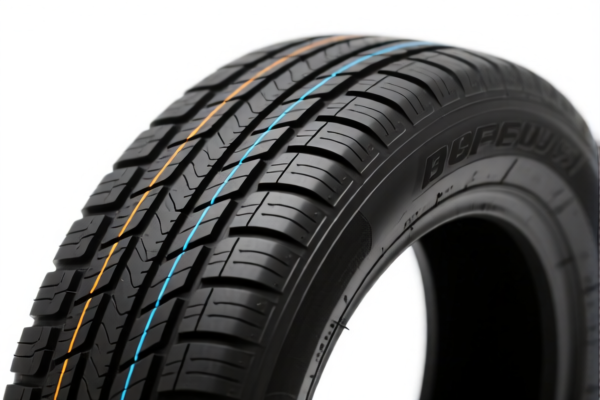
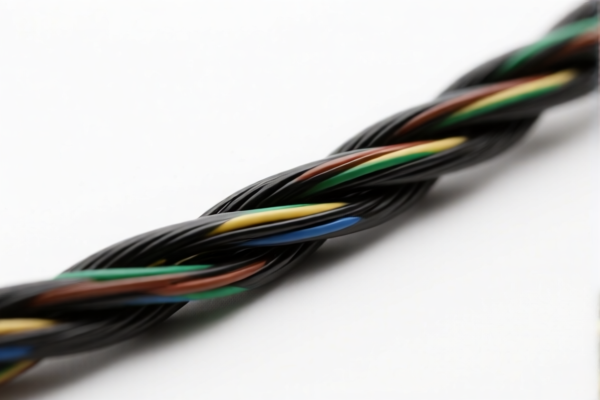

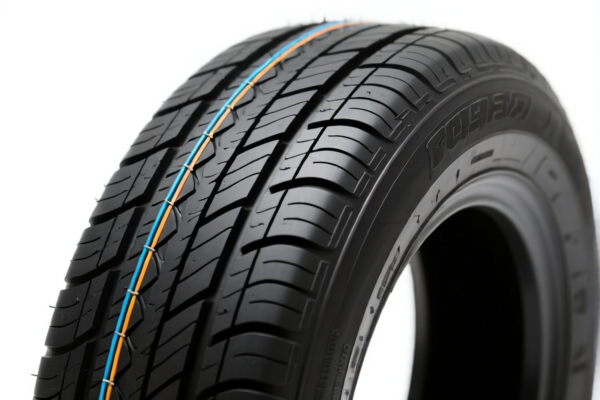
AI Analysis
🛞 Tire Cord Fabric (帘布层)
🌐 HS Code Reference & Customs Clearance Guide | 2026 Latest Tariff Analysis | Professional Clearance Strategy
📌 I. Product Definition & Classification: Do You Understand "Tire Cord"?
Tire Cord Fabric is the skeletal reinforcement material in pneumatic tires, providing tensile strength and structural integrity. In international trade, it is not a single uniform product but is classified based on its chemical composition and textile structure.
The key distinction lies in whether the cord is: 1. Rubberized (Coated with rubber, characteristic of Rubberized Textile Fabrics, Chapter 59); 2. Unrubberized/Polyester Knitted (Artificial fiber knitting/woven, Chapter 59); 3. Polyester Long Fiber Woven (Synthetic filament fabric, Chapter 54).
⚠️ Key Distinction Point:
- If the fabric is polyester and features a rubberized coating typical of tire reinforcement →归入 5906.91.20.00
- If it is polyester but classified as knitted/woven artificial fiber without specific rubberization features mentioned in 5906.91.20 →归入 5906.91.25.00
- If it is broadly classified under Synthetic Filament Fabric (Polyester/Viscose) without specific tire-specific sub-headings →归入 5407.10.00.10 / .90
📦 II. HS Code Classification Details (2026 Latest Tariff Authority Comparison)
| HS Code | Product Description | Application Scenario | Tax Rate (China→US) |
|---|---|---|---|
5906.91.20.00 |
Tire cord of polyester (artificial fiber), rubberized textile fabric characteristic | High-strength tire reinforcement, rubber-coated cord fabric | 35.0% |
5906.91.25.00 |
Tire cord of polyester material, belonging to artificial fiber knitting/woven category | General synthetic fiber textile used in tires, non-rubberized or different coating | 17.5% |
5407.10.00.10 |
Tire cord of polyester material, synthetic filament fabric category | Broad synthetic filament fabric, less specific tire application | 48.6% |
5407.10.00.90 |
Tire cord of polyester (polyester = artificial fiber), synthetic filament fabric category | General synthetic filament fabric, broader classification | 48.6% |
🔍 Key Reminder:
- "Rubberized" vs. "Unrubberized": The presence of rubber coating significantly affects the classification between 5906.91.20 and 5906.91.25. - Chapter 54 vs. Chapter 59: Chapter 54 covers general synthetic filament fabrics. Chapter 59 covers textile fabrics impregnated, coated, covered or laminated with rubber. Tire cords are often rubberized, pushing them to Chapter 59 for lower or specific tariffs (except for the high base rate in some cases).
💰 III. 2026 Latest Tariff Rate Details (Including Surtaxes & Policy Add-ons)
✅ Applicable Country: United States (US)
✅ Origin: China (CN)
✅ Effective Date: From November 10, 2025 (including subsequent imports)
🎯 1. 5906.91.20.00 —— Polyester Tire Cord, Rubberized Textile Fabric
| Item | Content |
|---|---|
| Base Tariff | 0.0% (ad valorem) |
| Section 301 Surtax | +25.0% (from USITC Footnote) |
| IEEPA Surtax | +10.0% (Targeting China/Hong Kong products, from Nov 10, 2025) |
| Total Tariff | 35.0% |
| Tax Calculation | CIF Value × 35.0% |
| De Minimis Exemption | ❌ Not Available (deny_de_minimis) |
| Legal Basis Path | IEEPA:9903.01.25 → IEEPA:9903.01.24 → USITC:5906.91.20.00 |
📌 Explanation:
- The 25% comes from the "Section 301" additional tariffs. - The 10% is the IEEPA additional tariff. - Total 35%, which is a high tariff for this category. Must be anticipated in cost calculations.
🎯 2. 5906.91.25.00 —— Polyester Tire Cord, Artificial Fiber Knitting/Woven Category
| Item | Content |
|---|---|
| Base Tariff | 7.5% |
| Section 301 Surtax | 0.0% |
| IEEPA Surtax | +10.0% |
| Total Tariff | 17.5% |
| Tax Calculation | CIF Value × 17.5% |
| De Minimis Exemption | ❌ Not Available |
| Legal Basis Path | IEEPA:9901.25 → IEEPA:9903.01.24 → USITC:5906.91.25.00 |
📌 Note:
- This category has a higher base rate (7.5%) but no Section 301 surtax (0%). - The 10% IEEPA still applies. - Total 17.5%, which is significantly lower than the 35% or 48.6% categories. Optimization Opportunity!
🎯 3. 5407.10.00.10 & 5407.10.00.90 —— Polyester Tire Cord, Synthetic Filament Fabric
| Item | Content |
|---|---|
| Base Tariff | 13.6% |
| Section 301 Surtax | +25.0% |
| IEEPA Surtax | +10.0% |
| Total Tariff | 48.6% |
| Tax Calculation | CIF Value × 48.6% |
| De Minimis Exemption | ❌ Not Available |
| Legal Basis Path | IEEPA:9903.01.25 → IEEPA:9903.01.24 → USITC:5407.10.00.10/.90 |
📌 Warning:
- This is the highest tariff category at 48.6%. - It applies if the product is classified as general synthetic filament fabric without the specific rubberized textile fabric designation. - Avoid this classification if possible by proving the product fits 5906.91.25.00 (17.5%).
🛠️ IV. Customs Clearance Practical Advice (Combat Pit-Avoidance Guide)
✅ 1. Required Documents Checklist (None Can Be Missing)
| Document | Must Provide | Description |
|---|---|---|
| ✅ Product Specification Sheet | ✔️ | Material (Polyester/Polyamide), Denier, Thread Count, Coating Type |
| ✅ Technical Data Sheet | ✔️ | Tensile strength, elongation, heat resistance, rubber coating thickness |
| ✅ Product Photos (Labeled) | ✔️ | Clear images of fabric texture, cross-section, and any labels |
| ✅ Commercial Invoice | ✔️ | Clearly state "Tire Cord Fabric" and HS Code |
| ✅ Packing List | ✔️ | Weight, dimensions, number of rolls |
| ✅ Certificate of Origin (CO) | ✔️ | If not Chinese origin, may qualify for preferential rates |
| ✅ Test Report | ✔️ | Third-party lab test results for material composition |
✅ 2. Declaration Tips (Key Mantra)
🔥 "Rubberized is 5906, Filament is 5407, Check the Coating, Save Money!"
| Scenario | Correct Declaration | Wrong Practice |
|---|---|---|
| Polyester cord with rubber coating | 5906.91.20.00 (35%) or 5906.91.25.00 (17.5%) |
Misdeclare as general fabric → 48.6% |
| Polyester cord without specific rubberization features | 5906.91.25.00 (17.5%) |
Misdeclare as rubberized → 35% |
| General polyester filament fabric | 5407.10.00.90 (48.6%) |
Misdeclare as tire cord → Risk of penalty |
| Mixed Shipment | Separate HS codes | Mixed declaration → Delay/Inspection |
✅ 3. Special Handling
| Scenario | Handling Advice |
|---|---|
| OEM Custom Fabric | Provide customer order + design specs to prove specific use |
| Blended Fibers | If not 100% polyester, classification may change significantly |
| Tire Cord vs. General Fabric | Provide proof of end-use (tire manufacturing) to support Chapter 59 classification |
| Pre-Ruling Application | Strongly Recommended to avoid 48.6% classification |
🌍 V. Global Market Customs Comparison (2026 Latest)
| Country/Region | Recommended HS Code | Tariff | Certification | Notes |
|---|---|---|---|---|
| 🇺🇸 USA | 5906.91.25.00 |
17.5% (Best Case) | None | 35% or 48.6% if misclassified |
| 🇨🇳 China | 5906.91.25.00 |
~6% | CCC (if applicable) | No additional surtaxes |
| 🇪🇺 EU | 5906.91 |
0-2% (if eligible) | REACH | No US-style surtaxes |
| 🇦🇺 Australia | 5906.91 |
5% | None | No additional surtaxes |
| 🇯🇵 Japan | 5906.91 |
0-3% | None | No additional surtaxes |
📌 Conclusion:
- USA is the most challenging market due to high additional tariffs (IEEPA + Section 301). - Classification as5906.91.25.00(17.5%) is critical to minimize costs compared to 35% or 48.6%. - China, EU, Australia, Japan have much lower tariff burdens. Consider supply chain diversification if targeting the US.
📌 VI. Common Errors & Pitfall Avoidance (Lessons Learned)
❌ Error 1: Declaring "Rubberized Tire Cord" as 5407.10.00.90
👉 Consequence: Tariff jumps from 35% to 48.6% → 13.6% extra cost!
❌ Error 2: Declaring "Unrubberized Polyester Cord" as 5906.91.20.00
👉 Consequence: Tariff increases from 17.5% to 35% → 17.5% extra cost!
❌ Error 3: Missing "Rubber Coating" details in declaration
👉 Consequence: Customs may classify as general fabric → 48.6%
❌ Error 4: Using "Fabric" instead of "Tire Cord Fabric"
👉 Consequence: Lack of clarity → Delay for inspection
✅ Correct Practice:
"Polyester Tire Cord Fabric, Rubberized, 1200 Denier, 2 Ply, 2x2 Twill, HS 5906.91.25.00, Made in China"
🎯 VII. Conclusion: Professional Declaration, Time-Saving, Cost-Effective!
🎯 Remember the Mantra:
🔹 "Rubberized 5906.20 (35%), Unrubberized 5906.25 (17.5%), General 5407 (48.6%)!"
🔹 "HS Code determines destiny, tariff difference is huge, wrong declaration costs thousands!"
📌 Pro Tip:
If your tire cord fabric is originally from Vietnam, Mexico, Thailand, or Malaysia, you may qualify for IEEPA exemptions, with tariffs as low as 0%~5%.
Recommend applying for Advance Ruling to avoid clearance risks.
📣 Immediate Action:
📞 Contact professional customs broker + Provide product specs + Apply for HS Code Advance Ruling
🚀 Let your tire cord fabric, smooth clearance, efficient export, profit maximization!
✨ Professional Clearance Starts with Accurate Classification!
💼 Your every cent of cost deserves precise calculation!
Customer Reviews
About HS Code Classification
The Harmonized System (HS) is an internationally standardized nomenclature developed by the World Customs Organization (WCO) to classify traded products. Over 200 countries use the HS system as the basis for customs tariffs, trade statistics, and import/export regulations.
Each HS code follows a hierarchical structure:
- Chapter (2 digits) — Broad category of goods (e.g., Chapter 84: Machinery and Mechanical Appliances)
- Heading (4 digits) — More specific grouping within the chapter
- Subheading (6 digits) — Internationally standardized breakdown, used by all WCO member countries
- National subdivisions (8-10 digits) — Country-specific extensions for further classification, such as US HTSUS 10-digit codes
Correct HS code classification is essential for smooth customs clearance, accurate duty payment, and compliance with trade regulations. Misclassification can lead to customs delays, overpayment of duties, or penalties.
When importing from CN to US, the applicable tariff rates may include:
- Most-Favored-Nation (MFN) rate — The standard duty rate applied to WTO members
- General rate — Applied to countries without trade agreements
- Trade remedy duties — Additional tariffs such as Section 301 (anti-dumping), Section 232 (national security), or countervailing duties
The information provided on this page is for reference purposes only. For official classification, please consult with your local customs authority or a licensed customs broker.