Tire Liner
CN → US| HS Code | Tariff Rate | Origin | Destination | Doc |
|---|---|---|---|---|
| 4013905010 | 38.7% | CN | US | Official Doc |
| 4016996010 | 37.5% | CN | US | Official Doc |
| 4013905050 | 38.7% | CN | US | Official Doc |
| 4016996050 | 37.5% | CN | US | Official Doc |
| 4012909000 | 37.7% | CN | US | Official Doc |
Product Images
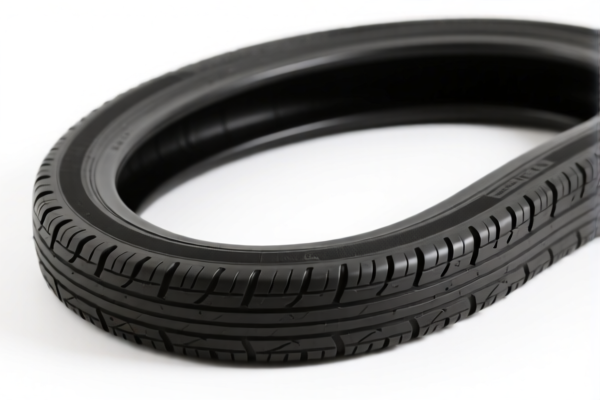
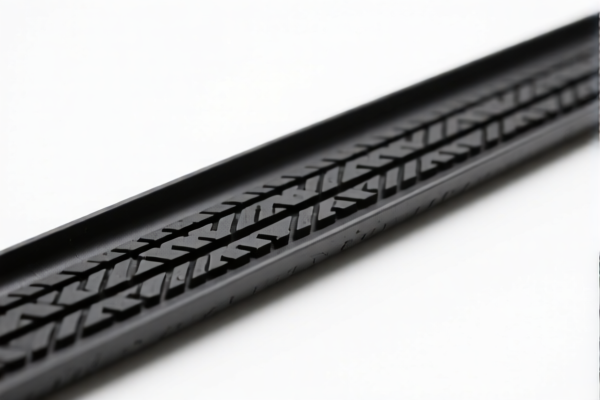
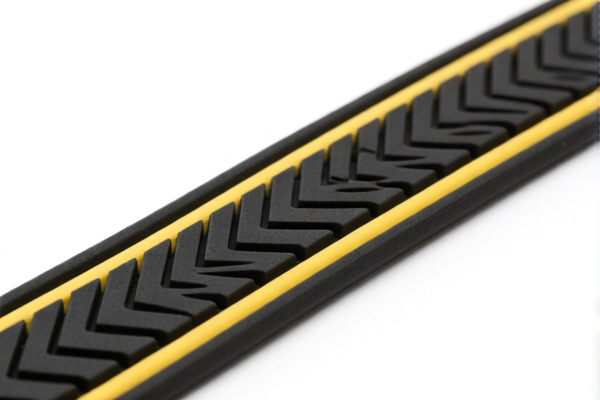
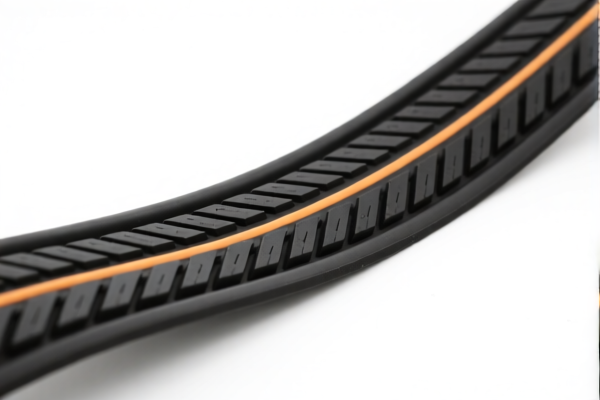
AI Analysis
🛞 Tire Liner (Puncture-Resistant Tire Insert)
🌐 HS Code Reference & Customs Clearance Guide | 2024/2025 Latest Tariff Analysis | Professional Clearance Strategy
📌 I. Product Definition & Classification: Do You Really Understand "Tire Liners"?
A Tire Liner (often referred to as a puncture-resistant insert, tire liner, or inner lining) is an auxiliary component used inside pneumatic tires to prevent punctures, reduce air leakage, and enhance durability. In international trade, its classification depends heavily on its material composition, physical form, and specific function within the tire assembly.
Key Distinctions in Classification:
- As a Part of the Tire (Chapter 40.13): If the liner is specifically designed as an integral part of the inner tube or tire structure.
- As a Rubber Article (Chapter 40.16): If the liner is classified as a general vulcanized rubber article or accessory.
- As a Tire Component (Chapter 40.12): If it is considered a tread, bead, or other specific tire part.
⚠️ Critical Classification Point:
- If the product is explicitly an inner liner or auxiliary component of an inner tube/tire → Likely 4013.90.50.xx
- If the product is a vulcanized rubber insert without specific tire-part designation → Likely 4016.99.60.xx
- If the product is categorized under treads or other tire parts → Likely 4012.90.90.00
📦 II. HS Code Classification Details (Based on Provided Data)
| HS Code | Product Description | Application Scenario | Classification Logic |
|---|---|---|---|
4013.90.50.10 |
Rubber Tire Puncture-Resistant Liner, material: rubber, form: liner, purpose: tire accessory | Standard tire reinforcement | ✅ Classified under "Parts and accessories of pneumatic tires" |
4016.99.60.10 |
Rubber Tire Puncture-Resistant Liner, material: vulcanized rubber, form: liner, purpose: tire accessory | General vulcanized rubber insert | ✅ Classified under "Other articles of vulcanized rubber other than hard rubber" |
4013.90.50.50 |
Rubber Tire Puncture-Resistant Liner, material: rubber, function: auxiliary/appendage to inner tube | Inner tube auxiliary component | ✅ Classified under "Parts and accessories of pneumatic tires (auxiliary)" |
4016.99.60.50 |
Rubber Tire Puncture-Resistant Liner, material: rubber, category: other vulcanized rubber articles | General rubber liner | ✅ Classified under "Other vulcanized rubber articles" |
4012.90.90.00 |
Rubber Tire Puncture-Resistant Liner, material: rubber, category: other tire tread/bead parts | Tire structural component | ✅ Classified under "Other tire treads and tire flaps" |
🔍 Key Reminder:
- The difference between 4013 (Tire Parts) and 4016 (Other Rubber Articles) is crucial for duty rates.
- 4013 items are generally treated as integral tire components.
- 4016 items are treated as general rubber goods.
- 4012 is specific to treads and bead-like components.
💰 III. 2024/2025 Latest Tariff Rate Breakdown (Including Additional Taxes)
✅ Applicable Country: United States (US)
✅ Origin: China (CN)
✅ Effective Date: Current trade policies (Section 301 & Section 122)
🎯 1. 4013.90.50.10 & 4013.90.50.50 —— Tire Parts (Liner/Inner Tube Accessory)
| Item | Details |
|---|---|
| Base Duty Rate | 3.7% (Ad Valorem) |
| Additional Duty (Section 301) | +25.0% |
| Section 122 Duty | +10.0% |
| Total Tax Rate | 38.7% |
| Calculation Method | CIF Value × 38.7% |
| De Minimis Exemption | ❌ Not Applicable (High duty rates exclude 80 USD exemption) |
| Legal Basis | HTSUS 4013.90.50.xx + Section 301 Footnote + Section 122 |
📌 Explanation:
- 3.7% is the standard MFN (Most Favored Nation) duty for tire parts.
- 25% is the Section 301 additional duty on Chinese-origin goods.
- 10% is the Section 122 duty (national security trade remedy).
- Total: 38.7% – This is a high-cost category. Proper classification is essential to avoid misclassification penalties.
🎯 2. 4016.99.60.10 & 4016.99.60.50 —— Other Vulcanized Rubber Articles
| Item | Details |
|---|---|
| Base Duty Rate | 2.5% (Ad Valorem) |
| Additional Duty (Section 301) | +25.0% |
| Section 122 Duty | +10.0% |
| Total Tax Rate | 37.5% |
| Calculation Method | CIF Value × 37.5% |
| De Minimis Exemption | ❌ Not Applicable |
| Legal Basis | HTSUS 4016.99.60.xx + Section 301 Footnote + Section 122 |
📌 Explanation:
- 2.5% is the standard duty for general vulcanized rubber articles.
- 25% + 10% same as above.
- Total: 37.5% – Slightly lower than the 4013 category due to a lower base rate.
🎯 3. 4012.90.90.00 —— Other Tire Treads and Bead Parts
| Item | Details |
|---|---|
| Base Duty Rate | 2.7% (Ad Valorem) |
| Additional Duty (Section 301) | +25.0% |
| Section 122 Duty | +10.0% |
| Total Tax Rate | 37.7% |
| Calculation Method | CIF Value × 37.7% |
| De Minimis Exemption | ❌ Not Applicable |
| Legal Basis | HTSUS 4012.90.90.00 + Section 301 Footnote + Section 122 |
📌 Explanation:
- 2.7% base rate for other tire parts.
- Total: 37.7% – Falls between the 4013 and 4016 categories.
🛠️ IV. Customs Clearance Practical Advice (Avoiding Pitfalls)
✅ 1. Documentation Checklist (Must-Haves)
| Document | Required? | Notes |
|---|---|---|
| ✅ Product Specification Sheet | ✔️ | Must detail material (vulcanized rubber), dimensions, and function. |
| ✅ Technical Drawing | ✔️ | Shows if it’s an integral tire part or a standalone rubber insert. |
| ✅ Commercial Invoice | ✔️ | Clearly state "Tire Liner" or "Puncture-Resistant Insert." Avoid vague terms. |
| ✅ Certificate of Origin | ✔️ | Essential for proving Chinese origin (triggers Section 301/122). |
| ✅ Bill of Lading/Air Waybill | ✔️ | Standard shipping document. |
| ✅ HS Code Pre-Ruling (Optional but Recommended) | ✔️ | Get an official binding ruling from CBP to avoid misclassification. |
✅ 2. Declaration Strategy (Key Tips)
🔥 "Classify by Function, Not Just Name!"
| Scenario | Recommended HS Code | Risk if Misclassified |
|---|---|---|
| Specific Inner Tube/Liner Part | 4013.90.50.10 or 4013.90.50.50 |
Misclassifying as 4016 may lead to audits (though rate difference is small, structure differs). |
| General Rubber Insert | 4016.99.60.10 or 4016.99.60.50 |
Overpaying if it qualifies for 4012? Unlikely, but underpaying if it’s strictly a tire part. |
| Tread/Bead-like Component | 4012.90.90.00 |
Rare for liners, but if it fits the shape/function, this code applies. |
📌 Important:
- Do not split shipments to de minimis exempt ($80) because all these HS codes have high duties (37-39%) and are explicitly excluded from de minimis exemptions under Section 301/122.
- Be consistent in naming. Use "Vulcanized Rubber Tire Liner" for 4016, and "Tire Part - Liner" for 4013.
✅ 3. Special Cases
| Situation | Advice |
|---|---|
| OEM Custom Liners | Provide OEM contract and design specs. Prove it’s a specific tire part. |
| Mixed Containers | Ensure all items have the same HS code. Mixed classifications increase inspection risk. |
| Origin Shifting | If rubber is processed outside China (e.g., Vietnam), you might avoid Section 301/122, but rules of origin must be strictly met. |
| Section 122 Exemptions | Check if your product is on the Section 122 exclusion list (rare for tire parts). |
🌍 V. Global Market Comparison (2024/2025)
| Country/Region | Recommended HS Code | Duty Rate (China Origin) | Certifications | Notes |
|---|---|---|---|---|
| 🇺🇸 USA | 4013.90.50.10 |
38.7% | None specific, but DOT compliance may apply | High duties due to Sec 301 & 122 |
| 🇨🇳 China | 4013.90.50.10 |
~5-10% (Import) | CCC (if applicable) | Lower base duty, no Sec 301 |
| 🇪🇺 EU | 4013.90.50.10 |
4.5% + VAT | CE, REACH | No Section 301/122 equivalent |
| 🇨🇦 Canada | 4013.90.50.10 |
0% (if under CUSMA) | None | Free trade if originating in Canada/Mexico |
| 🇦🇺 Australia | 4013.90.50.10 |
5% | None | No major additional duties |
📌 Conclusion:
- USA is the highest-cost market for Chinese tire liners due to Section 301 (25%) and Section 122 (10%).
- EU, Canada, Australia have significantly lower tariffs.
- Strategy: Consider supply chain diversification if shipping large volumes to the US.
📌 VI. Common Mistakes & Pitfalls (Lessons Learned)
❌ Mistake 1: Using generic terms like "Rubber Insert" without specifying function.
👉 Result: Customs may reclassify to a higher duty rate or request additional info → Delays.
❌ Mistake 2: Assuming de minimis ($80) exemption applies.
👉 Result: Shipments under $80 still subject to 38.7% duty → Unexpected costs.
❌ Mistake 3: Misclassifying as "Auto Parts" (Chapter 87) instead of "Rubber Articles" (Chapter 40).
👉 Result: Incorrect HS code → Penalties and back taxes.
❌ Mistake 4: Not disclosing Section 122 liability.
👉 Result: Underpayment of 10% → Seizure or fines.
✅ Correct Declaration Example:
"VULCANIZED RUBBER TIRE LINER, PUNCTURE-RESISTANT, FOR PASSENGER CAR TIRES, MODEL TL-2024, ORIGIN: CHINA"
🎯 VII. Conclusion: Professional Classification Saves Money
🎯 Remember:
🔹 "38.7% is the US Reality for Tire Liners!"
🔹 "Section 122 (+10%) is Non-Negotiable for Chinese Origins!"
🔹 "Classify Correctly to Avoid Audits!"
📌 Pro Tip:
If your liner is made from non-Chinese raw materials and undergoes substantial transformation elsewhere, you may qualify for exemptions from Section 301/122. Consult a customs broker for Rule of Origin analysis.
📣 Immediate Action:
📞 Hire a licensed US customs broker.
📄 Submit an HS Code Pre-Ruling Request to CBP.
🚀 Optimize your supply chain to mitigate high duties.
✨ Precision in Classification is Precision in Profit!
💼 Every percentage point counts in global trade.
Customer Reviews
About HS Code Classification
The Harmonized System (HS) is an internationally standardized nomenclature developed by the World Customs Organization (WCO) to classify traded products. Over 200 countries use the HS system as the basis for customs tariffs, trade statistics, and import/export regulations.
Each HS code follows a hierarchical structure:
- Chapter (2 digits) — Broad category of goods (e.g., Chapter 84: Machinery and Mechanical Appliances)
- Heading (4 digits) — More specific grouping within the chapter
- Subheading (6 digits) — Internationally standardized breakdown, used by all WCO member countries
- National subdivisions (8-10 digits) — Country-specific extensions for further classification, such as US HTSUS 10-digit codes
Correct HS code classification is essential for smooth customs clearance, accurate duty payment, and compliance with trade regulations. Misclassification can lead to customs delays, overpayment of duties, or penalties.
When importing from CN to US, the applicable tariff rates may include:
- Most-Favored-Nation (MFN) rate — The standard duty rate applied to WTO members
- General rate — Applied to countries without trade agreements
- Trade remedy duties — Additional tariffs such as Section 301 (anti-dumping), Section 232 (national security), or countervailing duties
The information provided on this page is for reference purposes only. For official classification, please consult with your local customs authority or a licensed customs broker.