Tire Retreading Rubber
CN → US| HS Code | Tariff Rate | Origin | Destination | Doc |
|---|---|---|---|---|
| 9817009080 | 10.0% | CN | US | Official Doc |
| 9817009060 | 10.0% | CN | US | Official Doc |
| 4016996050 | 37.5% | CN | US | Official Doc |
| 4016996010 | 37.5% | CN | US | Official Doc |
Product Images


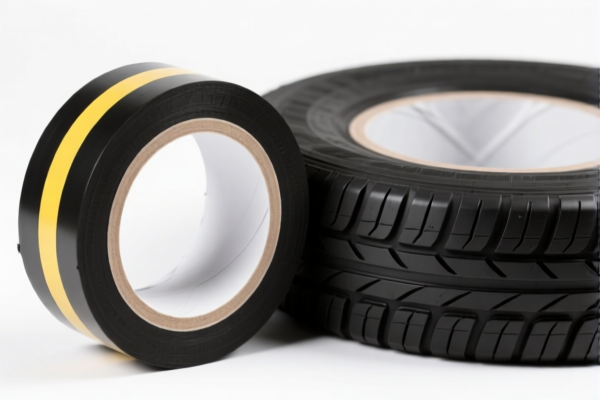

AI Analysis
🚛 Tire Retreading Rubber: The Unsung Hero of Sustainable Logistics
🌐 HS Code Reference & Customs Clearance Guide | 2026 Latest Tariff Analysis | Professional-Level Clearance Strategy
📌 I. Product Definition & Classification: What Exactly Is "Tire Retreading Rubber"?
Tire Retreading Rubber refers to raw or semi-finished vulcanized rubber materials specifically designed for the retreading process of worn tires. This includes rubber treads, cushion gums, and other rubber components used to restore the usability of truck, bus, and aircraft tires. It is not a new tire, nor is it a finished tire part ready for immediate installation without processing.
In international trade, this product falls under the broader category of Articles of Vulcanized Rubber Other Than Hard Rubber. The key distinction lies in the specific application and form: * If it is a generic rubber article (e.g., seals, gaskets, simple mats) with no specific vehicle application → Classified under general rubber articles. * If it is a mechanical part for motor vehicles (even if it's a component like a tread or cushion gum) → Classified under automotive rubber parts.
⚠️ Critical Distinction:
- If the rubber is a generic article not specific to a single machine part → 4016.99.60.50
- If the rubber is a mechanical article/compent for motor vehicles (like a retread tread assembly intended for vehicle machinery) → 4016.99.60.10
📦 II. HS Code Classification Details (2026 Latest Tariff Authority Match)
Based on the provided data, here are the applicable HS Codes for "Tire Retreading Rubber" depending on its specific nature and declaration:
| HS Code | Product Description | Applicable Scenario | Vehicle Component? |
|---|---|---|---|
4016.99.60.50 |
Other articles of vulcanized rubber other than hard rubber: Other: Other: Other: Other: Other Other | Generic rubber blocks, non-specific rubber sheets, or rubber items not clearly defined as vehicle parts | ❌ No |
4016.99.60.10 |
Other articles of vulcanized rubber other than hard rubber: Other: Other: Other: Other: Other Mechanical articles for motor vehicles | Tire retreading treads, cushion gums, or rubber parts specifically designed for motor vehicle machinery | ✅ Yes |
🔍 Key Insight:
- 4016.99.60.10 is the most precise classification for tire retreading materials because they are considered "mechanical articles" or components integral to the vehicle's operation and maintenance. - 4016.99.60.50 is a residual category for generic rubber goods that do not fit other specific subheadings. Use this only if the rubber is not clearly a vehicle part.
💰 III. 2026 Latest Tariff Rate Breakdown (Including Surcharges & Policy Add-ons)
✅ Applicable Country: United States (US)
✅ Origin: China (CN) (Assumed based on common trade patterns; adjust if origin differs)
✅ Effective Date: Current rates apply as per 2026 tariff schedule
🎯 1. 4016.99.60.10 — Mechanical Articles for Motor Vehicles (e.g., Retreading Rubber)
| Item | Content |
|---|---|
| Base Tariff | 0.0% (Ad Valorem) |
| Additional Tariffs | 0.0% (No Section 301 or IEEPA surcharges listed for this HS Code in provided data) |
| Total Tax Rate | 0.0% |
| Tax Calculation | CIF Value × 0.0% = $0 |
| De Minimis Eligibility | ✅ Yes (Low-value shipments may qualify under current rules) |
| Legal Basis | HTSUS 4016.99.60.10 |
📌 Explanation:
- 0% Tariff: This is a major advantage for tire retreading rubber. Unlike many electronics or steel products, rubber articles for motor vehicles currently face no base tariff and no additional surcharges in the provided data. - Cost Efficiency: This makes the US a highly competitive market for retreaded tire components from China.
🎯 2. 4016.99.60.50 — Other Rubber Articles (Generic)
| Item | Content |
|---|---|
| Base Tariff | 0.0% (Ad Valorem) |
| Additional Tariffs | 0.0% |
| Total Tax Rate | 0.0% |
| Tax Calculation | CIF Value × 0.0% = $0 |
| De Minimis Eligibility | ✅ Yes |
| Legal Basis | HTSUS 4016.99.60.50 |
📌 Explanation:
- Also 0% tariff. However, this code is less specific and may trigger more scrutiny if the product is clearly a vehicle part.
🛠️ IV. Customs Clearance Practical Advice (Real-World Pitfall Guide)
✅ 1. Required Documentation Checklist (Non-Negotiable)
| Document | Mandatory? | Explanation |
|---|---|---|
| ✅ Commercial Invoice | ✔️ | Must clearly state "Tire Retreading Rubber" or "Vulcanized Rubber for Retreading" and specify if it's for motor vehicles. |
| ✅ Packing List | ✔️ | Detail weight, dimensions, and quantity. Avoid vague terms like "rubber goods." |
| ✅ Product Specification Sheet | ✔️ | Include material composition (vulcanized rubber), hardness, and intended use (retreading). |
| ✅ HS Code Justification Letter | ✔️ | Explain why it falls under 4016.99.60.10 (mechanical article for motor vehicles) vs. 4016.99.60.50. |
| ✅ Certificate of Origin (CO) | ✔️ | Required for customs verification, especially if claiming preferential treatment (though not applicable here as rate is 0%). |
| ✅ Photos of Goods | ✔️ | Show the product form (e.g., tread strips, rubber blocks) to prove it's not a finished tire. |
✅ 2. Declaration Tips (Key Mantra)
🔥 “Be Specific: ‘Mechanical Article for Motor Vehicles’ or ‘Generic Rubber’? Choose Wisely!”
| Scenario | Correct Declaration | Wrong Practice |
|---|---|---|
| Retread Treads | 4016.99.60.10 — "Mechanical articles for motor vehicles" |
Misdeclare as "Tires" (84.01) → Complex classification |
| Rubber Sheets for Retreading | 4016.99.60.50 — "Other rubber articles" if not pre-formed |
Use generic term "Rubber" → May trigger audit |
| Finished Tires | Not applicable (Different HS Code) | Declaring as "Retreading Rubber" → Smuggling risk |
📌 Note:
- If the rubber is pre-formed and specifically sized for a tire retreading line, always use4016.99.60.10. - If it’s raw rubber stock used to make retreading parts,4016.99.60.50may be more appropriate.
✅ 3. Special Cases Handling
| Scenario | Handling Advice |
|---|---|
| OEM Retreading Kits | Provide customer order + design specs to prove it’s a vehicle part. |
| Mixed Shipments | If shipment contains both vehicle parts and generic rubber, separate declarations are required to avoid misclassification. |
| Samples | Clearly mark as "Samples Not for Resale" to potentially reduce duty liability under de minimis rules. |
| Recycled Rubber | If the rubber is made from recycled tires, ensure it’s still classified under 4016 (vulcanized rubber), not 39 (plastics) or 78 (scrap). |
🌍 V. Global Market Comparison (2026 Latest)
| Country/Region | Recommended HS Code | Tariff | Certification Requirements | Notes |
|---|---|---|---|---|
| 🇺🇸 USA | 4016.99.60.10 |
0% | None (Low regulatory barrier) | Best market for cost efficiency |
| 🇨🇳 China | 4016.99.60.10 |
5% | CCC (if applicable) | Higher base rate than US |
| 🇪🇺 EU | 4016.99.60.10 |
0% (if under FTA) | REACH, RoHS | Check for specific EU rubber regulations |
| 🇯🇵 Japan | 4016.99.60.10 |
0% | JIS Standards | No surcharges |
📌 Conclusion:
- The US offers a 0% tariff for tire retreading rubber, making it the most cost-effective destination for this product. - No additional surcharges apply, unlike electronics or steel.
📌 VI. Common Errors & Pitfall Guide (Lessons Learned)
❌ Error 1: Misclassifying as "Tires" (84.01)
👉 Consequence: Incorrect HS code, potential fines, and delays. Tires are finished goods; retreading rubber is a component.
❌ Error 2: Using Generic "Rubber" Declaration
👉 Consequence: Customs may audit for proper classification, leading to delays. Always specify "Vulcanized Rubber Article."
❌ Error 3: Ignoring "Mechanical Article" Status
👉 Consequence: If declared as generic rubber (4016.99.60.50) but actually a vehicle part, customs may reclassify and apply different duties (though here both are 0%, it affects statistical data and future audits).
❌ Error 4: Not Providing Product Specifications
👉 Consequence: Customs cannot verify if it’s a "mechanical article," leading to holdups.
✅ Correct Practice:
“Vulcanized Rubber Treads for Tire Retreading, Mechanical Articles for Motor Vehicles, Model RT-100, Used in Commercial Truck Maintenance”
🎯 VII. Conclusion: Professional Declaration, Save Time & Money
🎯 Remember:
🔹 “Retreading Rubber = Mechanical Article for Motor Vehicles” → 0% Tariff!
🔹 “Generic Rubber” → 0% Tariff, but less specific!
🔹 “Be Precise, Avoid Delays, Maximize Profit!”
📌 Pro Tip:
If your retreading rubber is high-quality and certified (e.g., ISO, SAE), highlight this in your invoice to speed up customs clearance.
Consider Applying for an Advance Ruling if you’re unsure about the classification, to ensure 0% tariff applicability.
📣 Immediate Action:
📞 Contact a professional customs broker + Provide Product Specs + Confirm HS Code
4016.99.60.10
🚀 Your Tire Retreading Rubber, Cleared Smoothly, Zero Duty, Maximized Profit!
✨ Professional Clearance Starts with Precise Classification!
💼 Every Dollar Saved Counts!
Customer Reviews
About HS Code Classification
The Harmonized System (HS) is an internationally standardized nomenclature developed by the World Customs Organization (WCO) to classify traded products. Over 200 countries use the HS system as the basis for customs tariffs, trade statistics, and import/export regulations.
Each HS code follows a hierarchical structure:
- Chapter (2 digits) — Broad category of goods (e.g., Chapter 84: Machinery and Mechanical Appliances)
- Heading (4 digits) — More specific grouping within the chapter
- Subheading (6 digits) — Internationally standardized breakdown, used by all WCO member countries
- National subdivisions (8-10 digits) — Country-specific extensions for further classification, such as US HTSUS 10-digit codes
Correct HS code classification is essential for smooth customs clearance, accurate duty payment, and compliance with trade regulations. Misclassification can lead to customs delays, overpayment of duties, or penalties.
When importing from CN to US, the applicable tariff rates may include:
- Most-Favored-Nation (MFN) rate — The standard duty rate applied to WTO members
- General rate — Applied to countries without trade agreements
- Trade remedy duties — Additional tariffs such as Section 301 (anti-dumping), Section 232 (national security), or countervailing duties
The information provided on this page is for reference purposes only. For official classification, please consult with your local customs authority or a licensed customs broker.