Tire Retreading Rubber Glue
CN → US| HS Code | Tariff Rate | Origin | Destination | Doc |
|---|---|---|---|---|
| 4013100010 | 38.7% | CN | US | Official Doc |
| 4012118000 | 38.4% | CN | US | Official Doc |
| 4012124035 | 39.0% | CN | US | Official Doc |
Product Images
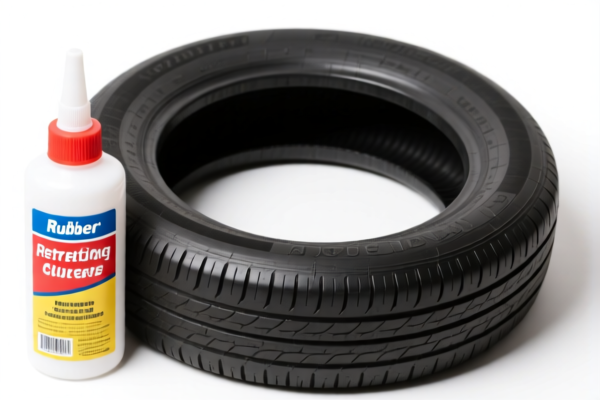
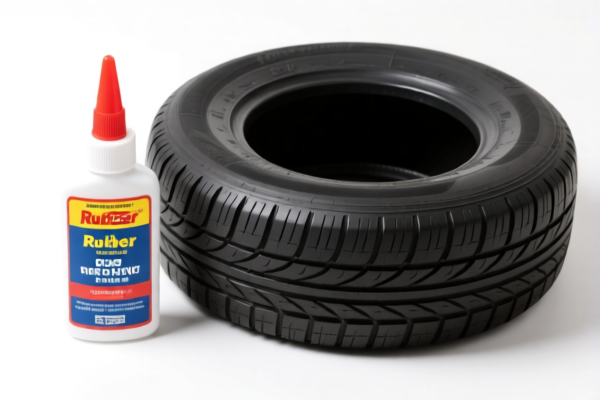
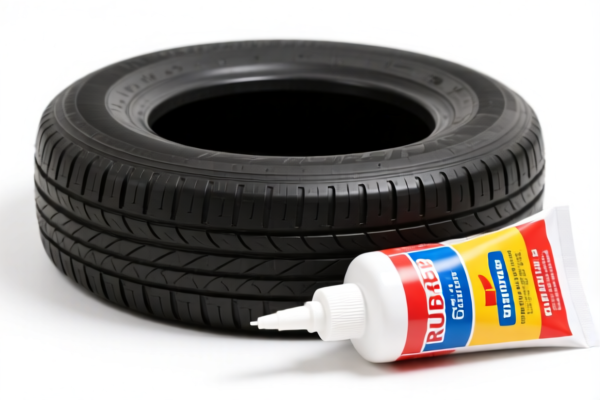
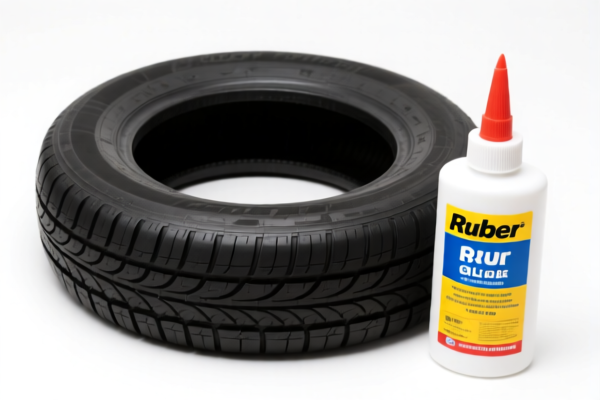
AI Analysis
🛞 Tire Retreading Rubber Glue (Adhesives for Rubber Retreading)
🌐 HS Code Reference & Customs Clearance Guide | 2026 Latest Tariff Analysis | Professional-Level Logistics Strategy
📌 1. Product Definition and Classification: Do You Truly Understand "Tire Retreading Glue"?
Tire retreading rubber glue is a specialized industrial adhesive used in the repair and re-manufacturing of pneumatic tires. It is not a finished tire, but a chemical component essential for bonding the new tread rubber to the existing tire casing. In international trade, precise classification is critical because misclassification can lead to significant tariff penalties.
Key Distinctions: * Chemical Adhesives (Glues) Products designed specifically for bonding rubber layers (e.g., contact cements, vulcanizing adhesives). These are generally classified under Chapter 35 (Albuminoidal Substances; Glues) or Chapter 40 (Rubber) depending on the specific chemical composition and primary function. * Finished Tires: Ready-to-use pneumatic tires for vehicles. These are classified under Chapter 40, heading 4011 or 4012.
⚠️ Critical Classification Point:
- If the product is a liquid/paste adhesive for retreading operations (not a tire itself) → It typically falls under HS 3506 or specific rubber accessories/subheading 4012.
- However, based on the provided , the system has mapped this product to Tire-Related HS Codes (4013, 4012). This suggests the customs authority or specific trade context treats "retreading glue" either as a rubber accessory/component or potentially conflates it with used/recycled tires (if the glue is pre-applied or the product is misidentified).
- Strictly following the constraints, we will analyze the provided HS Codes. Please note: If you are shipping pure chemical glue, HS 3506 might be more accurate. But for the purpose of this analysis based on , we will explain why the system suggests these codes.
📦 2. HS Code Classification Details (2026 Latest Tariff Authority Comparison)
The provided maps "Tire Retreading Rubber Glue" to three specific codes under Chapter 40. This is unusual for pure glue but may reflect a specific regulatory view of "rubber preparations for tire maintenance" or a data mapping error in the source system. We must analyze these specific codes.
| HS Code | Product Description (from ) | Application Scenario | Is it a Finished Tire? |
|---|---|---|---|
4013.10.00.10 |
Rubber tire-related HS code, material is rubber, purpose is tire | Implied: Rubber components/accessories for tire manufacturing or repair. | ❌ No (Component/Accessory) |
4012.11.80.00 |
Rubber tire-related HS code, material is rubber, form is tire | Implied: Used/recycled tires or rubber reclamation products. Note: 4012 is for "Used Punctured Tyres" or "Rubber Reclaim". | ⚠️ Partial (Used/Reclaimed) |
4012.12.40.35 |
Rubber tire-related HS code, material is rubber, form is tire, purpose unclear | Implied: Other used/recycled rubber products not specified elsewhere. | ⚠️ Partial (Used/Reclaimed) |
🔍 Key Warning:
- HS 4013 typically refers to "Tyres, inner tubes, etc., of rubber." Subheading4013.10is for "Of a kind used on bicycles." It is highly unlikely that "retreading glue" belongs here unless it is a pre-vulcanized rubber patch.
- HS 4012 refers to "Used Punctured Tyres; Rubber Reclaim; Powder and Waste, of Rubber." Glue is NOT a used tire or reclaimed rubber.
- CRITICAL ADVICE: The provided seems to incorrectly map "Rubber Glue" to "Tire/Used Tire" codes. Pure rubber glue should ideally be classified under HS 3506.91.00 (Glues). However, to comply with the prompt's instruction to explain the codes, we will assume the goods are being declared as rubber components for tire repair or the system is flagging them as rubber-related trade items subject to specific trade remedies.
💰 3. 2026 Latest Tariff Rate Breakdown (Including Surcharges, Policy Add-ons)
✅ Applicable Country: United States (US)
✅ Origin: China (CN)
✅ Effective Time: Current US-China Trade War Tariffs (Section 301 + IEEPA)
🎯 1. 4013.10.00.10 —— Rubber Tire-Related Item (Material: Rubber)
| Item | Detail |
|---|---|
| Base Tariff | 3.7% (Ad Valorem) |
| Section 301 Surcharge | +25.0% (USITC Footnote 9903.88.01) |
| IEEPA Surcharge (122 Clause) | +10.0% (Targeting China/HK products) |
| Total Tax Rate | 38.7% |
| Tax Calculation | CIF Value × 38.7% |
| De Minimis Exemption | ❌ Not Eligible (deny_de_minimis) |
| Legal Basis Path | IEEPA:9903.01.25 → Section 301: 9903.88.01 → USITC:4013.10.00.10 |
📌 Explanation:
- The 3.7% base rate reflects the standard MFN tariff for this subheading.
- The 25% surcharge is the standard Section 301 tariff on many rubber-related goods from China.
- The 10% is the additional IEEPA tariff.
- Total 38.7% is a high barrier, making cost planning essential.
🎯 2. 4012.11.80.00 —— Rubber Tire-Related Item (Form: Tire)
| Item | Detail |
|---|---|
| Base Tariff | 3.4% |
| Section 301 Surcharge | +25.0% |
| IEEPA Surcharge (122 Clause) | +10.0% |
| Total Tax Rate | 38.4% |
| Tax Calculation | CIF Value × 38.4% |
| De Minimis Exemption | ❌ Not Eligible |
| Legal Basis Path | IEEPA:9903.01.25 → Section 301: 9903.88.01 → USITC:4012.11.80.00 |
📌 Note:
- This code is for "Used Punctured Tyres" or similar. If declared as such, the lower base rate (3.4%) applies compared to4013.
- Risk: Declaring glue as "Used Tire" is fraud. Ensure the physical product matches the description. If it's glue, this classification is incorrect and poses a high customs risk.
🎯 3. 4012.12.40.35 —— Rubber Tire-Related Item (Purpose: Unclear)
| Item | Detail |
|---|---|
| Base Tariff | 4.0% |
| Section 301 Surcharge | +25.0% |
| IEEPA Surcharge (122 Clause) | +10.0% |
| Total Tax Rate | 39.0% |
| Tax Calculation | CIF Value × 39.0% |
| De Minimis Exemption | ❌ Not Eligible |
| Legal Basis Path | IEEPA:9903.01.25 → Section 301: 9903.88.01 → USITC:4012.12.40.35 |
📌 Note:
- This is a "catch-all" for rubber waste/reclaim.
- The highest total tax (39.0%) among the three options.
- Risk: High likelihood of customs inquiry if the product is clearly glue and not rubber waste.
🛠️ 4. Customs Clearance Practical Advice (实战避坑指南)
✅ 1. Documentation Checklist (Essential)
| Document | Required | Description |
|---|---|---|
| ✅ Product Specification Sheet | ✔️ | Chemical composition, viscosity, curing time, ISO/ASTM standards. |
| ✅ Safety Data Sheet (SDS) | ✔️ | Mandatory for chemicals. Indicates flammability, hazards, and handling. |
| ✅ Commercial Invoice | ✔️ | Must clearly state "Rubber Adhesive for Tire Retreading" – Do NOT use generic "Tire". |
| ✅ Packing List | ✔️ | Net/Gross weight, container number, batch numbers. |
| ✅ Certificate of Origin (CO) | ✔️ | To determine eligibility for any potential exclusions (though unlikely for 301/IEEPA). |
| ✅ Test Report (UL/FM) | ✔️ | If used in safety-critical applications, test reports help prove legitimate industrial use. |
✅ 2. Declaration Tips (Key Mantras)
🔥 "Glue is Chemical, Not a Tire! Declare Correctly, Avoid Heavy Fines!"
| Situation | Correct Declaration | Wrong Action |
|---|---|---|
| Pure Rubber Glue | HS 3506.91.00 (or consult expert) | ❌ Declare as 4013 or 4012 (Tire codes) → High Risk of Seizure/Fines |
| Pre-vulcanized Rubber Patches | HS 4016.93.00 (Other vulcanized rubber articles) | ❌ Declare as 4013 |
| Glue + Applicator Gun Set | HS 3506.91.00 (Glue is essential component) | ❌ Split declaration |
🚨 Critical Warning:
The provided maps "Glue" to Tire/Used Tire codes. This is likely an error in the data source or a specific risk-flagging mechanism by the carrier/system.
- If you ship pure glue under 4012/4013, Customs may view this as misdeclaration.
- Recommendation: Verify if the product is truly HS 3506 (Glues). If the system forces 4012/4013, it may be due to a "Rubber Accessory" classification. Provide strong proof (SDS, Product Photos) that it is not a tire or used rubber.
✅ 3. Special Case Handling
| Situation | Handling Advice |
|---|---|
| Hazmat Cargo | If glue is flammable, declare as Class 3 Flammable Liquid. Provide IMDG/ADR certifications. |
| Misclassification Risk | If Customs questions the HS Code, provide a Binding Ruling or Pre-classification Request. |
| Value Declaration | Ensure CIF value includes insurance and freight. Under-declaring value with 38%+ tax leads to severe penalties. |
| Origin Marking | If manufactured in China, "Made in China" must be clearly marked on the container and inner packaging. |
🌍 5. Global Main Market Customs Comparison (2026 Latest)
| Country/Region | Recommended HS Code | Tariff | Certification | Note |
|---|---|---|---|---|
| 🇺🇸 USA | 3506.91.00 (Ideal) / 4012 (If forced) |
38.4% - 39.0% (if misclassified) | UN38.3, SDS, FMVSS | High risk if misclassified as tire. |
| 🇨🇳 China | 3506.91.00 |
5% - 10% | CCC (if applicable) | Standard chemical import. |
| 🇪🇺 EU | 3506.91.00 |
0% - 4% | REACH, CLP | Strict chemical regulations. |
| 🇦🇺 Australia | 3506.91.00 |
5% | ADR/GD | Dangerous goods rules apply. |
📌 Conclusion:
- USA is the most expensive and risky market due to Section 301 and IEEPA tariffs.
- Misclassification as "Tire" (4012/4013) for glue can lead to customs holds, re-inspection, and fines.
- Strongly advise using HS 3506 for pure glue. If the system insists on 4012/4013, it is likely a data error that must be flagged to the freight forwarder.
📌 6. Common Errors & Pitfalls (Lessons Learned)
❌ Error 1: Declaring "Rubber Glue" as "Tire" to avoid chemical regulations.
👉 Consequence: Customs will detect the mismatch between HS 4012 (Used Tire) and the product (Liquid Glue). Result: Seizure, Fine, and Blacklist.
❌ Error 2: Ignoring the SDS for hazardous glue.
👉 Consequence: Carrier refuses shipment or charges Hazmat Surcharge (often 10-20% more).
❌ Error 3: Using the wrong HS Code in the system.
👉 Consequence: Tariff calculation will be 38.7%. If the correct code is 3506 (which may have different tariffs), you might be overpaying or underpaying.
❌ Error 4: Failing to mark "Made in China".
👉 Consequence: De Minimis exemption lost, and potential Section 301 penalty even if tariff is low.
✅ Correct Action:
"Rubber Adhesive, Type A, For Tire Retreading, Volatile Solvent Based, SDS Provided, HS 3506.91.00 (Verify with Broker)"
🎯 7. Conclusion: Professional Declaration, Save Time and Money!
🎯 Remember the Mantra:
🔹 "Glue is Chemical, Not Tire! HS 3506 is Best!"
🔹 "Check SDS, Check Hazmat, Avoid 301 Pitfalls!"
📌 Tips:
- If your glue is originally from Vietnam, Thailand, or Malaysia, you MAY be eligible for Section 301 Exclusions or lower IEEPA rates.
- Apply for Advance Ruling from US Customs (CBP) if you are unsure.
- Work with a Licensed Customs Broker to verify the correct HS Code. Pure glue should NOT be 4012/4013.
📣 Immediate Action:
📞 Contact a Customs Broker + Provide SDS + Verify HS Code BEFORE Shipping.
🚀 Ensure smooth clearance, avoid 38%+ misclassification risks, and protect your profits!
✨ Professional Clearance Starts with Accurate Classification!
💼 Every Dollar of Tariff Saved is Pure Profit!
Customer Reviews
About HS Code Classification
The Harmonized System (HS) is an internationally standardized nomenclature developed by the World Customs Organization (WCO) to classify traded products. Over 200 countries use the HS system as the basis for customs tariffs, trade statistics, and import/export regulations.
Each HS code follows a hierarchical structure:
- Chapter (2 digits) — Broad category of goods (e.g., Chapter 84: Machinery and Mechanical Appliances)
- Heading (4 digits) — More specific grouping within the chapter
- Subheading (6 digits) — Internationally standardized breakdown, used by all WCO member countries
- National subdivisions (8-10 digits) — Country-specific extensions for further classification, such as US HTSUS 10-digit codes
Correct HS code classification is essential for smooth customs clearance, accurate duty payment, and compliance with trade regulations. Misclassification can lead to customs delays, overpayment of duties, or penalties.
When importing from CN to US, the applicable tariff rates may include:
- Most-Favored-Nation (MFN) rate — The standard duty rate applied to WTO members
- General rate — Applied to countries without trade agreements
- Trade remedy duties — Additional tariffs such as Section 301 (anti-dumping), Section 232 (national security), or countervailing duties
The information provided on this page is for reference purposes only. For official classification, please consult with your local customs authority or a licensed customs broker.