Tissue
CN → US| HS Code | Tariff Rate | Origin | Destination | Doc |
|---|---|---|---|---|
| 4803002000 | 35.0% | CN | US | Official Doc |
| 4803004000 | 35.0% | CN | US | Official Doc |
| 4818100000 | 35.0% | CN | US | Official Doc |
| 4818200040 | 35.0% | CN | US | Official Doc |
| 4818900080 | 17.5% | CN | US | Official Doc |
Product Images
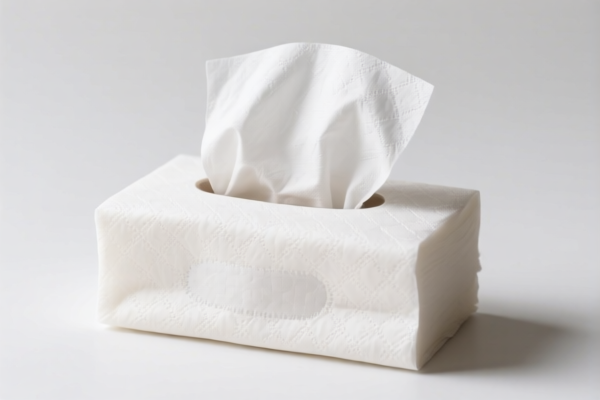
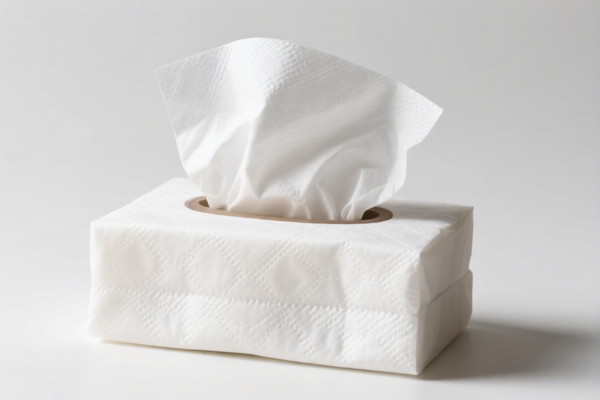
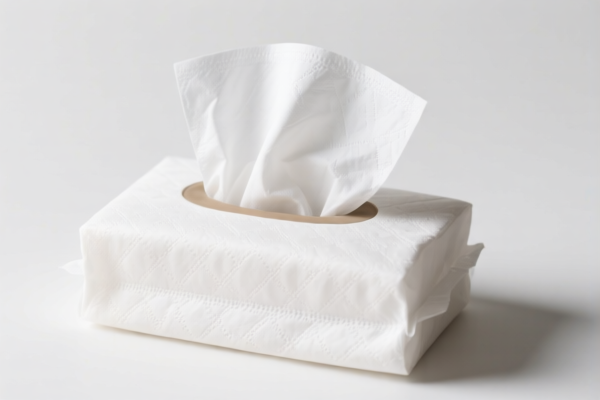
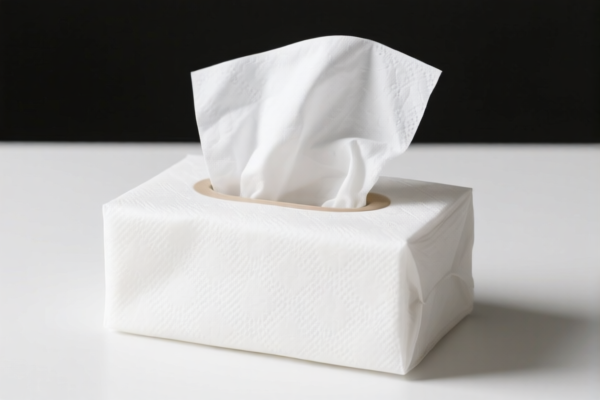
AI Analysis
🧻 Tissue Paper & Facial Tissues (Paper Products for Household & Sanitary Use)
🌐 HS Code Reference & Customs Clearance Guide | 2026 Latest Tariff Analysis | Professional Clearance Strategy
📌 1. Product Definition & Classification: Do You Really Know "Tissue"?
Tissue paper, in international trade, covers a broad range of paper products used for domestic and sanitary purposes. It is generally categorized into two main groups:
Dry Tissues/Paper Towels: Including facial tissues, toilet paper, paper napkins, and paper towels. These are dry, porous, and used for absorbing liquids or wiping. Wet Tissues: Pre-moistened paper products impregnated with lotions, cleaning agents, or disinfectants.
⚠️ Critical Distinction:
- If the product is dry (facial tissue, toilet roll, napkins) → It falls under chapters 4803 or 4818. - If the product is wet (wet wipes, moistened towelettes) → It falls under 4818.90.00.80. - Key Differentiator: Moisture content and packaging. Wet tissues require specific labeling (ingredients, moisture %) and may face different regulatory scrutiny.
📦 2. HS Code Classification Matrix (2026 Latest Tariff Reference)
Based on the provided data, here is the authoritative breakdown for US imports from China:
| HS Code | Product Description | Application Scenario | Tax Rate |
|---|---|---|---|
4803.00.20.00 |
Tissue paper, for household or sanitary purposes | General household paper towels, rougher grade tissues | 35.0% |
4803.00.40.00 |
Facial tissue, matching material & usage requirements | Premium facial tissues, soft ply tissues | 35.0% |
4818.10.00.00 |
Napkins, tissues, and similar household/sanitary items | Paper napkins, pocket tissues, toilet paper rolls | 35.0% |
4818.20.00.40 |
Cleaning or facial tissues, paper products | Specific cleaning wipes (dry), facial wipes | 35.0% |
4818.90.00.80 |
Wet tissues, sanitary paper & similar, cleaning tissues | Wet wipes, moistened towelettes, baby wipes | 17.5% |
🔍 Key Insight:
- Dry tissues (4803 & 4818.10/20) are subject to a higher total tariff of 35%. - Wet tissues (4818.90.00.80) are subject to a lower total tariff of 17.5%. - Note: This difference is due to varying "Section 301" and "122 Provision" tax details.
💰 3. 2026 Latest Tariff Rate Breakdown (Including Surtaxes & Policy Add-ons)
✅ Applicable Country: United States (US)
✅ Origin: China (CN)
✅ Effective Date: Current (Post-2025 adjustments)
🎯 Group A: Dry Tissues & Sanitary Paper (4803.00.20.00, 4803.00.40.00, 4818.10.00.00, 4818.20.00.40)
| Item | Detail |
|---|---|
| Base Duty | 0.0% |
| Section 301 Surcharge | 25.0% (Standard USITC Footnote) |
| Section 122 Tariff | 10.0% (Specific provision for certain paper goods) |
| Total Effective Rate | 35.0% |
| Calculation Base | CIF Value × 35% |
| De Minimis Exemption | ❌ Not Eligible (Value > $800 threshold is heavily taxed; small parcels may still face scrutiny) |
| Legal Basis | USITC: 4803/4818 → Section 301: 25% + Section 122: 10% |
📌 Explanation:
- The 25% is the standard Section 301 tariff on Chinese goods. - The 10% is an additional "Section 122" tariff, often applied to specific textile/paper categories to protect domestic manufacturing. - Total: 35%. This is a high-cost category.
🎯 Group B: Wet Tissues & Moistened Wipes (4818.90.00.80)
| Item | Detail |
|---|---|
| Base Duty | 0.0% |
| Section 301 Surcharge | 7.5% (Reduced rate for wet wipes) |
| Section 122 Tariff | 10.0% (Same as dry tissues) |
| Total Effective Rate | 17.5% |
| Calculation Base | CIF Value × 17.5% |
| De Minimis Exemption | ❌ Not Eligible (Subject to same trade rules) |
| Legal Basis | USITC: 4818.90 → Section 301: 7.5% + Section 122: 10% |
📌 Explanation:
- Wet tissues benefit from a lower Section 301 rate (7.5% vs 25%). - Total: 17.5%. This is significantly cheaper than dry tissues. - Strategic Note: If your product can be classified as "wet" (even with low moisture content), it may save you 17.5% in duties.
🛠️ 4. Customs Clearance Practical Advice (Avoid Pitfalls)
✅ 1. Documentation Checklist (Mandatory)
| Document | Required | Description |
|---|---|---|
| ✅ Product Specification Sheet | ✔️ | Must clearly state: Dry vs. Wet, Ply, Material (100% wood pulp?), Dimensions. |
| ✅ Commercial Invoice | ✔️ | Must specify "Tissue Paper" or "Wet Wipes" accurately. Avoid vague terms like "Paper Goods." |
| ✅ Packing List | ✔️ | Weight, dimensions, carton count. Critical for volume calculation. |
| ✅ Certificate of Origin | ✔️ | Proves origin as China (to apply correct tariff). |
| ✅ FDA Registration (for Wet Tissues) | ✔️ | If wet tissues contain lotions/medicinal ingredients, FDA approval may be required. |
| ✅ Ingredient List (for Wet Tissues) | ✔️ | Required for customs valuation and regulatory compliance. |
✅ 2. Declaration Tips (Critical Rules)
🔥 "Define Dry vs. Wet, Label Accurately, Tariff Halved!"
| Scenario | Correct Declaration | Incorrect Declaration | Consequence |
|---|---|---|---|
| Facial Tissue (Dry) | 4803.00.40.00 |
"Wipes" | Misclassification → Audit + Back Duties |
| Wet Baby Wipes | 4818.90.00.80 |
"Paper Towels" | Overpaying 17.5% extra duty |
| Paper Napkins | 4818.10.00.00 |
"Tissue Paper" | Generally okay, but specific subcode preferred |
| Dry Cleaning Wipes | 4818.20.00.40 |
"Wet Wipes" | Underpaying duty → Penalty |
✅ 3. Special Cases & Mitigation
| Case | Strategy |
|---|---|
| Mixed Shipment (Dry + Wet) | Split the shipment or declare separately. Do not mix under one HS Code. |
| Low Moisture Wipes | If moisture < 20%, customs may reclassify as "Dry." Ensure labeling reflects actual moisture. |
| OEM/Private Label | Provide license agreement. Ensure brand owner details are clear. |
| Voluntary Disclosure | If previous errors found, use Voluntary Disclosure Program to reduce penalties. |
🌍 5. Global Market Comparison (2026)
| Country/Region | Recommended HS Code | Tariff (China Origin) | Certifications | Notes |
|---|---|---|---|---|
| 🇺🇸 USA | 4818.10.00.00 (Dry)4818.90.00.80 (Wet) |
35% (Dry) 17.5% (Wet) |
FDA (if wet), CPC (if child-use) | High tariffs due to Section 301 + 122 |
| 🇨🇳 China | 4818.10.00.00 |
5-10% | CCC (if applicable) | No additional surtaxes |
| 🇪🇺 EU | 4818.10.00 |
0-6.5% | CE, REACH | No Section 301 equivalent |
| 🇬🇧 UK | 4818.10.00 |
0-5% | UKCA | Post-Brexit rules apply |
| 🇦🇺 Australia | 4818.10.00 |
5% | ADR | No major surtaxes |
📌 Conclusion:
- USA is the most expensive market for tissue paper due to Section 122 + 301. - Wet tissues have a 50% lower tariff than dry tissues in the US. - EU/UK/AU are more favorable for duty costs, but regulatory compliance (REACH/CE) is stricter.
📌 6. Common Mistakes & Pitfalls (Lessons Learned)
❌ Mistake 1: Declaring Wet Wipes as "Dry Tissue" to avoid FDA/Ingredient scrutiny.
👉 Result: Customs inspection → Seizure + Fine.
✅ Fix: Clearly label as "Moistened Wipes" and provide ingredient list.
❌ Mistake 2: Using "Paper Products" as a generic description.
👉 Result: Delayed clearance, customs asks for clarification → Demurrage charges.
✅ Fix: Use specific HS Code descriptions: "Facial Tissue," "Toilet Paper," "Wet Wipes."
❌ Mistake 3: Ignoring Section 122 Tariff.
👉 Result: Underestimating landed cost by 10%.
✅ Fix: Include 10% in all cost calculations for US imports.
🎯 7. Conclusion: Smart Classification Saves Money!
🎯 Remember:
🔹 "Dry = 35%, Wet = 17.5%. Define your moisture!"
🔹 "Section 122 adds 10% to all paper goods. Plan accordingly."
🔹 "Clear labeling prevents audits. Be specific: 'Facial Tissue,' not 'Paper.'"
📌 Pro Tip:
If your wet tissues contain cosmetic ingredients, ensure they comply with FDA Cosmetic Regulations. If they contain antibacterial agents, they may be classified as drugs, changing the HS Code entirely!
📣 Take Action Now:
📞 Consult a licensed customs broker for Advance Ruling if your product is on the borderline between "Dry" and "Wet."
📊 Calculate Landed Cost including 35% (Dry) or 17.5% (Wet) tariffs.
🚀 Optimize your supply chain to minimize duty burden through accurate classification.
✨ Precision in Classification is Profit in Your Pocket!
💼 Every percentage point counts in international trade.
Customer Reviews
About HS Code Classification
The Harmonized System (HS) is an internationally standardized nomenclature developed by the World Customs Organization (WCO) to classify traded products. Over 200 countries use the HS system as the basis for customs tariffs, trade statistics, and import/export regulations.
Each HS code follows a hierarchical structure:
- Chapter (2 digits) — Broad category of goods (e.g., Chapter 84: Machinery and Mechanical Appliances)
- Heading (4 digits) — More specific grouping within the chapter
- Subheading (6 digits) — Internationally standardized breakdown, used by all WCO member countries
- National subdivisions (8-10 digits) — Country-specific extensions for further classification, such as US HTSUS 10-digit codes
Correct HS code classification is essential for smooth customs clearance, accurate duty payment, and compliance with trade regulations. Misclassification can lead to customs delays, overpayment of duties, or penalties.
When importing from CN to US, the applicable tariff rates may include:
- Most-Favored-Nation (MFN) rate — The standard duty rate applied to WTO members
- General rate — Applied to countries without trade agreements
- Trade remedy duties — Additional tariffs such as Section 301 (anti-dumping), Section 232 (national security), or countervailing duties
The information provided on this page is for reference purposes only. For official classification, please consult with your local customs authority or a licensed customs broker.