Tissue Dispenser
CN → US| HS Code | Tariff Rate | Origin | Destination | Doc |
|---|---|---|---|---|
| 4205008000 | 35.0% | CN | US | Official Doc |
| 4819100020 | 35.0% | CN | US | Official Doc |
| 4823610020 | 35.0% | CN | US | Official Doc |
| 4823690040 | 35.0% | CN | US | Official Doc |
| 4819200020 | 35.0% | CN | US | Official Doc |
Product Images
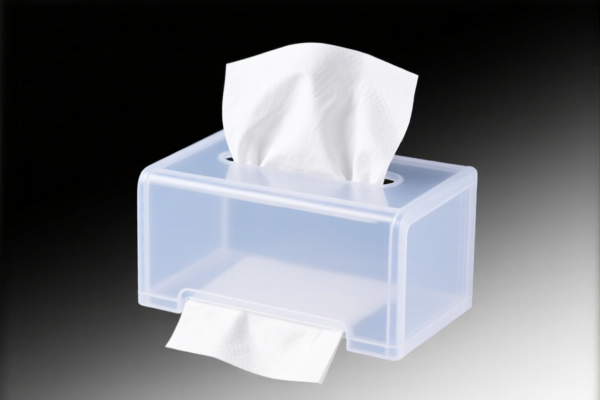

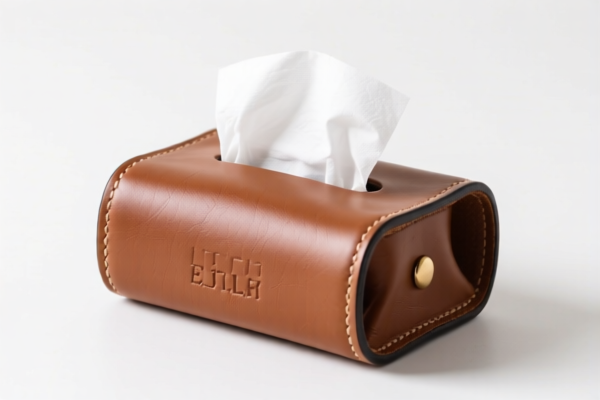
AI Analysis
🧻 Tissue Dispenser (Paper Box & Leather Holder)
🌐 HS Code Reference & Customs Clearance Guide | 2026 Tax Regime Breakdown | Professional Entry Strategy
📌 I. Product Definition & Classification: Do You Know What "Tissue Dispenser" Really Is?
A "Tissue Dispenser" is a container or housing used to hold and dispense paper tissues, napkins, or wipes. In international trade, its classification depends strictly on the material composition and functional design:
Paperboard Boxes: Made primarily of paper, cardboard, or corrugated material, often used for single-use or disposable packaging.
Leather Holders: Made from processed leather, often designed for home or office decor and intended for repeated use.
⚠️ Critical Classification Distinction:
- If the product is made of leather (even with a paper insert) → Classified under Chapter 42 (Articles of Leather).
- If the product is made of paper/cardboard (regardless of shape: box, tray, or container) → Classified under Chapter 48 (Paper & Paperboard).
- Note: Even if called a "dispenser," the material dictates the HS Code, not the function.
📦 II. HS Code Classification Details (2026 Latest Tariff Data)
Based on the provided data, here is the authoritative breakdown for the two main material types:
| HS Code | Product Description | Material | Primary Function | Category |
|---|---|---|---|---|
| 4205.00.80.00 | Leather Tissue Box | Leather | Tissue Holder | Other Leather Articles |
| 4819.10.00.20 | Paper Lunch Box | Paper/Cardboard | Food Container | Corrugated Containers |
| 4823.61.00.20 | Paper Lunch Box | Paper/Cardboard | Food Container | Paper/Cardboard Containers |
| 4823.69.00.40 | Paper Lunch Box | Paper/Cardboard | Tray/Plate | Paper/Cardboard Products |
| 4819.20.00.20 | Paper Lunch Box | Paper/Cardboard | Food Container | Folding Boxes/Cases |
🔍 Key Insight:
- The Leather version (4205.00.80.00) is a durable good.
- The Paper versions (4819/4823 series) are often used for food service but function here as tissue holders. The specific sub-code depends on the manufacturing process: Corrugated (4819.10), Containers (4823.61), or Trays/Folding Boxes (4819.20).
💰 III. 2026 Tariff Rate Analysis (Detailed Breakdown)
✅ Applicable Country: United States (US)
✅ Origin: China (CN)
✅ Effective Date: Current Trade Policy Era (2024-2026)
🎯 1. Leather Tissue Dispenser (4205.00.80.00)
| Item | Content |
|---|---|
| Basic Tariff | 0.0% (ad valorem) |
| Additional Tariff (Section 301) | +25.0% (Added Tariff) |
| 122-Clause Tariff | +10.0% (Section 122 Tariff) |
| Total Tax Rate | 35.0% |
| Tax Calculation | CIF Value × 35% |
| De Minimis Exemption? | ❌ No (Section 301/122 items are not exempt) |
| Legal Pathway | Section 301: +25% + Section 122: +10% |
📌 Explanation:
- The 25% Additional Tariff applies to most Chinese-origin goods under Section 301.
- The 10% "122-Clause Tariff" is a specific additional duty targeting certain sectors (often electronics, tech, or specific manufacturing goods, but applied here to the final product classification).
- Result: A 35% total duty makes this a high-cost item for importers.
🎯 2. Paper Tissue/Food Boxes (4819.10.00.20, 4823.61.00.20, 4823.69.00.40, 4819.20.00.20)
| Item | Content |
|---|---|
| Basic Tariff | 0.0% (ad valorem) |
| Additional Tariff (Section 301) | +25.0% |
| 122-Clause Tariff | +10.0% |
| Total Tax Rate | 35.0% |
| Tax Calculation | CIF Value × 35% |
| De Minimis Exemption? | ❌ No |
| Legal Pathway | Section 301: +25% + Section 122: +10% |
📌 Explanation:
- Despite the base tariff being 0%, the Section 301 (25%) and 122-Clause (10%) taxes stack up, resulting in the same 35% total as the leather version.
- Important: Do not assume "paper products" get a lower rate. In US-China trade relations, many paper packaging items are heavily targeted.
🛠️ IV. Customs Clearance Practical Advice (Avoiding Pitfalls)
✅ 1. Preparation Checklist (Must-Have Documents)
| Document | Required? | Why? |
|---|---|---|
| Material Composition Certificate | ✔️ | Proves if it is Leather vs. Paper (Critical for HS Code). |
| Product Photos | ✔️ | Must clearly show seams, texture, and lack of metal/plastic components. |
| Packing List | ✔️ | Must declare quantity and weight accurately. |
| Commercial Invoice | ✔️ | Must list "Tissue Dispenser" + "Leather" or "Paper" explicitly. |
| Origin Declaration (CO) | ✔️ | Essential for proving China origin (triggers the 35% rate). |
✅ 2. Declaration Strategy (Golden Rules)
🔥 "Material First, Function Second!"
| Scenario | Correct Declaration | Incorrect Declaration | Consequence |
|---|---|---|---|
| Leather Body | HS 4205.00.80.00 |
4819.20.00.20 (Paper) |
Severe Penalty: Under-reporting taxes leads to fines + seizure. |
| Paper Body | HS 4819.xxxxx.x0 or 4823.xxxxx.x0 |
4205.00.80.00 (Leather) |
Over-payment: You pay 35% on a cheaper item, but no penalty. |
| Mixed Material | Declare the predominant material (by value or function) | Split declaration | Delay: CBP will inspect to verify the primary component. |
✅ 3. Special Considerations for "Tissue Dispensers"
- Leather Content: If the leather is only a "trim" or "decorative patch" and the main structure is cardboard, declare as Paper (Chapter 48). If the structure is leather, declare as Leather (Chapter 42).
- Food Contact: Even if used for tissues, if the paper is certified for "Food Contact" (as seen in the
4819and4823codes mentioning "Lunch Box" or "Food Container"), ensure you have FDA compliance documents if the box touches food. - Section 122 Clause: This is a specific and often updated clause. Ensure your broker checks the latest 122 Clause list for the exact date of entry, as it can change based on geopolitical events.
🌍 V. Market Comparison & Cost Strategy
| Market | HS Code Category | Base Rate | Additional Tax | Total Estimate | Notes |
|---|---|---|---|---|---|
| 🇺🇸 USA | 4205 / 4819 / 4823 | 0% | 35% (25+10) | 35% | High Cost. Section 301 + 122 applies. |
| 🇨🇦 Canada | Similar Codes | 0-5% | ~0% | ~5% | No 301/122 clause. Lower cost. |
| 🇬🇧 UK | Similar Codes | 0-5% | 0% | ~5% | Post-Brexit tariffs apply, but no 301. |
| 🇪🇺 EU | 4205 / 4819 | 0-5% | 0% | ~5% | Generally low tariffs for paper/leather. |
📌 Strategy:
If you are importing into the US, the 35% tax is a massive cost driver.
- Option A: Source from a non-China country (Vietnam, Thailand) to avoid Section 301/122.
- Option B: Redesign the product to be 100% plastic or metal (different HS Code, potentially lower or no Section 301 tax).
- Option C: Consolidate shipments to maximize container volume, spreading the fixed administrative costs.
📌 VI. Common Mistakes & Lessons Learned
❌ Mistake 1: Calling a "Paper Box" a "Tissue Holder" without specifying material.
👉 Result: Customs may guess the HS Code, leading to the highest applicable tariff or detention.
✅ Fix: Always write "Paper/Cardboard Tissue Box" or "Leather Tissue Dispenser" on the invoice.
❌ Mistake 2: Assuming "Paper" means "Low Tax".
👉 Result: Many paper products are hit with 25% + 10% = 35% tariffs.
✅ Fix: Verify the Section 122 Clause status for the specific paper sub-code before shipping.
❌ Mistake 3: Splitting the box from the tissue pack to avoid taxes.
👉 Result: If sold together, they are treated as a set. If separated, you might still be liable for the full set value.
✅ Fix: Declare the complete unit.
🎯 VII. Conclusion: Smart Classification Saves Money
🎯 Key Takeaway:
"Leather or Paper? That is the Question!"
- Leather (4205): High luxury tax, 35% total duty.
- Paper (4819/4823): Disposable look, but also 35% total duty in the US.Total Duty is 35% regardless of material (0% base + 25% Section 301 + 10% Section 122).
🚀 Action Plan:
1. Verify the Material Composition immediately.
2. Check if your supplier can prove Non-China Origin (to bypass the 35%).
3. Prepare Product Photos showing the texture (Leather grain vs. Cardboard fibers) for Customs.
4. Calculate your Landed Cost including the 35% tax before quoting to customers.
✨ Professional Customs Clearance starts with precise HS Code selection!
💼 Don't let the 35% tax eat your margins – know your product, know your code!
📞 Need Help? Contact a licensed customs broker to apply for a Pre-Classification Ruling (Advance Ruling) before your first shipment.
Customer Reviews
About HS Code Classification
The Harmonized System (HS) is an internationally standardized nomenclature developed by the World Customs Organization (WCO) to classify traded products. Over 200 countries use the HS system as the basis for customs tariffs, trade statistics, and import/export regulations.
Each HS code follows a hierarchical structure:
- Chapter (2 digits) — Broad category of goods (e.g., Chapter 84: Machinery and Mechanical Appliances)
- Heading (4 digits) — More specific grouping within the chapter
- Subheading (6 digits) — Internationally standardized breakdown, used by all WCO member countries
- National subdivisions (8-10 digits) — Country-specific extensions for further classification, such as US HTSUS 10-digit codes
Correct HS code classification is essential for smooth customs clearance, accurate duty payment, and compliance with trade regulations. Misclassification can lead to customs delays, overpayment of duties, or penalties.
When importing from CN to US, the applicable tariff rates may include:
- Most-Favored-Nation (MFN) rate — The standard duty rate applied to WTO members
- General rate — Applied to countries without trade agreements
- Trade remedy duties — Additional tariffs such as Section 301 (anti-dumping), Section 232 (national security), or countervailing duties
The information provided on this page is for reference purposes only. For official classification, please consult with your local customs authority or a licensed customs broker.