Tissue Paper
CN → US| HS Code | Tariff Rate | Origin | Destination | Doc |
|---|---|---|---|---|
| 4803002000 | 35.0% | CN | US | Official Doc |
| 4803004000 | 35.0% | CN | US | Official Doc |
| 4818100000 | 35.0% | CN | US | Official Doc |
| 4818900080 | 17.5% | CN | US | Official Doc |
| 4818900020 | 17.5% | CN | US | Official Doc |
Product Images


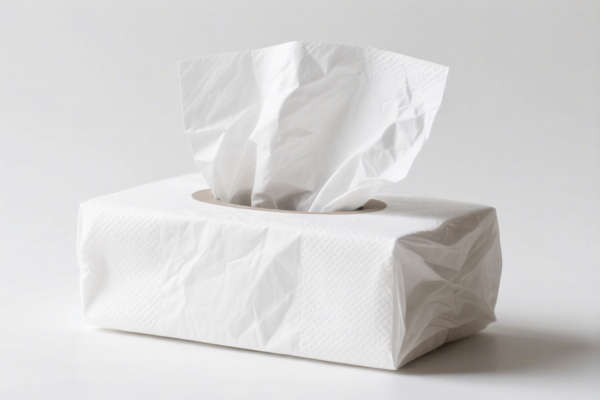

AI Analysis
🧻 Tissue Paper (Sanitary Rolls & Hygiene Products)
🌐 HS Code Reference & Customs Clearance Guide | 2026 Latest Tariff Analysis | Professional Customs Strategy
📌 1. Product Definition & Classification: Do You Really Understand "Tissue Paper"?
Tissue paper, in the context of international trade, primarily refers to sanitary paper products such as toilet rolls, facial tissues, and paper towels. These products are classified based on their material state (rolled vs. sheets), end-use (sanitary/hygienic), and processing method.
The distinction is critical because different HS codes attract significantly different tax rates, especially under current US trade policies targeting Chinese goods.
⚠️ Key Distinction Point:
- Rolled Sanitary Paper (Toilet rolls, jumbo rolls for cutting): Generally falls under 4803 or 4818.10. These attract higher additional tariffs (25% + 10%).
- Other Sanitary Paper Products (Facial tissues, napkins, specific hygiene items not in roll form or specific sub-categories): Falls under 4818.90. These attract lower additional tariffs (7.5% + 10%).
📦 2. HS Code Classification Details (2026 Latest Tariff Authority Comparison)
| HS Code | Product Description | Application Scenario | Tax Rate (Total) | Additional Tariff Details |
|---|---|---|---|---|
4803.00.20.00 |
Sanitary paper rolls, in roll form, for sanitary purposes | Toilet rolls, jumbo rolls for household cutting | 35.0% | Base: 0%, Section 301: 25%, IEEPA 122: 10% |
4803.00.40.00 |
Sanitary paper rolls, paper material, household or sanitary use | General household toilet paper, bath tissue | 35.0% | Base: 0%, Section 301: 25%, IEEPA 122: 10% |
4818.10.00.00 |
Sanitary paper rolls, paper product material, roll form, sanitary use | Commercial or household sanitary rolls | 35.0% | Base: 0%, Section 301: 25%, IEEPA 122: 10% |
4818.90.00.80 |
Sanitary paper rolls, paper product material, sanitary purpose, roll form | Specific sanitary items in roll form not covered by 4803/4818.10 | 17.5% | Base: 0%, Section 301: 7.5%, IEEPA 122: 10% |
4818.90.00.20 |
Paper sanitary products, paper or cellulose material, for sanitary use | Facial tissues, napkins, handkerchiefs (non-roll or specific sub-cat) | 17.5% | Base: 0%, Section 301: 7.5%, IEEPA 122: 10% |
🔍 Important Reminder:
- High-Tax Category (35%): Primarily applies to standard toilet paper rolls (HS 4803 and 4818.10). The "Section 301" additional tariff is 25%.
- Low-Tax Category (17.5%): Applies to other sanitary paper products (HS 4818.90). The "Section 301" additional tariff is reduced to 7.5%.
- Common Element: All categories include a 10% IEEPA 122 tariff for Chinese origin goods.
💰 3. Detailed Explanation of 2026 Latest Tariff Rates (Including Additional Taxes & Policy Add-ons)
✅ Applicable Country: United States (US)
✅ Origin: China (CN)
✅ Effective Date: Current policies apply as of 2026
🎯 1. 4803.00.20.00, 4803.00.40.00, 4818.10.00.00 —— Standard Sanitary Paper Rolls
| Item | Content |
|---|---|
| Base Tariff Rate | 0% (ad valorem) |
| USITC Additional Tariff (Section 301) | +25% (From USITC Footnote: Section 301 Tariff List 3/4) |
| IEEPA 122 Additional Tariff | +10% (Targeting Chinese products under IEEPA Section 122) |
| Total Tariff Rate | 35.0% |
| Tax Calculation | CIF Value × 35% |
| De Minimis Eligibility | ❌ No (Denied de minimis) |
| Legal Basis Path | IEEPA:122 → USITC:301 → HS:4803/4818.10 |
📌 Explanation:
- The 25% Section 301 tariff is applied to most Chinese-made toilet paper rolls.
- The 10% IEEPA 122 tariff is a separate surcharge for specific Chinese-origin goods.
- Total 35% is a very high tax burden. Importers must plan pricing strategies accordingly.
🎯 2. 4818.90.00.80, 4818.90.00.20 —— Other Sanitary Paper Products
| Item | Content |
|---|---|
| Base Tariff Rate | 0% (ad valorem) |
| USITC Additional Tariff (Section 301) | +7.5% (Reduced rate for specific sub-categories under Section 301) |
| IEEPA 122 Additional Tariff | +10% (Targeting Chinese products under IEEPA Section 122) |
| Total Tariff Rate | 17.5% |
| Tax Calculation | CIF Value × 17.5% |
| De Minimis Eligibility | ❌ No (Denied de minimis) |
| Legal Basis Path | IEEPA:122 → USITC:301 (Reduced) → HS:4818.90 |
📌 Note:
- Products like facial tissues, paper towels, and napkins (if classified under 4818.90) enjoy a significantly lower Section 301 rate of 7.5% instead of 25%.
- This creates a 17.5% total rate, which is half of the toilet roll rate.
- Proper classification is key to cost savings!
🛠️ 4. Customs Clearance Practical Advice (实战避坑指南)
✅ 1. Preparation Checklist (Essential Documents)
| Document | Required | Explanation |
|---|---|---|
| ✅ Product Specification Sheet | ✔️ | Must specify: Material (cellulose/paper), Form (Roll/Sheet), Use (Sanitary) |
| ✅ Product Photos (Clear) | ✔️ | Show packaging, brand, model, and product form (roll vs. folded) |
| ✅ Commercial Invoice | ✔️ | Must clearly state: "Sanitary Paper, Paper Material, For Sanitary Use" |
| ✅ Packing List | ✔️ | Detail quantity, weight, and dimensions |
| ✅ Certificate of Origin (CO) | ✔️ | If not Chinese origin, may qualify for lower/zero tariffs |
| ✅ Third-Party Lab Report | ✔️ | FDA compliance (if applicable), hygiene standards |
✅ 2. Declaration Tips (Critical Keywords)
🔥 “Form Defines Code, Use Defines Tax!”
| Scenario | Correct Declaration | Mistake to Avoid |
|---|---|---|
| Toilet Rolls | 4803.00.20.00 or 4818.10.00.00 |
Declaring as "Paper" → Risk of misclassification |
| Facial Tissues/Napkins | 4818.90.00.20 |
Declaring as "Toilet Paper" → 35% tax instead of 17.5% |
| Jumbo Rolls for Cutting | 4803.00.40.00 |
Declaring as "Finished Tissues" → Incorrect |
| Mixed Packing | Declare per item type | Combining all into one generic code → Audit risk |
✅ 3. Special Handling
| Scenario | Recommendation |
|---|---|
| OEM Branded Tissues | Provide brand authorization letter to avoid IP issues |
| Product for Medical Use | If marketed as medical gauze/surgical paper, may fall under different HS (30 or 4801), consult customs |
| Bulk vs. Retail | Bulk jumbo rolls may be classified differently than consumer-packaged rolls |
🌍 5. Global Market Comparison (2026 Latest)
| Country/Region | Recommended HS Code | Tariff (CN Origin) | Certification Requirements | Remarks |
|---|---|---|---|---|
| 🇺🇸 USA | 4803.00.20.00 / 4818.90.00.20 |
35% / 17.5% | FDA (if contact food), CPC | High tariffs due to trade policy |
| 🇨🇳 China | 4803.00.20.00 / 4818.90.00.20 |
5% / 10% | CCC (if applicable) | Lower base tariff |
| 🇪🇺 EU | 4803.00.20.00 / 4818.90.00.20 |
6.5% / 6.5% | CE (if applicable), FSC | No additional sanctions |
| 🇬🇧 UK | 4803.00.20.00 / 4818.90.00.20 |
6.5% / 6.5% | UKCA | Post-Brexit rates |
| 🇦🇺 Australia | 4803.00.20.00 / 4818.90.00.20 |
5% / 5% | ACCC | Free Trade Agreement may apply |
📌 Conclusion:
- USA is the most challenging market due to high additional tariffs.
- EU and Australia offer more stable and lower tariff environments.
- China Domestic Market has the lowest base tariff but is subject to domestic consumption taxes if applicable.
📌 6. Common Mistakes & Pitfalls (Lessons Learned)
❌ Mistake 1: Declaring all paper products as "Other Paper" (HS 4823)
👉 Consequence: Misclassification → Penalty + Back Taxes!
❌ Mistake 2: Mixing toilet rolls and facial tissues in one HS code
👉 Consequence: Audit risk → Delayed clearance + Potential fines
❌ Mistake 3: Ignoring the "Sanitary Use" specification
👉 Consequence: Customs may reclassify as "General Paper" → Different tax rate + Documentation rejection
❌ Mistake 4: Using vague descriptions like "Paper Rolls"
👉 Consequence: Customs cannot determine use → Holds shipment for inspection
✅ Correct Practice:
"Toilet Paper Rolls, 100% Wood Pulp, 3-Ply, for Household Sanitary Use, Model XYZ, Bulk Packaging"
🎯 7. Conclusion: Professional Declaration Saves Money!
🎯 Key Takeaways:
🔹 "Toilet Rolls = 35% Tax; Facial Tissues = 17.5% Tax!"
🔹 "Classify by Form and Use, Not Just Material!"
🔹 "Always Declare 'Sanitary Use' Explicitly!"
📌 Pro Tip:
If your tissue paper is originally from Vietnam, Thailand, or Malaysia, you may qualify for lower or zero tariffs under US Free Trade Agreements or general MFN rates.
Recommend Advance Ruling for complex product lines to avoid clearance risks.
📣 Immediate Action:
📞 Contact Professional Customs Broker + Provide Product Specs + Apply for HS Code Advance Ruling
🚀 Let your tissue paper clear customs smoothly, reduce costs, and maximize profits!
✨ Professional Customs Clearance Starts with Accurate Classification!
💼 Every Cent of Tax Paid Should Be Justified!
Customer Reviews
About HS Code Classification
The Harmonized System (HS) is an internationally standardized nomenclature developed by the World Customs Organization (WCO) to classify traded products. Over 200 countries use the HS system as the basis for customs tariffs, trade statistics, and import/export regulations.
Each HS code follows a hierarchical structure:
- Chapter (2 digits) — Broad category of goods (e.g., Chapter 84: Machinery and Mechanical Appliances)
- Heading (4 digits) — More specific grouping within the chapter
- Subheading (6 digits) — Internationally standardized breakdown, used by all WCO member countries
- National subdivisions (8-10 digits) — Country-specific extensions for further classification, such as US HTSUS 10-digit codes
Correct HS code classification is essential for smooth customs clearance, accurate duty payment, and compliance with trade regulations. Misclassification can lead to customs delays, overpayment of duties, or penalties.
When importing from CN to US, the applicable tariff rates may include:
- Most-Favored-Nation (MFN) rate — The standard duty rate applied to WTO members
- General rate — Applied to countries without trade agreements
- Trade remedy duties — Additional tariffs such as Section 301 (anti-dumping), Section 232 (national security), or countervailing duties
The information provided on this page is for reference purposes only. For official classification, please consult with your local customs authority or a licensed customs broker.