Tissue Pocket
CN → US| HS Code | Tariff Rate | Origin | Destination | Doc |
|---|---|---|---|---|
| 4803002000 | 35.0% | CN | US | Official Doc |
| 4803004000 | 35.0% | CN | US | Official Doc |
| 4818100000 | 35.0% | CN | US | Official Doc |
| 4818200040 | 35.0% | CN | US | Official Doc |
| 4818900080 | 17.5% | CN | US | Official Doc |
Product Images
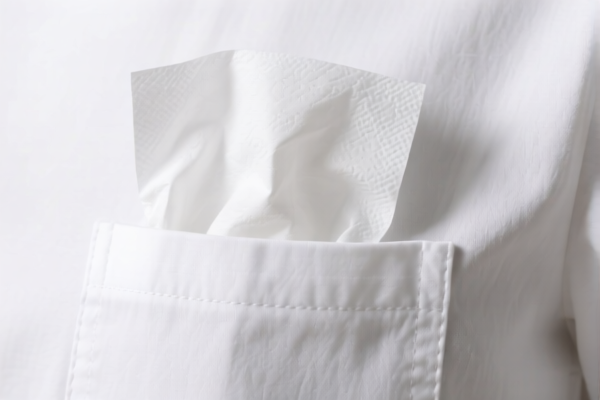
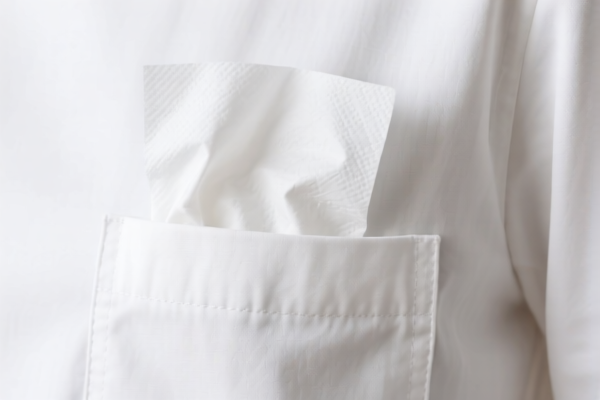
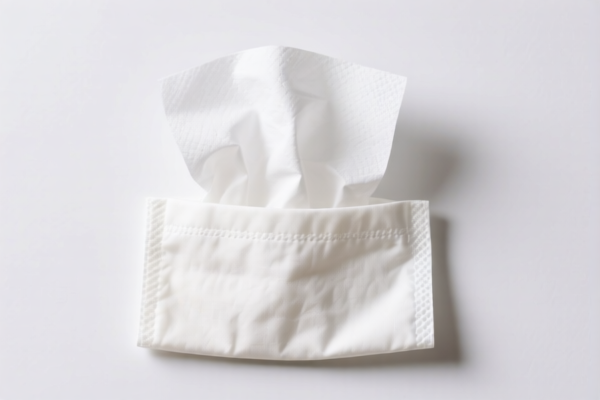
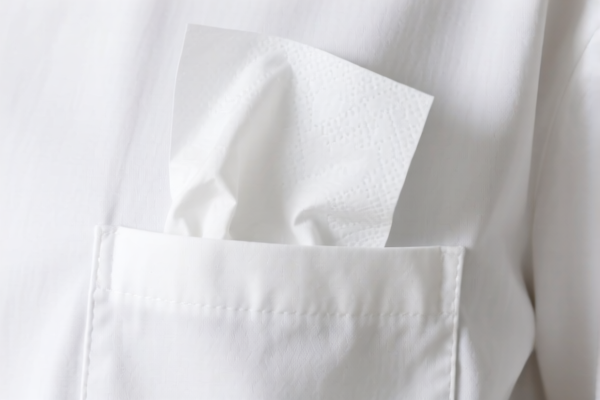
AI Analysis
🧻 Tissue Pocket (Facial Tissues & Paper Towels)
🌐 HS Code Reference & Customs Clearance Guide | 2026 Latest Tariff Analysis | Professional-Level Entry Strategy
📌 I. Product Definition & Classification: What Exactly is "Tissue"?
"Tissue Pocket" in international trade generally refers to paper-based hygiene products, including facial tissues, pocket tissues, napkins, and wet wipes. These are classified as paper products intended for household or sanitary use. In the US Customs context, the distinction between dry paper tissues and wet wipes is critical, as it drastically changes the HS Code and tariff burden.
⚠️ Key Distinction:
- Dry Tissues/Napkins: Made of paper, used for cleaning faces, noses, or tables. →归入 4803 or 4818 series.
- Wet Tissues: Paper impregnated with chemical solutions (lotions, antiseptics). →归入 4818.90.00.80.
- Crucial Point: Misclassifying dry tissues as wet wipes (or vice versa) leads to incorrect duty calculations and potential customs seizures.
📦 II. HS Code Classification Details (2026 Latest Tariff Authority)
Based on the provided data, here are the specific HS Codes for tissue-related products, their summaries, and applicable tax details.
| HS Code | Product Summary | Material & Use Case | Tax Rate Structure |
|---|---|---|---|
4803.00.20.00 |
Tissue Paper (General) | Paper material; for household or sanitary purposes (e.g., facial tissue sheets). | 35.0% Total |
4803.00.40.00 |
Tissue Paper (Specific) | Paper material; meets requirements for tissues, facial paper. | 35.0% Total |
4818.10.00.00 |
Sanitary Paper Products | Paper material; napkins, tissues, and similar household/sanitary articles. | 35.0% Total |
4818.20.00.40 |
Facial Tissues/Toilet Paper | Paper material; cleaning or facial tissue applications. | 35.0% Total |
4818.90.00.80 |
Wet Tissues/Wipes | Cellulose/Paper product; impregnated with cosmetics or toilet preparations (hygiene wipes). | 17.5% Total |
🔍 Important Note:
- Codes4803.00.20.00,4803.00.40.00,4818.10.00.00, and4818.20.00.40all share the same 35% total tax rate.
- Only Wet Tissues (4818.90.00.80) have a lower total tax rate of 17.5%.
- Do not confuse "Pocket Tissues" (dry) with "Wet Wipes" (wet). Even if packaged in a pocket, if it's dry paper, it falls under the 35% category.
💰 III. Detailed Tariff Rate Breakdown (Including Additional Duties & Policy Surcharges)
✅ Applicable Country: United States (US)
✅ Country of Origin: China (CN)
✅ Effective Time: Current tariffs apply based on the 2026 data provided.
🎯 1. Dry Tissues & Paper Sanitary Products
HS Codes: 4803.00.20.00, 4803.00.40.00, 4818.10.00.00, 4818.20.00.40
| Item | Details |
|---|---|
| Base Tariff | 0.0% (Ad valorem) |
| Section 301 Additional Tariff | +25.0% (USITC Footnote for Chinese goods) |
| Section 122 Tariff | +10.0% (Specific provision for certain paper/hygiene goods) |
| Total Tax Rate | 35.0% |
| Tax Calculation | CIF Value × 35% |
| De Minimis Eligibility | ❌ Not Eligible (Due to Section 301 and 122 tariffs, typically denied for these HTSUs) |
📌 Explanation:
- Although the base MFN rate is 0%, the addition of the 25% Section 301 tariff (trade war measure) and the 10% Section 122 tariff pushes the total duty to 35%.
- This is a high-cost category for US importers sourcing from China.
- Section 122 applies specifically to certain paper products, reinforcing the higher duty burden.
🎯 2. Wet Tissues / Hygiene Wipes
HS Code: 4818.90.00.80
| Item | Details |
|---|---|
| Base Tariff | 0.0% (Ad valorem) |
| Section 301 Additional Tariff | +7.5% (Reduced Section 301 rate for this specific subheading) |
| Section 122 Tariff | +10.0% |
| Total Tax Rate | 17.5% |
| Tax Calculation | CIF Value × 17.5% |
| De Minimis Eligibility | ❌ Not Eligible (Generally subject to Section 301 exclusions review, but base rate is lower) |
📌 Explanation:
- Wet tissues (4818.90.00.80) benefit from a lower Section 301 rate (7.5%) compared to dry tissues (25%).
- Combined with the 10% Section 122 tariff, the total is 17.5%, which is half the cost of dry tissues.
- Strategic Insight: If your product can be formulated as a "moistened wipe" (with water/solution) rather than dry paper, the duty savings are significant. However, ensure it meets the legal definition of "wet tissue" and not dry paper.
🛠️ IV. Customs Clearance Practical Advice (Risk Avoidance Guide)
✅ 1. Documentation Checklist (Must-Haves)
| Document | Required? | Explanation |
|---|---|---|
| ✅ Product Specification Sheet | ✔️ | Must clearly state: Material (100% Paper vs. Cellulose), Moisture Content (Dry vs. Wet), and Dimensions. |
| ✅ Ingredients List (For Wet Tissues) | ✔️ | If claiming 4818.90.00.80, you must prove the product is impregnated with water/cosmetics. Dry air = Dry Tissue. |
| ✅ Commercial Invoice | ✔️ | Description must match HS Code summary (e.g., "Facial Tissue, Dry, 2-Ply" vs. "Baby Wipes, Wet"). |
| ✅ Packing List | ✔️ | Details on carton dimensions, weight, and number of units. |
| ✅ Country of Origin Certificate | ✔️ | Required to apply Section 301/122 tariffs correctly. |
✅ 2. Classification Strategy & Tips
🔥 "Dry is 35%, Wet is 17.5%! Check Moisture First!"
| Scenario | Correct HS Code | Duty Rate | Why? |
|---|---|---|---|
| Standard Pocket Tissues | 4818.20.00.40 or 4803.00.20.00 |
35.0% | Dry paper, sanitary use. |
| Napkins for Dining | 4818.10.00.00 |
35.0% | Paper napkins, household use. |
| Wet Baby Wipes | 4818.90.00.80 |
17.5% | Impregnated with solution. |
| Dry Towelettes (e.g., makeup remover) | Risk Area | Likely 35.0% | If moisture is minimal or evaporates, US Customs may reclassify as dry tissue. |
⚠️ Warning:
- Do not declare wet wipes as dry tissues to avoid higher duties? No! If it's wet, declaring it dry is fraud.
- Do not declare dry tissues as wet wipes? Correct! If it's dry, declaring it wet is fraud.
- Customs Inspection: CBP may send a sample to a lab to test moisture content. If moisture < threshold, it becomes dry tissue (35%).
✅ 3. Special Cases & Mitigation
| Situation | Advice |
|---|---|
| OEM Branding | Ensure the invoice lists the manufacturer and the importer of record clearly. Branding does not change HS Code. |
| Mixed Shipments | If shipping both dry tissues and wet wipes in one container, declare separately. Mixing can lead to audit of the entire shipment. |
| Section 122 Exclusions | Check if your specific product type is excluded from Section 122. Some paper products may have temporary exclusions. |
| Free Trade Agreements | Tissues from China do not benefit from USMCA or other FTAs. No preferential rates apply. |
🌍 V. Global Market Comparison (2026 Latest)
| Market | Recommended HS Code | Base Duty | Additional Duties (China) | Total Effective Duty | Notes |
|---|---|---|---|---|---|
| 🇺🇸 USA | 4803.00.20.00 / 4818.10.00.00 |
0% | +25% (301) + 10% (122) | 35.0% | High barrier for dry tissues. |
| 🇺🇸 USA (Wet) | 4818.90.00.80 |
0% | +7.5% (301) + 10% (122) | 17.5% | Lower duty for wet wipes. |
| 🇨🇳 China (Import) | 4818.10.00.00 |
5-10% | None | 5-10% | Lower duty for importing into China. |
| 🇪🇺 EU | 4818.10.00.00 |
0-6.5% | None | 0-6.5% | No Section 301/122 equivalent. |
| 🇬🇧 UK | 4818.10.00.00 |
0% | None | 0% | Post-Brexit, most paper goods are duty-free. |
📌 Conclusion:
- US Market is the most expensive due to Section 301 and 122 tariffs.
- Wet wipes are significantly cheaper to import into the US than dry tissues.
- EU and UK markets are much more favorable for Chinese tissue exports.
📌 VI. Common Mistakes & Pitfalls (Lessons Learned)
❌ Mistake 1: Declaring all "tissue products" under one HS Code without specifying dry vs. wet.
👉 Consequence: Customs reclassification → 17.5% becomes 35% → Back duties + Penalties!
❌ Mistake 2: Ignoring Section 122 tariff.
👉 Consequence: Underpayment of duties → Seizure of goods or heavy fines.
❌ Mistake 3: Assuming "Pocket Tissues" are always dry.
👉 Consequence: If they are slightly moistened (e.g., sanitizing wipes), they might be classified as wet wipes (17.5%), but if declared dry, it’s fine. However, if they are wet and declared dry, it’s fraud. Always be accurate.
❌ Mistake 4: Not providing moisture content data.
👉 Consequence: CBP lab test required → Delays in clearance (1-4 weeks).
✅ Correct Practice:
"Facial Tissue, Dry, 2-Ply, 100% Virgin Wood Pulp, 4x4 Inches, 100 Sheets/Box, Model ABC"
OR
"Baby Wet Wipes, Moistened with Aloe Vera, 80 Wipes/Can, Model XYZ"
🎯 VII. Conclusion: Professional Clearance for Tissues!
🎯 Remember the Key Takeaway:
🔹 "Dry Tissues = 35% (Heavy Tax)"
🔹 "Wet Wipes = 17.5% (Lighter Tax)"
🔹 "Check Moisture! Check Moisture! Check Moisture!"
📌 Pro Tip:
If you are exporting to the US, consult a customs broker to confirm the exact moisture threshold for "wet tissues" in your specific product formulation. A small change in water content can save you 17.5% in duties.
📣 Immediate Action:
📞 Contact your customs broker with product specs (dry/wet).
📄 Prepare accurate invoices matching the HS Code summary.
🚀 Avoid costly delays by getting pre-classification advice.
✨ Professional Clearance Starts with Accurate Classification!
💼 Every Percent Saved is Profit Gained!
Customer Reviews
About HS Code Classification
The Harmonized System (HS) is an internationally standardized nomenclature developed by the World Customs Organization (WCO) to classify traded products. Over 200 countries use the HS system as the basis for customs tariffs, trade statistics, and import/export regulations.
Each HS code follows a hierarchical structure:
- Chapter (2 digits) — Broad category of goods (e.g., Chapter 84: Machinery and Mechanical Appliances)
- Heading (4 digits) — More specific grouping within the chapter
- Subheading (6 digits) — Internationally standardized breakdown, used by all WCO member countries
- National subdivisions (8-10 digits) — Country-specific extensions for further classification, such as US HTSUS 10-digit codes
Correct HS code classification is essential for smooth customs clearance, accurate duty payment, and compliance with trade regulations. Misclassification can lead to customs delays, overpayment of duties, or penalties.
When importing from CN to US, the applicable tariff rates may include:
- Most-Favored-Nation (MFN) rate — The standard duty rate applied to WTO members
- General rate — Applied to countries without trade agreements
- Trade remedy duties — Additional tariffs such as Section 301 (anti-dumping), Section 232 (national security), or countervailing duties
The information provided on this page is for reference purposes only. For official classification, please consult with your local customs authority or a licensed customs broker.