Toaster Oven
CN → US| HS Code | Tariff Rate | Origin | Destination | Doc |
|---|---|---|---|---|
| 8516604070 | 35.0% | CN | US | Official Doc |
| 8516604074 | 35.0% | CN | US | Official Doc |
| 8438800000 | 35.0% | CN | US | Official Doc |
| 8516720000 | 15.3% | CN | US | Official Doc |
| 3924104000 | 13.4% | CN | US | Official Doc |
Product Images

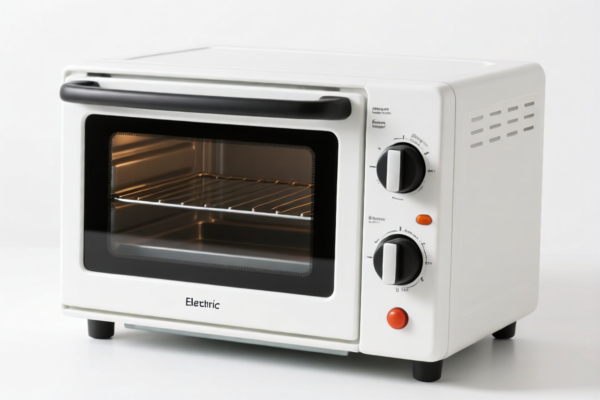
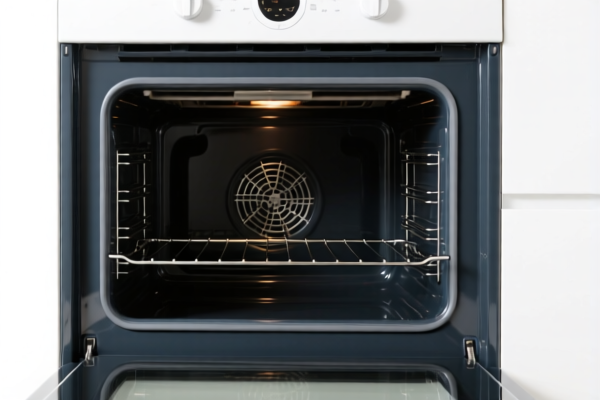
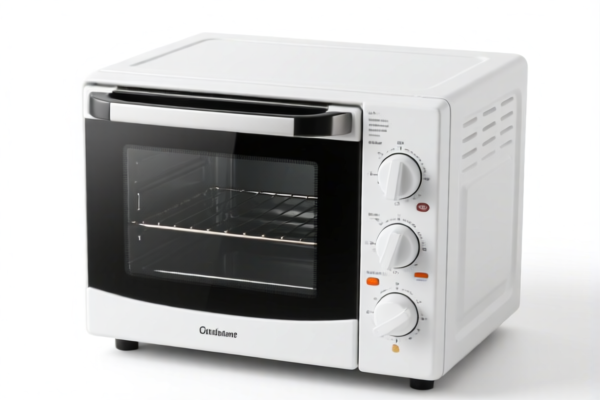
AI Analysis
🍞 Toaster Oven (Oven for Baking & Toasting)
🌐 HS Code Reference & Customs Clearance Guide | 2026 Updated Tariff Breakdown | Professional Clearance Strategy
📌 I. Product Definition & Classification: Are You Using the Right Oven?
A Toaster Oven is a compact electric heating appliance designed for baking, broiling, toasting, and reheating food. Unlike a standard kitchen oven, it is portable and intended for countertop use. In international trade, the classification hinges on electrical function, portability, and intended use.
⚠️ Critical Classification Distinction:
- Portable Electric Oven (Countertop): Designed for home/commercial kitchen use, electric-powered, and fits under "Portable Ovens." → 8516.60
- Industrial Food Processing Machine: Large-scale, non-portable, dedicated to mass food production lines. → 8438.80
- Toaster (Slot-type): Specifically for slicing and heating bread slices, not a full oven. → 8516.72
- Accessories (Trays/Racks): Plastic supports for the oven, not the main heating unit. → 3924.10
📦 II. Detailed HS Code Breakdown (2026 Tariff Reference)
Based on your specific product scenarios, here is the authoritative breakdown:
| HS Code | Product Description | Use Case | Material/State |
|---|---|---|---|
8516.60.40.70 |
Toaster Oven | Matched portable use; fits the category of "Portable stoves, cooking appliances, and ovens." | Portable, Electric |
8516.60.40.74 |
Toaster Oven | Electric heating appliance; no material or shape conflicts; classified as "Other Electric Heating Appliances." | Electric, Countertop |
8438.80.00.00 |
Food Processing Oven | Deduced as machinery for food processing; fits "Machinery for food/beverage manufacturing." | Industrial/Heavy-duty |
8516.72.00.00 |
Toaster (Slot Type) | Strictly matches the definition in the Explanatory Notes; intended for toasting bread slices only. | Electric, Slot-type |
3924.10.40.00 |
Toaster Rack/Tray | Deduced as kitchenware; fits "Plastic kitchen utensils" category (accessory only). | Plastic, Accessory |
🔍 Key Insight:
- 8516 Series is the most common for consumer-grade toaster ovens (electric heating elements). - 8438 Series is for industrial machines (large volume, automated). - 8516.72 is NOT a toaster oven; it is strictly for a slot toaster (bread only). Do not mix them up!
💰 III. 2026 Tariff Rate Breakdown (Detailed & Critical)
✅ Applicable Market: USA (US)
✅ Origin: China (CN)
✅ Effective Date: Includes recent trade measures (2025-2026)
🎯 1. 8516.60.40.70 & 8516.60.40.74 — Consumer Toaster Ovens
These are the standard portable electric ovens for home or light commercial use.
| Item | Content |
|---|---|
| Base Tariff | 0.0% (ad valorem) |
| Section 301 Additional Tariff | +25.0% (High tariff imposed under US Trade Act Section 301) |
| "122" Clause Tariff | +10.0% (Additional tariff targeting specific Chinese goods) |
| Total Duty Rate | 35.0% |
| Tax Calculation | CIF Value × 35% |
| De Minimis Exemption? | ❌ NO (Not eligible for $800/$2500 de minimis exemption due to Section 301 status) |
| Legal Path | 301:8516.60.40 → 122 Clause: 8516.60.40 |
📌 Explanation:
- The 25% is the standard Section 301 tariff for Chinese electrical appliances. - The 10% is a specific "122 Clause" surcharge (likely related to specific trade policy adjustments). - Total: 35%. This is a VERY HIGH duty rate. You must budget accordingly.
🎯 2. 8438.80.00.00 — Industrial Food Processing Ovens
For large machines dedicated to food manufacturing lines.
| Item | Content |
|---|---|
| Base Tariff | 0.0% |
| Section 301 Additional Tariff | +25.0% |
| "122" Clause Tariff | +10.0% |
| Total Duty Rate | 35.0% |
| Tax Calculation | CIF Value × 35% |
| De Minimis Exemption? | ❌ NO |
| Legal Path | 301:8438.80.00 → 122 Clause: 8438.80.00 |
📌 Note:
- Even if it's "machinery," if it's electric and from China, it often falls under the same heavy tariff structure. - Warning: Ensure you are not misclassifying a consumer oven as industrial machinery to avoid audits.
🎯 3. 8516.72.00.00 — Toaster (Slot Type)
Specific to the classic 2-slice or 4-slice bread toaster (NOT a toaster oven).
| Item | Content |
|---|---|
| Base Tariff | 5.3% |
| Section 301 Additional Tariff | 0.0% (Exempt or lower rate for this specific sub-category) |
| "122" Clause Tariff | +10.0% |
| Total Duty Rate | 15.3% |
| Tax Calculation | CIF Value × 15.3% |
| De Minimis Exemption? | ✅ YES (Potentially eligible if under $800 value, check current de minimis rules) |
| Legal Path | 122 Clause: 8516.72.00 |
📌 Critical Strategy:
- If your product is ONLY a bread toaster (no oven function), the tariff drops from 35% to 15.3%. - Do not try to classify a toaster oven as a "Toaster" (8516.72) if it has a broil/bake function. Customs will reject it.
🎯 4. 3924.10.40.00 — Toaster Rack/Tray (Accessory)
Plastic accessories for the toaster/oven.
| Item | Content |
|---|---|
| Base Tariff | 3.4% |
| Section 301 Additional Tariff | 0.0% |
| "122" Clause Tariff | +10.0% |
| Total Duty Rate | 13.4% |
| Tax Calculation | CIF Value × 13.4% |
| De Minimis Exemption? | ✅ YES (Likely eligible) |
📌 Note:
- This is for accessories only (e.g., a plastic rack). - If you ship the oven and the rack together, the oven's 35% rate applies to the whole shipment unless separated and declared individually (risky).
🛠️ IV. Customs Clearance Practical Advice (Actionable Strategies)
✅ 1. Document Checklist (Non-Negotiable)
| Document | Required? | Why? |
|---|---|---|
| Product Spec Sheet | ✅ | Must explicitly state: "Toaster Oven" vs "Bread Toaster" vs "Food Processor". |
| Circuit Diagram | ✅ | Proves it is an electric heating appliance (8516) vs mechanical (8438). |
| Photos (Clear) | ✅ | Show the control panel, heating elements, and interior. If it has a door for baking → 35% rate. |
| User Manual | ✅ | Must describe "Baking," "Broiling," "Toasting" functions for 8516.60. |
| Material Declaration | ✅ | Crucial for 3924.10 (Plastic) vs 8516 (Metal/Electrical). |
✅ 2. Declaration Tips (The "Golden Rules")
🔥 Mantra: "Function defines Code, Code defines Cost!"
| Scenario | Correct HS Code | Resulting Duty | Common Mistake |
|---|---|---|---|
| Full Toaster Oven (Bake + Toast + Broil) | 8516.60.40.70 / .74 |
35% | ❌ Trying to declare as 8516.72 (Toaster) → Denied/Seized |
| Pure Bread Toaster (2 slots, no oven) | 8516.72.00.00 |
15.3% | ❌ Declaring as "Oven" → Overpay 20% extra |
| Industrial Food Machine (Large, belt-fed) | 8438.80.00.00 |
35% | ❌ Declaring as "Small Appliance" → Audit Risk |
| Plastic Rack Sold Separately | 3924.10.40.00 |
13.4% | ❌ Bundling into oven value → Oven rate applied |
📌 Warning: Customs officers are strict on "Oven" vs "Toaster". - If it heats a whole food item (pizza, chicken, bread loaf) → Oven (35%). - If it heats slices in a slot → Toaster (15.3%).
✅ 3. Special Scenarios
| Scenario | Handling Strategy |
|---|---|
| Bundled Sale (Oven + Rack) | Declare separately if possible. If bundled, the Oven rate (35%) applies to the whole value. |
| OEM Customization | Provide original manufacturer's catalog to prove the intended use (Baking vs Toasting). |
| Export to Vietnam/Mexico | If re-exported, check if "Made in Vietnam/Mexico" rules apply to avoid Section 301, but 122 Clause may still apply depending on origin proof. |
🌍 V. Global Market Comparison (2026 Tariff Outlook)
| Country/Region | Recommended HS Code | Total Tariff (China Origin) | Key Note |
|---|---|---|---|
| 🇺🇸 USA | 8516.60.40.70 |
35.0% | High Section 301 + 122 Clause. |
| 🇪🇺 EU | 8516.60.40.70 |
~5-15% (Varies) | No Section 301, but CE certification required. |
| 🇨🇳 China | 8516.60.40.70 |
5-10% | Domestic market; lower rates. |
| 🇯🇵 Japan | 8516.60.40.70 |
0-5% | PSE Certification mandatory. |
📌 Conclusion:
- The USA is the most expensive market for toaster ovens due to Section 301 + 122 Clause. - Differentiate between "Toaster" (15.3%) and "Toaster Oven" (35%) to save costs if your product allows.
📌 VI. Common Pitfalls & Avoidance
❌ Pitfall 1: Calling a "Toaster Oven" a "Toaster" to avoid 35% duty.
👉 Result: Customs audit, fines, and retroactive payment of the 20% difference + penalties.
❌ Pitfall 2: Shipping the oven and plastic racks together without separating them.
👉 Result: You lose the 13.4% rate on the rack; you pay 35% on the rack's value too!
❌ Pitfall 3: Not declaring the "122 Clause" in the system.
👉 Result: Seizure of goods for non-compliance with new trade regulations.
✅ Best Practice:
"Electric Toaster Oven, 120V/1500W, Countertop, with Toasting and Baking Functions, Model ABC."
HS Code:8516.60.40.70
Duty: 35%
🎯 VII. Conclusion: Precision is Profit!
🎯 Remember:
🔹 "Oven = 35% (High Risk)"
🔹 "Toaster = 15.3% (Savings!)"
🔹 "Plastic Part = 13.4% (Accessory)"
📌 Action Item:
- Verify if your product has a "Baking" function. If yes → 35%.
- Separate accessories in the invoice if possible.
- Check if your product fits the strict definition of a "Toaster" (slot type) for the lower 15.3% rate.
🚀 Smart Tariff Planning = Higher Margins!
💼 Don't let customs fees eat your profit. Get the HS Code right first!
Customer Reviews
About HS Code Classification
The Harmonized System (HS) is an internationally standardized nomenclature developed by the World Customs Organization (WCO) to classify traded products. Over 200 countries use the HS system as the basis for customs tariffs, trade statistics, and import/export regulations.
Each HS code follows a hierarchical structure:
- Chapter (2 digits) — Broad category of goods (e.g., Chapter 84: Machinery and Mechanical Appliances)
- Heading (4 digits) — More specific grouping within the chapter
- Subheading (6 digits) — Internationally standardized breakdown, used by all WCO member countries
- National subdivisions (8-10 digits) — Country-specific extensions for further classification, such as US HTSUS 10-digit codes
Correct HS code classification is essential for smooth customs clearance, accurate duty payment, and compliance with trade regulations. Misclassification can lead to customs delays, overpayment of duties, or penalties.
When importing from CN to US, the applicable tariff rates may include:
- Most-Favored-Nation (MFN) rate — The standard duty rate applied to WTO members
- General rate — Applied to countries without trade agreements
- Trade remedy duties — Additional tariffs such as Section 301 (anti-dumping), Section 232 (national security), or countervailing duties
The information provided on this page is for reference purposes only. For official classification, please consult with your local customs authority or a licensed customs broker.